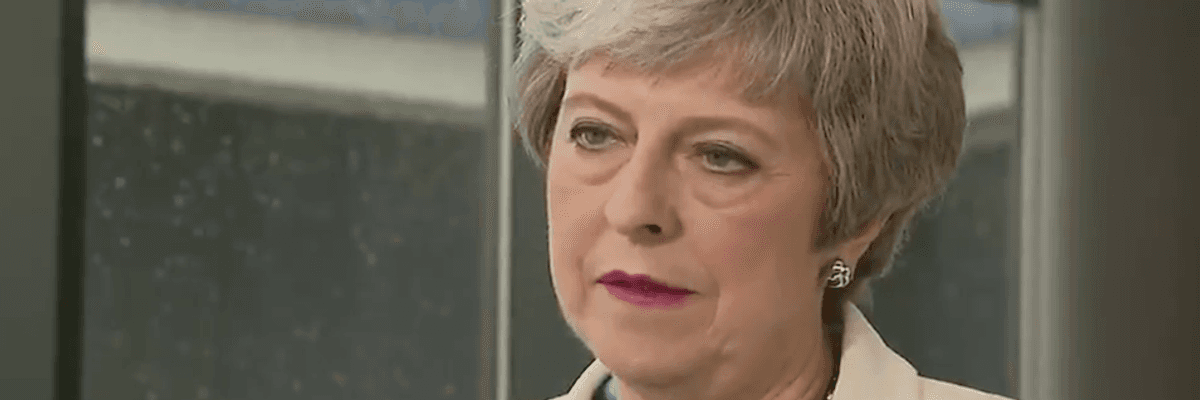
Theresa May speaks to reporters about Thursday's local election results. (Image: Sky News screenshot)
UK Conservatives Lose Over 1,200 Local Seats in Local Elections
Labour lost 100 seats as well, Liberal Democrats and other independent parties the big winners
Small and independent parties won big in local elections in the U.K. on Thursday as the country's two largest parties suffered decisive defeats.
The Greens, a left-wing party, posted their biggest gain in years.
"We've broken through on to the councils to become the new voice," party co-leader Sian Berry told The Guardian.
The Liberal Democrats, a centrist party that opposes Brexit, also saw large gains.
"The Lib Dems were written off at one point but we're coming back very, very strongly," said party leader Vince Cable.
By contrast, Prime Minister Theresa May's Conservatives lost over 1,200 seats and opposition party Labour lost 100. The results were largely interpreted as a rejection of the continuing debate over Brexit as the country delayed its departure from the E.U. for another six months.
British commentators were quick to note the connection between the country's increasingly dysfunctional national politics and the trickle-down effect to local elections.
In a column for the BBC, pollster John Curtice said that voters were sending a message to politicians: "A plague on both your houses."
"That seems to have been the key message to emerge from the ballot boxes," said Curtice.
The Guardian editorial board cautioned the two main parties on the future, citing the European Parliamentary elections coming later in the month.
"With European elections impending, there is a lesson for both Labour and the Tories," said The Guardian. "They cannot easily profit as the Brexit process drifts on and on, but their insurgent rivals might."
Tom Newton Dunn, politics editor for The Sun, said in a tweet that the results were "another unwanted record" for May.
Labour Leader Jeremy Corbyn, in remarks to ITV, said that the results mean the country has to deal with Brexit, one way or another.
"An arrangement has to be made, a deal has to be done, Parliament has to resolve this issue," said Corbyn. "I think that is very, very clear."
May, on the other hand, took the results to mean that the country wants Parliament to "deliver Brexit."
"How she got that from these results is beyond me," said Ian Dunt, the editor of politics.co.uk.
Twitter user @SheRa_Marley, however, had a pretty good idea.
We are at a crossroads
This country and this world are at a monumental crossroads. In a few short weeks, US voters will have an opportunity to beat back the forces of fascism and confront the billionaires who are rigging the economy, our media system, and our democracy, making it increasingly impossible for ordinary people to get by. We’re not just talking about the election. We’re talking about what must be done once these fascist elements are vanquished from power. We need a bolder set of solutions than what either major party has so far been willing to offer and a working-class movement ready to fight like hell for it. Trump didn't emerge from nowhere. The conditions that fueled MAGA authoritarianism were created by decades of radical neoliberal economic policies and a corrupt political system dominated by corporate interests. They slashed taxes on the super-rich, promising that the benefits would trickle down. They said giveaways to the corporate titans would make life more affordable for the rest of us. It was all bullshit. And when a bitter, betrayed populace searches for someone to blame, right-wing demagogues have little trouble finding scapegoats. People know when they're being lied to, but you won't hear any of this from the corporate media. Only independent journalism—powered and funded by people who believe in building a better world—can deliver truly trustworthy daily news. Our Fall Campaign is underway, and we need your help. To power our newsroom through the rest of the year, we need to raise $125,000 by midnight on October 31. So if you share our vision, please contribute whatever you can to sustain our work. |
Small and independent parties won big in local elections in the U.K. on Thursday as the country's two largest parties suffered decisive defeats.
The Greens, a left-wing party, posted their biggest gain in years.
"We've broken through on to the councils to become the new voice," party co-leader Sian Berry told The Guardian.
The Liberal Democrats, a centrist party that opposes Brexit, also saw large gains.
"The Lib Dems were written off at one point but we're coming back very, very strongly," said party leader Vince Cable.
By contrast, Prime Minister Theresa May's Conservatives lost over 1,200 seats and opposition party Labour lost 100. The results were largely interpreted as a rejection of the continuing debate over Brexit as the country delayed its departure from the E.U. for another six months.
British commentators were quick to note the connection between the country's increasingly dysfunctional national politics and the trickle-down effect to local elections.
In a column for the BBC, pollster John Curtice said that voters were sending a message to politicians: "A plague on both your houses."
"That seems to have been the key message to emerge from the ballot boxes," said Curtice.
The Guardian editorial board cautioned the two main parties on the future, citing the European Parliamentary elections coming later in the month.
"With European elections impending, there is a lesson for both Labour and the Tories," said The Guardian. "They cannot easily profit as the Brexit process drifts on and on, but their insurgent rivals might."
Tom Newton Dunn, politics editor for The Sun, said in a tweet that the results were "another unwanted record" for May.
Labour Leader Jeremy Corbyn, in remarks to ITV, said that the results mean the country has to deal with Brexit, one way or another.
"An arrangement has to be made, a deal has to be done, Parliament has to resolve this issue," said Corbyn. "I think that is very, very clear."
May, on the other hand, took the results to mean that the country wants Parliament to "deliver Brexit."
"How she got that from these results is beyond me," said Ian Dunt, the editor of politics.co.uk.
Twitter user @SheRa_Marley, however, had a pretty good idea.
Small and independent parties won big in local elections in the U.K. on Thursday as the country's two largest parties suffered decisive defeats.
The Greens, a left-wing party, posted their biggest gain in years.
"We've broken through on to the councils to become the new voice," party co-leader Sian Berry told The Guardian.
The Liberal Democrats, a centrist party that opposes Brexit, also saw large gains.
"The Lib Dems were written off at one point but we're coming back very, very strongly," said party leader Vince Cable.
By contrast, Prime Minister Theresa May's Conservatives lost over 1,200 seats and opposition party Labour lost 100. The results were largely interpreted as a rejection of the continuing debate over Brexit as the country delayed its departure from the E.U. for another six months.
British commentators were quick to note the connection between the country's increasingly dysfunctional national politics and the trickle-down effect to local elections.
In a column for the BBC, pollster John Curtice said that voters were sending a message to politicians: "A plague on both your houses."
"That seems to have been the key message to emerge from the ballot boxes," said Curtice.
The Guardian editorial board cautioned the two main parties on the future, citing the European Parliamentary elections coming later in the month.
"With European elections impending, there is a lesson for both Labour and the Tories," said The Guardian. "They cannot easily profit as the Brexit process drifts on and on, but their insurgent rivals might."
Tom Newton Dunn, politics editor for The Sun, said in a tweet that the results were "another unwanted record" for May.
Labour Leader Jeremy Corbyn, in remarks to ITV, said that the results mean the country has to deal with Brexit, one way or another.
"An arrangement has to be made, a deal has to be done, Parliament has to resolve this issue," said Corbyn. "I think that is very, very clear."
May, on the other hand, took the results to mean that the country wants Parliament to "deliver Brexit."
"How she got that from these results is beyond me," said Ian Dunt, the editor of politics.co.uk.
Twitter user @SheRa_Marley, however, had a pretty good idea.