

SUBSCRIBE TO OUR FREE NEWSLETTER
Daily news & progressive opinion—funded by the people, not the corporations—delivered straight to your inbox.
5
#000000
#FFFFFF
To donate by check, phone, or other method, see our More Ways to Give page.
Daily news & progressive opinion—funded by the people, not the corporations—delivered straight to your inbox.
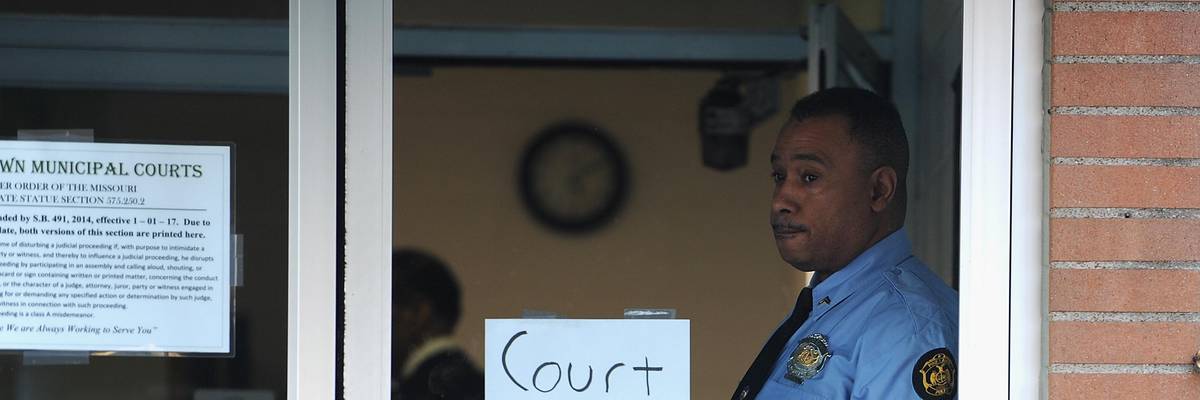
Attorney General Jeff Sessions retracted an Obama-era letter asking municipal courts to be wary of slapping low-income defendents with gratuitous fines meant to add to court's revenues. (Photo: Michael B. Thomas/Getty Images)
Civil rights advocates accused Attorney General Jeff Sessions of "turning back the clock" on criminal justice reforms after the Department of Justice rescinded Obama-era guidance that protected low-income defendants from being forced to pay gratuitous fees to local courts.
"Profit-minded court policies targeting the most economically vulnerable Americans have resulted in a resurgence of unconstitutional but widespread practices penalizing the poor and people of color," said Kristen Clarke, president of the Lawyers' Committee for Civil Rights Under the Law. "Attorney General Jeff Session's decision to retract guidance from the Justice Department rooting out practices resulting in a perpetual cycle of fines, debt and jail of America's poor is a horrifying step backwards in ongoing efforts to reform the criminal justice system."
Under President Barack Obama, the DOJ issued a warning to local courts in May 2016 regarding the common practice of handing fines to poor defendants in order to boost their own revenues.
"Individuals may confront escalating debt; face repeated, unnecessary incarceration for nonpayment despite posing no danger to the community; lose their jobs; and become trapped in cycles of poverty that can be nearly impossible to escape," wrote Vanita Gupta, the head of the DOJ's civil rights division at the time, and former Office for Access to Justice director Lisa Foster. "Furthermore, in addition to being unlawful, to the extent that these practices are geared not toward addressing public safety, but rather toward raising revenue, they can cast doubt on the impartiality of the tribunal and erode trust between local governments and their constituents."
The "Dear Colleague" letter of guidance sent by Gupta and Foster, which was not legally binding, cited examples of unfair demands for payment made by municipal courts, including drivers who could be ordered to pay a penalty of $300 for a driving citation and told that a court date could only be scheduled after the payment was made.
Such requirements "can have the effect of denying access to justice to the poor," they wrote.
Sessions said Friday that he was reversing the guidance to combat "the long-standing abuse of issuing rules by simply publishing a letter or posting a web page" and to prevent "confusing the public with improper and wrong advice."
Gupta told the Washington Post that Sessions's decision "seems like an abdication of the Justice Department's responsibility" to guide municipal courts.
"I think it just takes the pressure off of some jurisdictions that may have been more reluctant to engage in reform," she said.
On social media, other critics denounced Sessions's decision.
Dear Common Dreams reader, It’s been nearly 30 years since I co-founded Common Dreams with my late wife, Lina Newhouser. We had the radical notion that journalism should serve the public good, not corporate profits. It was clear to us from the outset what it would take to build such a project. No paid advertisements. No corporate sponsors. No millionaire publisher telling us what to think or do. Many people said we wouldn't last a year, but we proved those doubters wrong. Together with a tremendous team of journalists and dedicated staff, we built an independent media outlet free from the constraints of profits and corporate control. Our mission has always been simple: To inform. To inspire. To ignite change for the common good. Building Common Dreams was not easy. Our survival was never guaranteed. When you take on the most powerful forces—Wall Street greed, fossil fuel industry destruction, Big Tech lobbyists, and uber-rich oligarchs who have spent billions upon billions rigging the economy and democracy in their favor—the only bulwark you have is supporters who believe in your work. But here’s the urgent message from me today. It's never been this bad out there. And it's never been this hard to keep us going. At the very moment Common Dreams is most needed, the threats we face are intensifying. We need your support now more than ever. We don't accept corporate advertising and never will. We don't have a paywall because we don't think people should be blocked from critical news based on their ability to pay. Everything we do is funded by the donations of readers like you. When everyone does the little they can afford, we are strong. But if that support retreats or dries up, so do we. Will you donate now to make sure Common Dreams not only survives but thrives? —Craig Brown, Co-founder |
Civil rights advocates accused Attorney General Jeff Sessions of "turning back the clock" on criminal justice reforms after the Department of Justice rescinded Obama-era guidance that protected low-income defendants from being forced to pay gratuitous fees to local courts.
"Profit-minded court policies targeting the most economically vulnerable Americans have resulted in a resurgence of unconstitutional but widespread practices penalizing the poor and people of color," said Kristen Clarke, president of the Lawyers' Committee for Civil Rights Under the Law. "Attorney General Jeff Session's decision to retract guidance from the Justice Department rooting out practices resulting in a perpetual cycle of fines, debt and jail of America's poor is a horrifying step backwards in ongoing efforts to reform the criminal justice system."
Under President Barack Obama, the DOJ issued a warning to local courts in May 2016 regarding the common practice of handing fines to poor defendants in order to boost their own revenues.
"Individuals may confront escalating debt; face repeated, unnecessary incarceration for nonpayment despite posing no danger to the community; lose their jobs; and become trapped in cycles of poverty that can be nearly impossible to escape," wrote Vanita Gupta, the head of the DOJ's civil rights division at the time, and former Office for Access to Justice director Lisa Foster. "Furthermore, in addition to being unlawful, to the extent that these practices are geared not toward addressing public safety, but rather toward raising revenue, they can cast doubt on the impartiality of the tribunal and erode trust between local governments and their constituents."
The "Dear Colleague" letter of guidance sent by Gupta and Foster, which was not legally binding, cited examples of unfair demands for payment made by municipal courts, including drivers who could be ordered to pay a penalty of $300 for a driving citation and told that a court date could only be scheduled after the payment was made.
Such requirements "can have the effect of denying access to justice to the poor," they wrote.
Sessions said Friday that he was reversing the guidance to combat "the long-standing abuse of issuing rules by simply publishing a letter or posting a web page" and to prevent "confusing the public with improper and wrong advice."
Gupta told the Washington Post that Sessions's decision "seems like an abdication of the Justice Department's responsibility" to guide municipal courts.
"I think it just takes the pressure off of some jurisdictions that may have been more reluctant to engage in reform," she said.
On social media, other critics denounced Sessions's decision.
Civil rights advocates accused Attorney General Jeff Sessions of "turning back the clock" on criminal justice reforms after the Department of Justice rescinded Obama-era guidance that protected low-income defendants from being forced to pay gratuitous fees to local courts.
"Profit-minded court policies targeting the most economically vulnerable Americans have resulted in a resurgence of unconstitutional but widespread practices penalizing the poor and people of color," said Kristen Clarke, president of the Lawyers' Committee for Civil Rights Under the Law. "Attorney General Jeff Session's decision to retract guidance from the Justice Department rooting out practices resulting in a perpetual cycle of fines, debt and jail of America's poor is a horrifying step backwards in ongoing efforts to reform the criminal justice system."
Under President Barack Obama, the DOJ issued a warning to local courts in May 2016 regarding the common practice of handing fines to poor defendants in order to boost their own revenues.
"Individuals may confront escalating debt; face repeated, unnecessary incarceration for nonpayment despite posing no danger to the community; lose their jobs; and become trapped in cycles of poverty that can be nearly impossible to escape," wrote Vanita Gupta, the head of the DOJ's civil rights division at the time, and former Office for Access to Justice director Lisa Foster. "Furthermore, in addition to being unlawful, to the extent that these practices are geared not toward addressing public safety, but rather toward raising revenue, they can cast doubt on the impartiality of the tribunal and erode trust between local governments and their constituents."
The "Dear Colleague" letter of guidance sent by Gupta and Foster, which was not legally binding, cited examples of unfair demands for payment made by municipal courts, including drivers who could be ordered to pay a penalty of $300 for a driving citation and told that a court date could only be scheduled after the payment was made.
Such requirements "can have the effect of denying access to justice to the poor," they wrote.
Sessions said Friday that he was reversing the guidance to combat "the long-standing abuse of issuing rules by simply publishing a letter or posting a web page" and to prevent "confusing the public with improper and wrong advice."
Gupta told the Washington Post that Sessions's decision "seems like an abdication of the Justice Department's responsibility" to guide municipal courts.
"I think it just takes the pressure off of some jurisdictions that may have been more reluctant to engage in reform," she said.
On social media, other critics denounced Sessions's decision.

