SUBSCRIBE TO OUR FREE NEWSLETTER
Daily news & progressive opinion—funded by the people, not the corporations—delivered straight to your inbox.
5
#000000
#FFFFFF
To donate by check, phone, or other method, see our More Ways to Give page.
Daily news & progressive opinion—funded by the people, not the corporations—delivered straight to your inbox.
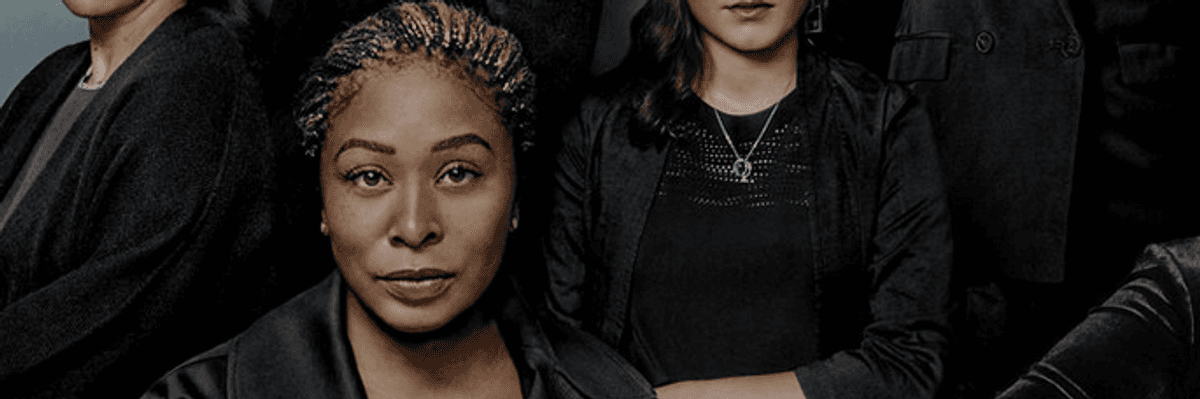
Detail of TIME's cover featuring the 2017 person of the year, "the Silence Breakers." Editor-in-chief Edward Felsenthal said the movement was being honored "For giving voice to open secrets, for moving whisper networks onto social networks, for pushing us all to stop accepting the unacceptable."
A year after it gave accused sexual assaulter Donald Trump the honor, TIME on Wednesday named "the Silence Breakers"--the women (and men) named and unnamed who exposed and helped bring accountability for the staggering pervasiveness of sexual misconduct by those in positions of power--as 2017 Person of the Year.
Editor-in-chief Edward Felsenthal said the movement was being honored "For giving voice to open secrets, for moving whisper networks onto social networks, for pushing us all to stop accepting the unacceptable."
"This reckoning appears to have sprung up overnight," the magazine writes. "But it has actually been simmering for years, decades, centuries."
"These silence breakers have started a revolution of refusal, gathering strength by the day, and in the past two months alone, their collective anger has spurred immediate and shocking results: nearly every day, CEOs have been fired, moguls toppled, icons disgraced. In some cases, criminal charges have been brought," it continues.
The hashtag #MeToo--coined years ago by social activist Tarana Burke and reignited this year by actor Alyssa Milano--as well as its international equivalents, "has provided an umbrella of solidarity for millions of people to come forward with their stories, is part of the picture, but not all of it."
Milano acknowledged the award with a thread on Twitter, writing: "This is for every woman who came forward. This is for every woman who was brave enough to say #MeToo."
TIME references stories of higher profile women like Ashley Judd and Rose McGowan as well as those whose stories were not featured in mainstream media reports like hotel worker Juana Melara and former dishwasher Sandra Pezqueda. The story notes that "women and men who have broken their silence span all races, all income classes, all occupations, and virtually all corners of the globe." They "often had eerily similar stories to share."
"We're still at the bomb-throwing point of this revolution, a reactive stage at which nuance can go into hiding," TIME writes. Yet, "for the moment, the world is listening."
Burke, for her part, tweeted Wednesday morning: "Now the work REALLY begins."
TIME has been naming a person of the year for over nine decades, but, as Washington Post correspondent Philip Bump noted, it has never given the honor to an American woman by herself.
Dear Common Dreams reader, It’s been nearly 30 years since I co-founded Common Dreams with my late wife, Lina Newhouser. We had the radical notion that journalism should serve the public good, not corporate profits. It was clear to us from the outset what it would take to build such a project. No paid advertisements. No corporate sponsors. No millionaire publisher telling us what to think or do. Many people said we wouldn't last a year, but we proved those doubters wrong. Together with a tremendous team of journalists and dedicated staff, we built an independent media outlet free from the constraints of profits and corporate control. Our mission has always been simple: To inform. To inspire. To ignite change for the common good. Building Common Dreams was not easy. Our survival was never guaranteed. When you take on the most powerful forces—Wall Street greed, fossil fuel industry destruction, Big Tech lobbyists, and uber-rich oligarchs who have spent billions upon billions rigging the economy and democracy in their favor—the only bulwark you have is supporters who believe in your work. But here’s the urgent message from me today. It's never been this bad out there. And it's never been this hard to keep us going. At the very moment Common Dreams is most needed, the threats we face are intensifying. We need your support now more than ever. We don't accept corporate advertising and never will. We don't have a paywall because we don't think people should be blocked from critical news based on their ability to pay. Everything we do is funded by the donations of readers like you. When everyone does the little they can afford, we are strong. But if that support retreats or dries up, so do we. Will you donate now to make sure Common Dreams not only survives but thrives? —Craig Brown, Co-founder |
A year after it gave accused sexual assaulter Donald Trump the honor, TIME on Wednesday named "the Silence Breakers"--the women (and men) named and unnamed who exposed and helped bring accountability for the staggering pervasiveness of sexual misconduct by those in positions of power--as 2017 Person of the Year.
Editor-in-chief Edward Felsenthal said the movement was being honored "For giving voice to open secrets, for moving whisper networks onto social networks, for pushing us all to stop accepting the unacceptable."
"This reckoning appears to have sprung up overnight," the magazine writes. "But it has actually been simmering for years, decades, centuries."
"These silence breakers have started a revolution of refusal, gathering strength by the day, and in the past two months alone, their collective anger has spurred immediate and shocking results: nearly every day, CEOs have been fired, moguls toppled, icons disgraced. In some cases, criminal charges have been brought," it continues.
The hashtag #MeToo--coined years ago by social activist Tarana Burke and reignited this year by actor Alyssa Milano--as well as its international equivalents, "has provided an umbrella of solidarity for millions of people to come forward with their stories, is part of the picture, but not all of it."
Milano acknowledged the award with a thread on Twitter, writing: "This is for every woman who came forward. This is for every woman who was brave enough to say #MeToo."
TIME references stories of higher profile women like Ashley Judd and Rose McGowan as well as those whose stories were not featured in mainstream media reports like hotel worker Juana Melara and former dishwasher Sandra Pezqueda. The story notes that "women and men who have broken their silence span all races, all income classes, all occupations, and virtually all corners of the globe." They "often had eerily similar stories to share."
"We're still at the bomb-throwing point of this revolution, a reactive stage at which nuance can go into hiding," TIME writes. Yet, "for the moment, the world is listening."
Burke, for her part, tweeted Wednesday morning: "Now the work REALLY begins."
TIME has been naming a person of the year for over nine decades, but, as Washington Post correspondent Philip Bump noted, it has never given the honor to an American woman by herself.
A year after it gave accused sexual assaulter Donald Trump the honor, TIME on Wednesday named "the Silence Breakers"--the women (and men) named and unnamed who exposed and helped bring accountability for the staggering pervasiveness of sexual misconduct by those in positions of power--as 2017 Person of the Year.
Editor-in-chief Edward Felsenthal said the movement was being honored "For giving voice to open secrets, for moving whisper networks onto social networks, for pushing us all to stop accepting the unacceptable."
"This reckoning appears to have sprung up overnight," the magazine writes. "But it has actually been simmering for years, decades, centuries."
"These silence breakers have started a revolution of refusal, gathering strength by the day, and in the past two months alone, their collective anger has spurred immediate and shocking results: nearly every day, CEOs have been fired, moguls toppled, icons disgraced. In some cases, criminal charges have been brought," it continues.
The hashtag #MeToo--coined years ago by social activist Tarana Burke and reignited this year by actor Alyssa Milano--as well as its international equivalents, "has provided an umbrella of solidarity for millions of people to come forward with their stories, is part of the picture, but not all of it."
Milano acknowledged the award with a thread on Twitter, writing: "This is for every woman who came forward. This is for every woman who was brave enough to say #MeToo."
TIME references stories of higher profile women like Ashley Judd and Rose McGowan as well as those whose stories were not featured in mainstream media reports like hotel worker Juana Melara and former dishwasher Sandra Pezqueda. The story notes that "women and men who have broken their silence span all races, all income classes, all occupations, and virtually all corners of the globe." They "often had eerily similar stories to share."
"We're still at the bomb-throwing point of this revolution, a reactive stage at which nuance can go into hiding," TIME writes. Yet, "for the moment, the world is listening."
Burke, for her part, tweeted Wednesday morning: "Now the work REALLY begins."
TIME has been naming a person of the year for over nine decades, but, as Washington Post correspondent Philip Bump noted, it has never given the honor to an American woman by herself.