

SUBSCRIBE TO OUR FREE NEWSLETTER
Daily news & progressive opinion—funded by the people, not the corporations—delivered straight to your inbox.
5
#000000
#FFFFFF
To donate by check, phone, or other method, see our More Ways to Give page.
Daily news & progressive opinion—funded by the people, not the corporations—delivered straight to your inbox.
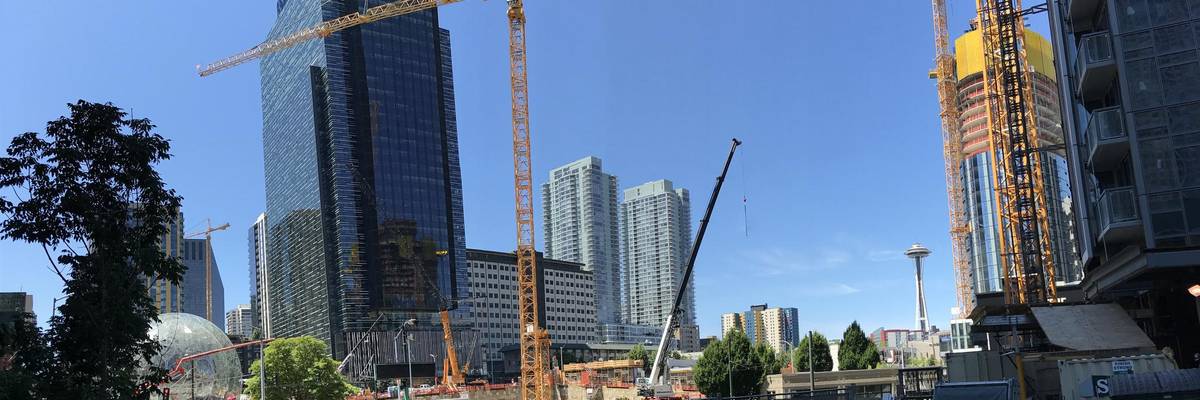
Critics say Amazon has contributed to rising housing costs in Seattle as well as heavy traffic and income inequality--and now it's looking for a second home. (Photo: Kiewic/Flickr/cc)
While city and state governments across the country appear all-too-eager to compete in Amazon's "race to the bottom" as the corporate giant searches for a home for its second headquarters, community leaders sent the company a list of demands to ensure that any upcoming deal is one that benefits and protects local residents.
Demanding jobs for locals, investments in affordable housing and community enrichment, and transparency from the company regarding its operations, a coalition of 73 organizations made clear that they're unwilling to grant Amazon access to their cities without getting anything in exchange.
Amazon kicked off a bidding war last month when it released its "wish list" for the city that will host its new campus. The company said it wants its secondary home to have a population of at least one million people, enough room to build a headquarters of at least 500,000 square feet--and be willing to offer generous tax breaks and incentives.
"You have your list of things you're looking for from cities," the coalition wrote in an open letter to Amazon CEO Jeff Bezos, "but we live in these cities, and we've got some expectations of our own for Amazon. We love jobs, we love technology, and we love convenience--but what you're looking for will impact every part of our cities. We built these cities, and we want to make sure they remain ours."
Jobs With Justice, the Working Families Party, the Center for Popular Democracy, and dozens of labor organizations were among the groups that signed the letter.
While leaders in New Jersey and Michigan are preparing to woo Amazon with billions of dollars in tax breaks, the signers demanded the company support, not exploit, the community where it ends up:
The things about our cities that make you want to move here are the same reasons many of us live here--we have great systems of higher education, museums, and infrastructure that helps move people and things from one place to another. But we got that stuff by collectively paying for it, through taxes, and we're expecting Amazon to pay your fair share if you end up being our neighbor.
The arrival of Amazon is expected to bring 50,000 jobs to an American city, and the groups also demanded that locals benefit from the new opportunities in construction, office, and warehouse jobs. They asked the company to "reserve a substantial number of construction jobs for local residents, especially underrepresented people of color and women," protect the right to form unions, pay living wages, and "allow independent, third party organizations to conduct health and safety trainings," in light of reports of unsafe conditions at Amazon warehouses.
Amazon's original headquarters is located in Seattle, where critics have blamed it for contributing to the city's out-of-control housing costs, which have skyrocketed by 13 percent in the past year, greater income inequality, and increased traffic due to prolonged construction projects--all of which have served as a warning to some cities as they weigh whether to welcome the tech behemoth.
Proposals from cities interested in hosting Amazon's headquarters are due on Friday, and the company is expected to announce its decision in 2018.
Dear Common Dreams reader, It’s been nearly 30 years since I co-founded Common Dreams with my late wife, Lina Newhouser. We had the radical notion that journalism should serve the public good, not corporate profits. It was clear to us from the outset what it would take to build such a project. No paid advertisements. No corporate sponsors. No millionaire publisher telling us what to think or do. Many people said we wouldn't last a year, but we proved those doubters wrong. Together with a tremendous team of journalists and dedicated staff, we built an independent media outlet free from the constraints of profits and corporate control. Our mission has always been simple: To inform. To inspire. To ignite change for the common good. Building Common Dreams was not easy. Our survival was never guaranteed. When you take on the most powerful forces—Wall Street greed, fossil fuel industry destruction, Big Tech lobbyists, and uber-rich oligarchs who have spent billions upon billions rigging the economy and democracy in their favor—the only bulwark you have is supporters who believe in your work. But here’s the urgent message from me today. It's never been this bad out there. And it's never been this hard to keep us going. At the very moment Common Dreams is most needed, the threats we face are intensifying. We need your support now more than ever. We don't accept corporate advertising and never will. We don't have a paywall because we don't think people should be blocked from critical news based on their ability to pay. Everything we do is funded by the donations of readers like you. When everyone does the little they can afford, we are strong. But if that support retreats or dries up, so do we. Will you donate now to make sure Common Dreams not only survives but thrives? —Craig Brown, Co-founder |
While city and state governments across the country appear all-too-eager to compete in Amazon's "race to the bottom" as the corporate giant searches for a home for its second headquarters, community leaders sent the company a list of demands to ensure that any upcoming deal is one that benefits and protects local residents.
Demanding jobs for locals, investments in affordable housing and community enrichment, and transparency from the company regarding its operations, a coalition of 73 organizations made clear that they're unwilling to grant Amazon access to their cities without getting anything in exchange.
Amazon kicked off a bidding war last month when it released its "wish list" for the city that will host its new campus. The company said it wants its secondary home to have a population of at least one million people, enough room to build a headquarters of at least 500,000 square feet--and be willing to offer generous tax breaks and incentives.
"You have your list of things you're looking for from cities," the coalition wrote in an open letter to Amazon CEO Jeff Bezos, "but we live in these cities, and we've got some expectations of our own for Amazon. We love jobs, we love technology, and we love convenience--but what you're looking for will impact every part of our cities. We built these cities, and we want to make sure they remain ours."
Jobs With Justice, the Working Families Party, the Center for Popular Democracy, and dozens of labor organizations were among the groups that signed the letter.
While leaders in New Jersey and Michigan are preparing to woo Amazon with billions of dollars in tax breaks, the signers demanded the company support, not exploit, the community where it ends up:
The things about our cities that make you want to move here are the same reasons many of us live here--we have great systems of higher education, museums, and infrastructure that helps move people and things from one place to another. But we got that stuff by collectively paying for it, through taxes, and we're expecting Amazon to pay your fair share if you end up being our neighbor.
The arrival of Amazon is expected to bring 50,000 jobs to an American city, and the groups also demanded that locals benefit from the new opportunities in construction, office, and warehouse jobs. They asked the company to "reserve a substantial number of construction jobs for local residents, especially underrepresented people of color and women," protect the right to form unions, pay living wages, and "allow independent, third party organizations to conduct health and safety trainings," in light of reports of unsafe conditions at Amazon warehouses.
Amazon's original headquarters is located in Seattle, where critics have blamed it for contributing to the city's out-of-control housing costs, which have skyrocketed by 13 percent in the past year, greater income inequality, and increased traffic due to prolonged construction projects--all of which have served as a warning to some cities as they weigh whether to welcome the tech behemoth.
Proposals from cities interested in hosting Amazon's headquarters are due on Friday, and the company is expected to announce its decision in 2018.
While city and state governments across the country appear all-too-eager to compete in Amazon's "race to the bottom" as the corporate giant searches for a home for its second headquarters, community leaders sent the company a list of demands to ensure that any upcoming deal is one that benefits and protects local residents.
Demanding jobs for locals, investments in affordable housing and community enrichment, and transparency from the company regarding its operations, a coalition of 73 organizations made clear that they're unwilling to grant Amazon access to their cities without getting anything in exchange.
Amazon kicked off a bidding war last month when it released its "wish list" for the city that will host its new campus. The company said it wants its secondary home to have a population of at least one million people, enough room to build a headquarters of at least 500,000 square feet--and be willing to offer generous tax breaks and incentives.
"You have your list of things you're looking for from cities," the coalition wrote in an open letter to Amazon CEO Jeff Bezos, "but we live in these cities, and we've got some expectations of our own for Amazon. We love jobs, we love technology, and we love convenience--but what you're looking for will impact every part of our cities. We built these cities, and we want to make sure they remain ours."
Jobs With Justice, the Working Families Party, the Center for Popular Democracy, and dozens of labor organizations were among the groups that signed the letter.
While leaders in New Jersey and Michigan are preparing to woo Amazon with billions of dollars in tax breaks, the signers demanded the company support, not exploit, the community where it ends up:
The things about our cities that make you want to move here are the same reasons many of us live here--we have great systems of higher education, museums, and infrastructure that helps move people and things from one place to another. But we got that stuff by collectively paying for it, through taxes, and we're expecting Amazon to pay your fair share if you end up being our neighbor.
The arrival of Amazon is expected to bring 50,000 jobs to an American city, and the groups also demanded that locals benefit from the new opportunities in construction, office, and warehouse jobs. They asked the company to "reserve a substantial number of construction jobs for local residents, especially underrepresented people of color and women," protect the right to form unions, pay living wages, and "allow independent, third party organizations to conduct health and safety trainings," in light of reports of unsafe conditions at Amazon warehouses.
Amazon's original headquarters is located in Seattle, where critics have blamed it for contributing to the city's out-of-control housing costs, which have skyrocketed by 13 percent in the past year, greater income inequality, and increased traffic due to prolonged construction projects--all of which have served as a warning to some cities as they weigh whether to welcome the tech behemoth.
Proposals from cities interested in hosting Amazon's headquarters are due on Friday, and the company is expected to announce its decision in 2018.

