SUBSCRIBE TO OUR FREE NEWSLETTER
Daily news & progressive opinion—funded by the people, not the corporations—delivered straight to your inbox.
5
#000000
#FFFFFF
To donate by check, phone, or other method, see our More Ways to Give page.
Daily news & progressive opinion—funded by the people, not the corporations—delivered straight to your inbox.
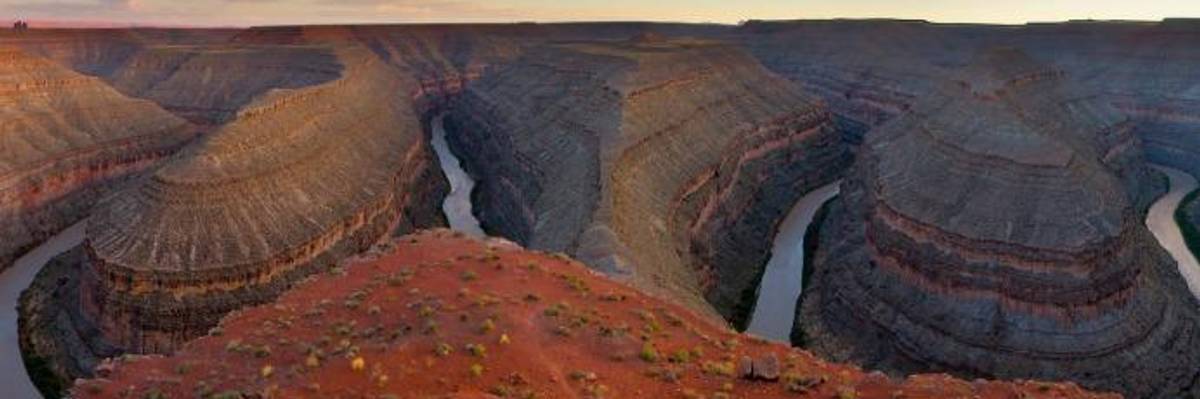
Multiple groups have threatened to take the president to court if he acts on proposals from the Interior Department to reduce federal protections for 10 national monuments, including Bears Ears National Monument in southeastern Utah. (Photo: Bob Wick/Bureau of Land Management/Flickr/cc)
Conservationists are outraged by Interior Department Secretary Ryan Zinke's proposal--as outlined in a memo to President Donald Trump that was leaked by media outlets late Sunday--to revoke or alter federal protections for at least 10 national monuments and expose protected lands and waters to commercial activity.
"If President Trump accepts Zinke's advice, and moves to eviscerate monument protections, he'd be ignoring the law--and the will of the American people," said Natural Resources Defense Council (NRDC) president Rhea Suh, who also vowed to fight the changes in court, should the president act on the secretary's suggestions. Suh was not alone in her charge that it would be illegal for the president to make the proposed changes.
"Acting on these recommendations would represent an unprecedented assault on our parks and public lands, and undermine bipartisan progress to protect our lands and waters that dates to Theodore Roosevelt," said Jamie Williams, president of the Wilderness Society. "We believe the Trump administration has no legal authority to alter or erase protections for national treasures." Williams also promised to battle "these illegal and dangerous recommendations" in court, if Trump acts on them.
In April, the president ordered Zinke to review 27 monuments--all larger than 100,000 acres--that have been granted federal protections under the Antiquities Act since 1996, claiming that his predecessors went too far when designating certain U.S. lands and waters as protected from commercial activity. Zinke's leaked 19-page memo (pdf) follows a two-page summary (pdf) the department released in late August, which also garnered intense criticism from conservationists.
"It appears that certain monuments were designated to prevent economic activity such as grazing, mining, and timber production rather than to protect specific objects," the memo reads. Although it notes that "comments received were overwhelmingly in favor of maintaining existing monuments," the vocal resistance to rolling back protections for national monuments seems to have fallen on deaf ears.
Zinke suggests shrinking borders for four land monuments, potentially leaving thousands or even millions of acres of land vulnerable to mining, logging, and types of other development. He also wants to see commercial fishing return to two marine monuments, including the Pacific Remote Islands, the world's largest marine reserve.
"We will not allow these special lands and waters to be handed over to private interests for drilling, commercial fishing, logging, and other extraction," added Suh of NRDC.
Among the most controversial proposed changes are to two massive monuments in Utah that together total more than 3.2 million acres. The Associated Press reports:
Bears Ears, designated for federal protection by former President Barack Obama, totals 1.3 million acres in southeastern Utah on land that is sacred to Native Americans and home to tens of thousands of archaeological sites, including ancient cliff dwellings. Grand Staircase-Escalante, in southern Utah, includes nearly 1.9 million acres in a sweeping vista larger than the state of Delaware.
Grand Staircase has been a source of ire for local officials and Republican leaders for more than two decades amid complaints that its 1996 designation as a monument by former President Bill Clinton closed off too much land to development.
Zinke's leaked memo targets only 10 of the 27 reviewed monuments:
This country and this world are at a monumental crossroads. US voters have an opportunity to beat back the forces of fascism and confront the billionaires who are rigging the economy, our media system, and our democracy, making it increasingly impossible for ordinary people to get by. We’re not just talking about the election. We’re talking about what must be done once these fascist elements are vanquished from power. We need a bolder set of solutions than what either major party has so far been willing to offer and a working-class movement ready to fight like hell for it. Trump didn't emerge from nowhere. The conditions that fueled MAGA authoritarianism were created by decades of radical neoliberal economic policies and a corrupt political system dominated by corporate interests. They slashed taxes on the super-rich, promising that the benefits would trickle down. They said giveaways to the corporate titans would make life more affordable for the rest of us. It was all bullshit. And when a bitter, betrayed populace searches for someone to blame, right-wing demagogues have little trouble finding scapegoats. People know when they're being lied to, but you won't hear any of this from the corporate media. Only independent journalism—powered and funded by people who believe in building a better world—can deliver truly trustworthy daily news. If you share our vision, please contribute whatever you can to sustain our work. |
Conservationists are outraged by Interior Department Secretary Ryan Zinke's proposal--as outlined in a memo to President Donald Trump that was leaked by media outlets late Sunday--to revoke or alter federal protections for at least 10 national monuments and expose protected lands and waters to commercial activity.
"If President Trump accepts Zinke's advice, and moves to eviscerate monument protections, he'd be ignoring the law--and the will of the American people," said Natural Resources Defense Council (NRDC) president Rhea Suh, who also vowed to fight the changes in court, should the president act on the secretary's suggestions. Suh was not alone in her charge that it would be illegal for the president to make the proposed changes.
"Acting on these recommendations would represent an unprecedented assault on our parks and public lands, and undermine bipartisan progress to protect our lands and waters that dates to Theodore Roosevelt," said Jamie Williams, president of the Wilderness Society. "We believe the Trump administration has no legal authority to alter or erase protections for national treasures." Williams also promised to battle "these illegal and dangerous recommendations" in court, if Trump acts on them.
In April, the president ordered Zinke to review 27 monuments--all larger than 100,000 acres--that have been granted federal protections under the Antiquities Act since 1996, claiming that his predecessors went too far when designating certain U.S. lands and waters as protected from commercial activity. Zinke's leaked 19-page memo (pdf) follows a two-page summary (pdf) the department released in late August, which also garnered intense criticism from conservationists.
"It appears that certain monuments were designated to prevent economic activity such as grazing, mining, and timber production rather than to protect specific objects," the memo reads. Although it notes that "comments received were overwhelmingly in favor of maintaining existing monuments," the vocal resistance to rolling back protections for national monuments seems to have fallen on deaf ears.
Zinke suggests shrinking borders for four land monuments, potentially leaving thousands or even millions of acres of land vulnerable to mining, logging, and types of other development. He also wants to see commercial fishing return to two marine monuments, including the Pacific Remote Islands, the world's largest marine reserve.
"We will not allow these special lands and waters to be handed over to private interests for drilling, commercial fishing, logging, and other extraction," added Suh of NRDC.
Among the most controversial proposed changes are to two massive monuments in Utah that together total more than 3.2 million acres. The Associated Press reports:
Bears Ears, designated for federal protection by former President Barack Obama, totals 1.3 million acres in southeastern Utah on land that is sacred to Native Americans and home to tens of thousands of archaeological sites, including ancient cliff dwellings. Grand Staircase-Escalante, in southern Utah, includes nearly 1.9 million acres in a sweeping vista larger than the state of Delaware.
Grand Staircase has been a source of ire for local officials and Republican leaders for more than two decades amid complaints that its 1996 designation as a monument by former President Bill Clinton closed off too much land to development.
Zinke's leaked memo targets only 10 of the 27 reviewed monuments: