SUBSCRIBE TO OUR FREE NEWSLETTER
Daily news & progressive opinion—funded by the people, not the corporations—delivered straight to your inbox.
5
#000000
#FFFFFF
To donate by check, phone, or other method, see our More Ways to Give page.
Daily news & progressive opinion—funded by the people, not the corporations—delivered straight to your inbox.
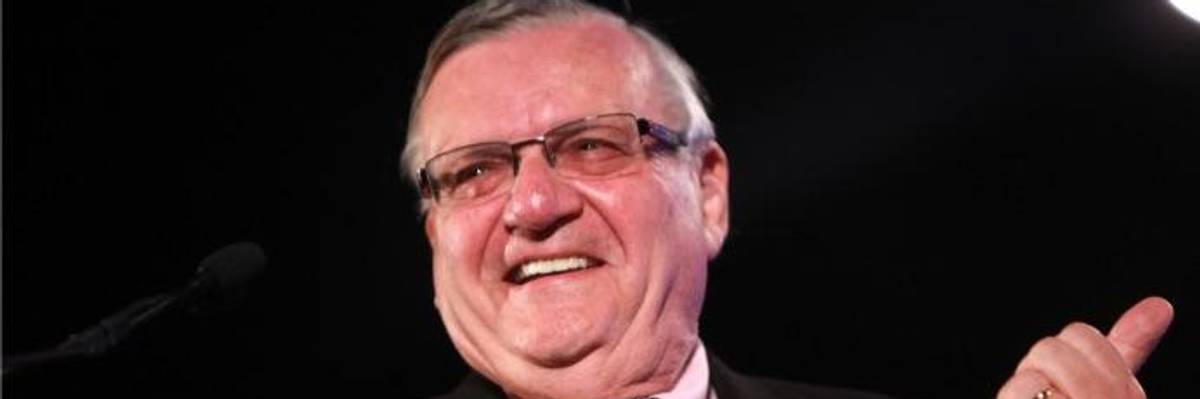
Former sheriff Joe Arpaio, convicted of violating a court order and racially profiling Latinos in Arizona, was granted a pardon by President Donald Trump. (Photo: Gage Skidmore/Flickr/cc)
Rights groups, immigration activists, legal experts, politicians, and others swiftly denounced President Donald Trump's decision to pardon the notorious former sheriff Joe Arpaio, who was awaiting sentencing after being convicted of criminal contempt for violating a court order that mandated he and his deputies stop racially profiling Latinos in Maricopa County, Arizona.
"This pardon sends a dangerous message that a law enforcement officer who abused his position of power and defied a court order can simply be excused by a president who himself clearly does not respect the law."
--Vanita Gupta, president and CEO of the Leadership Conference on Civil and Human Rights
"Trump's pardon of Arpaio is an official endorsement on racial profiling and the abuse of immigrants and people of color," said United We Dream executive director Cristina Jimenez. "It is also a slap in the face of the people in Maricopa County who voted a racist, anti-immigrant sheriff out of his job."
"Instead of a dog whistle, President Trump picked up a bullhorn," said Vanita Gupta, president and CEO of the Leadership Conference on Civil and Human Rights. "This pardon sends a dangerous message that a law enforcement officer who abused his position of power and defied a court order can simply be excused by a president who himself clearly does not respect the law."
"Once again, the president has acted in support of illegal, failed immigration enforcement practices that target people of color and that have been struck down by the courts," American Civil Liberties Union (ACLU) deputy legal director Cecillia Wang, who sought the court injunction against Arpaio, told Reuters.
Many expressed concerns about the long-term legal implications of Trump's decision.
The announcment followed indications from Trump that he was considering a pardon. During a bizarre and long-winded speech in Arizona on Tuedsday night, the president said that he believed the former sheriff would be "just fine."
White House press secretary Sarah Huckabee Sanders had said earlier in the week that Trump would make an announcement at an "appropriate time," but the pardon was announced Friday evening, as most media attention was focused the category 4 Hurricane Harvey ravaging the coasts of Texas and Louisiana.
The White House statement said: "Throughout his time as sheriff, Arpaio continued his life's work of protecting the public from the scourges of crime and illegal immigration," and "after more than fifty years of admirable service to our nation, he is a worthy candidate for a presidential pardon."
Following the official announcement, Trump called Arpaio a "patriot" on Twitter.
Calling Trump "a big supporter of law enforcement," Arpaio, who has reportedly scheduled a press conference to discuss the pardon, told Reuters on Friday: "I have to thank the president for what he has done, that's for sure."
Later on Twitter, Arpaio did just that, in addition to tweeting a link for supporters to make donations toward his legal fees.
Serving as county sheriff for 24 years, Arpaio, who self-identifies as "America's toughest sheriff," gained national notoriety for his relentless campaign against undocumented immigrants. He has faced multiple legal battles for racially profiling Latinos, and violating county residents' constitutional rights. Although he was ousted in the election last year, Arpaio has become a prominent media and political figure, and stumped for Trump during his campaign for president.
The president's first pardon was met with strong and widespread condemnation online.
Dear Common Dreams reader, It’s been nearly 30 years since I co-founded Common Dreams with my late wife, Lina Newhouser. We had the radical notion that journalism should serve the public good, not corporate profits. It was clear to us from the outset what it would take to build such a project. No paid advertisements. No corporate sponsors. No millionaire publisher telling us what to think or do. Many people said we wouldn't last a year, but we proved those doubters wrong. Together with a tremendous team of journalists and dedicated staff, we built an independent media outlet free from the constraints of profits and corporate control. Our mission has always been simple: To inform. To inspire. To ignite change for the common good. Building Common Dreams was not easy. Our survival was never guaranteed. When you take on the most powerful forces—Wall Street greed, fossil fuel industry destruction, Big Tech lobbyists, and uber-rich oligarchs who have spent billions upon billions rigging the economy and democracy in their favor—the only bulwark you have is supporters who believe in your work. But here’s the urgent message from me today. It's never been this bad out there. And it's never been this hard to keep us going. At the very moment Common Dreams is most needed, the threats we face are intensifying. We need your support now more than ever. We don't accept corporate advertising and never will. We don't have a paywall because we don't think people should be blocked from critical news based on their ability to pay. Everything we do is funded by the donations of readers like you. When everyone does the little they can afford, we are strong. But if that support retreats or dries up, so do we. Will you donate now to make sure Common Dreams not only survives but thrives? —Craig Brown, Co-founder |
Rights groups, immigration activists, legal experts, politicians, and others swiftly denounced President Donald Trump's decision to pardon the notorious former sheriff Joe Arpaio, who was awaiting sentencing after being convicted of criminal contempt for violating a court order that mandated he and his deputies stop racially profiling Latinos in Maricopa County, Arizona.
"This pardon sends a dangerous message that a law enforcement officer who abused his position of power and defied a court order can simply be excused by a president who himself clearly does not respect the law."
--Vanita Gupta, president and CEO of the Leadership Conference on Civil and Human Rights
"Trump's pardon of Arpaio is an official endorsement on racial profiling and the abuse of immigrants and people of color," said United We Dream executive director Cristina Jimenez. "It is also a slap in the face of the people in Maricopa County who voted a racist, anti-immigrant sheriff out of his job."
"Instead of a dog whistle, President Trump picked up a bullhorn," said Vanita Gupta, president and CEO of the Leadership Conference on Civil and Human Rights. "This pardon sends a dangerous message that a law enforcement officer who abused his position of power and defied a court order can simply be excused by a president who himself clearly does not respect the law."
"Once again, the president has acted in support of illegal, failed immigration enforcement practices that target people of color and that have been struck down by the courts," American Civil Liberties Union (ACLU) deputy legal director Cecillia Wang, who sought the court injunction against Arpaio, told Reuters.
Many expressed concerns about the long-term legal implications of Trump's decision.
The announcment followed indications from Trump that he was considering a pardon. During a bizarre and long-winded speech in Arizona on Tuedsday night, the president said that he believed the former sheriff would be "just fine."
White House press secretary Sarah Huckabee Sanders had said earlier in the week that Trump would make an announcement at an "appropriate time," but the pardon was announced Friday evening, as most media attention was focused the category 4 Hurricane Harvey ravaging the coasts of Texas and Louisiana.
The White House statement said: "Throughout his time as sheriff, Arpaio continued his life's work of protecting the public from the scourges of crime and illegal immigration," and "after more than fifty years of admirable service to our nation, he is a worthy candidate for a presidential pardon."
Following the official announcement, Trump called Arpaio a "patriot" on Twitter.
Calling Trump "a big supporter of law enforcement," Arpaio, who has reportedly scheduled a press conference to discuss the pardon, told Reuters on Friday: "I have to thank the president for what he has done, that's for sure."
Later on Twitter, Arpaio did just that, in addition to tweeting a link for supporters to make donations toward his legal fees.
Serving as county sheriff for 24 years, Arpaio, who self-identifies as "America's toughest sheriff," gained national notoriety for his relentless campaign against undocumented immigrants. He has faced multiple legal battles for racially profiling Latinos, and violating county residents' constitutional rights. Although he was ousted in the election last year, Arpaio has become a prominent media and political figure, and stumped for Trump during his campaign for president.
The president's first pardon was met with strong and widespread condemnation online.
Rights groups, immigration activists, legal experts, politicians, and others swiftly denounced President Donald Trump's decision to pardon the notorious former sheriff Joe Arpaio, who was awaiting sentencing after being convicted of criminal contempt for violating a court order that mandated he and his deputies stop racially profiling Latinos in Maricopa County, Arizona.
"This pardon sends a dangerous message that a law enforcement officer who abused his position of power and defied a court order can simply be excused by a president who himself clearly does not respect the law."
--Vanita Gupta, president and CEO of the Leadership Conference on Civil and Human Rights
"Trump's pardon of Arpaio is an official endorsement on racial profiling and the abuse of immigrants and people of color," said United We Dream executive director Cristina Jimenez. "It is also a slap in the face of the people in Maricopa County who voted a racist, anti-immigrant sheriff out of his job."
"Instead of a dog whistle, President Trump picked up a bullhorn," said Vanita Gupta, president and CEO of the Leadership Conference on Civil and Human Rights. "This pardon sends a dangerous message that a law enforcement officer who abused his position of power and defied a court order can simply be excused by a president who himself clearly does not respect the law."
"Once again, the president has acted in support of illegal, failed immigration enforcement practices that target people of color and that have been struck down by the courts," American Civil Liberties Union (ACLU) deputy legal director Cecillia Wang, who sought the court injunction against Arpaio, told Reuters.
Many expressed concerns about the long-term legal implications of Trump's decision.
The announcment followed indications from Trump that he was considering a pardon. During a bizarre and long-winded speech in Arizona on Tuedsday night, the president said that he believed the former sheriff would be "just fine."
White House press secretary Sarah Huckabee Sanders had said earlier in the week that Trump would make an announcement at an "appropriate time," but the pardon was announced Friday evening, as most media attention was focused the category 4 Hurricane Harvey ravaging the coasts of Texas and Louisiana.
The White House statement said: "Throughout his time as sheriff, Arpaio continued his life's work of protecting the public from the scourges of crime and illegal immigration," and "after more than fifty years of admirable service to our nation, he is a worthy candidate for a presidential pardon."
Following the official announcement, Trump called Arpaio a "patriot" on Twitter.
Calling Trump "a big supporter of law enforcement," Arpaio, who has reportedly scheduled a press conference to discuss the pardon, told Reuters on Friday: "I have to thank the president for what he has done, that's for sure."
Later on Twitter, Arpaio did just that, in addition to tweeting a link for supporters to make donations toward his legal fees.
Serving as county sheriff for 24 years, Arpaio, who self-identifies as "America's toughest sheriff," gained national notoriety for his relentless campaign against undocumented immigrants. He has faced multiple legal battles for racially profiling Latinos, and violating county residents' constitutional rights. Although he was ousted in the election last year, Arpaio has become a prominent media and political figure, and stumped for Trump during his campaign for president.
The president's first pardon was met with strong and widespread condemnation online.