SUBSCRIBE TO OUR FREE NEWSLETTER
Daily news & progressive opinion—funded by the people, not the corporations—delivered straight to your inbox.
5
#000000
#FFFFFF
To donate by check, phone, or other method, see our More Ways to Give page.


Daily news & progressive opinion—funded by the people, not the corporations—delivered straight to your inbox.

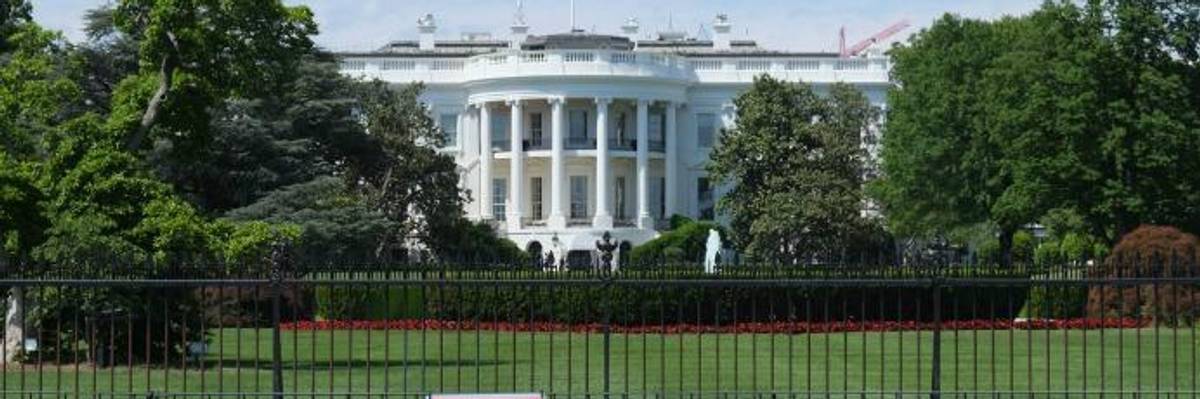
A new lawsuit filed by two watchdog organizations accuses Trump of violating the Presidential Records Act. (Photo: Paul Sabelman/flickr/cc)
A new lawsuit accuses President Donald Trump and White House staff of illegally destroying presidential records.
A pair of watchdog organizations, Citizens for Responsibility and Ethics in Washington (CREW) and the National Security Archive (NSA), filed the suit Thursday a federal district court to challenge actions by the White House "that seek to evade transparency and government accountability" and appear to violate the Presidential Records Act.
That law, passed in the wake of the Watergate scandal, requires that the offices of the president and vice president preserve records and make them accessible to the public.
"Yet, the evidence to date suggests that President Trump and others within the White House are either ignoring or outright flouting these responsibilities," the complaint (pdf) states, citing Trump's use of Twitter and reports of White House staff use of the encrypted messaging application Signal, which can auto-delete messages, as well as another encrypted messaging app, Confide, which deletes chats after they're read. The complaint continues:
From early on in this Administration, White House staff have used and, on information and belief, continue to use certain email messaging applications that destroy the contents of messages as soon as they are read, without regard to whether the messages are presidential records. Presidential statements made on Twitter sent from the President's personal Twitter account, which are subject to federal record-keeping obligations, have been destroyed. The President also has implied that he is secretly tape-recording some or all conversations with Administration officials, and it is unclear if these tapes are being preserved. And there is at least one news report that, when the ongoing congressional and FBI investigations were disclosed, White House aides purged their phones of potentially compromising information. These practices violate the Presidential Records Act.
"The American people not only deserve to know how their government is making important decisions, it's the law," CREW executive director Noah Bookbinder said in a press statement. "By deleting these records, the White House is destroying essential historical records."
The lawsuit also challenges Trump's use of executive orders, which "are cloaked in secrecy, preventing federal agencies from complying with their statutory duties under the Federal Records Act (FRA), the Administrative Procedure Act (APA), and the Freedom of Information Act (FOIA).
For at least some of the 43 executive orders Trump has issued so far, "the White House has maintained control over the process and the documents it generated to avoid leaving a publicly accessible paper trail," the suit charges.
Dear Common Dreams reader, It’s been nearly 30 years since I co-founded Common Dreams with my late wife, Lina Newhouser. We had the radical notion that journalism should serve the public good, not corporate profits. It was clear to us from the outset what it would take to build such a project. No paid advertisements. No corporate sponsors. No millionaire publisher telling us what to think or do. Many people said we wouldn't last a year, but we proved those doubters wrong. Together with a tremendous team of journalists and dedicated staff, we built an independent media outlet free from the constraints of profits and corporate control. Our mission has always been simple: To inform. To inspire. To ignite change for the common good. Building Common Dreams was not easy. Our survival was never guaranteed. When you take on the most powerful forces—Wall Street greed, fossil fuel industry destruction, Big Tech lobbyists, and uber-rich oligarchs who have spent billions upon billions rigging the economy and democracy in their favor—the only bulwark you have is supporters who believe in your work. But here’s the urgent message from me today. It's never been this bad out there. And it's never been this hard to keep us going. At the very moment Common Dreams is most needed, the threats we face are intensifying. We need your support now more than ever. We don't accept corporate advertising and never will. We don't have a paywall because we don't think people should be blocked from critical news based on their ability to pay. Everything we do is funded by the donations of readers like you. When everyone does the little they can afford, we are strong. But if that support retreats or dries up, so do we. Will you donate now to make sure Common Dreams not only survives but thrives? —Craig Brown, Co-founder |
A new lawsuit accuses President Donald Trump and White House staff of illegally destroying presidential records.
A pair of watchdog organizations, Citizens for Responsibility and Ethics in Washington (CREW) and the National Security Archive (NSA), filed the suit Thursday a federal district court to challenge actions by the White House "that seek to evade transparency and government accountability" and appear to violate the Presidential Records Act.
That law, passed in the wake of the Watergate scandal, requires that the offices of the president and vice president preserve records and make them accessible to the public.
"Yet, the evidence to date suggests that President Trump and others within the White House are either ignoring or outright flouting these responsibilities," the complaint (pdf) states, citing Trump's use of Twitter and reports of White House staff use of the encrypted messaging application Signal, which can auto-delete messages, as well as another encrypted messaging app, Confide, which deletes chats after they're read. The complaint continues:
From early on in this Administration, White House staff have used and, on information and belief, continue to use certain email messaging applications that destroy the contents of messages as soon as they are read, without regard to whether the messages are presidential records. Presidential statements made on Twitter sent from the President's personal Twitter account, which are subject to federal record-keeping obligations, have been destroyed. The President also has implied that he is secretly tape-recording some or all conversations with Administration officials, and it is unclear if these tapes are being preserved. And there is at least one news report that, when the ongoing congressional and FBI investigations were disclosed, White House aides purged their phones of potentially compromising information. These practices violate the Presidential Records Act.
"The American people not only deserve to know how their government is making important decisions, it's the law," CREW executive director Noah Bookbinder said in a press statement. "By deleting these records, the White House is destroying essential historical records."
The lawsuit also challenges Trump's use of executive orders, which "are cloaked in secrecy, preventing federal agencies from complying with their statutory duties under the Federal Records Act (FRA), the Administrative Procedure Act (APA), and the Freedom of Information Act (FOIA).
For at least some of the 43 executive orders Trump has issued so far, "the White House has maintained control over the process and the documents it generated to avoid leaving a publicly accessible paper trail," the suit charges.

A new lawsuit accuses President Donald Trump and White House staff of illegally destroying presidential records.
A pair of watchdog organizations, Citizens for Responsibility and Ethics in Washington (CREW) and the National Security Archive (NSA), filed the suit Thursday a federal district court to challenge actions by the White House "that seek to evade transparency and government accountability" and appear to violate the Presidential Records Act.
That law, passed in the wake of the Watergate scandal, requires that the offices of the president and vice president preserve records and make them accessible to the public.
"Yet, the evidence to date suggests that President Trump and others within the White House are either ignoring or outright flouting these responsibilities," the complaint (pdf) states, citing Trump's use of Twitter and reports of White House staff use of the encrypted messaging application Signal, which can auto-delete messages, as well as another encrypted messaging app, Confide, which deletes chats after they're read. The complaint continues:
From early on in this Administration, White House staff have used and, on information and belief, continue to use certain email messaging applications that destroy the contents of messages as soon as they are read, without regard to whether the messages are presidential records. Presidential statements made on Twitter sent from the President's personal Twitter account, which are subject to federal record-keeping obligations, have been destroyed. The President also has implied that he is secretly tape-recording some or all conversations with Administration officials, and it is unclear if these tapes are being preserved. And there is at least one news report that, when the ongoing congressional and FBI investigations were disclosed, White House aides purged their phones of potentially compromising information. These practices violate the Presidential Records Act.
"The American people not only deserve to know how their government is making important decisions, it's the law," CREW executive director Noah Bookbinder said in a press statement. "By deleting these records, the White House is destroying essential historical records."
The lawsuit also challenges Trump's use of executive orders, which "are cloaked in secrecy, preventing federal agencies from complying with their statutory duties under the Federal Records Act (FRA), the Administrative Procedure Act (APA), and the Freedom of Information Act (FOIA).
For at least some of the 43 executive orders Trump has issued so far, "the White House has maintained control over the process and the documents it generated to avoid leaving a publicly accessible paper trail," the suit charges.