
With Trump As "Final Straw," Immigrant and Workers' Rights Groups Gear Up for May Day Strikes
"Day Without an Immigrant" aims to demonstrate critical role of immigrant labor in U.S. economy
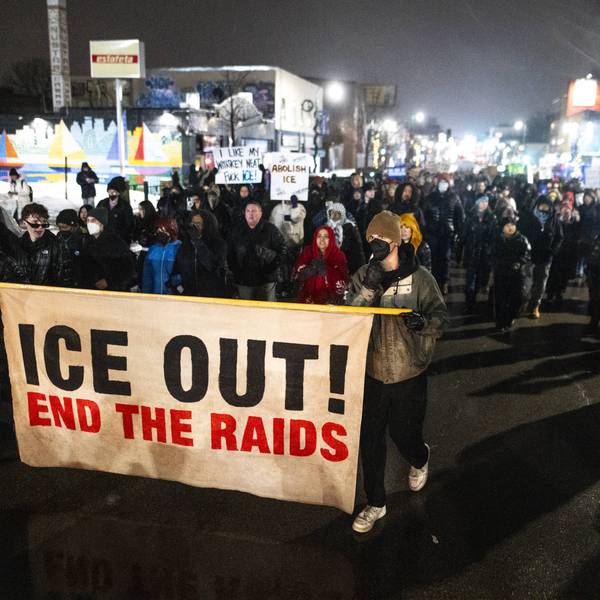
Immigrant and workers' rights organizations on Monday announced a national strike to take place on May 1, commonly known as May Day, to demonstrate the critical role of immigrant labor in the U.S. economy.
Hundreds of thousands of workers have already pledged to participate in the strike known as the "Day Without Immigrants." Organizers are expecting it to be the biggest turnout for this kind of event since the 2006 immigration reform marches, which saw over a million people take to the streets in hundreds of cities across the country in protest of raising penalties for undocumented immigration.
This year, they will be taking a stand against the criminalization of black and brown communities, raids and deportations, and worker exploitation under President Donald Trump, who is known for his xenophobic policies and rhetoric.
"Without workers, who does Trump think will harvest the crops, craft the food, transport it to market, stock the shelves, cook in kitchens, and serve the meals?"
--Jose Oliva,
Food Chain Workers Alliance
The protests will follow a series of strikes in February, which saw thousands protesting anti-immigrant bills in Wisconsin under the banner #DayWithoutLatinos.
"May 1 is the first step in a series of strikes and boycotts that will change the conversation on immigration in the United States," said Maria Fernanda Cabello, a spokesperson from Movimiento Cosecha (Harvest Movement), on Monday.
"We believe that when the country recognizes it depends on immigrant labor to function, we will win permanent protection from deportation for the 11 million undocumented immigrants; the right to travel freely to visit our loved ones abroad; and the right to be treated with dignity and respect," she said. "After years of broken promises, raids, driving in fear of being pulled over, not being able to bury our loved ones, Trump is just the final straw. As we saw during the spontaneous strikes on February 16th, our people are ready."
Cristina Moreno, a member of UNITE HERE Tech Cafeteria Workers who has worked as a cashier for the tech giant Intel for 20 years, said, "I'm a cafeteria worker at one of Silicon Valley's biggest tech companies, Intel, and my coworkers and I organized and won significant raises and healthcare. Now, we're coming together with hundreds more cafeteria workers on May Day to stand united. Immigrants like us are the backbone of the valley's tech industry, and we won't tolerate Trump and his racist policies."
"We are a workforce made up mostly of immigrants, women, African Americans, and indigenous people," Jose Oliva of the Food Chain Workers Alliance, which will also be participating in the strike. "Without workers, who does Trump think will harvest the crops, craft the food, transport it to market, stock the shelves, cook in kitchens, and serve the meals?"
An Urgent Message From Our Co-Founder
Dear Common Dreams reader, It’s been nearly 30 years since I co-founded Common Dreams with my late wife, Lina Newhouser. We had the radical notion that journalism should serve the public good, not corporate profits. It was clear to us from the outset what it would take to build such a project. No paid advertisements. No corporate sponsors. No millionaire publisher telling us what to think or do. Many people said we wouldn't last a year, but we proved those doubters wrong. Together with a tremendous team of journalists and dedicated staff, we built an independent media outlet free from the constraints of profits and corporate control. Our mission has always been simple: To inform. To inspire. To ignite change for the common good. Building Common Dreams was not easy. Our survival was never guaranteed. When you take on the most powerful forces—Wall Street greed, fossil fuel industry destruction, Big Tech lobbyists, and uber-rich oligarchs who have spent billions upon billions rigging the economy and democracy in their favor—the only bulwark you have is supporters who believe in your work. But here’s the urgent message from me today. It's never been this bad out there. And it's never been this hard to keep us going. At the very moment Common Dreams is most needed, the threats we face are intensifying. We need your support now more than ever. We don't accept corporate advertising and never will. We don't have a paywall because we don't think people should be blocked from critical news based on their ability to pay. Everything we do is funded by the donations of readers like you. When everyone does the little they can afford, we are strong. But if that support retreats or dries up, so do we. Will you donate now to make sure Common Dreams not only survives but thrives? —Craig Brown, Co-founder |
Immigrant and workers' rights organizations on Monday announced a national strike to take place on May 1, commonly known as May Day, to demonstrate the critical role of immigrant labor in the U.S. economy.
Hundreds of thousands of workers have already pledged to participate in the strike known as the "Day Without Immigrants." Organizers are expecting it to be the biggest turnout for this kind of event since the 2006 immigration reform marches, which saw over a million people take to the streets in hundreds of cities across the country in protest of raising penalties for undocumented immigration.
This year, they will be taking a stand against the criminalization of black and brown communities, raids and deportations, and worker exploitation under President Donald Trump, who is known for his xenophobic policies and rhetoric.
"Without workers, who does Trump think will harvest the crops, craft the food, transport it to market, stock the shelves, cook in kitchens, and serve the meals?"
--Jose Oliva,
Food Chain Workers Alliance
The protests will follow a series of strikes in February, which saw thousands protesting anti-immigrant bills in Wisconsin under the banner #DayWithoutLatinos.
"May 1 is the first step in a series of strikes and boycotts that will change the conversation on immigration in the United States," said Maria Fernanda Cabello, a spokesperson from Movimiento Cosecha (Harvest Movement), on Monday.
"We believe that when the country recognizes it depends on immigrant labor to function, we will win permanent protection from deportation for the 11 million undocumented immigrants; the right to travel freely to visit our loved ones abroad; and the right to be treated with dignity and respect," she said. "After years of broken promises, raids, driving in fear of being pulled over, not being able to bury our loved ones, Trump is just the final straw. As we saw during the spontaneous strikes on February 16th, our people are ready."
Cristina Moreno, a member of UNITE HERE Tech Cafeteria Workers who has worked as a cashier for the tech giant Intel for 20 years, said, "I'm a cafeteria worker at one of Silicon Valley's biggest tech companies, Intel, and my coworkers and I organized and won significant raises and healthcare. Now, we're coming together with hundreds more cafeteria workers on May Day to stand united. Immigrants like us are the backbone of the valley's tech industry, and we won't tolerate Trump and his racist policies."
"We are a workforce made up mostly of immigrants, women, African Americans, and indigenous people," Jose Oliva of the Food Chain Workers Alliance, which will also be participating in the strike. "Without workers, who does Trump think will harvest the crops, craft the food, transport it to market, stock the shelves, cook in kitchens, and serve the meals?"
Immigrant and workers' rights organizations on Monday announced a national strike to take place on May 1, commonly known as May Day, to demonstrate the critical role of immigrant labor in the U.S. economy.
Hundreds of thousands of workers have already pledged to participate in the strike known as the "Day Without Immigrants." Organizers are expecting it to be the biggest turnout for this kind of event since the 2006 immigration reform marches, which saw over a million people take to the streets in hundreds of cities across the country in protest of raising penalties for undocumented immigration.
This year, they will be taking a stand against the criminalization of black and brown communities, raids and deportations, and worker exploitation under President Donald Trump, who is known for his xenophobic policies and rhetoric.
"Without workers, who does Trump think will harvest the crops, craft the food, transport it to market, stock the shelves, cook in kitchens, and serve the meals?"
--Jose Oliva,
Food Chain Workers Alliance
The protests will follow a series of strikes in February, which saw thousands protesting anti-immigrant bills in Wisconsin under the banner #DayWithoutLatinos.
"May 1 is the first step in a series of strikes and boycotts that will change the conversation on immigration in the United States," said Maria Fernanda Cabello, a spokesperson from Movimiento Cosecha (Harvest Movement), on Monday.
"We believe that when the country recognizes it depends on immigrant labor to function, we will win permanent protection from deportation for the 11 million undocumented immigrants; the right to travel freely to visit our loved ones abroad; and the right to be treated with dignity and respect," she said. "After years of broken promises, raids, driving in fear of being pulled over, not being able to bury our loved ones, Trump is just the final straw. As we saw during the spontaneous strikes on February 16th, our people are ready."
Cristina Moreno, a member of UNITE HERE Tech Cafeteria Workers who has worked as a cashier for the tech giant Intel for 20 years, said, "I'm a cafeteria worker at one of Silicon Valley's biggest tech companies, Intel, and my coworkers and I organized and won significant raises and healthcare. Now, we're coming together with hundreds more cafeteria workers on May Day to stand united. Immigrants like us are the backbone of the valley's tech industry, and we won't tolerate Trump and his racist policies."
"We are a workforce made up mostly of immigrants, women, African Americans, and indigenous people," Jose Oliva of the Food Chain Workers Alliance, which will also be participating in the strike. "Without workers, who does Trump think will harvest the crops, craft the food, transport it to market, stock the shelves, cook in kitchens, and serve the meals?"