Sanders Tackles Drug Pricing (Again), This Time With Help From 'Big-Pharma Dems'
Lawmakers call on President Donald Trump to make good on campaign promises and back their bill in Tuesday's address to Congress
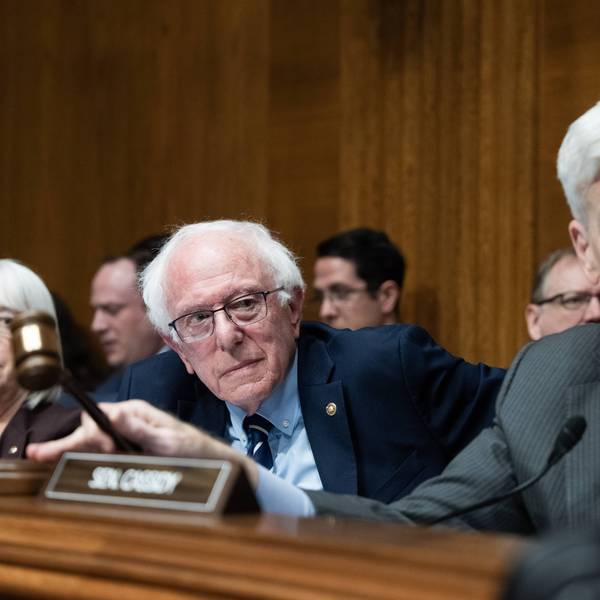
Aiming to lower the "outrageous" cost of prescription drugs, a group of lawmakers led by Sen. Bernie Sanders (I-Vt.) on Tuesday introduced legislation that would allow Americans to import low-cost medicine from Canada.
Sanders was joined (pdf) in his chamber by Sens. Cory Booker (D-N.J.) and Bob Casey (D-Pa.), among others, while Reps. Elijah Cummings (D-Md.) and Lloyd Doggett (D-Texas) introduced a companion bill in the House. A press statement from the lawmakers lists dozens of other supportive co-sponsors and advocacy organizations.
The Washington Post wrote of the bill:
The appeal is obvious; through cheap imported drugs, the U.S. would be able to take advantage of the government levers and regulation that other countries have used to bring down pharmaceutical prices. It's a far more politically palatable way to attack the problem of soaring drug prices than opening up an even more contentious fight over whether the U.S. government should meddle directly in pricing--and it has had wide popular and bipartisan support, including from Hillary Clinton and President [Donald] Trump during the presidential campaign.
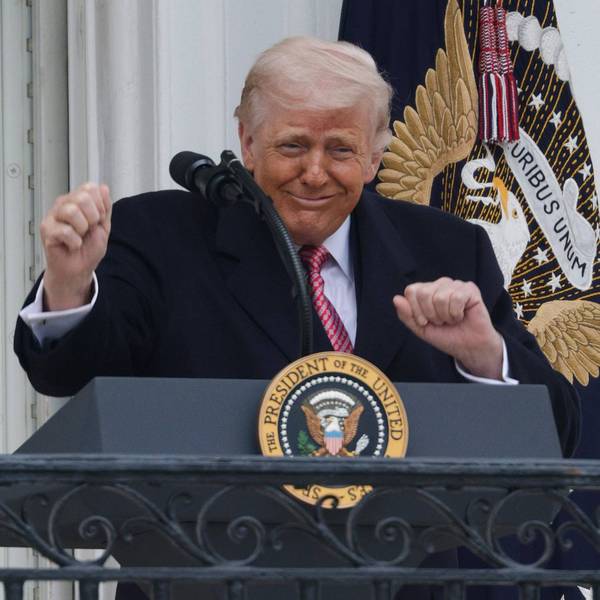
Indeed, Sanders called on Trump to make good on those campaign trail promises, declaring: "I say to President Trump: Talk is cheap. If you really have the guts to take on the pharmaceutical industry, tell your Republican friends in the House and the Senate to pass this legislation. Do it tonight in your address to Congress. Or admit to the American people that you were lying to them during the campaign."
A similar attempt, tacked on as an amendment to the 2017 budget resolution, failed to pass the Senate earlier this year. Notably, Booker and Casey were both among the 13 Democrats to vote against that amendment, for which they were lambasted by progressives--including Sanders.
"The Democratic party has got to make it very clear that they are prepared to stand up to powerful special interests like the pharmaceutical industry and like Wall Street, and they're not going to win elections and they're not going to be doing the right thing for the American people unless they have the guts to do that," Sanders said at the time. "That 13 Democrats did not is disappointing. I absolutely hope that in the coming weeks and months you're going to see many of them develop the courage to stand up to [Big] Pharma."
That time has come, apparently. And though journalist David Dayen said recent reporting has "soured" him on the importation approach ("You need to rip up the whole pharmaceutical supply chain," he argued), he also admitted that Booker's coming aboard the effort "shows movement power."
Watch the lawmakers unveil the legislation at a press conference below:
Urgent. It's never been this bad.
Dear Common Dreams reader, It’s been nearly 30 years since I co-founded Common Dreams with my late wife, Lina Newhouser. We had the radical notion that journalism should serve the public good, not corporate profits. It was clear to us from the outset what it would take to build such a project. No paid advertisements. No corporate sponsors. No millionaire publisher telling us what to think or do. Many people said we wouldn't last a year, but we proved those doubters wrong. Together with a tremendous team of journalists and dedicated staff, we built an independent media outlet free from the constraints of profits and corporate control. Our mission from the outset was simple. To inform. To inspire. To ignite change for the common good. Building Common Dreams was not easy. Our survival was never guaranteed. When you take on the most powerful forces—Wall Street greed, fossil fuel industry destruction, Big Tech lobbyists, and uber-rich oligarchs who have spent billions upon billions rigging the economy and democracy in their favor—the only bulwark you have is supporters who believe in your work. But here’s the urgent message from me today. It’s never been this bad out there. And it’s never been this hard to keep us going. At the very moment Common Dreams is most needed and doing some of its best and most important work, the threats we face are intensifying. Right now, with just three days to go in our Spring Campaign, we're falling short of our make-or-break goal. When everyone does the little they can afford, we are strong. But if that support retreats or dries up, so do we. Can you make a gift right now to make sure Common Dreams not only survives but thrives? There is no backup plan or rainy day fund. There is only you. —Craig Brown, Co-founder |
Aiming to lower the "outrageous" cost of prescription drugs, a group of lawmakers led by Sen. Bernie Sanders (I-Vt.) on Tuesday introduced legislation that would allow Americans to import low-cost medicine from Canada.
Sanders was joined (pdf) in his chamber by Sens. Cory Booker (D-N.J.) and Bob Casey (D-Pa.), among others, while Reps. Elijah Cummings (D-Md.) and Lloyd Doggett (D-Texas) introduced a companion bill in the House. A press statement from the lawmakers lists dozens of other supportive co-sponsors and advocacy organizations.
The Washington Post wrote of the bill:
The appeal is obvious; through cheap imported drugs, the U.S. would be able to take advantage of the government levers and regulation that other countries have used to bring down pharmaceutical prices. It's a far more politically palatable way to attack the problem of soaring drug prices than opening up an even more contentious fight over whether the U.S. government should meddle directly in pricing--and it has had wide popular and bipartisan support, including from Hillary Clinton and President [Donald] Trump during the presidential campaign.
Indeed, Sanders called on Trump to make good on those campaign trail promises, declaring: "I say to President Trump: Talk is cheap. If you really have the guts to take on the pharmaceutical industry, tell your Republican friends in the House and the Senate to pass this legislation. Do it tonight in your address to Congress. Or admit to the American people that you were lying to them during the campaign."
A similar attempt, tacked on as an amendment to the 2017 budget resolution, failed to pass the Senate earlier this year. Notably, Booker and Casey were both among the 13 Democrats to vote against that amendment, for which they were lambasted by progressives--including Sanders.
"The Democratic party has got to make it very clear that they are prepared to stand up to powerful special interests like the pharmaceutical industry and like Wall Street, and they're not going to win elections and they're not going to be doing the right thing for the American people unless they have the guts to do that," Sanders said at the time. "That 13 Democrats did not is disappointing. I absolutely hope that in the coming weeks and months you're going to see many of them develop the courage to stand up to [Big] Pharma."
That time has come, apparently. And though journalist David Dayen said recent reporting has "soured" him on the importation approach ("You need to rip up the whole pharmaceutical supply chain," he argued), he also admitted that Booker's coming aboard the effort "shows movement power."
Watch the lawmakers unveil the legislation at a press conference below:
Aiming to lower the "outrageous" cost of prescription drugs, a group of lawmakers led by Sen. Bernie Sanders (I-Vt.) on Tuesday introduced legislation that would allow Americans to import low-cost medicine from Canada.
Sanders was joined (pdf) in his chamber by Sens. Cory Booker (D-N.J.) and Bob Casey (D-Pa.), among others, while Reps. Elijah Cummings (D-Md.) and Lloyd Doggett (D-Texas) introduced a companion bill in the House. A press statement from the lawmakers lists dozens of other supportive co-sponsors and advocacy organizations.
The Washington Post wrote of the bill:
The appeal is obvious; through cheap imported drugs, the U.S. would be able to take advantage of the government levers and regulation that other countries have used to bring down pharmaceutical prices. It's a far more politically palatable way to attack the problem of soaring drug prices than opening up an even more contentious fight over whether the U.S. government should meddle directly in pricing--and it has had wide popular and bipartisan support, including from Hillary Clinton and President [Donald] Trump during the presidential campaign.
Indeed, Sanders called on Trump to make good on those campaign trail promises, declaring: "I say to President Trump: Talk is cheap. If you really have the guts to take on the pharmaceutical industry, tell your Republican friends in the House and the Senate to pass this legislation. Do it tonight in your address to Congress. Or admit to the American people that you were lying to them during the campaign."
A similar attempt, tacked on as an amendment to the 2017 budget resolution, failed to pass the Senate earlier this year. Notably, Booker and Casey were both among the 13 Democrats to vote against that amendment, for which they were lambasted by progressives--including Sanders.
"The Democratic party has got to make it very clear that they are prepared to stand up to powerful special interests like the pharmaceutical industry and like Wall Street, and they're not going to win elections and they're not going to be doing the right thing for the American people unless they have the guts to do that," Sanders said at the time. "That 13 Democrats did not is disappointing. I absolutely hope that in the coming weeks and months you're going to see many of them develop the courage to stand up to [Big] Pharma."
That time has come, apparently. And though journalist David Dayen said recent reporting has "soured" him on the importation approach ("You need to rip up the whole pharmaceutical supply chain," he argued), he also admitted that Booker's coming aboard the effort "shows movement power."
Watch the lawmakers unveil the legislation at a press conference below: