'Umbrella Revolutionaries' Sweep Riot Police From Hong Kong Streets
Despite tough tactics by security units, Occupy Central and its pro-democracy supporters use 'peace and love' to hold ground and increase numbers
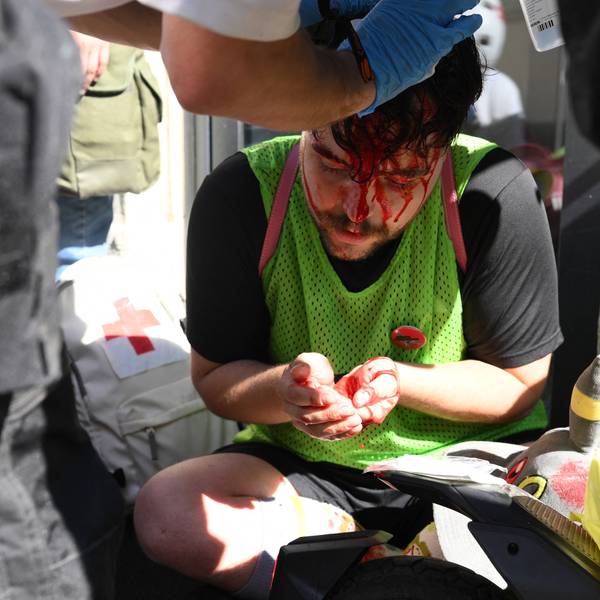
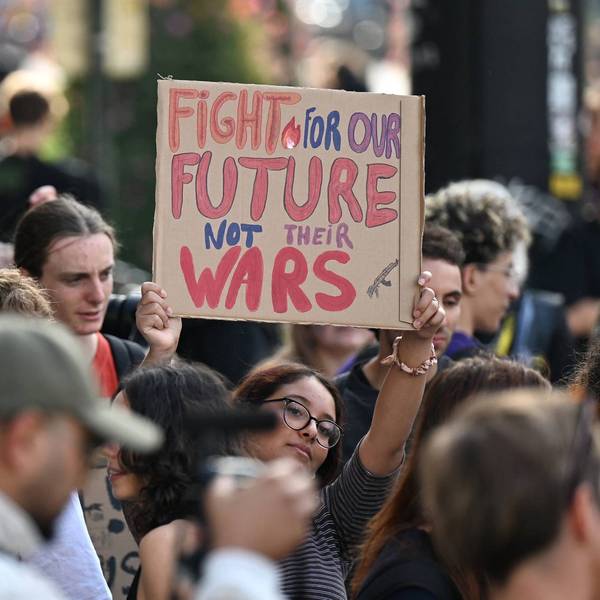
Despite deployment of increasingly harsh tactics over the weekend aimed at forcing pro-democracy protesters off the streets of Hong Kong, by Monday it was police units forced into retreat while the number of those backing democratic reforms and promising to hold 'central' areas of the city appear to be growing.
Initially organized under a call to 'Occupy Central with Peace and Love,' the growing protest movement in Hong Kong has now also been dubbed 'the Umbrella Revolution' following images of protesters using their umbrellas to shield themselves from volleys of tear gas shot by riot police over the weekend. Angered by efforts by the Chinese government to bring the once autonomous region more strictly under its control, those resisting the Communist Party's anti-democratic policies have called for greater independence and the right to vote for representation in Hong Kong without interference from Beijing.
According to the South China Morning Post:
Huge numbers of pro-democracy protesters filled the streets of Hong Kong on Monday night as an Occupy Central organiser praised them for taking over more areas of the city than he ever envisaged.
Benny Tai Yiu-ting delivered an emotional speech to massed ranks of protesters in Causeway Bay, in which he praised the achievements of the Occupy movement and renewed calls for Chief Executive Leung Chun-ying to step down.
Tai said that although the movement's initial name was Occupy Central, Hongkongers had also succeeded in occupying Admiralty, Causeway Bay and Mong Kok.
And CNN reports:
Thousands of pro-democracy protesters remained camped out on major highways in the heart of Hong Kong on Monday, defying government attempts to both coerce and cajole them into giving up their extraordinary demonstration.
The protests have brought widespread disruption to the heart of one of Asia's biggest financial centers, blocking traffic on multilane roads and prompting the suspension of school classes.
A police crackdown on demonstrators on Sunday -- involving tear gas, batons and pepper spray -- resulted in clashes that injured more than 40 people but failed to eject the protesters from their positions among the city's glittering skyscrapers.
The government adopted a more conciliatory approach Monday, saying it had withdrawn riot police from the protest areas. It urged people to disperse and allow traffic to return to the roads.
But the protesters, rallying against what many see as the growing influence of the Chinese Communist Party on the way Hong Kong is run, are so far refusing to budge.
Hung Ho-fung, a professor of sociology and political science at Johns Hopkins University, speaking with the Guardian newspaper, called the latest developments a "watershed moment" for Hong Kong.
"People are using civil disobedience and setting up barricades," Ho-fund continued. "There's also the disruptive aspect; in the past, they emphasised that demonstrations would not affect everyday life. This time they really don't care. I really haven't seen anything like this in Hong Kong history."
The Guardian adds:
Crowds of demonstrators blocking key roads swelled again on Monday afternoon, despite an apparent step back by police, with others saying they planned to join the throng as soon as they finished work.
Police attempts to use teargas to clear huge protests from Admiralty and Central in downtown Hong Kong late on Sunday backfired, instead spurring more people to take to the streets, with numbers peaking in the tens of thousands. New protests sprang up in Causeway Bay and Mongkok, in Kowloon.
"What we have seen is spontaneous - without leadership, without prior organisation, of its own volition ... a people's movement. We simply want basic dignity. We simply want to be respected," said lawmaker Alan Leong of the Civic party.
On Twitter:
We are at a crossroads
This country and this world are at a monumental crossroads. In a few short weeks, US voters will have an opportunity to beat back the forces of fascism and confront the billionaires who are rigging the economy, our media system, and our democracy, making it increasingly impossible for ordinary people to get by. We’re not just talking about the election. We’re talking about what must be done once these fascist elements are vanquished from power. We need a bolder set of solutions than what either major party has so far been willing to offer and a working-class movement ready to fight like hell for it. Trump didn't emerge from nowhere. The conditions that fueled MAGA authoritarianism were created by decades of radical neoliberal economic policies and a corrupt political system dominated by corporate interests. They slashed taxes on the super-rich, promising that the benefits would trickle down. They said giveaways to the corporate titans would make life more affordable for the rest of us. It was all bullshit. And when a bitter, betrayed populace searches for someone to blame, right-wing demagogues have little trouble finding scapegoats. People know when they're being lied to, but you won't hear any of this from the corporate media. Only independent journalism—powered and funded by people who believe in building a better world—can deliver truly trustworthy daily news. Our Fall Campaign is underway, and we need your help. To power our newsroom through the rest of the year, we need to raise $125,000 by midnight on October 31. So if you share our vision, please contribute whatever you can to sustain our work. |
Despite deployment of increasingly harsh tactics over the weekend aimed at forcing pro-democracy protesters off the streets of Hong Kong, by Monday it was police units forced into retreat while the number of those backing democratic reforms and promising to hold 'central' areas of the city appear to be growing.
Initially organized under a call to 'Occupy Central with Peace and Love,' the growing protest movement in Hong Kong has now also been dubbed 'the Umbrella Revolution' following images of protesters using their umbrellas to shield themselves from volleys of tear gas shot by riot police over the weekend. Angered by efforts by the Chinese government to bring the once autonomous region more strictly under its control, those resisting the Communist Party's anti-democratic policies have called for greater independence and the right to vote for representation in Hong Kong without interference from Beijing.
According to the South China Morning Post:
Huge numbers of pro-democracy protesters filled the streets of Hong Kong on Monday night as an Occupy Central organiser praised them for taking over more areas of the city than he ever envisaged.
Benny Tai Yiu-ting delivered an emotional speech to massed ranks of protesters in Causeway Bay, in which he praised the achievements of the Occupy movement and renewed calls for Chief Executive Leung Chun-ying to step down.
Tai said that although the movement's initial name was Occupy Central, Hongkongers had also succeeded in occupying Admiralty, Causeway Bay and Mong Kok.
And CNN reports:
Thousands of pro-democracy protesters remained camped out on major highways in the heart of Hong Kong on Monday, defying government attempts to both coerce and cajole them into giving up their extraordinary demonstration.
The protests have brought widespread disruption to the heart of one of Asia's biggest financial centers, blocking traffic on multilane roads and prompting the suspension of school classes.
A police crackdown on demonstrators on Sunday -- involving tear gas, batons and pepper spray -- resulted in clashes that injured more than 40 people but failed to eject the protesters from their positions among the city's glittering skyscrapers.
The government adopted a more conciliatory approach Monday, saying it had withdrawn riot police from the protest areas. It urged people to disperse and allow traffic to return to the roads.
But the protesters, rallying against what many see as the growing influence of the Chinese Communist Party on the way Hong Kong is run, are so far refusing to budge.
Hung Ho-fung, a professor of sociology and political science at Johns Hopkins University, speaking with the Guardian newspaper, called the latest developments a "watershed moment" for Hong Kong.
"People are using civil disobedience and setting up barricades," Ho-fund continued. "There's also the disruptive aspect; in the past, they emphasised that demonstrations would not affect everyday life. This time they really don't care. I really haven't seen anything like this in Hong Kong history."
The Guardian adds:
Crowds of demonstrators blocking key roads swelled again on Monday afternoon, despite an apparent step back by police, with others saying they planned to join the throng as soon as they finished work.
Police attempts to use teargas to clear huge protests from Admiralty and Central in downtown Hong Kong late on Sunday backfired, instead spurring more people to take to the streets, with numbers peaking in the tens of thousands. New protests sprang up in Causeway Bay and Mongkok, in Kowloon.
"What we have seen is spontaneous - without leadership, without prior organisation, of its own volition ... a people's movement. We simply want basic dignity. We simply want to be respected," said lawmaker Alan Leong of the Civic party.
On Twitter:
Despite deployment of increasingly harsh tactics over the weekend aimed at forcing pro-democracy protesters off the streets of Hong Kong, by Monday it was police units forced into retreat while the number of those backing democratic reforms and promising to hold 'central' areas of the city appear to be growing.
Initially organized under a call to 'Occupy Central with Peace and Love,' the growing protest movement in Hong Kong has now also been dubbed 'the Umbrella Revolution' following images of protesters using their umbrellas to shield themselves from volleys of tear gas shot by riot police over the weekend. Angered by efforts by the Chinese government to bring the once autonomous region more strictly under its control, those resisting the Communist Party's anti-democratic policies have called for greater independence and the right to vote for representation in Hong Kong without interference from Beijing.
According to the South China Morning Post:
Huge numbers of pro-democracy protesters filled the streets of Hong Kong on Monday night as an Occupy Central organiser praised them for taking over more areas of the city than he ever envisaged.
Benny Tai Yiu-ting delivered an emotional speech to massed ranks of protesters in Causeway Bay, in which he praised the achievements of the Occupy movement and renewed calls for Chief Executive Leung Chun-ying to step down.
Tai said that although the movement's initial name was Occupy Central, Hongkongers had also succeeded in occupying Admiralty, Causeway Bay and Mong Kok.
And CNN reports:
Thousands of pro-democracy protesters remained camped out on major highways in the heart of Hong Kong on Monday, defying government attempts to both coerce and cajole them into giving up their extraordinary demonstration.
The protests have brought widespread disruption to the heart of one of Asia's biggest financial centers, blocking traffic on multilane roads and prompting the suspension of school classes.
A police crackdown on demonstrators on Sunday -- involving tear gas, batons and pepper spray -- resulted in clashes that injured more than 40 people but failed to eject the protesters from their positions among the city's glittering skyscrapers.
The government adopted a more conciliatory approach Monday, saying it had withdrawn riot police from the protest areas. It urged people to disperse and allow traffic to return to the roads.
But the protesters, rallying against what many see as the growing influence of the Chinese Communist Party on the way Hong Kong is run, are so far refusing to budge.
Hung Ho-fung, a professor of sociology and political science at Johns Hopkins University, speaking with the Guardian newspaper, called the latest developments a "watershed moment" for Hong Kong.
"People are using civil disobedience and setting up barricades," Ho-fund continued. "There's also the disruptive aspect; in the past, they emphasised that demonstrations would not affect everyday life. This time they really don't care. I really haven't seen anything like this in Hong Kong history."
The Guardian adds:
Crowds of demonstrators blocking key roads swelled again on Monday afternoon, despite an apparent step back by police, with others saying they planned to join the throng as soon as they finished work.
Police attempts to use teargas to clear huge protests from Admiralty and Central in downtown Hong Kong late on Sunday backfired, instead spurring more people to take to the streets, with numbers peaking in the tens of thousands. New protests sprang up in Causeway Bay and Mongkok, in Kowloon.
"What we have seen is spontaneous - without leadership, without prior organisation, of its own volition ... a people's movement. We simply want basic dignity. We simply want to be respected," said lawmaker Alan Leong of the Civic party.
On Twitter: