SUBSCRIBE TO OUR FREE NEWSLETTER
Daily news & progressive opinion—funded by the people, not the corporations—delivered straight to your inbox.
5
#000000
#FFFFFF
To donate by check, phone, or other method, see our More Ways to Give page.
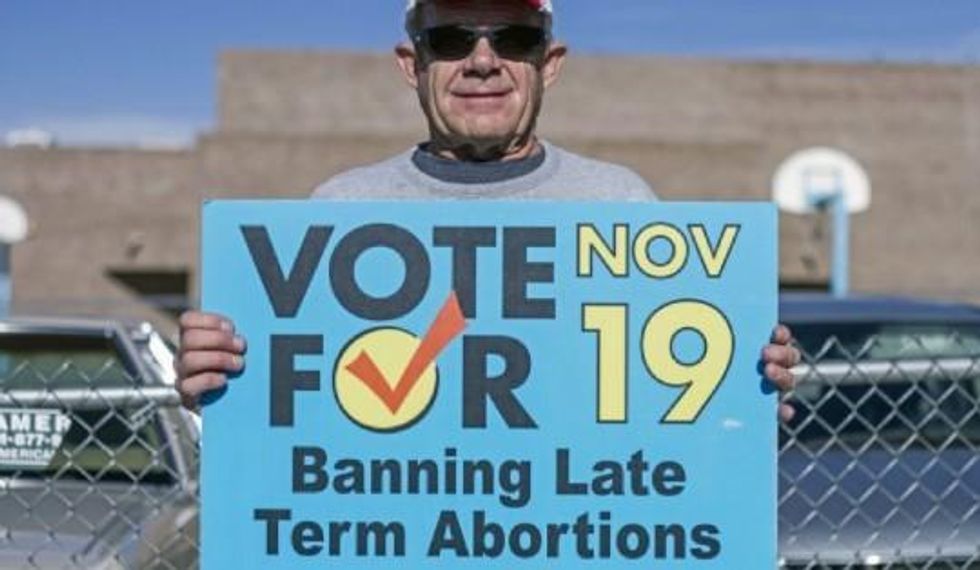
The people of Albuquerque, New Mexico roundly defeated an aggressive assualt on women's reproductive rights on Tuesday by voting down a measure that would ban all abortions after 20 weeks of pregnancy.
Meanwhile, the U.S. Supreme Court refused to uphold a requested injunction by women's rights groups in Texas who are fighting a state law that has forced more than a third of abortion clinics across the state to close their doors or turn away women seeking care.
In a 5-4 decision, the justices chose not to intervene against a lower court that has said the new rule requiring abortion clinics to retain admitting privileges at nearby hospitals will be allowed to remain in effect even as challenges to the law make their way through the judicial process.
In his dissenting opinion, Justice Stephen Breyer wrote: "Although the injunction will ultimately be reinstated if the law is indeed invalid, the harms to the individual women whose rights it restricts while it remains in effect will be permanent."
With the march against choice being felt at the state level across the country in recent years with increasingly regressive abortion laws, many national eyes watched with horror as the municipal-level fight emerged in Albuquerque as a new tactic by the anti-choice movement.
Put to the voters, however, the measure was defeated soundly by a 55 to 45 percent margin. Advocates for women's health and reproductive rights celebrated the result.
"Albuquerque rejected a ballot measure that would have banned abortion after 20 weeks in the city," said Vicki Saporta, president and CEO of the National Abortion Federation. "This ban was the result of a campaign led by extreme abortion opponents from outside of the state; however, the citizens of Albuquerque soundly defeated it."
As Reuters reports:
The proposed 20-week cutoff on abortions in the Albuquerque measure allowed for few of the exemptions permitted in most late-term abortion bans enacted in other states in recent years. It contained no exceptions for victims of rape or incest, and would have waived the ban only to save a mother's life or if continuing her pregnancy risked "substantial and irreversible physical impairment of a major bodily function."
A record number of city voters were reported to have cast early ballots in the special election.
"Not only have out-of-state, out-of-touch groups failed to impose their political agenda on Albuquerque families, they created an army of New Mexicans passionate about protecting private medical decisions between a woman and her doctor," said Julianna Koob, legislative advocate for Planned Parenthood of New Mexico.
NARAL Pro-Choice America President Ilyse Hogue said, "We hope today's resounding defeat of this abortion ban sends a clear message to the extreme forces around the country now trying to impose their agenda on cities around this country. "
The issue in Texas, however, remains and the damage already done there for women's health, according to advocates, is substantial.
"The shattering stories of women turned away at clinic doors and denied their constitutional right to abortion are already numerous, and they multiply every single day this underhanded law is enforced," said Nancy Northup, president and CEO of the Center for Reproductive Rights.
"The promise of our constitution and our judicial system is the equal protection of our rights against attacks like this law singling out women and the doctors they depend on," Northrup continued.
The high court's decision fundamentally fails to protect Texas women, she said, but vowed her group would continue to fight.
"We stand with Texas women and remain committed to protect women's health and rights in continuing the fight against this unworkable, unconscionable, and unconstitutional law," she said.
The two fights, of course, are both part of the larger battle being waged across the country against a women's right to choose. With similar fights happening in numerous states and a national 20-week abortion ban bill making its way through Congress, Northrup says the troubling trend "illustrates the very real threat that essential women's health care continues to face from those who seek to make [abortions] illegal."
Proponents of these restrictive laws, she said, are simply "indifferent to the devastating consequences that women will suffer."
_____________________________________________________
The people of Albuquerque, New Mexico roundly defeated an aggressive assualt on women's reproductive rights on Tuesday by voting down a measure that would ban all abortions after 20 weeks of pregnancy.
Meanwhile, the U.S. Supreme Court refused to uphold a requested injunction by women's rights groups in Texas who are fighting a state law that has forced more than a third of abortion clinics across the state to close their doors or turn away women seeking care.
In a 5-4 decision, the justices chose not to intervene against a lower court that has said the new rule requiring abortion clinics to retain admitting privileges at nearby hospitals will be allowed to remain in effect even as challenges to the law make their way through the judicial process.
In his dissenting opinion, Justice Stephen Breyer wrote: "Although the injunction will ultimately be reinstated if the law is indeed invalid, the harms to the individual women whose rights it restricts while it remains in effect will be permanent."
With the march against choice being felt at the state level across the country in recent years with increasingly regressive abortion laws, many national eyes watched with horror as the municipal-level fight emerged in Albuquerque as a new tactic by the anti-choice movement.
Put to the voters, however, the measure was defeated soundly by a 55 to 45 percent margin. Advocates for women's health and reproductive rights celebrated the result.
"Albuquerque rejected a ballot measure that would have banned abortion after 20 weeks in the city," said Vicki Saporta, president and CEO of the National Abortion Federation. "This ban was the result of a campaign led by extreme abortion opponents from outside of the state; however, the citizens of Albuquerque soundly defeated it."
As Reuters reports:
The proposed 20-week cutoff on abortions in the Albuquerque measure allowed for few of the exemptions permitted in most late-term abortion bans enacted in other states in recent years. It contained no exceptions for victims of rape or incest, and would have waived the ban only to save a mother's life or if continuing her pregnancy risked "substantial and irreversible physical impairment of a major bodily function."
A record number of city voters were reported to have cast early ballots in the special election.
"Not only have out-of-state, out-of-touch groups failed to impose their political agenda on Albuquerque families, they created an army of New Mexicans passionate about protecting private medical decisions between a woman and her doctor," said Julianna Koob, legislative advocate for Planned Parenthood of New Mexico.
NARAL Pro-Choice America President Ilyse Hogue said, "We hope today's resounding defeat of this abortion ban sends a clear message to the extreme forces around the country now trying to impose their agenda on cities around this country. "
The issue in Texas, however, remains and the damage already done there for women's health, according to advocates, is substantial.
"The shattering stories of women turned away at clinic doors and denied their constitutional right to abortion are already numerous, and they multiply every single day this underhanded law is enforced," said Nancy Northup, president and CEO of the Center for Reproductive Rights.
"The promise of our constitution and our judicial system is the equal protection of our rights against attacks like this law singling out women and the doctors they depend on," Northrup continued.
The high court's decision fundamentally fails to protect Texas women, she said, but vowed her group would continue to fight.
"We stand with Texas women and remain committed to protect women's health and rights in continuing the fight against this unworkable, unconscionable, and unconstitutional law," she said.
The two fights, of course, are both part of the larger battle being waged across the country against a women's right to choose. With similar fights happening in numerous states and a national 20-week abortion ban bill making its way through Congress, Northrup says the troubling trend "illustrates the very real threat that essential women's health care continues to face from those who seek to make [abortions] illegal."
Proponents of these restrictive laws, she said, are simply "indifferent to the devastating consequences that women will suffer."
_____________________________________________________
The people of Albuquerque, New Mexico roundly defeated an aggressive assualt on women's reproductive rights on Tuesday by voting down a measure that would ban all abortions after 20 weeks of pregnancy.
Meanwhile, the U.S. Supreme Court refused to uphold a requested injunction by women's rights groups in Texas who are fighting a state law that has forced more than a third of abortion clinics across the state to close their doors or turn away women seeking care.
In a 5-4 decision, the justices chose not to intervene against a lower court that has said the new rule requiring abortion clinics to retain admitting privileges at nearby hospitals will be allowed to remain in effect even as challenges to the law make their way through the judicial process.
In his dissenting opinion, Justice Stephen Breyer wrote: "Although the injunction will ultimately be reinstated if the law is indeed invalid, the harms to the individual women whose rights it restricts while it remains in effect will be permanent."
With the march against choice being felt at the state level across the country in recent years with increasingly regressive abortion laws, many national eyes watched with horror as the municipal-level fight emerged in Albuquerque as a new tactic by the anti-choice movement.
Put to the voters, however, the measure was defeated soundly by a 55 to 45 percent margin. Advocates for women's health and reproductive rights celebrated the result.
"Albuquerque rejected a ballot measure that would have banned abortion after 20 weeks in the city," said Vicki Saporta, president and CEO of the National Abortion Federation. "This ban was the result of a campaign led by extreme abortion opponents from outside of the state; however, the citizens of Albuquerque soundly defeated it."
As Reuters reports:
The proposed 20-week cutoff on abortions in the Albuquerque measure allowed for few of the exemptions permitted in most late-term abortion bans enacted in other states in recent years. It contained no exceptions for victims of rape or incest, and would have waived the ban only to save a mother's life or if continuing her pregnancy risked "substantial and irreversible physical impairment of a major bodily function."
A record number of city voters were reported to have cast early ballots in the special election.
"Not only have out-of-state, out-of-touch groups failed to impose their political agenda on Albuquerque families, they created an army of New Mexicans passionate about protecting private medical decisions between a woman and her doctor," said Julianna Koob, legislative advocate for Planned Parenthood of New Mexico.
NARAL Pro-Choice America President Ilyse Hogue said, "We hope today's resounding defeat of this abortion ban sends a clear message to the extreme forces around the country now trying to impose their agenda on cities around this country. "
The issue in Texas, however, remains and the damage already done there for women's health, according to advocates, is substantial.
"The shattering stories of women turned away at clinic doors and denied their constitutional right to abortion are already numerous, and they multiply every single day this underhanded law is enforced," said Nancy Northup, president and CEO of the Center for Reproductive Rights.
"The promise of our constitution and our judicial system is the equal protection of our rights against attacks like this law singling out women and the doctors they depend on," Northrup continued.
The high court's decision fundamentally fails to protect Texas women, she said, but vowed her group would continue to fight.
"We stand with Texas women and remain committed to protect women's health and rights in continuing the fight against this unworkable, unconscionable, and unconstitutional law," she said.
The two fights, of course, are both part of the larger battle being waged across the country against a women's right to choose. With similar fights happening in numerous states and a national 20-week abortion ban bill making its way through Congress, Northrup says the troubling trend "illustrates the very real threat that essential women's health care continues to face from those who seek to make [abortions] illegal."
Proponents of these restrictive laws, she said, are simply "indifferent to the devastating consequences that women will suffer."
_____________________________________________________