SUBSCRIBE TO OUR FREE NEWSLETTER
Daily news & progressive opinion—funded by the people, not the corporations—delivered straight to your inbox.
5
#000000
#FFFFFF
To donate by check, phone, or other method, see our More Ways to Give page.
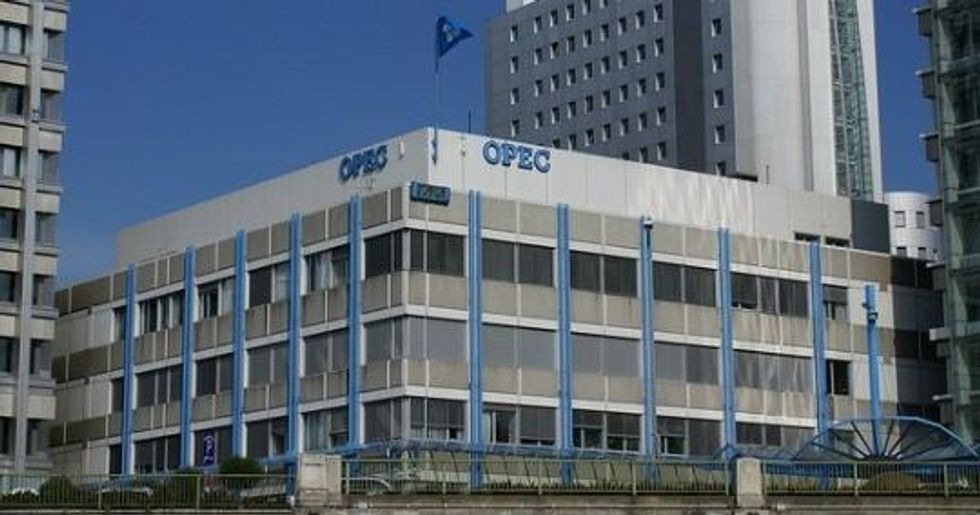
As critics note, this latest disclosure illustrates, once again, the expanse of the U.S. and U.K. spy networks and the breadth of their "collect-it-all" mandate despite attempts to frame their spy activities as strictly "counterterrorism."
According to a January 2008 document, the NSA department in charge of energy issues reported it had "accomplished its mission" of infiltrating OPEC, the 12-member consortium built to control the global oil market. Der Spiegel reports:
When the NSA used the Internet to infiltrate OPEC's computers, its analysts discovered an internal study in the OPEC Research Division. It stated that OPEC officials were trying to cast the blame for high oil prices on speculators. A look at files in the OPEC legal department revealed how the organization was preparing itself for an antitrust suit in the United States. And a review of the section reserved for the OPEC secretary general documented that the Saudis were using underhanded tactics, even within the organization. According to the NSA analysts, Riyadh had tried to keep an increase in oil production a secret for as long as possible.
Sharing such information with "customers" such as the CIA, the U.S. State Department and the Department of Energy, NSA analysts concluded that the Saudis had released incorrect oil production figures and were "promptly praised," according to a leaked 2010 report.
In response to this latest disclosure, journalist and blogger Marcy Wheeler tweeted, "Golly. It sounds like GCHQ did to OPEC PRECISELY what Snowden did to GCHQ. So confusing. I thought using Admin privileges to steal was bad?"
And another online observer added, "Why does the #NSA have a 'department in charge of energy issues' when they are supposed to be all about Terrorism(tm)(r)?"
Britain's GCHQ reportedly had similar success in obtaining "many documents of interest" after tapping into the oil consortium's database with their hacking software. Der Spiegel reports:
A secret GCHQ document dating from 2010 states that the agency had traditionally had "poor access" to OPEC. But that year, after a long period of meticulous work, it had managed to infiltrate the computers of nine OPEC employees by using the "Quantum Insert" method, which then creates a gateway to gain access into OPEC's computer system. GCHQ analysts were even able to acquire administrator privileges for the OPEC network and gain access to two secret servers containing "many documents of interest."
Despite frequent claims by both governments that surveillance is a necessary defense against terrorism, these latest documents further reveal that the NSA and GCHQ are employing their "spying superpowers to the full limits of 'foreign intelligence information,'" as Trevor Timm at the Electronic Frontier Foundation writes, "while trying to keep the conversation in a narrow band."
Timm continues:
Under the Foreign Intelligence Surveillance Act, NSA is given a mandate for collecting "foreign intelligence information" but this is not a very substantive limitation, and certainly does not restrict the NSA to counterterrorism--rather, it is defined to include "information with respect to a foreign power...that relates to...the conduct of the foreign affairs of the United States."
Read that carefully for a minute. Anything "that relates to the foreign affairs of the United States." Interpreted broadly, this can be political news, anything about economics, it doesn't even have to involve a crime-- basically anything besides the weather. Indeed, given the government penchant for warped and distorting the definitions of words in secret, we wouldn't be surprised if the government would argue that weather could fall under the umbrella of "foreign intelligence information" too.
_____________________
As critics note, this latest disclosure illustrates, once again, the expanse of the U.S. and U.K. spy networks and the breadth of their "collect-it-all" mandate despite attempts to frame their spy activities as strictly "counterterrorism."
According to a January 2008 document, the NSA department in charge of energy issues reported it had "accomplished its mission" of infiltrating OPEC, the 12-member consortium built to control the global oil market. Der Spiegel reports:
When the NSA used the Internet to infiltrate OPEC's computers, its analysts discovered an internal study in the OPEC Research Division. It stated that OPEC officials were trying to cast the blame for high oil prices on speculators. A look at files in the OPEC legal department revealed how the organization was preparing itself for an antitrust suit in the United States. And a review of the section reserved for the OPEC secretary general documented that the Saudis were using underhanded tactics, even within the organization. According to the NSA analysts, Riyadh had tried to keep an increase in oil production a secret for as long as possible.
Sharing such information with "customers" such as the CIA, the U.S. State Department and the Department of Energy, NSA analysts concluded that the Saudis had released incorrect oil production figures and were "promptly praised," according to a leaked 2010 report.
In response to this latest disclosure, journalist and blogger Marcy Wheeler tweeted, "Golly. It sounds like GCHQ did to OPEC PRECISELY what Snowden did to GCHQ. So confusing. I thought using Admin privileges to steal was bad?"
And another online observer added, "Why does the #NSA have a 'department in charge of energy issues' when they are supposed to be all about Terrorism(tm)(r)?"
Britain's GCHQ reportedly had similar success in obtaining "many documents of interest" after tapping into the oil consortium's database with their hacking software. Der Spiegel reports:
A secret GCHQ document dating from 2010 states that the agency had traditionally had "poor access" to OPEC. But that year, after a long period of meticulous work, it had managed to infiltrate the computers of nine OPEC employees by using the "Quantum Insert" method, which then creates a gateway to gain access into OPEC's computer system. GCHQ analysts were even able to acquire administrator privileges for the OPEC network and gain access to two secret servers containing "many documents of interest."
Despite frequent claims by both governments that surveillance is a necessary defense against terrorism, these latest documents further reveal that the NSA and GCHQ are employing their "spying superpowers to the full limits of 'foreign intelligence information,'" as Trevor Timm at the Electronic Frontier Foundation writes, "while trying to keep the conversation in a narrow band."
Timm continues:
Under the Foreign Intelligence Surveillance Act, NSA is given a mandate for collecting "foreign intelligence information" but this is not a very substantive limitation, and certainly does not restrict the NSA to counterterrorism--rather, it is defined to include "information with respect to a foreign power...that relates to...the conduct of the foreign affairs of the United States."
Read that carefully for a minute. Anything "that relates to the foreign affairs of the United States." Interpreted broadly, this can be political news, anything about economics, it doesn't even have to involve a crime-- basically anything besides the weather. Indeed, given the government penchant for warped and distorting the definitions of words in secret, we wouldn't be surprised if the government would argue that weather could fall under the umbrella of "foreign intelligence information" too.
_____________________
As critics note, this latest disclosure illustrates, once again, the expanse of the U.S. and U.K. spy networks and the breadth of their "collect-it-all" mandate despite attempts to frame their spy activities as strictly "counterterrorism."
According to a January 2008 document, the NSA department in charge of energy issues reported it had "accomplished its mission" of infiltrating OPEC, the 12-member consortium built to control the global oil market. Der Spiegel reports:
When the NSA used the Internet to infiltrate OPEC's computers, its analysts discovered an internal study in the OPEC Research Division. It stated that OPEC officials were trying to cast the blame for high oil prices on speculators. A look at files in the OPEC legal department revealed how the organization was preparing itself for an antitrust suit in the United States. And a review of the section reserved for the OPEC secretary general documented that the Saudis were using underhanded tactics, even within the organization. According to the NSA analysts, Riyadh had tried to keep an increase in oil production a secret for as long as possible.
Sharing such information with "customers" such as the CIA, the U.S. State Department and the Department of Energy, NSA analysts concluded that the Saudis had released incorrect oil production figures and were "promptly praised," according to a leaked 2010 report.
In response to this latest disclosure, journalist and blogger Marcy Wheeler tweeted, "Golly. It sounds like GCHQ did to OPEC PRECISELY what Snowden did to GCHQ. So confusing. I thought using Admin privileges to steal was bad?"
And another online observer added, "Why does the #NSA have a 'department in charge of energy issues' when they are supposed to be all about Terrorism(tm)(r)?"
Britain's GCHQ reportedly had similar success in obtaining "many documents of interest" after tapping into the oil consortium's database with their hacking software. Der Spiegel reports:
A secret GCHQ document dating from 2010 states that the agency had traditionally had "poor access" to OPEC. But that year, after a long period of meticulous work, it had managed to infiltrate the computers of nine OPEC employees by using the "Quantum Insert" method, which then creates a gateway to gain access into OPEC's computer system. GCHQ analysts were even able to acquire administrator privileges for the OPEC network and gain access to two secret servers containing "many documents of interest."
Despite frequent claims by both governments that surveillance is a necessary defense against terrorism, these latest documents further reveal that the NSA and GCHQ are employing their "spying superpowers to the full limits of 'foreign intelligence information,'" as Trevor Timm at the Electronic Frontier Foundation writes, "while trying to keep the conversation in a narrow band."
Timm continues:
Under the Foreign Intelligence Surveillance Act, NSA is given a mandate for collecting "foreign intelligence information" but this is not a very substantive limitation, and certainly does not restrict the NSA to counterterrorism--rather, it is defined to include "information with respect to a foreign power...that relates to...the conduct of the foreign affairs of the United States."
Read that carefully for a minute. Anything "that relates to the foreign affairs of the United States." Interpreted broadly, this can be political news, anything about economics, it doesn't even have to involve a crime-- basically anything besides the weather. Indeed, given the government penchant for warped and distorting the definitions of words in secret, we wouldn't be surprised if the government would argue that weather could fall under the umbrella of "foreign intelligence information" too.
_____________________