SUBSCRIBE TO OUR FREE NEWSLETTER
Daily news & progressive opinion—funded by the people, not the corporations—delivered straight to your inbox.
5
#000000
#FFFFFF
To donate by check, phone, or other method, see our More Ways to Give page.
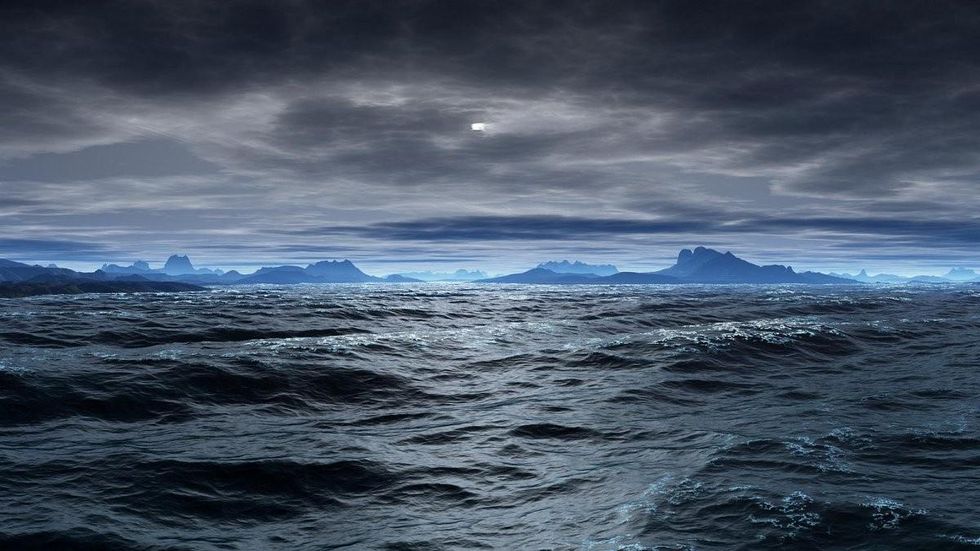
"The current rate of change is likely to be more than 10 times faster than it has been in any of the evolutionary crises in the earth's history," said Poertner in an interview with environmental journalist Fiona Harvey.
Ocean acidification--often called climate change's "evil twin" by scientists and experts--happens as the pH level of seawater dwindles as it absorbs increasing amount of carbon dioxide (CO2) and though such fluctuations are a normally occurring phenomenon, when the balance tips too far, the acidification can imperil numerous types of marine life and is especially threatening to coral, shell fish, and other essential members of the ocean's ecosystems.
Poertner--whose study, Inhospitable Oceans, was published Monday in the journal Nature Climate Change--says that if humanity's industrial carbon emissions continue with a "business as usual" attitude, the problem of the oceans will be catastrophic.
To make comparisons, the study looked back at the ancient fossil record of the ocean to learn about what we can expect if the process continues unchecked. "The [effects observed] among invertebrates resembles those seen during the Permian Triassic extinctions 250m years ago, when carbon dioxide was also involved," Poertner said. "The carbon dioxide range at which we see this sensitivity [to acidification] kicking in are the ones expected for the later part of this century and beyond."
As Harvey explains:
Oceans are one of the biggest areas of focus for current climate change research. The gradual warming of the deep oceans, as warmer water from the surface circulates gradually to lower depths, is thought to be a significant factor in the earth's climate. New science suggests that the absorption of heat by the oceans is probably one of the reasons that the observed warming in the last 15 years has been at a slightly slower pace than previously, and this is likely to form an important part of next month's Intergovernmental Panel on Climate Change (IPCC) report.
The IPCC report, the first since 2007, will provide a comprehensive picture of our knowledge of climate change. It is expected to show that scientists are at least 95% certain that global warming is happening and caused by human activity, but that some uncertainties remain over the exact degree of the planet's sensitivity to greenhouse gas increases.
And as Time points out in its review of the study:
Corals are likely to have the toughest time. The invertebrate species secretes calcium carbonate to make the rocky coastal reefs that form the basis of the most productive--and beautiful--ecosystems in the oceans. More acidic oceans will interfere with the ability of corals to form those reefs. Some coral have already shown the ability to adapt to lower pH levels, but combined with direct ocean warming--which can lead to coral bleaching, killing off whole reefs--many scientists believe that corals could become virtually extinct by the end of the century if we don't reduce carbon emissions.
The Nature Climate Change study found that mollusks like oysters and squids will also struggle to adapt to acidification, though crustaceans like lobsters and crabs--which build lighter exoskeletons--seem likely to fare better. With fish it's harder to know, though those species that live among coral reefs could be in trouble should the coral disappear. But ultimately, as the authors point out, "all considered groups are impacted negatively, albeit differently, even by moderate ocean acidification." No one gets out untouched.
__________________________________________
"The current rate of change is likely to be more than 10 times faster than it has been in any of the evolutionary crises in the earth's history," said Poertner in an interview with environmental journalist Fiona Harvey.
Ocean acidification--often called climate change's "evil twin" by scientists and experts--happens as the pH level of seawater dwindles as it absorbs increasing amount of carbon dioxide (CO2) and though such fluctuations are a normally occurring phenomenon, when the balance tips too far, the acidification can imperil numerous types of marine life and is especially threatening to coral, shell fish, and other essential members of the ocean's ecosystems.
Poertner--whose study, Inhospitable Oceans, was published Monday in the journal Nature Climate Change--says that if humanity's industrial carbon emissions continue with a "business as usual" attitude, the problem of the oceans will be catastrophic.
To make comparisons, the study looked back at the ancient fossil record of the ocean to learn about what we can expect if the process continues unchecked. "The [effects observed] among invertebrates resembles those seen during the Permian Triassic extinctions 250m years ago, when carbon dioxide was also involved," Poertner said. "The carbon dioxide range at which we see this sensitivity [to acidification] kicking in are the ones expected for the later part of this century and beyond."
As Harvey explains:
Oceans are one of the biggest areas of focus for current climate change research. The gradual warming of the deep oceans, as warmer water from the surface circulates gradually to lower depths, is thought to be a significant factor in the earth's climate. New science suggests that the absorption of heat by the oceans is probably one of the reasons that the observed warming in the last 15 years has been at a slightly slower pace than previously, and this is likely to form an important part of next month's Intergovernmental Panel on Climate Change (IPCC) report.
The IPCC report, the first since 2007, will provide a comprehensive picture of our knowledge of climate change. It is expected to show that scientists are at least 95% certain that global warming is happening and caused by human activity, but that some uncertainties remain over the exact degree of the planet's sensitivity to greenhouse gas increases.
And as Time points out in its review of the study:
Corals are likely to have the toughest time. The invertebrate species secretes calcium carbonate to make the rocky coastal reefs that form the basis of the most productive--and beautiful--ecosystems in the oceans. More acidic oceans will interfere with the ability of corals to form those reefs. Some coral have already shown the ability to adapt to lower pH levels, but combined with direct ocean warming--which can lead to coral bleaching, killing off whole reefs--many scientists believe that corals could become virtually extinct by the end of the century if we don't reduce carbon emissions.
The Nature Climate Change study found that mollusks like oysters and squids will also struggle to adapt to acidification, though crustaceans like lobsters and crabs--which build lighter exoskeletons--seem likely to fare better. With fish it's harder to know, though those species that live among coral reefs could be in trouble should the coral disappear. But ultimately, as the authors point out, "all considered groups are impacted negatively, albeit differently, even by moderate ocean acidification." No one gets out untouched.
__________________________________________
"The current rate of change is likely to be more than 10 times faster than it has been in any of the evolutionary crises in the earth's history," said Poertner in an interview with environmental journalist Fiona Harvey.
Ocean acidification--often called climate change's "evil twin" by scientists and experts--happens as the pH level of seawater dwindles as it absorbs increasing amount of carbon dioxide (CO2) and though such fluctuations are a normally occurring phenomenon, when the balance tips too far, the acidification can imperil numerous types of marine life and is especially threatening to coral, shell fish, and other essential members of the ocean's ecosystems.
Poertner--whose study, Inhospitable Oceans, was published Monday in the journal Nature Climate Change--says that if humanity's industrial carbon emissions continue with a "business as usual" attitude, the problem of the oceans will be catastrophic.
To make comparisons, the study looked back at the ancient fossil record of the ocean to learn about what we can expect if the process continues unchecked. "The [effects observed] among invertebrates resembles those seen during the Permian Triassic extinctions 250m years ago, when carbon dioxide was also involved," Poertner said. "The carbon dioxide range at which we see this sensitivity [to acidification] kicking in are the ones expected for the later part of this century and beyond."
As Harvey explains:
Oceans are one of the biggest areas of focus for current climate change research. The gradual warming of the deep oceans, as warmer water from the surface circulates gradually to lower depths, is thought to be a significant factor in the earth's climate. New science suggests that the absorption of heat by the oceans is probably one of the reasons that the observed warming in the last 15 years has been at a slightly slower pace than previously, and this is likely to form an important part of next month's Intergovernmental Panel on Climate Change (IPCC) report.
The IPCC report, the first since 2007, will provide a comprehensive picture of our knowledge of climate change. It is expected to show that scientists are at least 95% certain that global warming is happening and caused by human activity, but that some uncertainties remain over the exact degree of the planet's sensitivity to greenhouse gas increases.
And as Time points out in its review of the study:
Corals are likely to have the toughest time. The invertebrate species secretes calcium carbonate to make the rocky coastal reefs that form the basis of the most productive--and beautiful--ecosystems in the oceans. More acidic oceans will interfere with the ability of corals to form those reefs. Some coral have already shown the ability to adapt to lower pH levels, but combined with direct ocean warming--which can lead to coral bleaching, killing off whole reefs--many scientists believe that corals could become virtually extinct by the end of the century if we don't reduce carbon emissions.
The Nature Climate Change study found that mollusks like oysters and squids will also struggle to adapt to acidification, though crustaceans like lobsters and crabs--which build lighter exoskeletons--seem likely to fare better. With fish it's harder to know, though those species that live among coral reefs could be in trouble should the coral disappear. But ultimately, as the authors point out, "all considered groups are impacted negatively, albeit differently, even by moderate ocean acidification." No one gets out untouched.
__________________________________________