SUBSCRIBE TO OUR FREE NEWSLETTER
Daily news & progressive opinion—funded by the people, not the corporations—delivered straight to your inbox.
5
#000000
#FFFFFF
To donate by check, phone, or other method, see our More Ways to Give page.
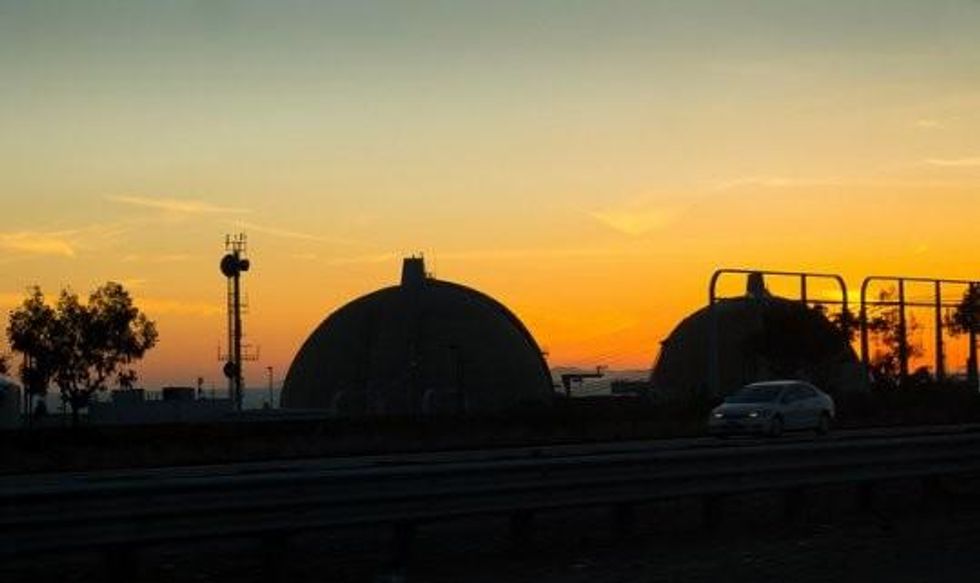
The plant's operator, Southern California Edison, made the announcement on Friday.
The closing of San Onofre "is very good news for the people of Southern California," said Erich Pica, president of Friends of the Earth (FOE).
As long-time anti-nuclear activist Harvey Wasserman has noted, the plant
sits in an earthquake/tsunami zone halfway between Los Angeles and San Diego. At least 8 million people live within a 50 mile radius, many millions more within 100. The reactors are a stone's throw from both a major interstate and the high tide line, with a 14-foot flood wall a bare fraction of the height of the tsunami that overwhelmed at Fukushima.
"We have long said that these reactors are too dangerous to operate and now Edison has agreed," added Pica.
The San Onofre Safety website has pointed out that
San Onofre consistently has the highest number of safety and discrimination allegations (complaints) compared to all other U.S. nuclear power plants, according to Nuclear Regulatory Commission (NRC) data.
The plant had been out of commission since January 2012 because of a leak detected in its steam generator, and in April a whistleblower warned a local news station of a "potentially catastrophic problem" at the plant and said that a faulty redesign of the plant's steam generators put the system at risk of a "full or partial meltdown."
With the plant now set to close, "the people of California now have the opportunity to move away from the failed promise of dirty and dangerous nuclear power and replace it with the safe and clean energy provided by the sun and the wind," said FOE's Picah.
______________________
The plant's operator, Southern California Edison, made the announcement on Friday.
The closing of San Onofre "is very good news for the people of Southern California," said Erich Pica, president of Friends of the Earth (FOE).
As long-time anti-nuclear activist Harvey Wasserman has noted, the plant
sits in an earthquake/tsunami zone halfway between Los Angeles and San Diego. At least 8 million people live within a 50 mile radius, many millions more within 100. The reactors are a stone's throw from both a major interstate and the high tide line, with a 14-foot flood wall a bare fraction of the height of the tsunami that overwhelmed at Fukushima.
"We have long said that these reactors are too dangerous to operate and now Edison has agreed," added Pica.
The San Onofre Safety website has pointed out that
San Onofre consistently has the highest number of safety and discrimination allegations (complaints) compared to all other U.S. nuclear power plants, according to Nuclear Regulatory Commission (NRC) data.
The plant had been out of commission since January 2012 because of a leak detected in its steam generator, and in April a whistleblower warned a local news station of a "potentially catastrophic problem" at the plant and said that a faulty redesign of the plant's steam generators put the system at risk of a "full or partial meltdown."
With the plant now set to close, "the people of California now have the opportunity to move away from the failed promise of dirty and dangerous nuclear power and replace it with the safe and clean energy provided by the sun and the wind," said FOE's Picah.
______________________
The plant's operator, Southern California Edison, made the announcement on Friday.
The closing of San Onofre "is very good news for the people of Southern California," said Erich Pica, president of Friends of the Earth (FOE).
As long-time anti-nuclear activist Harvey Wasserman has noted, the plant
sits in an earthquake/tsunami zone halfway between Los Angeles and San Diego. At least 8 million people live within a 50 mile radius, many millions more within 100. The reactors are a stone's throw from both a major interstate and the high tide line, with a 14-foot flood wall a bare fraction of the height of the tsunami that overwhelmed at Fukushima.
"We have long said that these reactors are too dangerous to operate and now Edison has agreed," added Pica.
The San Onofre Safety website has pointed out that
San Onofre consistently has the highest number of safety and discrimination allegations (complaints) compared to all other U.S. nuclear power plants, according to Nuclear Regulatory Commission (NRC) data.
The plant had been out of commission since January 2012 because of a leak detected in its steam generator, and in April a whistleblower warned a local news station of a "potentially catastrophic problem" at the plant and said that a faulty redesign of the plant's steam generators put the system at risk of a "full or partial meltdown."
With the plant now set to close, "the people of California now have the opportunity to move away from the failed promise of dirty and dangerous nuclear power and replace it with the safe and clean energy provided by the sun and the wind," said FOE's Picah.
______________________