SUBSCRIBE TO OUR FREE NEWSLETTER
Daily news & progressive opinion—funded by the people, not the corporations—delivered straight to your inbox.
5
#000000
#FFFFFF
To donate by check, phone, or other method, see our More Ways to Give page.

Beating drums, blowing whistles and chanting "Robbers, robbers!" demonstrators marched on parliament to display their anger at the wage cuts and tax hikes forced on the country by international lenders, Reuters reports.
"Unpaid bills, slashed wages and pensions, boarded-up shops. Greek people cannot wait for saviours. Only by taking their fortunes into their own hands can they exit the stalemate," opposition leader Alexis Tsipras, head of the left leaning Syriza party, told reporters.
"People of labour must fight for as long as this disastrous policy is followed by the government under orders from (Greece's creditors)," said Yiannis Panagopoulos, chairman of the private sector union GSEE, which organized the day's walkout along with the ADEDY public sector union. "They have destroyed an entire people."
"A social explosion is very near," added Ilias Iliopoulos, secretary general of the ADEDY, speaking from a rally in central Athens square while police helicopters circled overhead.
Six years of recession and three of punishing austerity policies have tripled the rate of unemployment in the country, bringing it to 27 percent for the general population--the highest in the European Union-- and over 60 percent for Greek youth.
Kicking off the first general strike of the year, Greek journalists walked off the job Tuesday choosing to keep a visit by French President Francois Hollande to Athens largely unreported.
Though Wednesday's protests were largely peaceful, Reuters reports that riot police fired tear gas at "hooded youths" who were "hurling rocks and bottles during a demonstration."
In observance of the general strike, state schools and tax offices remained shuttered, with public hospitals functioning solely on emergency staff. Al Jazeera reports that "court cases were stalled as lawyers walked off the job, and even neighborhood street fruit and vegetable markets were cancelled. Private doctors and dentists also joined the strike."
Transportation also came to a standstill, as the work stoppage forced airport authorities to cancel dozens of flights while ferries remained docked throughout the day.
One of the great surprises of the day was the added presence of Greek farmers who joined in the demonstrations. In Athens, the traditionally loyal supporters of the New Democracy party blocked the streets with their tractors.
Demonstrations were also held in Greece's second-biggest city, Thessaloniki, and on the island of Crete, "where dozens of protesters hit the streets waving black flags," said Reuters.
According to Guardian reports, additional marches were held in the communities of Kalamata and Corinth (Peloponnese), Larissa and Karditsa (central Greece), Preveza (western Greece), and Alexandroupolis (Thrace).
Since securing the second round of bailout funds in December the Greek government has significantly cracked down on opposition demonstrations, twice this year invoking emergency laws to force protesting laborers return to work after week-long walkouts.
Anticipating the elimination of 25,000 civil service jobs in the next round of labor cuts demanded by creditors, the International Monetary Fund and the European Union, the country's labor force is prepared to continue to fight against austerity until their voices are heard.
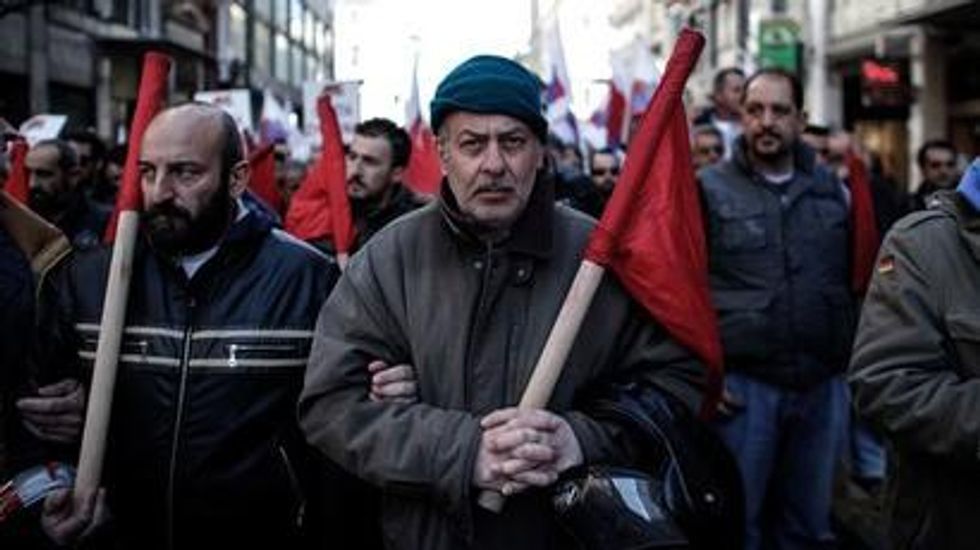
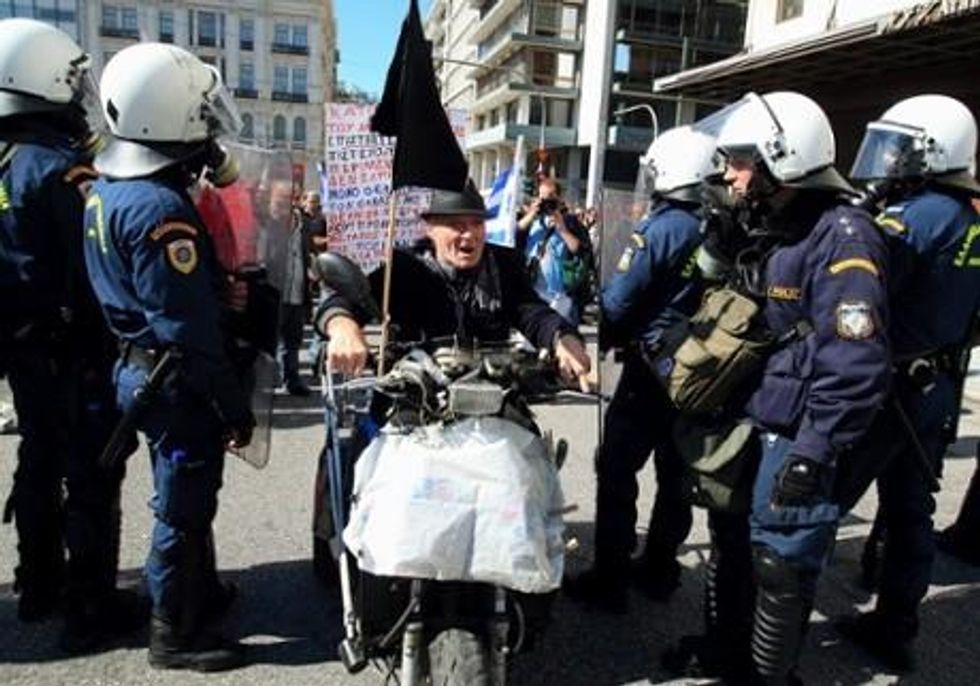
Beating drums, blowing whistles and chanting "Robbers, robbers!" demonstrators marched on parliament to display their anger at the wage cuts and tax hikes forced on the country by international lenders, Reuters reports.
"Unpaid bills, slashed wages and pensions, boarded-up shops. Greek people cannot wait for saviours. Only by taking their fortunes into their own hands can they exit the stalemate," opposition leader Alexis Tsipras, head of the left leaning Syriza party, told reporters.
"People of labour must fight for as long as this disastrous policy is followed by the government under orders from (Greece's creditors)," said Yiannis Panagopoulos, chairman of the private sector union GSEE, which organized the day's walkout along with the ADEDY public sector union. "They have destroyed an entire people."
"A social explosion is very near," added Ilias Iliopoulos, secretary general of the ADEDY, speaking from a rally in central Athens square while police helicopters circled overhead.
Six years of recession and three of punishing austerity policies have tripled the rate of unemployment in the country, bringing it to 27 percent for the general population--the highest in the European Union-- and over 60 percent for Greek youth.
Kicking off the first general strike of the year, Greek journalists walked off the job Tuesday choosing to keep a visit by French President Francois Hollande to Athens largely unreported.
Though Wednesday's protests were largely peaceful, Reuters reports that riot police fired tear gas at "hooded youths" who were "hurling rocks and bottles during a demonstration."
In observance of the general strike, state schools and tax offices remained shuttered, with public hospitals functioning solely on emergency staff. Al Jazeera reports that "court cases were stalled as lawyers walked off the job, and even neighborhood street fruit and vegetable markets were cancelled. Private doctors and dentists also joined the strike."
Transportation also came to a standstill, as the work stoppage forced airport authorities to cancel dozens of flights while ferries remained docked throughout the day.
One of the great surprises of the day was the added presence of Greek farmers who joined in the demonstrations. In Athens, the traditionally loyal supporters of the New Democracy party blocked the streets with their tractors.
Demonstrations were also held in Greece's second-biggest city, Thessaloniki, and on the island of Crete, "where dozens of protesters hit the streets waving black flags," said Reuters.
According to Guardian reports, additional marches were held in the communities of Kalamata and Corinth (Peloponnese), Larissa and Karditsa (central Greece), Preveza (western Greece), and Alexandroupolis (Thrace).
Since securing the second round of bailout funds in December the Greek government has significantly cracked down on opposition demonstrations, twice this year invoking emergency laws to force protesting laborers return to work after week-long walkouts.
Anticipating the elimination of 25,000 civil service jobs in the next round of labor cuts demanded by creditors, the International Monetary Fund and the European Union, the country's labor force is prepared to continue to fight against austerity until their voices are heard.
Beating drums, blowing whistles and chanting "Robbers, robbers!" demonstrators marched on parliament to display their anger at the wage cuts and tax hikes forced on the country by international lenders, Reuters reports.
"Unpaid bills, slashed wages and pensions, boarded-up shops. Greek people cannot wait for saviours. Only by taking their fortunes into their own hands can they exit the stalemate," opposition leader Alexis Tsipras, head of the left leaning Syriza party, told reporters.
"People of labour must fight for as long as this disastrous policy is followed by the government under orders from (Greece's creditors)," said Yiannis Panagopoulos, chairman of the private sector union GSEE, which organized the day's walkout along with the ADEDY public sector union. "They have destroyed an entire people."
"A social explosion is very near," added Ilias Iliopoulos, secretary general of the ADEDY, speaking from a rally in central Athens square while police helicopters circled overhead.
Six years of recession and three of punishing austerity policies have tripled the rate of unemployment in the country, bringing it to 27 percent for the general population--the highest in the European Union-- and over 60 percent for Greek youth.
Kicking off the first general strike of the year, Greek journalists walked off the job Tuesday choosing to keep a visit by French President Francois Hollande to Athens largely unreported.
Though Wednesday's protests were largely peaceful, Reuters reports that riot police fired tear gas at "hooded youths" who were "hurling rocks and bottles during a demonstration."
In observance of the general strike, state schools and tax offices remained shuttered, with public hospitals functioning solely on emergency staff. Al Jazeera reports that "court cases were stalled as lawyers walked off the job, and even neighborhood street fruit and vegetable markets were cancelled. Private doctors and dentists also joined the strike."
Transportation also came to a standstill, as the work stoppage forced airport authorities to cancel dozens of flights while ferries remained docked throughout the day.
One of the great surprises of the day was the added presence of Greek farmers who joined in the demonstrations. In Athens, the traditionally loyal supporters of the New Democracy party blocked the streets with their tractors.
Demonstrations were also held in Greece's second-biggest city, Thessaloniki, and on the island of Crete, "where dozens of protesters hit the streets waving black flags," said Reuters.
According to Guardian reports, additional marches were held in the communities of Kalamata and Corinth (Peloponnese), Larissa and Karditsa (central Greece), Preveza (western Greece), and Alexandroupolis (Thrace).
Since securing the second round of bailout funds in December the Greek government has significantly cracked down on opposition demonstrations, twice this year invoking emergency laws to force protesting laborers return to work after week-long walkouts.
Anticipating the elimination of 25,000 civil service jobs in the next round of labor cuts demanded by creditors, the International Monetary Fund and the European Union, the country's labor force is prepared to continue to fight against austerity until their voices are heard.