SUBSCRIBE TO OUR FREE NEWSLETTER
Daily news & progressive opinion—funded by the people, not the corporations—delivered straight to your inbox.
5
#000000
#FFFFFF
To donate by check, phone, or other method, see our More Ways to Give page.
Abused by a minority Republican party unyielding in its strategy to block any progressive legislation with which they disagree, critics say Senate Majority Leader Harry Reid's failure to push through a return of the "talking filibuster" crushes most hope for progress on the nation's most pressing problems.
"This country faces major crises in terms of the economy and unemployment, the deficit, global warming, health care, campaign finance reform, education and a crumbling infrastructure," said Senator Bernie Sanders (I-VT), explaining why he voted against the measure's weak provisions.
"In my view, none of these problems will be effectively addressed so long as one senator can demand 60 votes to pass legislation. The rule changes adopted today ... are not enough."
Democratic Senator Tom Harkin of Iowa went on record to say that the meager reforms will make passage of meaningful legislation in the Senate nearly impossible.
Harkin told reporters: "I said to President Obama back in August ... and I said to him the night before the election, I said to him, 'Look, if you get reelected, if we don't do something significant about filibuster reform, you might as well take a four-year vacation,'"
"This is not significant," Harkin added.
Adam Green, co-founder of the Progressive Change Campaign Committee, whose members had pushed for stronger reforms called the Senate's decision one "based on fear." The rules passed, he said, "will ultimately hurt millions of people who would have been helped by progressive bills that Republicans are sure to filibuster."
A group called Fix the Senate Now, which also rallied behind stronger measures, called the result a "missed an opportunity to restore accountability and deliberation to the Senate, while not raising the costs of obstruction."
"The incremental 'reforms' in the agreement do not go nearly far enough to deliver meaningful change," the group said.
Digby, political blogger at the Campaign for America's Future, summed up the deal by saying: "Better than nothing, but still not much. The story of our time."
And others put the focus directly on Reid, who had once threatened to exert all efforts and use all options at his disposal to see the strong changes enacted.
"My friend Harry Reid, the senator from Searchlight, NV, has gone missing in the fight for filibuster reform," said Common Cause President Bob Edgar. "The deal he and Sen. McConnell have struck allows individual senators to continue blocking debate and action by the entire body and to do so without explaining themselves to their colleagues or the American people. This is not the Senate of debate and deliberation our founders envisioned."
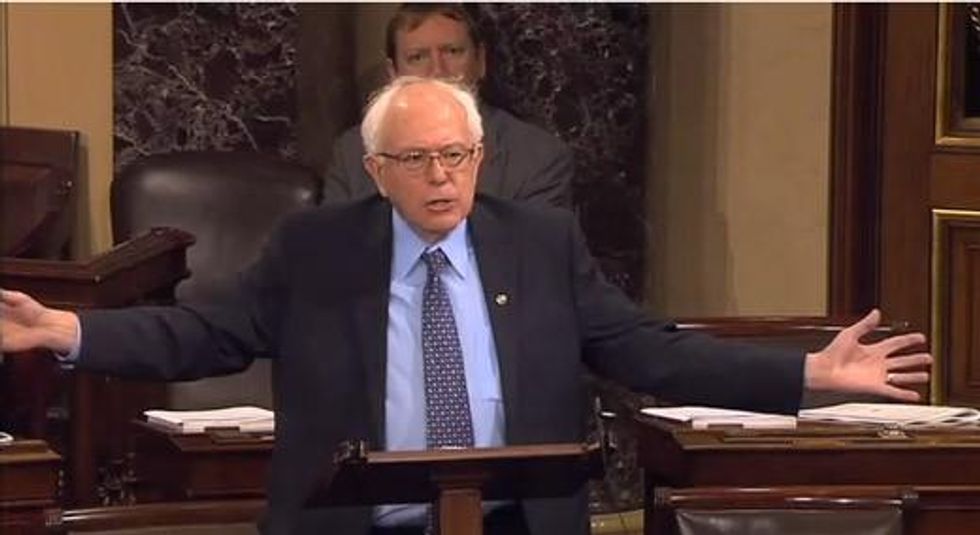
Senator Sanders seemed to agree with Edgar's last sentiment. In his closing floor statement, Sanders told his fellow Senators and those watching:
Most Americans grew up believing that in America the majority rules. That is not the case in the Senate.
For many years now, especially since President Obama has been in office, it has taken 60 votes to pass any significant piece of legislation. When Lyndon Johnson was majority leader in the 1950s, he filed cloture to end a filibuster only once. Majority Leader Reid has filed cloture 390 times.
The Senate is not the House and the minority party must be treated with respect and given the opportunity to offer amendments and make their case in opposition. A minority must not, however, be allowed to permanently obstruct the wishes of the majority. That is not democracy. That is a perversion of democracy.
In my view, if a senator or a group of senators are strenuously opposed to legislation they have the right and duty to come to the floor and, for as long as they want, engage in a talking filibuster by explaining to the American people the reasons for their objection. They should not, however, continue to have the right to abuse arcane Senate rules to block a majority of senators from acting on behalf of the American people.
And yet, it appears, that is exactly what they'll get the opportunity to do.
Abused by a minority Republican party unyielding in its strategy to block any progressive legislation with which they disagree, critics say Senate Majority Leader Harry Reid's failure to push through a return of the "talking filibuster" crushes most hope for progress on the nation's most pressing problems.
"This country faces major crises in terms of the economy and unemployment, the deficit, global warming, health care, campaign finance reform, education and a crumbling infrastructure," said Senator Bernie Sanders (I-VT), explaining why he voted against the measure's weak provisions.
"In my view, none of these problems will be effectively addressed so long as one senator can demand 60 votes to pass legislation. The rule changes adopted today ... are not enough."
Democratic Senator Tom Harkin of Iowa went on record to say that the meager reforms will make passage of meaningful legislation in the Senate nearly impossible.
Harkin told reporters: "I said to President Obama back in August ... and I said to him the night before the election, I said to him, 'Look, if you get reelected, if we don't do something significant about filibuster reform, you might as well take a four-year vacation,'"
"This is not significant," Harkin added.
Adam Green, co-founder of the Progressive Change Campaign Committee, whose members had pushed for stronger reforms called the Senate's decision one "based on fear." The rules passed, he said, "will ultimately hurt millions of people who would have been helped by progressive bills that Republicans are sure to filibuster."
A group called Fix the Senate Now, which also rallied behind stronger measures, called the result a "missed an opportunity to restore accountability and deliberation to the Senate, while not raising the costs of obstruction."
"The incremental 'reforms' in the agreement do not go nearly far enough to deliver meaningful change," the group said.
Digby, political blogger at the Campaign for America's Future, summed up the deal by saying: "Better than nothing, but still not much. The story of our time."
And others put the focus directly on Reid, who had once threatened to exert all efforts and use all options at his disposal to see the strong changes enacted.
"My friend Harry Reid, the senator from Searchlight, NV, has gone missing in the fight for filibuster reform," said Common Cause President Bob Edgar. "The deal he and Sen. McConnell have struck allows individual senators to continue blocking debate and action by the entire body and to do so without explaining themselves to their colleagues or the American people. This is not the Senate of debate and deliberation our founders envisioned."
Senator Sanders seemed to agree with Edgar's last sentiment. In his closing floor statement, Sanders told his fellow Senators and those watching:
Most Americans grew up believing that in America the majority rules. That is not the case in the Senate.
For many years now, especially since President Obama has been in office, it has taken 60 votes to pass any significant piece of legislation. When Lyndon Johnson was majority leader in the 1950s, he filed cloture to end a filibuster only once. Majority Leader Reid has filed cloture 390 times.
The Senate is not the House and the minority party must be treated with respect and given the opportunity to offer amendments and make their case in opposition. A minority must not, however, be allowed to permanently obstruct the wishes of the majority. That is not democracy. That is a perversion of democracy.
In my view, if a senator or a group of senators are strenuously opposed to legislation they have the right and duty to come to the floor and, for as long as they want, engage in a talking filibuster by explaining to the American people the reasons for their objection. They should not, however, continue to have the right to abuse arcane Senate rules to block a majority of senators from acting on behalf of the American people.
And yet, it appears, that is exactly what they'll get the opportunity to do.
Abused by a minority Republican party unyielding in its strategy to block any progressive legislation with which they disagree, critics say Senate Majority Leader Harry Reid's failure to push through a return of the "talking filibuster" crushes most hope for progress on the nation's most pressing problems.
"This country faces major crises in terms of the economy and unemployment, the deficit, global warming, health care, campaign finance reform, education and a crumbling infrastructure," said Senator Bernie Sanders (I-VT), explaining why he voted against the measure's weak provisions.
"In my view, none of these problems will be effectively addressed so long as one senator can demand 60 votes to pass legislation. The rule changes adopted today ... are not enough."
Democratic Senator Tom Harkin of Iowa went on record to say that the meager reforms will make passage of meaningful legislation in the Senate nearly impossible.
Harkin told reporters: "I said to President Obama back in August ... and I said to him the night before the election, I said to him, 'Look, if you get reelected, if we don't do something significant about filibuster reform, you might as well take a four-year vacation,'"
"This is not significant," Harkin added.
Adam Green, co-founder of the Progressive Change Campaign Committee, whose members had pushed for stronger reforms called the Senate's decision one "based on fear." The rules passed, he said, "will ultimately hurt millions of people who would have been helped by progressive bills that Republicans are sure to filibuster."
A group called Fix the Senate Now, which also rallied behind stronger measures, called the result a "missed an opportunity to restore accountability and deliberation to the Senate, while not raising the costs of obstruction."
"The incremental 'reforms' in the agreement do not go nearly far enough to deliver meaningful change," the group said.
Digby, political blogger at the Campaign for America's Future, summed up the deal by saying: "Better than nothing, but still not much. The story of our time."
And others put the focus directly on Reid, who had once threatened to exert all efforts and use all options at his disposal to see the strong changes enacted.
"My friend Harry Reid, the senator from Searchlight, NV, has gone missing in the fight for filibuster reform," said Common Cause President Bob Edgar. "The deal he and Sen. McConnell have struck allows individual senators to continue blocking debate and action by the entire body and to do so without explaining themselves to their colleagues or the American people. This is not the Senate of debate and deliberation our founders envisioned."
Senator Sanders seemed to agree with Edgar's last sentiment. In his closing floor statement, Sanders told his fellow Senators and those watching:
Most Americans grew up believing that in America the majority rules. That is not the case in the Senate.
For many years now, especially since President Obama has been in office, it has taken 60 votes to pass any significant piece of legislation. When Lyndon Johnson was majority leader in the 1950s, he filed cloture to end a filibuster only once. Majority Leader Reid has filed cloture 390 times.
The Senate is not the House and the minority party must be treated with respect and given the opportunity to offer amendments and make their case in opposition. A minority must not, however, be allowed to permanently obstruct the wishes of the majority. That is not democracy. That is a perversion of democracy.
In my view, if a senator or a group of senators are strenuously opposed to legislation they have the right and duty to come to the floor and, for as long as they want, engage in a talking filibuster by explaining to the American people the reasons for their objection. They should not, however, continue to have the right to abuse arcane Senate rules to block a majority of senators from acting on behalf of the American people.
And yet, it appears, that is exactly what they'll get the opportunity to do.