SUBSCRIBE TO OUR FREE NEWSLETTER
Daily news & progressive opinion—funded by the people, not the corporations—delivered straight to your inbox.
5
#000000
#FFFFFF
To donate by check, phone, or other method, see our More Ways to Give page.
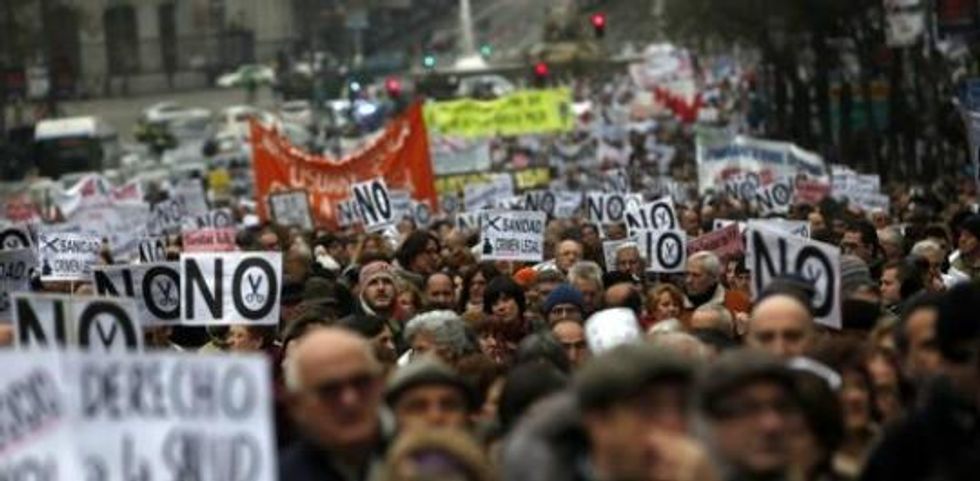
Thousands of Spanish medical workers marched through downtown Madrid on Monday in protest of a government plan to privatize the nation's public health care system.
Blowing horns and banging drums, the protesters marched along the capital's central avenues, some wearing white doctor's coats as well as scarves to protect against the cold, AFP says.
"Healthcare is up for sale so politicians can make money," read one banner.
The privatization proposal is part of an austerity push on the part of Madrid's conservative regional government who claims that these measures are necessary to save the health care system.
"I don't think it's fair that the taxes we all pay are going to go to private companies to provide our healthcare," said protestor Lucia Munoz.
"Those companies have to make a profit, so they are going to cut whatever they can," including jobs and budgets, she said. "That is going to affect the quality of healthcare."
RT reports:
The demonstrators protested against the privatization of six hospitals and 27 health centers in the Spanish capital. This comes after a new law was passed last month allowing Madrid's regional government to transfer the management of hospitals and health centers to private companies.
In Spain, health care and education are administered by the country's 17 semi-autonomous regions rather than the central government.
Monday's march is part of a series of anti-privatization demonstrations described as "white tide" because of the color of the protesters' medical scrubs.
Monica Garcia from the Association of Medical Specialists of Madrid, which initiated the march, said her organization would continue to protest "the loss of our public health care, a national heritage that belongs to us and not to the government."
"Those in government have money, so they don't care if they have to pay for health care," said Aurora Rojas, a 55-year-old nurse. "But the rest of us who just have a regular salary will not be able to afford decent treatment," she said.
This fall, anti-austerity protests racked the European nation in response to numerous budget proposals that reached "deep into the pockets of middle and working class citizens."

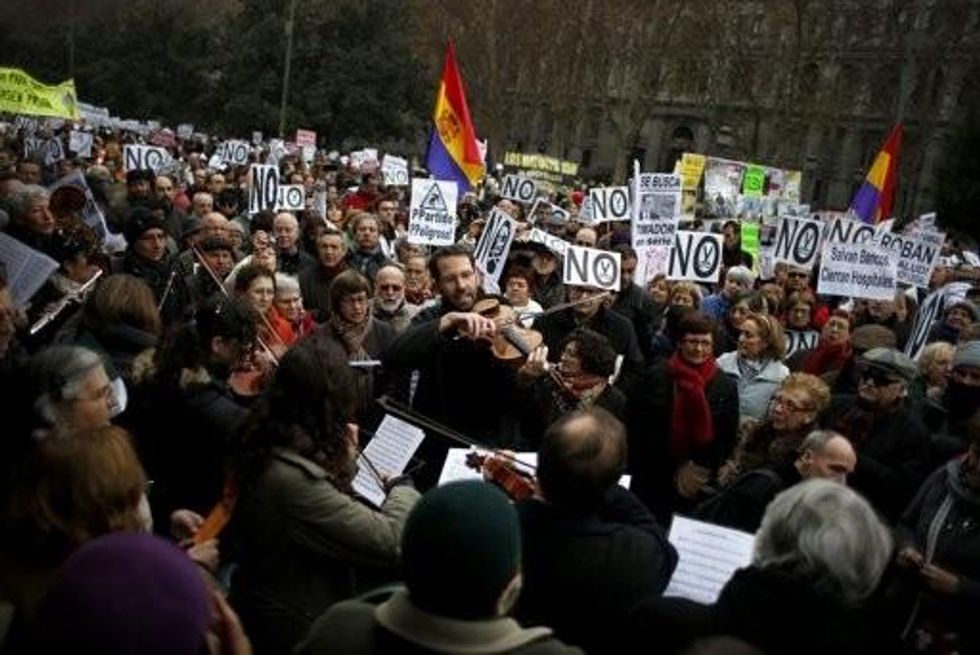
Thousands of Spanish medical workers marched through downtown Madrid on Monday in protest of a government plan to privatize the nation's public health care system.
Blowing horns and banging drums, the protesters marched along the capital's central avenues, some wearing white doctor's coats as well as scarves to protect against the cold, AFP says.
"Healthcare is up for sale so politicians can make money," read one banner.
The privatization proposal is part of an austerity push on the part of Madrid's conservative regional government who claims that these measures are necessary to save the health care system.
"I don't think it's fair that the taxes we all pay are going to go to private companies to provide our healthcare," said protestor Lucia Munoz.
"Those companies have to make a profit, so they are going to cut whatever they can," including jobs and budgets, she said. "That is going to affect the quality of healthcare."
RT reports:
The demonstrators protested against the privatization of six hospitals and 27 health centers in the Spanish capital. This comes after a new law was passed last month allowing Madrid's regional government to transfer the management of hospitals and health centers to private companies.
In Spain, health care and education are administered by the country's 17 semi-autonomous regions rather than the central government.
Monday's march is part of a series of anti-privatization demonstrations described as "white tide" because of the color of the protesters' medical scrubs.
Monica Garcia from the Association of Medical Specialists of Madrid, which initiated the march, said her organization would continue to protest "the loss of our public health care, a national heritage that belongs to us and not to the government."
"Those in government have money, so they don't care if they have to pay for health care," said Aurora Rojas, a 55-year-old nurse. "But the rest of us who just have a regular salary will not be able to afford decent treatment," she said.
This fall, anti-austerity protests racked the European nation in response to numerous budget proposals that reached "deep into the pockets of middle and working class citizens."
Thousands of Spanish medical workers marched through downtown Madrid on Monday in protest of a government plan to privatize the nation's public health care system.
Blowing horns and banging drums, the protesters marched along the capital's central avenues, some wearing white doctor's coats as well as scarves to protect against the cold, AFP says.
"Healthcare is up for sale so politicians can make money," read one banner.
The privatization proposal is part of an austerity push on the part of Madrid's conservative regional government who claims that these measures are necessary to save the health care system.
"I don't think it's fair that the taxes we all pay are going to go to private companies to provide our healthcare," said protestor Lucia Munoz.
"Those companies have to make a profit, so they are going to cut whatever they can," including jobs and budgets, she said. "That is going to affect the quality of healthcare."
RT reports:
The demonstrators protested against the privatization of six hospitals and 27 health centers in the Spanish capital. This comes after a new law was passed last month allowing Madrid's regional government to transfer the management of hospitals and health centers to private companies.
In Spain, health care and education are administered by the country's 17 semi-autonomous regions rather than the central government.
Monday's march is part of a series of anti-privatization demonstrations described as "white tide" because of the color of the protesters' medical scrubs.
Monica Garcia from the Association of Medical Specialists of Madrid, which initiated the march, said her organization would continue to protest "the loss of our public health care, a national heritage that belongs to us and not to the government."
"Those in government have money, so they don't care if they have to pay for health care," said Aurora Rojas, a 55-year-old nurse. "But the rest of us who just have a regular salary will not be able to afford decent treatment," she said.
This fall, anti-austerity protests racked the European nation in response to numerous budget proposals that reached "deep into the pockets of middle and working class citizens."