
The world's most elite professional race car drivers will head to Bahrain next week to participate in the Bahrain Grand Prix as the sport's governing body has accepted assurances from the ruling monarchy that, despite popular unrest and an ongoing protest movement, the streets will be safe for the drivers and the throngs of international spectators who will attend the race.
"Based on the current information the FIA has at this stage, it is satisfied that all the proper security measures are in place," the Association said in a press statement. "The FIA confirms that the 2012 Gulf Air F1 Grand Prix of Bahrain will go ahead as scheduled". Commercial rights holder of the Grand Prix, Bernie Ecclestone, said from Shanghai, "I know people who live there and it's all very quiet and peaceful."
Youth activists, have promised "three days of rage" during the race, and human rights groups expressed deep disappointment at the decision. Amnesty International released a special brief to expressly tell the world that "the human rights abuses are not over in Bahrain."
"Despite the authorities' claims to the contrary, state violence against those who oppose the Al Khalifa family rule continues, and in practice, not much has changed in the country since the brutal crackdown on anti-government protesters in February and March 2011," said the statement.
The Formula One race was cancelled in 2011 after Bahraini students and pro-democracy reformers took the streets during the so-called "Arab Spring," demanding an end to the authoritarian rule of the monarchy and asking for democracy reforms. The movement has been violently suppressed, but the government's brutal crackdown has received only tepid condemnation from the United States. Bahrain has long been home to the US Navy's Fifth Fleet in the oil-rich region.
* * *
Al-Jazeera: Bahraini youth vow 'three days of rage' during Formula 1
Ala'a Shehabi speaks to Al Jazeera from Manama about his conversation with Formula 1 Chief Bernie Ecclestone and the Bahraini youth who have promised "three days of rage" during the event:
* * *
Agence France-Presse: Bahrain Grand Prix cleared despite safety fears
With the FIA and Ecclestone under intense pressure to make a final ruling, the flamboyant 81-year-old had a 30-minute meeting with the teams before emerging to proclaim the race had never been in any doubt.
"I know people who live there and it's all very quiet and peaceful." --Formula One's Bernie Ecclestone
Asked by AFP if he was 100 percent sure Bahrain was on, he said: "Two hundred percent."
Ecclestone added: "Everybody's happy. You guys are happy."
Prompted if he had any concerns, he said: "Not at all. It's a 'problem' which has been discussed by the media, who have no idea what is going on.
"This race is on the calendar and has been on the calendar for quite a long time. We will be there. All the teams are happy to be there.
"I know people who live there and it's all very quiet and peaceful."
He added: "Formula One has put Bahrain on the map. They will sort out their internal problems, I am quite sure. I think it is good for Bahrain. Our position is quite clear: we don't get involved in politics."
* * *
Al-Jazeera reports:
Bahrain has suffered civil unrest since an uprising in February last year and the situation has grown more tense in recent weeks as the race date approaches and the health of a jailed activist on hunger strike deteriorates.
More than 5,000 demonstrators and police faced off near the capital Manama last Friday, with the protestors demanding the release of hunger striker Abdulhadi al-Khawaja.
Abdulhadi has been on hunger strike for more than 60 days and was moved to a military hospital last week in a fragile condition.
FIA president Todt is expected to be in China for the Chinese Grand Prix this weekend, as is F1 supremo Bernie Ecclestone, and there are likely to be a number of meetings in the Shanghai paddock - possibly up until as late as Sunday morning.
"Friday has been the busiest day for protests in Bahrain so Saturday looks the most likely day for any emergency meeting [in Shanghai]," commented one team member.
Last year's Bahrain Grand Prix was repeatedly re-scheduled and then reluctantly cancelled by organizers due to the violence in the country.
* * *
Amnesty International: Human Rights and the Grand Prix
The international community must not turn a blind eye to the ongoing human rights crisis in the country. The government must understand that its half-hearted measures are not sufficient -- sustained progress on real human rights reform remains essential.
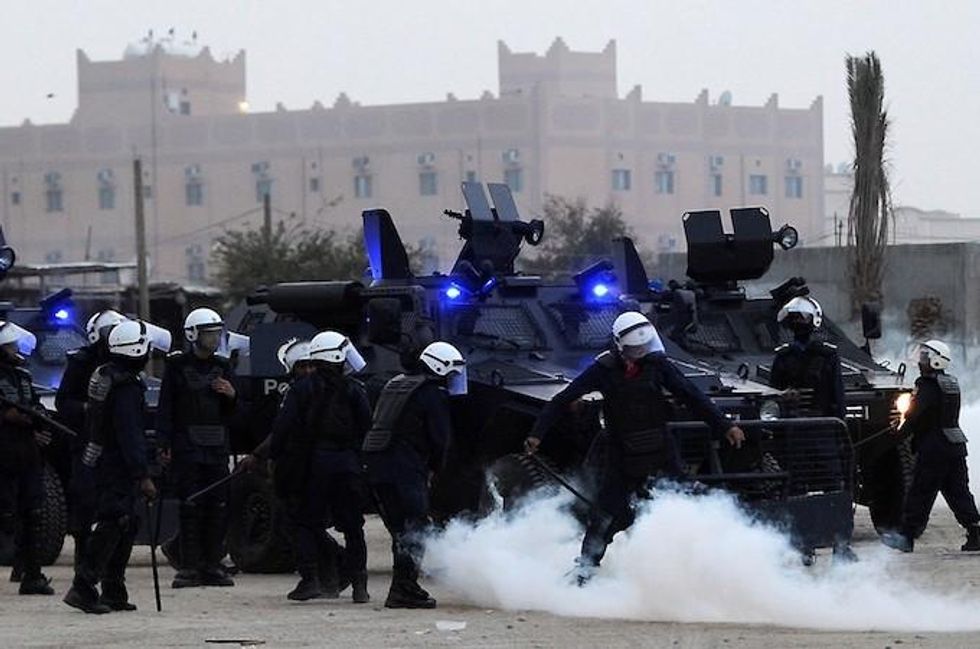
In recent months, the Bahraini authorities have become more concerned with re-building their image and investing in public relations than with actually introducing real human rights and political reforms in their country. Indeed, for the authorities, much is at stake. They are keen to portray Bahrain as a stable and secure country in order to stave off international criticism. But as the country prepares to host the Formula 1 Grand Prix on 20-22 April, after the event was cancelled last year in response to the instability in the country, daily anti-government protests continue to be violently suppressed by the riot police that uses tear gas recklessly and with fatal results. Acts of violence by some protesters against the police have also considerably increased in the last three months.
Holding the Grand Prix in Bahrain in 2012 risks being interpreted by the government of Bahrain as symbolizing a return to business as usual. The international community must not turn a blind eye to the ongoing human rights crisis in the country. The government must understand that its half-hearted measures are not sufficient -- sustained progress on real human rights reform remains essential.
# # #
The world's most elite professional race car drivers will head to Bahrain next week to participate in the Bahrain Grand Prix as the sport's governing body has accepted assurances from the ruling monarchy that, despite popular unrest and an ongoing protest movement, the streets will be safe for the drivers and the throngs of international spectators who will attend the race.
"Based on the current information the FIA has at this stage, it is satisfied that all the proper security measures are in place," the Association said in a press statement. "The FIA confirms that the 2012 Gulf Air F1 Grand Prix of Bahrain will go ahead as scheduled". Commercial rights holder of the Grand Prix, Bernie Ecclestone, said from Shanghai, "I know people who live there and it's all very quiet and peaceful."
Youth activists, have promised "three days of rage" during the race, and human rights groups expressed deep disappointment at the decision. Amnesty International released a special brief to expressly tell the world that "the human rights abuses are not over in Bahrain."
"Despite the authorities' claims to the contrary, state violence against those who oppose the Al Khalifa family rule continues, and in practice, not much has changed in the country since the brutal crackdown on anti-government protesters in February and March 2011," said the statement.
The Formula One race was cancelled in 2011 after Bahraini students and pro-democracy reformers took the streets during the so-called "Arab Spring," demanding an end to the authoritarian rule of the monarchy and asking for democracy reforms. The movement has been violently suppressed, but the government's brutal crackdown has received only tepid condemnation from the United States. Bahrain has long been home to the US Navy's Fifth Fleet in the oil-rich region.
* * *
Al-Jazeera: Bahraini youth vow 'three days of rage' during Formula 1
Ala'a Shehabi speaks to Al Jazeera from Manama about his conversation with Formula 1 Chief Bernie Ecclestone and the Bahraini youth who have promised "three days of rage" during the event:
* * *
Agence France-Presse: Bahrain Grand Prix cleared despite safety fears
With the FIA and Ecclestone under intense pressure to make a final ruling, the flamboyant 81-year-old had a 30-minute meeting with the teams before emerging to proclaim the race had never been in any doubt.
"I know people who live there and it's all very quiet and peaceful." --Formula One's Bernie Ecclestone
Asked by AFP if he was 100 percent sure Bahrain was on, he said: "Two hundred percent."
Ecclestone added: "Everybody's happy. You guys are happy."
Prompted if he had any concerns, he said: "Not at all. It's a 'problem' which has been discussed by the media, who have no idea what is going on.
"This race is on the calendar and has been on the calendar for quite a long time. We will be there. All the teams are happy to be there.
"I know people who live there and it's all very quiet and peaceful."
He added: "Formula One has put Bahrain on the map. They will sort out their internal problems, I am quite sure. I think it is good for Bahrain. Our position is quite clear: we don't get involved in politics."
* * *
Al-Jazeera reports:
Bahrain has suffered civil unrest since an uprising in February last year and the situation has grown more tense in recent weeks as the race date approaches and the health of a jailed activist on hunger strike deteriorates.
More than 5,000 demonstrators and police faced off near the capital Manama last Friday, with the protestors demanding the release of hunger striker Abdulhadi al-Khawaja.
Abdulhadi has been on hunger strike for more than 60 days and was moved to a military hospital last week in a fragile condition.
FIA president Todt is expected to be in China for the Chinese Grand Prix this weekend, as is F1 supremo Bernie Ecclestone, and there are likely to be a number of meetings in the Shanghai paddock - possibly up until as late as Sunday morning.
"Friday has been the busiest day for protests in Bahrain so Saturday looks the most likely day for any emergency meeting [in Shanghai]," commented one team member.
Last year's Bahrain Grand Prix was repeatedly re-scheduled and then reluctantly cancelled by organizers due to the violence in the country.
* * *
Amnesty International: Human Rights and the Grand Prix
The international community must not turn a blind eye to the ongoing human rights crisis in the country. The government must understand that its half-hearted measures are not sufficient -- sustained progress on real human rights reform remains essential.
In recent months, the Bahraini authorities have become more concerned with re-building their image and investing in public relations than with actually introducing real human rights and political reforms in their country. Indeed, for the authorities, much is at stake. They are keen to portray Bahrain as a stable and secure country in order to stave off international criticism. But as the country prepares to host the Formula 1 Grand Prix on 20-22 April, after the event was cancelled last year in response to the instability in the country, daily anti-government protests continue to be violently suppressed by the riot police that uses tear gas recklessly and with fatal results. Acts of violence by some protesters against the police have also considerably increased in the last three months.
Holding the Grand Prix in Bahrain in 2012 risks being interpreted by the government of Bahrain as symbolizing a return to business as usual. The international community must not turn a blind eye to the ongoing human rights crisis in the country. The government must understand that its half-hearted measures are not sufficient -- sustained progress on real human rights reform remains essential.
# # #
The world's most elite professional race car drivers will head to Bahrain next week to participate in the Bahrain Grand Prix as the sport's governing body has accepted assurances from the ruling monarchy that, despite popular unrest and an ongoing protest movement, the streets will be safe for the drivers and the throngs of international spectators who will attend the race.
"Based on the current information the FIA has at this stage, it is satisfied that all the proper security measures are in place," the Association said in a press statement. "The FIA confirms that the 2012 Gulf Air F1 Grand Prix of Bahrain will go ahead as scheduled". Commercial rights holder of the Grand Prix, Bernie Ecclestone, said from Shanghai, "I know people who live there and it's all very quiet and peaceful."
Youth activists, have promised "three days of rage" during the race, and human rights groups expressed deep disappointment at the decision. Amnesty International released a special brief to expressly tell the world that "the human rights abuses are not over in Bahrain."
"Despite the authorities' claims to the contrary, state violence against those who oppose the Al Khalifa family rule continues, and in practice, not much has changed in the country since the brutal crackdown on anti-government protesters in February and March 2011," said the statement.
The Formula One race was cancelled in 2011 after Bahraini students and pro-democracy reformers took the streets during the so-called "Arab Spring," demanding an end to the authoritarian rule of the monarchy and asking for democracy reforms. The movement has been violently suppressed, but the government's brutal crackdown has received only tepid condemnation from the United States. Bahrain has long been home to the US Navy's Fifth Fleet in the oil-rich region.
* * *
Al-Jazeera: Bahraini youth vow 'three days of rage' during Formula 1
Ala'a Shehabi speaks to Al Jazeera from Manama about his conversation with Formula 1 Chief Bernie Ecclestone and the Bahraini youth who have promised "three days of rage" during the event:
* * *
Agence France-Presse: Bahrain Grand Prix cleared despite safety fears
With the FIA and Ecclestone under intense pressure to make a final ruling, the flamboyant 81-year-old had a 30-minute meeting with the teams before emerging to proclaim the race had never been in any doubt.
"I know people who live there and it's all very quiet and peaceful." --Formula One's Bernie Ecclestone
Asked by AFP if he was 100 percent sure Bahrain was on, he said: "Two hundred percent."
Ecclestone added: "Everybody's happy. You guys are happy."
Prompted if he had any concerns, he said: "Not at all. It's a 'problem' which has been discussed by the media, who have no idea what is going on.
"This race is on the calendar and has been on the calendar for quite a long time. We will be there. All the teams are happy to be there.
"I know people who live there and it's all very quiet and peaceful."
He added: "Formula One has put Bahrain on the map. They will sort out their internal problems, I am quite sure. I think it is good for Bahrain. Our position is quite clear: we don't get involved in politics."
* * *
Al-Jazeera reports:
Bahrain has suffered civil unrest since an uprising in February last year and the situation has grown more tense in recent weeks as the race date approaches and the health of a jailed activist on hunger strike deteriorates.
More than 5,000 demonstrators and police faced off near the capital Manama last Friday, with the protestors demanding the release of hunger striker Abdulhadi al-Khawaja.
Abdulhadi has been on hunger strike for more than 60 days and was moved to a military hospital last week in a fragile condition.
FIA president Todt is expected to be in China for the Chinese Grand Prix this weekend, as is F1 supremo Bernie Ecclestone, and there are likely to be a number of meetings in the Shanghai paddock - possibly up until as late as Sunday morning.
"Friday has been the busiest day for protests in Bahrain so Saturday looks the most likely day for any emergency meeting [in Shanghai]," commented one team member.
Last year's Bahrain Grand Prix was repeatedly re-scheduled and then reluctantly cancelled by organizers due to the violence in the country.
* * *
Amnesty International: Human Rights and the Grand Prix
The international community must not turn a blind eye to the ongoing human rights crisis in the country. The government must understand that its half-hearted measures are not sufficient -- sustained progress on real human rights reform remains essential.
In recent months, the Bahraini authorities have become more concerned with re-building their image and investing in public relations than with actually introducing real human rights and political reforms in their country. Indeed, for the authorities, much is at stake. They are keen to portray Bahrain as a stable and secure country in order to stave off international criticism. But as the country prepares to host the Formula 1 Grand Prix on 20-22 April, after the event was cancelled last year in response to the instability in the country, daily anti-government protests continue to be violently suppressed by the riot police that uses tear gas recklessly and with fatal results. Acts of violence by some protesters against the police have also considerably increased in the last three months.
Holding the Grand Prix in Bahrain in 2012 risks being interpreted by the government of Bahrain as symbolizing a return to business as usual. The international community must not turn a blind eye to the ongoing human rights crisis in the country. The government must understand that its half-hearted measures are not sufficient -- sustained progress on real human rights reform remains essential.
# # #