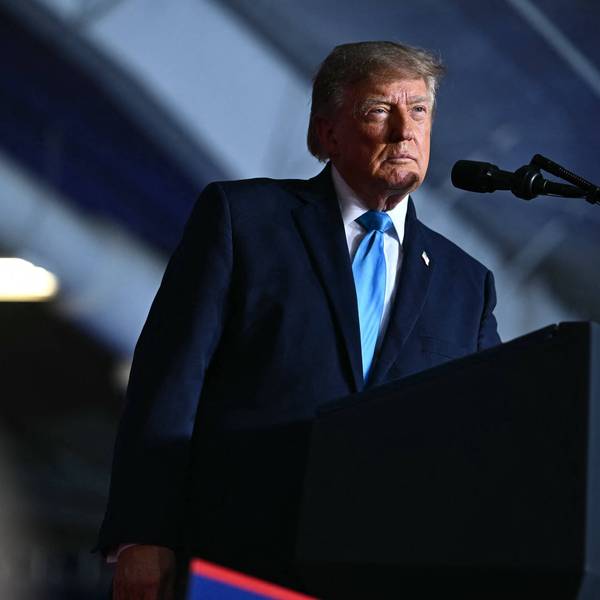
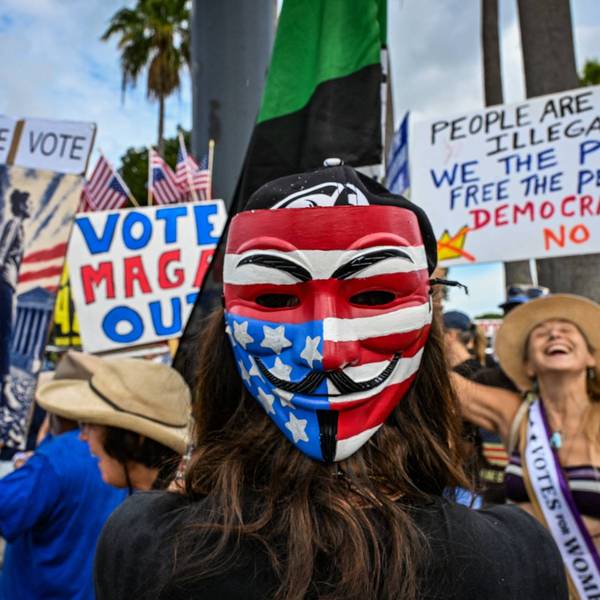
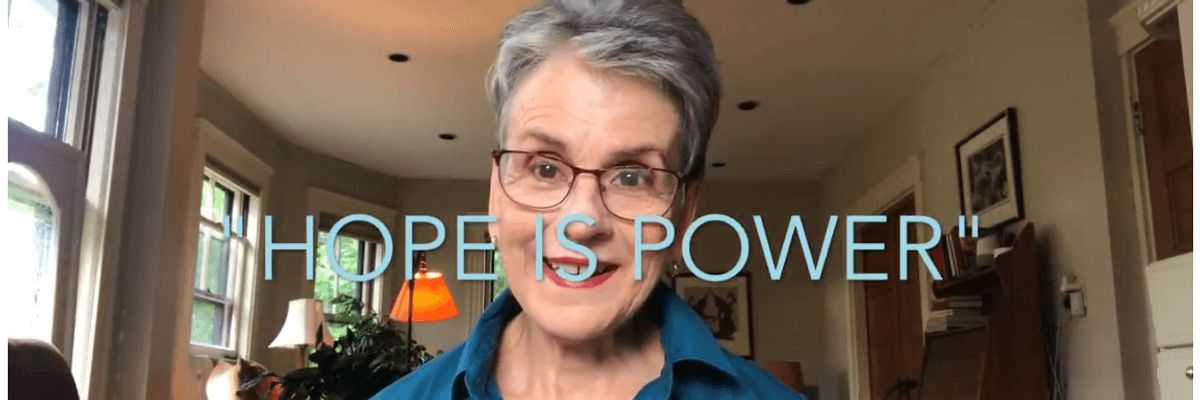
Let us drop any thought that hope is a weakling. (Photo: Samuel Corum/Getty Images)
Amid Our Nation's Mounting Democracy Crisis, Hope Is Power
Hope ignites our brains toward solutions
Yeah, I know. "Hope" gets shoved into a corner called "nice" where weaklings huddle who can't face hard realities. In fact, hope and power don't often show up in the same sentence.
Truth is, though, hope is a tap root of power.
First, note that the word power derives from the Latin, posse, "to be able." It is our capacity to act. So understood, power seems rather impossible without its partner, hope; for most of us have a hard time acting without at least a bit of it.
Then consider the work of Harvard's Srini Pillay, who grapples with hope's power from the world of psychiatry and neuroscience. In Life Unlocked he explains that hope has the power to help reorganize our brains toward solutions. "When the brain thinks that something is possible, it sketches out the route for achieving it."
"Hope is not an answer," he underscores, but because it stimulates the imagination "hope helps us to pose the right questions." And, I've learned that asking the right questions is foundational to achieving just about any goal.
And then Pillay adds the kicker.
Because "hope seems to travel in the same dungeons [parts of the brain] as fear, it might be a good soldier to employ if we want to meet fear." That sure sounds like power to me.
And there's yet another way hope wields power. It is the power to attract. When I sense hope in someone, immediately I am attracted. I want some of that!
And, in an era of multiplying threats, don't all of us, more than ever, want others near us?
Given our nation's mounting democracy crisis, with a president violating norms and rules that we long thought had protected us, don't we want others--in fact, millions more--joining together in the good work of fixing our democracy's system flaws that allowed this sad turn? Don't we want citizens closing the doors to big, secret money drowning out the voices of regular citizens?
Yes. Yes. Yes.
We want to attract strangers--people who've never ever been engaged in public actions--to join the work of hope that is the Democracy Movement.
Hope, I'm convinced, is one key to the birth and speedy growth of Democracy Initiative, an organization that in just five years has attracted nearly 70 national organizations--from labor to the environment to racial justice--representing 40 million Americans committed to pursuing reforms together to make democracy work for all of us.
A scowl of anger or despair won't draw in more new faces. Hope will. Hope is contagious, and that's a really good thing.
So, let us drop any thought that hope is a weakling.
No. It's pure muscle.
Hope ignites our brains toward solutions. It gets us asking the right questions. It counters fear. It attracts others. Wow.
Yes, hope is power, what we need now more than ever to fortify us to act boldly.
We are at a crossroads
This country and this world are at a monumental crossroads. In a few short weeks, US voters will have an opportunity to beat back the forces of fascism and confront the billionaires who are rigging the economy, our media system, and our democracy, making it increasingly impossible for ordinary people to get by. We’re not just talking about the election. We’re talking about what must be done once these fascist elements are vanquished from power. We need a bolder set of solutions than what either major party has so far been willing to offer and a working-class movement ready to fight like hell for it. Trump didn't emerge from nowhere. The conditions that fueled MAGA authoritarianism were created by decades of radical neoliberal economic policies and a corrupt political system dominated by corporate interests. They slashed taxes on the super-rich, promising that the benefits would trickle down. They said giveaways to the corporate titans would make life more affordable for the rest of us. It was all bullshit. And when a bitter, betrayed populace searches for someone to blame, right-wing demagogues have little trouble finding scapegoats. People know when they're being lied to, but you won't hear any of this from the corporate media. Only independent journalism—powered and funded by people who believe in building a better world—can deliver truly trustworthy daily news. Our Fall Campaign is underway, and we need your help. To power our newsroom through the rest of the year, we need to raise $125,000 by midnight on October 31. So if you share our vision, please contribute whatever you can to sustain our work. |
Yeah, I know. "Hope" gets shoved into a corner called "nice" where weaklings huddle who can't face hard realities. In fact, hope and power don't often show up in the same sentence.
Truth is, though, hope is a tap root of power.
First, note that the word power derives from the Latin, posse, "to be able." It is our capacity to act. So understood, power seems rather impossible without its partner, hope; for most of us have a hard time acting without at least a bit of it.
Then consider the work of Harvard's Srini Pillay, who grapples with hope's power from the world of psychiatry and neuroscience. In Life Unlocked he explains that hope has the power to help reorganize our brains toward solutions. "When the brain thinks that something is possible, it sketches out the route for achieving it."
"Hope is not an answer," he underscores, but because it stimulates the imagination "hope helps us to pose the right questions." And, I've learned that asking the right questions is foundational to achieving just about any goal.
And then Pillay adds the kicker.
Because "hope seems to travel in the same dungeons [parts of the brain] as fear, it might be a good soldier to employ if we want to meet fear." That sure sounds like power to me.
And there's yet another way hope wields power. It is the power to attract. When I sense hope in someone, immediately I am attracted. I want some of that!
And, in an era of multiplying threats, don't all of us, more than ever, want others near us?
Given our nation's mounting democracy crisis, with a president violating norms and rules that we long thought had protected us, don't we want others--in fact, millions more--joining together in the good work of fixing our democracy's system flaws that allowed this sad turn? Don't we want citizens closing the doors to big, secret money drowning out the voices of regular citizens?
Yes. Yes. Yes.
We want to attract strangers--people who've never ever been engaged in public actions--to join the work of hope that is the Democracy Movement.
Hope, I'm convinced, is one key to the birth and speedy growth of Democracy Initiative, an organization that in just five years has attracted nearly 70 national organizations--from labor to the environment to racial justice--representing 40 million Americans committed to pursuing reforms together to make democracy work for all of us.
A scowl of anger or despair won't draw in more new faces. Hope will. Hope is contagious, and that's a really good thing.
So, let us drop any thought that hope is a weakling.
No. It's pure muscle.
Hope ignites our brains toward solutions. It gets us asking the right questions. It counters fear. It attracts others. Wow.
Yes, hope is power, what we need now more than ever to fortify us to act boldly.
Yeah, I know. "Hope" gets shoved into a corner called "nice" where weaklings huddle who can't face hard realities. In fact, hope and power don't often show up in the same sentence.
Truth is, though, hope is a tap root of power.
First, note that the word power derives from the Latin, posse, "to be able." It is our capacity to act. So understood, power seems rather impossible without its partner, hope; for most of us have a hard time acting without at least a bit of it.
Then consider the work of Harvard's Srini Pillay, who grapples with hope's power from the world of psychiatry and neuroscience. In Life Unlocked he explains that hope has the power to help reorganize our brains toward solutions. "When the brain thinks that something is possible, it sketches out the route for achieving it."
"Hope is not an answer," he underscores, but because it stimulates the imagination "hope helps us to pose the right questions." And, I've learned that asking the right questions is foundational to achieving just about any goal.
And then Pillay adds the kicker.
Because "hope seems to travel in the same dungeons [parts of the brain] as fear, it might be a good soldier to employ if we want to meet fear." That sure sounds like power to me.
And there's yet another way hope wields power. It is the power to attract. When I sense hope in someone, immediately I am attracted. I want some of that!
And, in an era of multiplying threats, don't all of us, more than ever, want others near us?
Given our nation's mounting democracy crisis, with a president violating norms and rules that we long thought had protected us, don't we want others--in fact, millions more--joining together in the good work of fixing our democracy's system flaws that allowed this sad turn? Don't we want citizens closing the doors to big, secret money drowning out the voices of regular citizens?
Yes. Yes. Yes.
We want to attract strangers--people who've never ever been engaged in public actions--to join the work of hope that is the Democracy Movement.
Hope, I'm convinced, is one key to the birth and speedy growth of Democracy Initiative, an organization that in just five years has attracted nearly 70 national organizations--from labor to the environment to racial justice--representing 40 million Americans committed to pursuing reforms together to make democracy work for all of us.
A scowl of anger or despair won't draw in more new faces. Hope will. Hope is contagious, and that's a really good thing.
So, let us drop any thought that hope is a weakling.
No. It's pure muscle.
Hope ignites our brains toward solutions. It gets us asking the right questions. It counters fear. It attracts others. Wow.
Yes, hope is power, what we need now more than ever to fortify us to act boldly.