SUBSCRIBE TO OUR FREE NEWSLETTER
Daily news & progressive opinion—funded by the people, not the corporations—delivered straight to your inbox.
5
#000000
#FFFFFF
To donate by check, phone, or other method, see our More Ways to Give page.
Today marks five years since I was ordered into military confinement while deployed to Iraq in 2010. I find it difficult to believe, at times, just how long I have been in prison. Throughout this time, there have been so many ups and downs - it often feels like a physical and emotional roller coaster.
It all began in the first few weeks of 2010, when I made the life-changing decision to release to the public a repository of classified (and unclassified but "sensitive" ) documents that provided a simultaneously horrific and beautiful outlook on the war in Iraq and Afghanistan. After spending months preparing to deploy to Afghanistan in 2008, switching to Iraq in 2009 and actually staying in Iraq from 2009-10, I quickly and fully recognized the importance of these documents to the world at large.
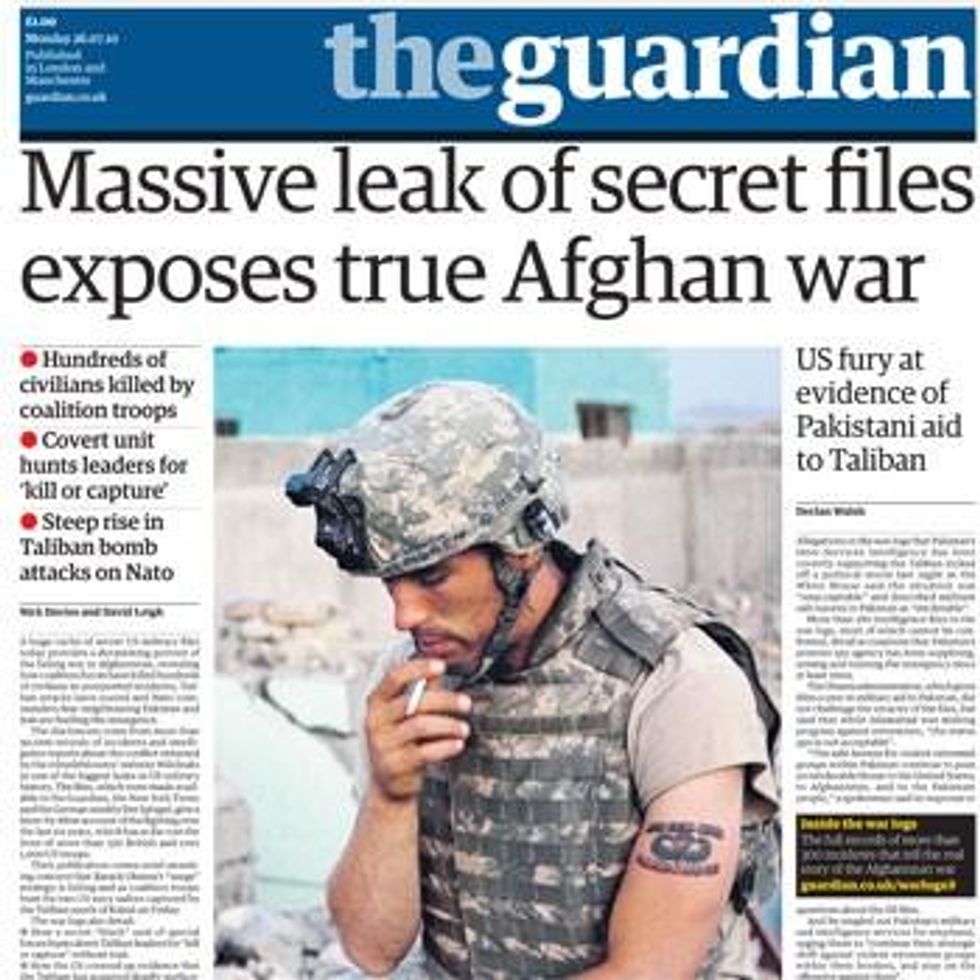
I felt that the Iraq and Afghanistan "war diaries" (as they have been dubbed) were vital to the public's understanding of the two interconnected counter-insurgency conflicts from a real-time and on-the-ground perspective. In the years before these documents were collected, the public likely never had such a complete record of the chaotic nature of modern warfare. Once you come to realize that the co-ordinates in these records represent real places, that the dates are our recent history and that the numbers represent actual human lives - with all of the love, hope, dreams, hate, fear and nightmares with which we all live - then you cannot help but be reminded just how important it is for us to understand and, hopefully, prevent such tragedies in the future.
A few months later, after spending months poring over at least a few thousand classified US diplomatic cables, I moved to also have these documents released to the public in the "cablegate" archive. After reading so many of these documents - detailing an exhaustive list of public interest issues, from the conduct of the "global war on terrorism" to the deliberate diplomatic and economic exploitation of developing countries - I felt that they, too, belonged in the public domain.
In 2010, I was considerably less mature than I am now, and the potential consequences and outcomes of my actions seemed vague and very surreal to me. I certainly expected the worst possible outcome, but I lacked a strong sense of what "the worst" would entail. I did expect to be demonized and targeted, to have every moment of my life re-examined and analyzed for every possible personal flaw and blemish, and to have them used against me in the court of public opinion or against transgender people as a whole.
Read the full article at The Guardian.
Today marks five years since I was ordered into military confinement while deployed to Iraq in 2010. I find it difficult to believe, at times, just how long I have been in prison. Throughout this time, there have been so many ups and downs - it often feels like a physical and emotional roller coaster.
It all began in the first few weeks of 2010, when I made the life-changing decision to release to the public a repository of classified (and unclassified but "sensitive" ) documents that provided a simultaneously horrific and beautiful outlook on the war in Iraq and Afghanistan. After spending months preparing to deploy to Afghanistan in 2008, switching to Iraq in 2009 and actually staying in Iraq from 2009-10, I quickly and fully recognized the importance of these documents to the world at large.
I felt that the Iraq and Afghanistan "war diaries" (as they have been dubbed) were vital to the public's understanding of the two interconnected counter-insurgency conflicts from a real-time and on-the-ground perspective. In the years before these documents were collected, the public likely never had such a complete record of the chaotic nature of modern warfare. Once you come to realize that the co-ordinates in these records represent real places, that the dates are our recent history and that the numbers represent actual human lives - with all of the love, hope, dreams, hate, fear and nightmares with which we all live - then you cannot help but be reminded just how important it is for us to understand and, hopefully, prevent such tragedies in the future.
A few months later, after spending months poring over at least a few thousand classified US diplomatic cables, I moved to also have these documents released to the public in the "cablegate" archive. After reading so many of these documents - detailing an exhaustive list of public interest issues, from the conduct of the "global war on terrorism" to the deliberate diplomatic and economic exploitation of developing countries - I felt that they, too, belonged in the public domain.
In 2010, I was considerably less mature than I am now, and the potential consequences and outcomes of my actions seemed vague and very surreal to me. I certainly expected the worst possible outcome, but I lacked a strong sense of what "the worst" would entail. I did expect to be demonized and targeted, to have every moment of my life re-examined and analyzed for every possible personal flaw and blemish, and to have them used against me in the court of public opinion or against transgender people as a whole.
Read the full article at The Guardian.
Today marks five years since I was ordered into military confinement while deployed to Iraq in 2010. I find it difficult to believe, at times, just how long I have been in prison. Throughout this time, there have been so many ups and downs - it often feels like a physical and emotional roller coaster.
It all began in the first few weeks of 2010, when I made the life-changing decision to release to the public a repository of classified (and unclassified but "sensitive" ) documents that provided a simultaneously horrific and beautiful outlook on the war in Iraq and Afghanistan. After spending months preparing to deploy to Afghanistan in 2008, switching to Iraq in 2009 and actually staying in Iraq from 2009-10, I quickly and fully recognized the importance of these documents to the world at large.
I felt that the Iraq and Afghanistan "war diaries" (as they have been dubbed) were vital to the public's understanding of the two interconnected counter-insurgency conflicts from a real-time and on-the-ground perspective. In the years before these documents were collected, the public likely never had such a complete record of the chaotic nature of modern warfare. Once you come to realize that the co-ordinates in these records represent real places, that the dates are our recent history and that the numbers represent actual human lives - with all of the love, hope, dreams, hate, fear and nightmares with which we all live - then you cannot help but be reminded just how important it is for us to understand and, hopefully, prevent such tragedies in the future.
A few months later, after spending months poring over at least a few thousand classified US diplomatic cables, I moved to also have these documents released to the public in the "cablegate" archive. After reading so many of these documents - detailing an exhaustive list of public interest issues, from the conduct of the "global war on terrorism" to the deliberate diplomatic and economic exploitation of developing countries - I felt that they, too, belonged in the public domain.
In 2010, I was considerably less mature than I am now, and the potential consequences and outcomes of my actions seemed vague and very surreal to me. I certainly expected the worst possible outcome, but I lacked a strong sense of what "the worst" would entail. I did expect to be demonized and targeted, to have every moment of my life re-examined and analyzed for every possible personal flaw and blemish, and to have them used against me in the court of public opinion or against transgender people as a whole.
Read the full article at The Guardian.