SUBSCRIBE TO OUR FREE NEWSLETTER
Daily news & progressive opinion—funded by the people, not the corporations—delivered straight to your inbox.
5
#000000
#FFFFFF
To donate by check, phone, or other method, see our More Ways to Give page.

Daily news & progressive opinion—funded by the people, not the corporations—delivered straight to your inbox.
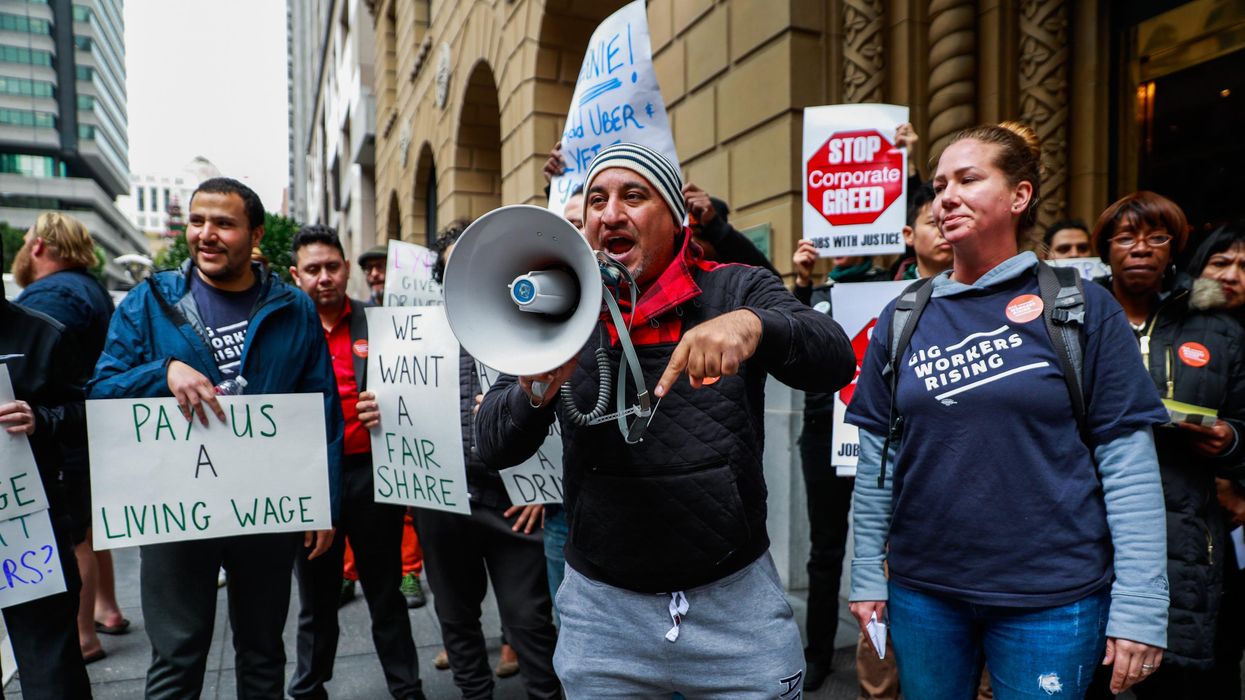
As Massachusetts becomes the latest battleground state in the fight for gig worker rights, advocates on Wednesday accused Lyft of attempting to purchase a law by giving over $14 million to a committee pushing a ballot initiative to prevent app-based drivers from being classified as employees.
"Remember when gig corporations bought a law in California for $200 million? They're at it again--this time, in Massachusetts."
The Boston Globe reports Lyft gave $14.4 million to Flexibility and Benefits for Massachusetts Drivers, a coalition established to fund an upcoming state ballot measure to keep ride-hailing and delivery app drivers classified as independent contractors. Such a policy would free companies like Lyft from having to pay a minimum wage or provide certain workplace rights, protections, and benefits that employees receive.
Records reveal that most of Lyft's investment came in a single $13 million December contribution--by far the biggest ever recorded by the Massachusetts Office of Campaign and Political Finance.
" Big Tech is trying to buy an election," tweeted Jerry Berger, a professor at Boston University's College of Communications. "The Legislature has the ability to prevent it. IF they act. Always a big IF."
Zephyr Teachout--a professor at the Fordham University School of Law in New York City and author of Break 'Em Up: Recovering Our Freedom From Big Ag, Big Tech, and Big Money--denounced Lyft, Uber, and DoorDash for "spending millions to make sure they can profit without responsibility."
While proponents of the Lyft-backed measure--which has also received more than $1 million in funding from each Uber, DoorDash, and Instacart--argue that it would protect driver flexibility and confer benefits including healthcare stipends and paid sick time, labor advocates counter that gig workers should already receive such rights under existing laws.
"Big Tech is trying to buy an election. The Legislature has the ability to prevent it. IF they act. Always a big IF."
In July 2020, Massachusetts Attorney General Maura Healey, a Democrat, sued Uber and Lyft for classifying drivers as contractors, alleging violations of state wage and labor laws while accusing the companies of getting a "free ride" and having "profited greatly" from "systematically" denying drivers "basic workplace protections and benefits."
Lyft's largesse has allowed Flexibility and Benefits for Massachusetts Drivers to hire some of the state's best political consultants, including the Dewey Square Group, described by the Globe as "a public affairs firm with deep roots in Democratic politics," and Conan Harris & Associates, which was founded by the husband of U.S. Rep. Ayanna Pressley (D-Mass.), who has argued that app-based drivers are "misclassified" as contractors, and "need benefits and full labor protections."
Opponents of the upcoming Massachusetts ballot measure are devising creative ways to try to overcome their tremendous funding disadvantage.
Bloomberg reports Massachusetts Drivers United is selling 50 $200 non-fungible tokens (NFTs) which let buyers play a game of whack-a-mole against a giant rat named Big Gig that tunnels under a map of the United States, popping up in states with proposed anti-driver legislation.
"We're using technology to fight back," Massachusetts Drivers United executive director Henry De Groot explained. "Uber, Lyft, and their peers have used technology to circumvent labor laws and deny app workers basic protections and benefits. We invite the crypto community to wage a campaign against the billionaires who control Big Gig."
The Massachusetts fight closely mirrors California's battle over Proposition 22, which was approved by voters in November 2020 and exempts app-based driver companies from classifying their workers as employees.
Uber, Lyft, and DoorDash spent a combined $160 million in support of the measure--more than 10 times the amount spent by opponents--making it the most expensive ballot initiative in California history. The companies also pressed drivers to vote for Prop 22, while prominent critics of the bill faced intense harassment.
Related Content

Last August, a California judge ruled Prop 22 unconstitutional, finding that the law "appears only to protect the economic interest of the network companies in having a divided, ununionized workforce."
Although the California Labor Federation hailed the decision as "a major and deserved win for drivers and gig workers," the ruling was appealed, and Golden State drivers remain classified as contractors.
As was the case with Prop 22 in California, some Massachusetts observers reacted to Lyft's mega-donation with calls for systemic reform. Kevin Connor, chief of staff to state Sen. Harriette Chandler (D-1st Worcester), tweeted that "there should be donor limits on MA ballot initiatives campaigns."
The nonpartisan advocacy group We the People Massachusetts called for a more sweeping solution.
"We need the #WeThePeopleAmendment to overturn Citizens United and other SCOTUS decisions that have gutted campaign finance regs and have made 'buying a loophole' in our laws possible," the group asserted, referring to a constitutional amendment introduced by U.S. House Democrats to end the controversial 2010 U.S. Supreme Court ruling that affirmed unlimited corporate political contributions.
"The Facebook Papers" on Monday prompted longtime critics of Big Tech to renew demands for policymakers within and beyond the United States to crack down on and even break up the social media giant.
A consortium of 17 American news outlets--along with a separate group of European newsrooms--on Friday began publishing articles on internal documents obtained by former employee and whistleblower Frances Haugen, though much of the reporting was released Monday.
"It's an important day to read the news," said the American Economic Liberties Project, pointing to the Facebook Papers and reiterating its call to break up the company.
The reporting shows Facebook prioritizes growth and profit over trying to prevent and contain problematic content. As The Verge summarized, key findings include that Facebook "was caught off guard" by Covid-19 vaccine misinformation, it struggled to handle efforts to delegitimize the 2020 U.S. election, and Apple threatened to ban its apps over online "slave markets."
Echoing reactions to a second whistleblower submitting a complaint about the company to the U.S. Securities and Exchange Commission (SEC) on Friday, Evan Greer, director of the digital rights advocacy group Fight for the Future, declared that "Facebook can't be reformed."
"We can and should push for policies that reduce its immediate harm to marginalized communities in the short term," she said Monday. "But in the long term, we need policies that reduce its power, so that we can build alternatives to fully abolish and replace it."
"Before it was acquired by Facebook, Instagram actually tried to improve quality instead of just increasing virality at all costs," tweeted Fordham University School of Law professor Zephyr Teachout. "Break them up!"
Facebook bought the photo- and video-sharing platform Instagram in 2012 then acquired the messaging service WhatsApp two years later. The company is also responsible for the highly popular Messenger application.
The Real Facebook Oversight Board (RFOB) framed the new reporting as vindication of Haugen's recent public comments.
"Today's avalanche of leaks, revelations, and reporting blasts apart Facebook's spin that Frances Haugen was 'cherry picking' documents," the RFOB statement said. "Across 17 news organizations, dozens of journalists, and thousands of documents, the Facebook Papers and Frances Haugen's continued testimony have laid bare the extreme harm and devastating impacts of Facebook."
Related Content

"In breathtaking detail, the Facebook Papers show a company that is in the thrall of right-wing extremists, so afraid of looking 'partisan' that they welcome insurrectionists, racists, and disinformation artists onto their platforms under the guise of free speech," the RFOB continued. "Ignoring house on fire warnings from their own staff and lying to regulators and their own oversight board, we now see Facebook for what it really is: an international criminal enterprise."
The RFOB called for an independent investigation:
The Facebook Papers also reveal the absolute inadequacy of Facebook's oversight board, fiddling while Rome burns and begging the company to stop lying. As MP and RFOB member Damian Collins said today in Parliament, the "hindsight board" lacks the independence and mandate to hold Facebook accountable when it needs oversight the most. As new allegations cascade down around Facebook, the oversight board by design has no authority to intervene.
We reject the premise that the Facebook oversight board can ever be considered independent.
Instead, at this defining moment of crisis for Facebook and democracy, we call for a full, independent, outside investigation of Facebook and the allegations raised in the Facebook Files, the Facebook Papers, and recent SEC filings. In the U.S., the U.K., and the E.U., policymakers should fast-track legislation to ensure permanent, independent oversight of Facebook. No criminal should appoint its own judge and jury, as Facebook has done with its oversight board.
Haugen's testimony to the U.K. Parliament on Monday resembled what she recently told U.S. lawmakers about Facebook: that it "fans hate," the "current system is biased towards bad actors, and people who push people to the extremes," and the company has been "negligent" in terms of addressing concerns raised internally by its own data scientists for years.
Related Content

Employing language often used by critics of Big Oil's climate lies, U.S. Sen. Amy Klobuchar (D-Minn.) said Monday that "there's a lot to discover in these papers about how the platform promotes extremism and hurts our communities, but here's what is clear: Facebook knew."
"For too long, tech companies have said, 'Trust us, we've got this.' Now the extent to which Facebook has put profits over people is becoming more and more clear," said Klobuchar, chair of the Senate Judiciary Committee's antitrust panel.
"The time has come for action from all sides to rein in Big Tech," she asserted, calling for modernizing competition laws, holding companies accountable for spreading disinformation, and federal privacy legislation "with rules of the road for tech platforms to protect user data and ensure that algorithms stop promoting toxic and dangerous content."
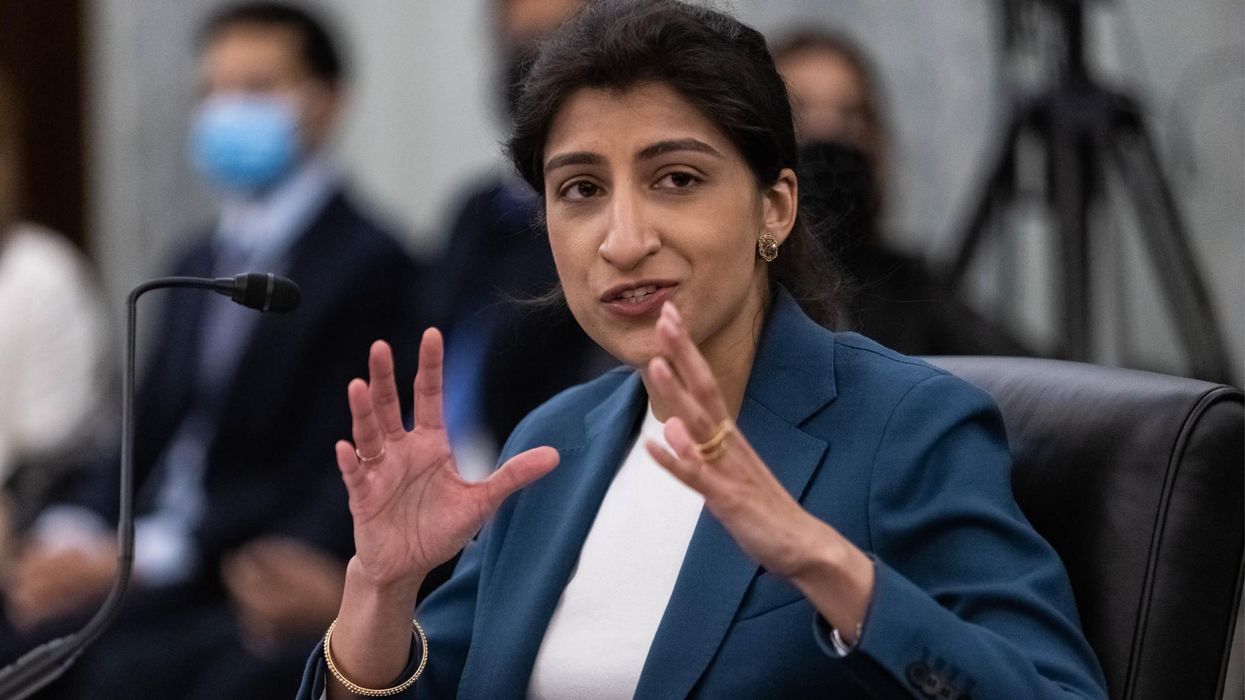
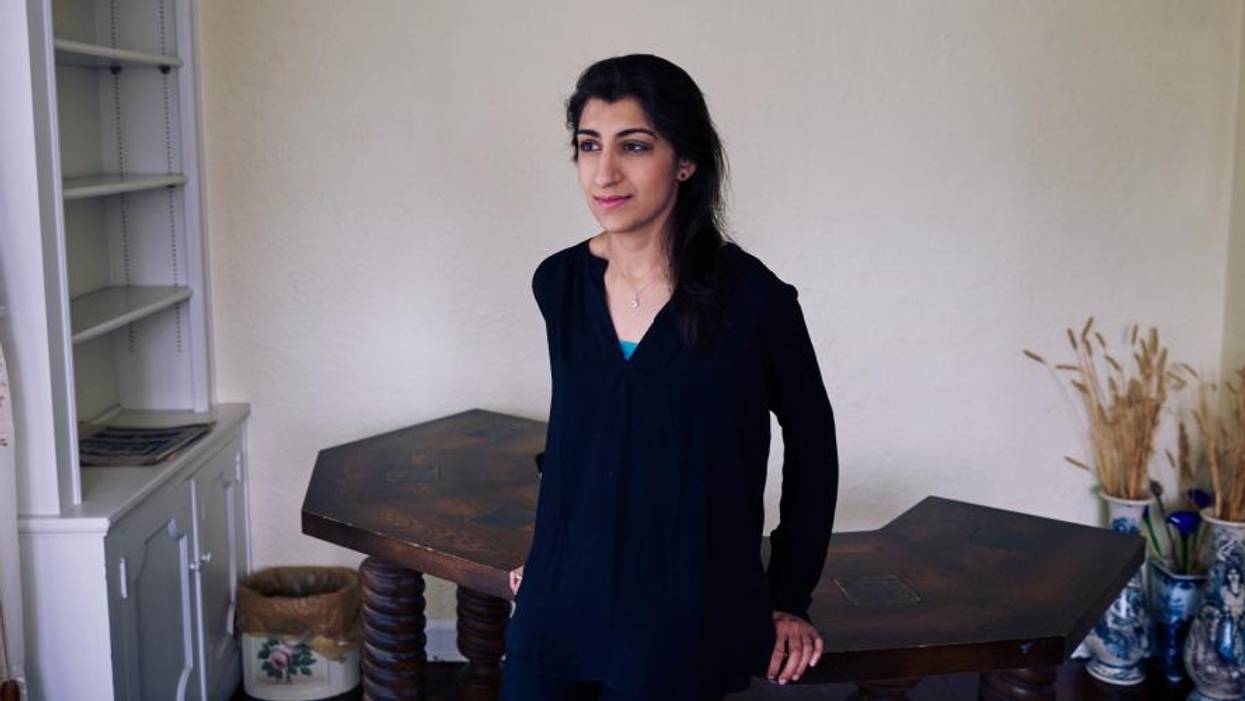
Progressive advocacy groups that have spent the past several months urging President Joe Biden to step up antitrust enforcement, particularly with Big Tech, applauded the U.S. Senate's Tuesday confirmation of Lina Khan to serve on the Federal Trade Commission.
After senators' 69-28 bipartisan vote--which included all Democrats present--in support of the 32-year-old "antitrust trailblazer," the White House said that Biden has named Khan as the FTC's chair. The president announced his nomination of the Columbia Law School associate professor in March, winning widespread praise from opponents of corporate consolidation.
The groups and individuals who, since the March announcement, have pushed for Khan's confirmation celebrated what they hope is the beginning of a new era for the regulatory agency--and beyond, including at the Federal Communications Commission and U.S. Department of Justice.
" Lina Khan has proven herself as one of the fiercest and most effective critics of Big Tech," said Demand Progress executive director David Segal. "She not only understands the threat these monopolies impose, but how to utilize the tools of government to hold them accountable and break them up."
"We need strong champions like Lina throughout the government--most notably at the FTC, FCC, and DOJ--and hope this is a sign that the administration will move to fill these other key roles in a timely manner," he added. "We look forward to working alongside her to hold Big Tech accountable, and we encourage the Biden administration to swiftly fill out the commission with a strong fifth commissioner, so that the FTC can fully wield its power."
The development was also welcomed by Sen. Elizabeth Warren (D-Mass.), who voted for Khan, and Zephyr Teachout, an antitrust expert and Fordham University associate professor of law.
Alex Harman, competition policy advocate for Public Citizen said that "the overwhelming bipartisan vote for Lina Khan speaks both to her qualifications that made her the ideal nominee to serve on the FTC and the recognition by both parties that concentrated corporate power is a crisis that needs to be urgently addressed."
"As a commissioner, Khan will take on corporate barons in Silicon Valley and throughout our economy," Harman predicted. "Greedy and abusive corporations should be on notice that the FTC will no longer look the other way as they amass power to hurt consumers, treat competitors unfairly, and take advantage of workers."
The advocate applauded Biden and the Senate for "recognizing the urgent need to address runaway corporate power" and said Public Citizen looks forward to "seeing a similar approach to filling the other antitrust vacancies with like-minded progressive leaders who will stand up to corporate abusers."
"Biden's choice to nominate Lina Khan demonstrated that Democrats understand the imperative of turning the page on a failed era of antitrust enforcement, and her bipartisan confirmation illustrates policymakers' hearty appetite to rein in Big Tech," declared Sarah Miller, executive director of the American Economic Liberties Project.
"Her presence on the FTC marks the beginning of the end of an era of lawlessness for powerful corporations that they've enjoyed at the expense of workers, smaller businesses, and democracy," Miller added.
Highlighting that support for Khan goes beyond advocates of breaking up tech giants, Family Farm Action recently led a coalition of 33 groups in sending a letter (pdf) to the Senate Committee on Commerce, Science, and Transportation in support of Khan, whom they described as "a leading scholar and voice in antitrust with a bold legal and policy vision for protecting farmers and ranchers, workers, small farms and businesses, and bolstering an economy where all have a right to share in the prosperity they help build."
Family Farm Action president and CEO Joe Maxwell was among those celebrating her confirmation on Tuesday.
"Establishing fair market opportunities in the food system will require a strong leader with knowledge and experience in antitrust work, and Ms. Khan's proven skills and priorities position her as an ideal candidate," he said. "Family Farm Action looks forward to working alongside Ms. Khan to dismantle concentrated power in agriculture and realize a more just, equitable food system."
With the CEOs of Twitter, Google, and Facebook set to testify Thursday on the role social media plays in promoting the kinds of misinformation and far-right extremism that sparked the deadly Capitol attack, anti-monopoly experts are urging members of Congress not to allow the executives to divert attention away from their fundamentally nefarious business model that thrives on the spread of dangerous lies.
"False or radicalizing content is not an unfortunate byproduct of the business model. It's core to these corporations' ad-based revenue models."
--Fight Corporate Monopolies
"The tech CEOs want to talk about their content policies and moderation efforts--because they know their core business models are indefensible and toxic," Morgan Harper, senior advisor at Fight Corporate Monopolies, said ahead of the House technology subcommittee hearing, which is scheduled to begin at 12:00 pm ET.
"If lawmakers are serious about fixing these problems," Harper added, "they must focus on structural power and resist the distractions. Anything less would be a massive failure."
Watch the hearing live:
Amid intensifying scrutiny from lawmakers and growing support for forceful antitrust and regulatory action, Facebook, Twitter, and Google in recent months have taken steps purportedly aimed at stemming the flow of misinformation about the coronavirus pandemic, Covid-19 vaccines, elections, and more.
In the aftermath of the January 6 insurrection--fueled by lies that circulated widely on social media--Facebook and Twitter banned former President Donald Trump for being the chief architect and amplifier of those lies.
But Fight Corporate Monopolies and other advocacy groups argue that such self-regulation--by design--does nothing to address the fact the Facebook, Google, and Twitter's profits depend to a significant degree on cultivating outrageous falsehoods and using invasive surveillance advertising to ensure they spread to receptive audiences.
"False or radicalizing content is not an unfortunate byproduct of the business model. It's core to these corporations' ad-based revenue models," said Fight Corporate Monopolies. "Facebook and Google's YouTube generate a substantial portion of their revenue by selling user data to advertisers--which means any social media obsession becomes a profit hub."
Tech CEOs, the group warned, "want to talk about modest regulatory reforms that would allow them to continue operating in largely the same ways they do today. We have seen this misdirection before, after YouTube and Facebook supercharged a conspiracy theory claiming George Floyd's death was faked to reach 1.3 million viewers."
Amnesty Tech's acting deputy director Joe Westby offered a similar critique, noting that "the business model of Big Tech firms like Google and Facebook depends on capturing people's attention to generate ad revenue--to that end, the algorithms that determine what we see on Facebook's newsfeed or Google's YouTube frequently amplify discrimination and inflammatory content."
"These companies appeal to our emotions of fear and anger to keep us staring at our screens," said Westby. "This can have a devastating effect at a population scale, fueling polarization, division, or serious human rights consequences."
Zephyr Teachout, a law professor at Fordham University, expressed hope that House panelists will ask Facebook CEO Mark Zuckerberg "how much money the company made off of QAnon," the far-right conspiracy theory whose adherents played a considerable role in the violent siege of the Capitol earlier this year.
Emma Ruby-Sachs, executive director of SumOfUs, said in a statement Thursday that Facebook, Google, and Twitter's "inability to deal with the violence, hate, and disinformation they promote on their platforms shows that these companies are failing to regulate themselves."
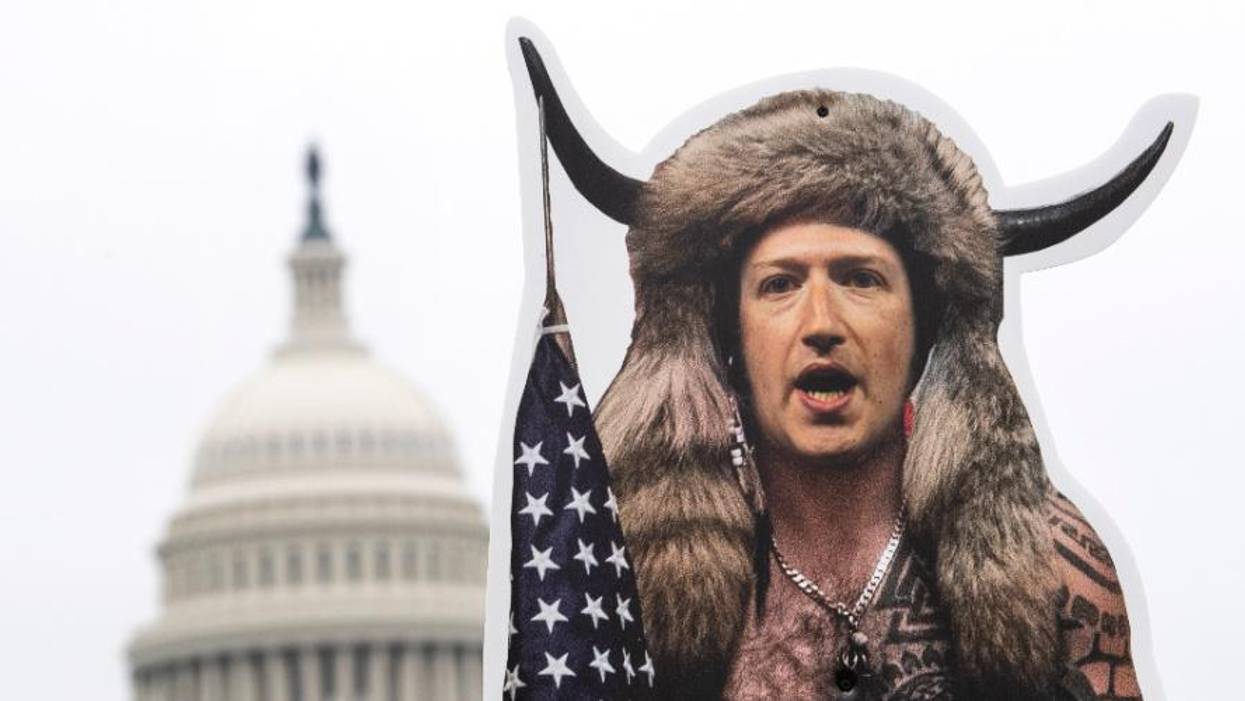
Ahead of the House subcommittee hearing, activists with SumOfUs gathered near the U.S. Capitol and displayed cutouts of tech executives dressed as insurrectionists to stress the role their platforms played in the violent January 6 attack.
"It's no shocker that Facebook failed to tell us about how its technology is being used to manipulate voters and spread harmful misinformation. How many times are we going to be fooled by these profit-hungry monopolies before Congress finally acts?" said Ruby-Sachs. "Letting Facebook decide how it should be regulated is like letting a criminal decide their own sentence."
Opponents of the decades-long trend of corporate consolidation applauded President Joe Biden's reported decision to nominate Columbia Law School professor and "antitrust trailblazer" Lina Khan to a seat on the five-member Federal Trade Commission, a key regulatory agency tasked with protecting consumers from business abuses.
First reported by Politico Tuesday morning, Biden's selection of Khan for the FTC slot comes days after the president named Tim Wu--another leading monopoly critic who coined the term "net neutrality"--to a spot on the National Economic Council, a position that does not require Senate confirmation.
" Lina Khan going to the FTC and Tim Wu going to the White House are two extraordinary, powerful choices by Biden," said Zephyr Teachout, an associate professor of law at Fordham University. "Lina is brilliant, kind, careful, and original, with nerves of steel. I am so happy for our country."
"One last thing to highlight: antitrust is not just about Big Tech," Teachout added. "It's ag[riculture] and hospitals. It's about democratic/economic policy broadly. About how private power is dispersed or centralized. Khan and Wu are not 'tech critics,' they are visionary anti-monopolists across the board."
Prior to serving as counsel to the House Subcommittee on Antitrust, Commercial, and Administrative Law during its year and a half-long investigation of the digital marketplace, Khan rose to prominence as a critic of corporate concentration following the 2017 publication of her paper titled "Amazon's Antitrust Paradox," which criticized the failure of current antitrust law to restrain the tech behemoth's anti-competitive practices.
In a 2018 profile, the New York Times characterized Khan's article--published when she was a student at Yale University--as a challenge to "decades of monopoly law."
"We applaud President Biden for recognizing that Lina Khan is a once-in-a-generation legal mind," Sarah Miller, executive director of the American Economic Liberties Project, said in a statement Tuesday.
"Professor Khan is the intellectual architect of the bipartisan suits against Facebook and Google," Miller continued. "She has exposed the dangerous concentration of power in the meat industry. She's identified key national security concerns posed by our concentrated supply chains. And she has written thoughtfully about all of the tools the government should bring to bear to advance the interests of working people, smaller businesses, and local communities."
Politico noted Tuesday morning that Biden's decision to elevate Khan and Wu to prominent government positions "represents a massive shift in philosophy away from the era of Barack Obama, who proudly forged an alliance between the Democratic Party and Big Tech."
Joining the chorus of applause, the Progressive Change Campaign Committee (PCCC) said Tuesday that "there is no possible better pick for FTC than Lina Khan."
"She is a thought leader and the embodiment of the modern antitrust movement," the group added. "Big move."
Justice Democrats, a progressive advocacy organization, offered similar praise for Biden's decision to nominate Khan, which has not yet been formally announced.
"This is a major progressive pick by the Biden administration to check the concentration of corporate power and uplift working families," the group tweeted.
Progressive critics and advocacy groups are responding with alarm and anger to the Trump administration's refusal to disclose the names of more than 4.5 million companies that have collectively received over $500 billion in corporate bailout money through a federal program created to provide businesses with relief from the coronavirus pandemic.
The over $2 trillion Coronavirus Aid, Relief, and Economic Security (CARES) Act signed by President Donald Trump in March established the Paycheck Protection Program (PPP) with $349 billion in funding for forgivable loans. After the initial capital ran out in just 13 days, lawmakers approved $310 billion more--though over $130 billion of that amount was still left as of Tuesday.
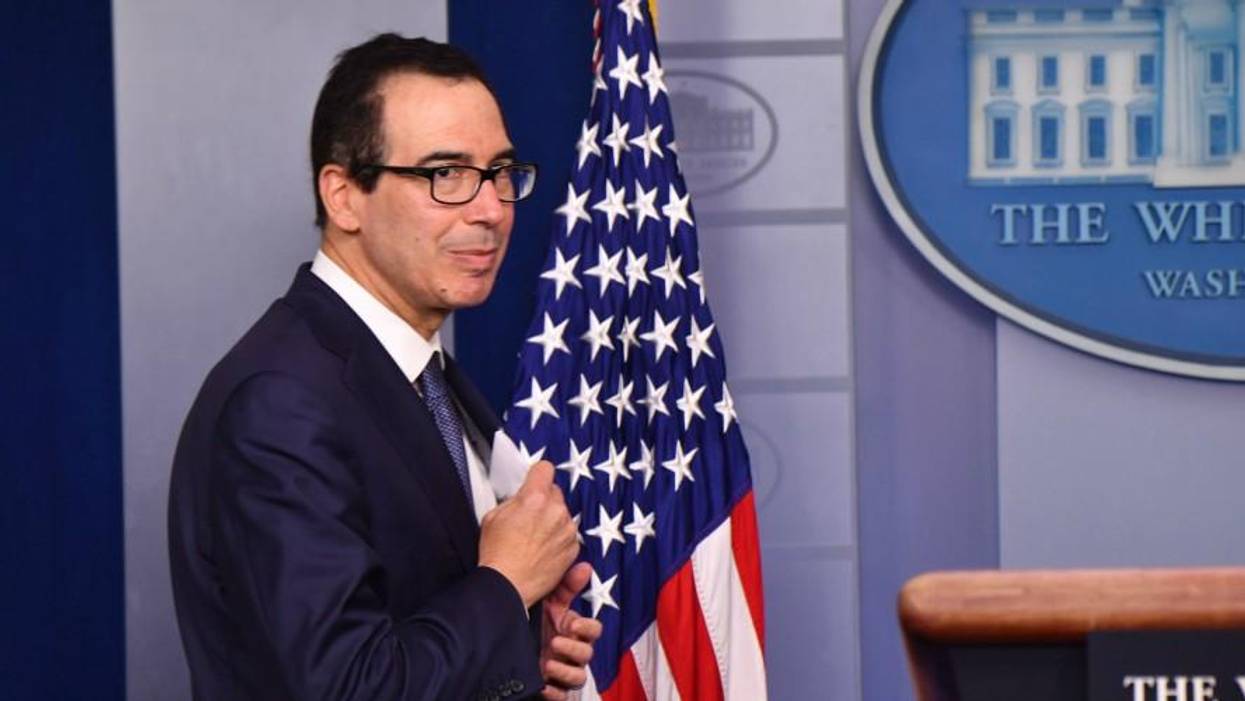
Although, as the Washington Post reported, the Small Business Administration (SBA) "typically discloses names of borrowers from the loan program" on which the PPP is based, Treasury Secretary Steven Mnuchin testified to the Senate Committee on Small Business and Entrepreneurship that he won't be following that model for the Covid-19 program, despite concerns about which companies are benefiting from it.
As Mnuchin told the Senate committee Wednesday: "We believe that that's proprietary information, and in many cases for sole proprietors and small businesses, it is confidential information." The secretary's comments provoked a barrage of condemnation, particularly among individuals and groups that had previously expressed concern about the PPP.
"Making sure trillions in aid goes to workers, not profiteers, begins with knowing where the aid goes," Bartlett Naylor, Public Citizen's financial policy advocate, told Common Dreams of the federal government's Covid-19 bailout efforts. "Zero transparency is red carpet for hucksters, schemers, and battlefield scavengers."
Public Citizen tweeted Thursday about Mnuchin's remarks, blasting his refusal to disclose businesses getting PPP funds as "unconscionable, jaw-dropping corruption."
Progressives swiftly echoed the group's critique in their own tweets--including Fordham University law professor Zephyr Teachout, who wrote: "This is outrageous AND exactly what was obviously going to happen AND exactly why many of us opposed CARES as written."
Jeet Heer, national affairs correspondent at The Nation, highlighted Public Citizen's response with the introduction: "Speaking of looting...."
Several other critics made similar nods to current events, tweeting: "This is the looting we should be furious about" and "Oh shit. Looting has broken out in Washington."
"This is absolutely unreal," declared author and activist Naomi Klein. "Looting with masks on."
This is absolutely unreal. Last time: no strings attached bail out money. This time: the public doesn't even get to know which multinational, multibillion dollar companies got its money. Looting with masks on. https://t.co/Zdcg25l8vJ
-- Naomi Klein (@NaomiAKlein) June 11, 2020
Broader charges of corporate looting in relation to the CARES Act have circulated since before it was signed into law. However, in the over two weeks of protests since Minneapolis police killed George Floyd, "looting" has become "the word of the day, on the lips of every newscaster, the president, and elected officials across the country," as progressive radio host Thom Hartmann wrote for Common Dreams on June 1.
Hartmann and others have made that case that, indeed, "looting is a major problem in America"--just not in the way that the issue has been presented by President Donald Trump and the corporate media, who have spotlighted the property destruction and the stealing of goods that have occurred alongside the demonstrations against police brutality and systemic racism over past few weeks.
"Americans know who the real looters are," progressive radio host Benjamin Dixon told Common Dreams in late May. Referencing a recent analysis from Americans for Tax Fairness and the Institute for Policy Studies, he added: "It's the billionaires who plundered America for $434 billion during the pandemic while the essential workers keeping our country afloat make barely over minimum wage."
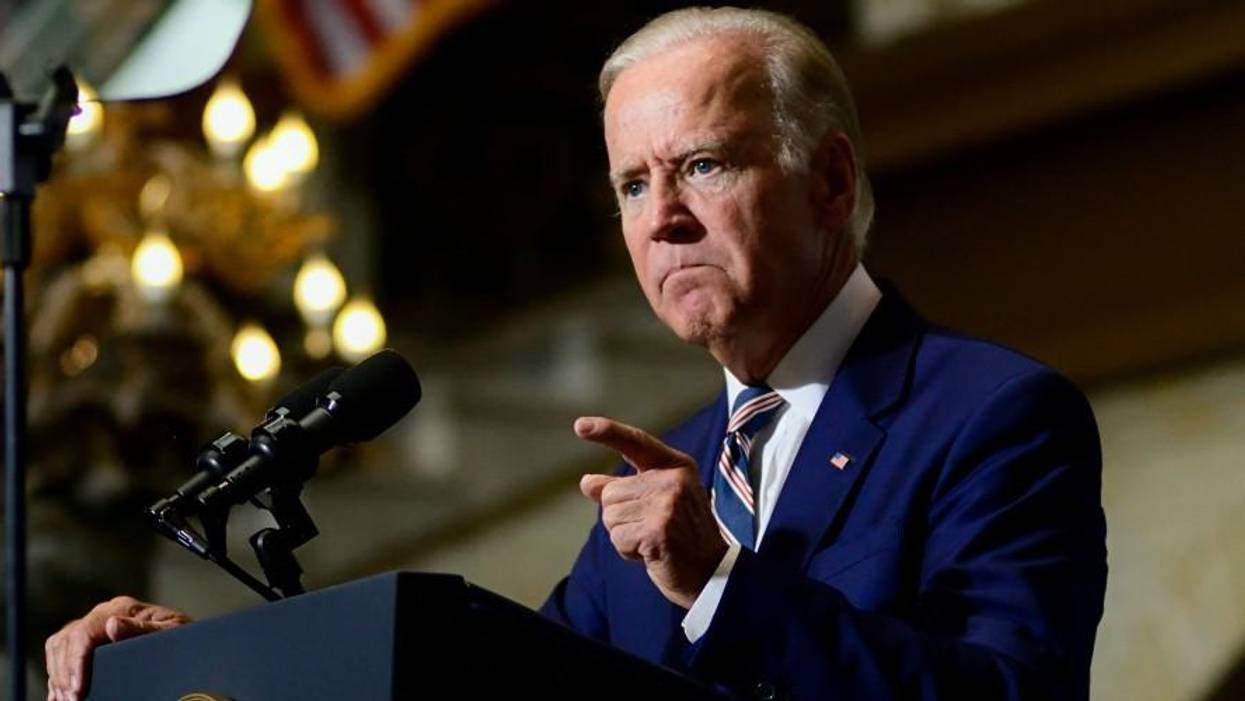
After establishment Democrats exploded over a column making the argument that former Vice President Joe Biden is too corrupt to credibly present voters an alternative to President Donald Trump in the 2020 general election, progressives presented more evidence from Biden's past that make the case against his candidacy.
A column Monday by Zephyr Teachout, a professor of law at Fordham University and supporter of the Democratic presidential bid of Sen. Bernie Sanders (I-Vt.), set off a firestorm for asserting Biden has a "corruption problem" and that his past makes the former vice president a "weak candidate" compared to others in the primary field.
"Here's the thing," wrote Teachout, "nominating a candidate like Biden will make it far more difficult to defeat Trump."
Teachout detailed three major areas of concern: Biden's prioritization of the financial industry over working Americans, his ties to the healthcare industry, and his connections to the fossil fuel industry. The potential for Trump to use Biden's record against him in a general election, said Teachout, should not be underestimated.
"Corrupt politicians always use whataboutism," Teachout wrote. "With Biden, we are basically handing Trump a whataboutism playbook."
Cenk Uygur, the Young Turks host running for Congress in California's 25th district, said on Twitter that the argument against Biden for corruption was an easy one to make.
"Of course Biden is corrupt," said Uygur. "He takes millions in campaign contributions and votes with his donors. It's obvious."
Establishment Democrats and members of the media cried foul over the piece, calling it an attack and placing the blame for it at Sanders' feet.
The Hill's Krystal Ball replied by noting the double standard in which it is off the table for Sanders and his team to mark legitimate distinctions between the senator and other candidates while his rivals are allowed to levy unfounded attacks against him.
"So the Sanders campaign isn't allowed to point things out that are objectively true, while other campaigns are celebrated for nasty invented smears," Ball tweeted of an attack on the campaign from New York Times columnist Paul Krugman. "Got it."
Jon Schwarz, a writer for The Intercept, opined that Krugman's distaste for the attacks was based in his support for Biden and not in a real interest in keeping the primary fair.
"Note Krugman doesn't say anything here is false, and is not denying Biden is corrupt," said Schwarz. "Krugman surely knows Biden is corrupt (although in the standard Washington way, not the insane lurid Trump way). Krugman just objects to anyone mentioning these facts."
Sanders, for his part, disavowed Teachout's article and claimed not to believe Biden is corrupt in an interview with CBS News.
"Thanks for acknowledging this, Bernie," Biden tweeted in response. "These kinds of attacks have no place in this primary. Let's all keep our focus on making Donald Trump a one-term president."
Giving Biden the ability to pivot away from discussing that history and calling for ignoring it altogether, said Intercept journalist Mehdi Hasan, is a problem.
"It is political malpractice that none of his rivals have brought up Biden's sponsorship of the infamous bankruptcy bill on behalf of the credit card industry in Delaware at a single TV debate so far," Hasan said, "which allows Biden to then put out tweets like this."
Journalist Sam Adler-Bell agreed and noted the possibility of the GOP taking advantage of a gaping hole in Biden's credibility with voters.
"Biden is corrupt and the Sanders campaign is justified in saying so," said Adler-Bell. "Just on electability grounds, Biden's record is a huge opening for Trump (also corrupt)."
As a number of progressives pointed out, Biden's history at the very least hints at corruption and nepotism of the kind described by Teachout and used by Republicans to defend Trump from impeachment over withholding aid to Ukraine until the country's leaders announced an investigation into Biden's son Hunter's employment by gas company Burisma.
To be clear, @ZephyrTeachout is an expert on corruption and the substance of her article is correct.
People are outraged that she called Joe Biden corrupt, and yet no one has even attempted to refute what the article actually says. Because it's verifiably correct.
-- cabral (@axcomrade) January 21, 2020
With the politics of impeachment looming and Biden's documented history of promoting the interests of corporate donors clear to anyone willing to look, the time to air out the current national frontrunner's record is now, said Current Affairs editor Nathan J. Robinson.
"If we don't point out the truth, we risk getting stuck with a corrupt candidate that Trump will crush," Robinson said.
Teachout, in her column Monday, called on Democrats to choose a different path.
"We still have time to break with this culture of corruption," wrote Teachout. "We don't have to choose Biden's way, which would give Trump a perfect foil."
"We have a rare opportunity to end a larger culture of corruption and we should take it," she added. "We will regret it if we don't."
Legal scholar and political activist Zephyr Teachout, who literally wrote the text book on government and corporate corruption, endorsed Sen. Bernie Sanders for president on Friday as she applauded him for building "the kind of movement that we need to fight the corruption that is killing us."
In her endorsement, Teachout said Sanders has emerged as the most trustworthy candidate when it comes to honesty, integrity, and having the fortitude to stand up to powerful interests.
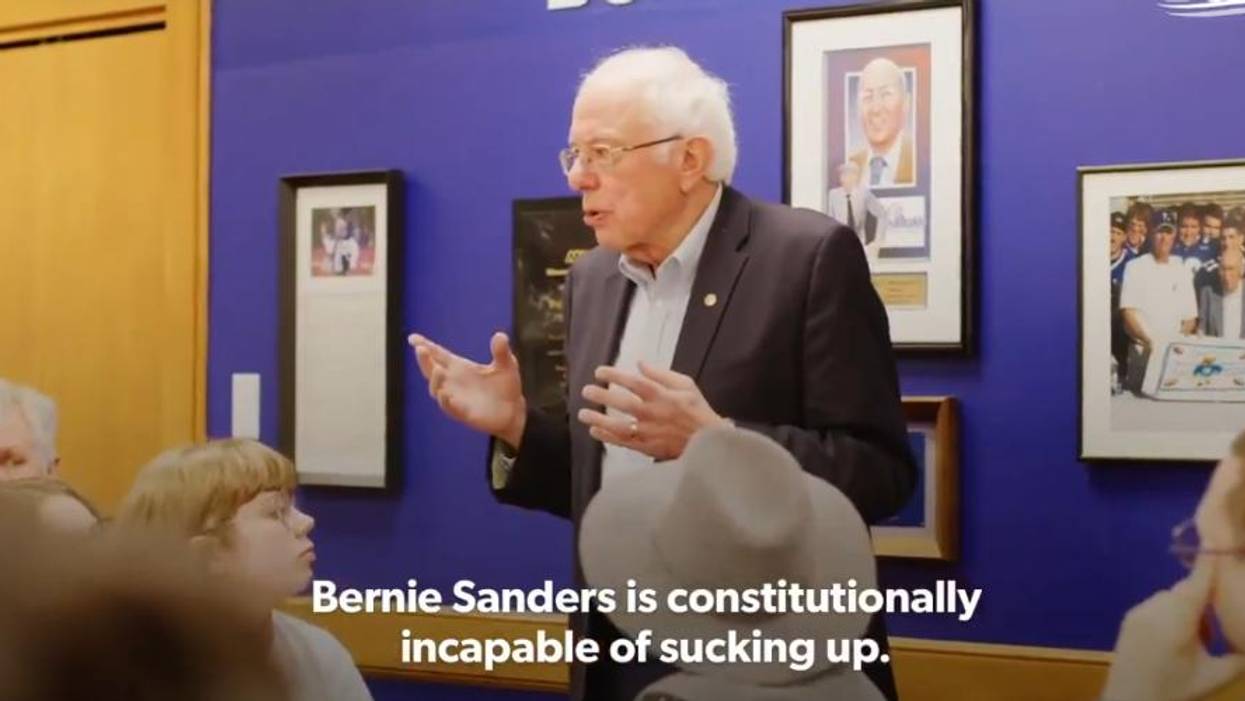
"Bottom line: Bernie Sanders is constitutionally incapable of sucking up, and that's why people love him," Teachout said. "They know he'll always be on the side of the little guy against big agriculture, big banks, big pharma, big tech, hate, and fear."
In her statement, credited Sanders for the "extraordinary multi-class, multi-race movement grounded in community and compassion" he and his team have built over recent year. Sanders, said Teachout, is "showing us that together, we can beat back the corruption of billionaires, beat the reckless profiteering of corporations, and beat Donald Trump."
As part of the endorsement, Teachout and the Sanders campaign released a video in which she highlighted the importance of the grassroots campaign he is running and the movement he has helped build. Watch:
Teachout, who ran for governor of New York in 2014 and teaches law at Fordham University, remains a key progressive voice in the U.S. when it comes to government corruption and corporate influence. As the Sanders campaign noted in its statement:
Teachout's book, Corruption in America, is generally recognized as essential reading in corruption scholarship and a major contribution to understanding the history of corruption law. Her work was cited in the House Judiciary Impeachment Report, as well as by Justice Stevens in his dissent in Citizens United. She was one of the countries' few experts on Emoluments prior to the Trump Presidency, and wrote the first New York Times article raising questions about Trump's pending constitutional violations. She is currently a plaintiff in an ongoing lawsuit attempting to overturn Citizens United.
For a series of "End Corporate Greed" rallies and events scheduled for New Hampshire over the weekend, Teachout will join Sanders and others to focus on corruption, getting big money out of politics, and how to fight back against the sinister revolving-door agenda of the Trump era.
"Zephyr has dedicated her life to stamping out corruption in our country," said Sanders. "She has directly taken on the greed of Donald Trump and fought tirelessly for a political system that rejects the influence of big money and special interests. I am honored to receive her endorsement and look forward to working together to defeat Trump and create an economy and a political system that finally works for everyone."
In a move that elevated growing calls for breaking up tech giants, European regulators on Wednesday hit Alphabet's Google with its third antitrust fine in two years--this time, fining the company nearly $1.7 billion.
"Breaking up big tech isn't the only solution, but it's the necessary first step to actually addressing the problem of big tech."
--Matt Stoller, Open Markets Institute
The new penalty comes in response to Google's "illegal practices in search advertising brokering to cement its dominant market position," in violation of European Union (EU) anti-competition rules.
It follows fines of $2.7 billion for Google's online shopping search results in 2017 and $5 billion for its Android mobile operating system and applications last year--bringing the two-year total to more than $9 billion.
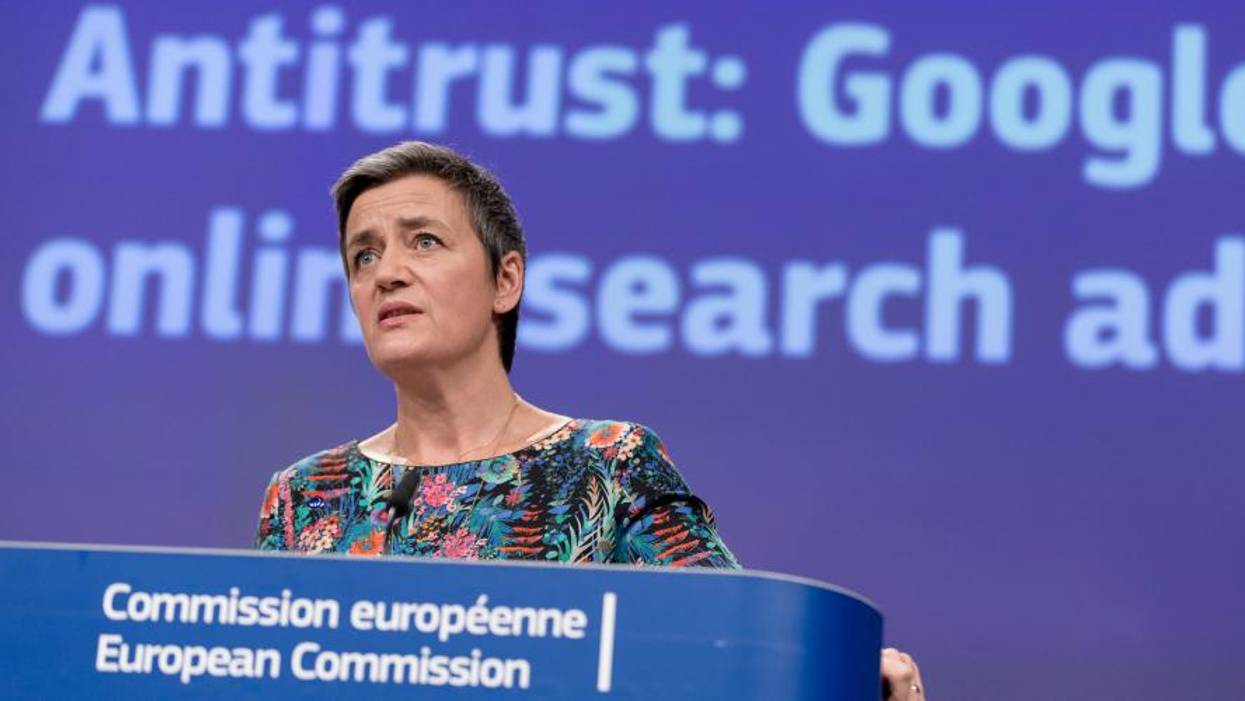
"Google is dominant when it comes to online advertising brokerage market, with market shares in Europe of above 70 percent," said Margrethe Vestager, the EU commissioner for competition. "Google abused its dominance to stop websites using brokers other than the AdSense platform."
Former New York attorney general candidate Zephyr Teachout celebrated the penalty. "Europe is cracking down on Google's corrupt business model," she tweeted. "The abuse of power is real. But the tide has changed."
"The U.S. should act too," Teachout said, pointing to Sen. Elizabeth Warren's (D-Mass.) plan to break up tech giants. While unveiling her plan this month, the senator and 2020 presidential candidate charged that companies such as Google, Amazon, and Facebook have " too much power over our economy, our society, and our democracy."
In a series of tweets on Wednesday, Matt Stoller, a fellow at the Open Markets Institute, concurred with Teachout and Warren. "Breaking up big tech isn't the only solution," he said, "but it's the necessary first step to actually addressing the problem of big tech."
Google has been at odds with the EU over antitrust rules for the past decade. As Vestager was investigating Google for antitrust violations in November of 2014, members of the European Parliament voted 384-174 for the European Commission to consider "unbundling search engines from other commercial services."
However, as Stoller noted, Vestager does not agree with Warren's approach to regulating big tech. "When it comes to the very far reaching proposal to split up companies, for us, from a European perspective, that would be a measure of last resort," the EU commissioner said, explaining that she favors antitrust probes and fines to "change the marketplace to make it a fair place."
While the EU's fines targeting Google far outweigh any actions by U.S. regulators, Stoller dimissed the latest penalty as "another useless parking ticket" and suggested that given the company's continued dominance of the digital world, Europe's current rules and penalties "aren't working."
Though the impact of the EU's fines is debatable, they have forced some reforms. The Associated Press reported that "Google, which is appealing both of the earlier cases, said ahead of Wednesday's announcement that it has put in place remedies required by the commission."
"We've already made a wide range of changes to our products to address the commission's concerns," said Kent Walker, Google's senior vice president of global affairs. "Over the next few months, we'll be making further updates to give more visibility to rivals in Europe."
Sen. Elizabeth Warren unveiled her plan for how to break up the nation's technology behemoths on Friday.
The Democratic senator from Massachusetts, who's seeking the Democratic nomination for president, laid out her proposal in a Medium post entitled "Here's How We Can Break Up Big Tech." In the post, Warren argued that it's essential to crack down on the unfair market advantage enjoyed by Amazon, Facebook, and Google in order to boost competition and fuel innovation.
Fordham law professor Zephyr Teachout praised the plan, calling it as a sign that a "new anti-monopoly movement is happening, and Warren is coming out swinging at the right targets!" Agreeing with Warren, she added, "The big tech monsters are conglomerates with too much power that they use to extract wealth and data from all us of us as if we are subjects in their feudal regimes."
Warren described the problem thusly:
Today's big tech companies have too much power -- too much power over our economy, our society, and our democracy. They've bulldozed competition, used our private information for profit, and tilted the playing field against everyone else.
The impacts of this power, she wrote, are clear:
With fewer competitors entering the market, the big tech companies do not have to compete as aggressively in key areas like protecting our privacy. And some of these companies have grown so powerful that they can bully cities and states into showering them with massive taxpayer handouts in exchange for doing business, and can act--in the words of Mark Zuckerberg--"more like a government than a traditional company."
The tech giants have utilized a two-pronged strategy to amass this power, Warren said: using mergers to eat up potential competitors--like Facebook buying Instagram--and getting passes from federal regulators who've failed to assert their authority to block anti-competitive mergers.
Warren proposed her own two-pronged strategy to counter the tech giants:
First, by passing legislation that requires large tech platforms to be designated as "Platform Utilities" and broken apart from any participant on that platform. [...]
Second, my administration would appoint regulators committed to reversing illegal and anti-competitive tech mergers.
Making such changes, she argued, would make sure "that the next generation of technology innovation is as vibrant as the last."
"Sen. Warren's proposal rightly recognizes that digital platforms have become the core infrastructure of our economy," said Stacy Mitchell, co-director of the Institute for Local Self-Reliance, and author of multiple deep-dives into Amazon's threats to an open market. "If we're going to restore competition and protect the free exchange of goods and ideas, then we cannot allow Amazon and other big tech companies to continue to use their control of this infrastructure to privilege their own goods and services at the expense of their competitors."
Calling Warren's proposal "smart and practical," Open Markets Institute fellow Matt Stoller said it also showed that it's been a "good week for anti-monopolists."