

SUBSCRIBE TO OUR FREE NEWSLETTER
Daily news & progressive opinion—funded by the people, not the corporations—delivered straight to your inbox.
5
#000000
#FFFFFF
To donate by check, phone, or other method, see our More Ways to Give page.
Daily news & progressive opinion—funded by the people, not the corporations—delivered straight to your inbox.
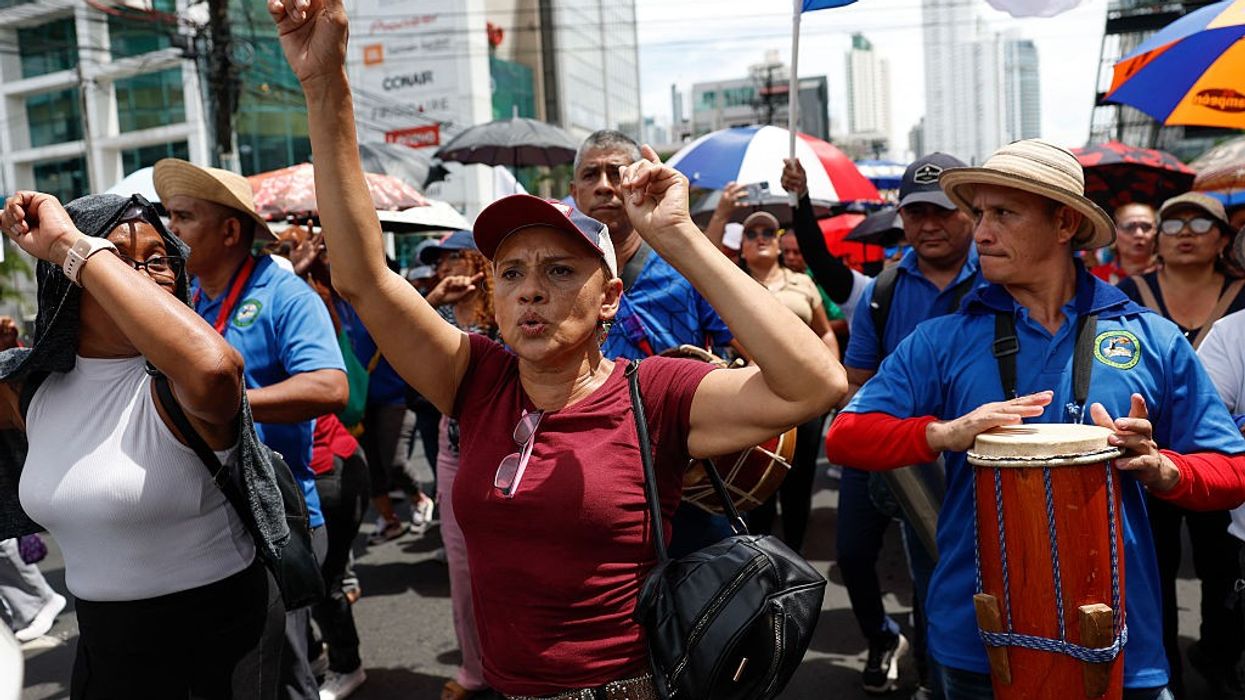
The Chiquita workers' strike is part of a nationwide protest movement against pension reforms approved by Panama's right-wing government.
The U.S.-headquartered banana giant Chiquita said Thursday that it moved to fire thousands of Panamanian workers who walked off the job last month as part of nationwide protests against the right-wing government's unpopular reforms to the nation's pension system.
Citing an unnamed source close to Chiquita, Reuters reported that the mass firings are expected to impact around 5,000 of the company's 6,500 Panamanian workers. José Raúl Mulino, Panama's right-wing president, defended the banana giant formerly known as United Fruit, accusing striking workers of unlawful "intransigence."
The company estimates that the strike, which began in late April, has cost it at least $75 million.
The pension reforms, known as Law 462, sparked outrage across Panama, with unions and other groups warning the changes would result in cuts to retirement benefits, particularly in the future for younger workers. The law transitions the country's pension system to an individual account structure that opponents say will be far less reliable than its predecessor.
"With the previous legislation, we could retire on 60% to 70% of our salary. Now, with the new formula, that amount drops to just 30% to 35%," said Diógenes Sánchez of Panama's main teachers' union. "It's a starvation pension."
The Associated Press noted Thursday that in recent weeks, "marches and occasional roadblocks have stretched from one end of the country to the other as teachers, construction workers, and other unions expressed their rejection of changes the government said were necessary to keep the social security system solvent."
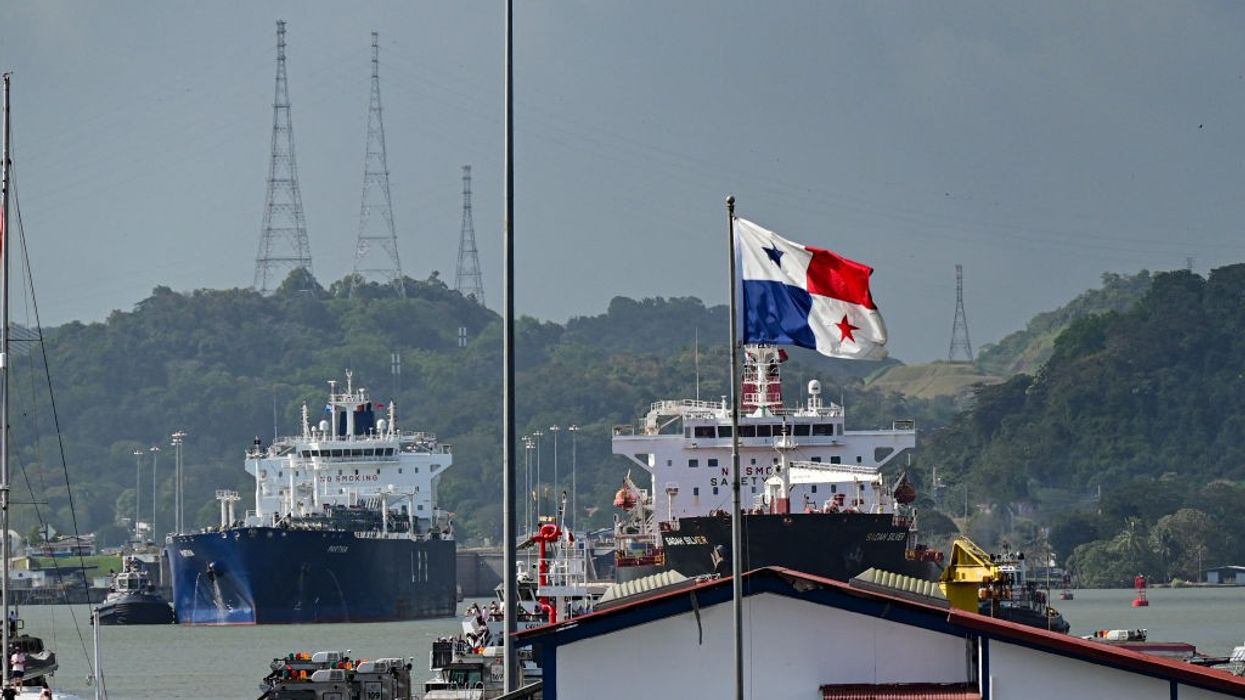
U.S. officials familiar with the planning said options for "reclaiming" the vital waterway include close cooperation with Panama's military and, absent that, possible war.
President Donald Trump has directed the Pentagon to prepare plans for carrying out his threat to "take back" the Panama Canal, including by military force if needed, two U.S. officials familiar with the situation told NBC News Thursday.
According to the outlet, the officials said that U.S. Southern Command (SOUTHCOM) is drawing up potential plans that run the gamut from working more closely with Panama's military to a less likely scenario in which U.S. troops invade the country and take the canal by force. They also said that SOUTHCOM commander Adm. Alvin Holsey has presented draft strategies to be reviewed by U.S. Defense Secretary Pete Hegseth, who is scheduled to visit Panama next month.
The officials explained that the likelihood of a U.S invasion depended on the level of cooperation shown by the Panamanian military.
Trump has repeatedly refused to rule out use of military force to seize control of the vital U.S.-built waterway, as well as Greenland, an autonomous territory of NATO ally Denmark.
Last week during his joint address to Congress, Trump proclaimed that "to further enhance our national security, my administration will be reclaiming the Panama Canal," but his administration has not clarified precisely what "reclaiming" entails.
The Republican president says the U.S. needs to retake control of the Panama Canal to enhance "economic security," and has falsely claimed that the waterway is "operated by China."
Earlier this month, the New York-based investment firm BlackRock led a group of investors in a $23 billion deal to purchase ports at both ends of the Panama Canal from a Hong Kong-based conglomerate, an agreement Trump dubiously seized upon as proof that "we've already started" reclaiming the conduit.
Panamanian President José Raúl Molina countered that "the Panama Canal is not in the process of being reclaimed... The canal is Panamanian and will continue to be Panamanian!"
The U.S. controlled what was formerly called the Panama Canal Zone from the time of the waterway's construction in the early 20th century—largely done by Afro-Caribbean workers, thousands of whom died in what's widely known as the world's deadliest construction project—until then-President Jimmy Carter transferred sovereignty to Panama in the late 1970s. Under the Torrijos-Carter treaties, the U.S. reserves the right to use military force to defend the canal's neutrality.
The United States has repeatedly used deadly military force in Panama over the decades, including during a 1964 student-led uprising against American control in which 22 Panamanians and four U.S. soldiers were killed, and in a full-scale invasion in 1989 ordered by then-President George H.W. Bush to capture erstwhile ally and CIA asset turned narcotrafficking dictator Manuel Noriega. The U.S. invaders killed hundreds of Panamanians, including many civilians.
Writing for Americas Quarterly this week, Panamanian jurist Alonso E. Illueca argued that Panama's efforts to appease Trump aren't working. These include the BlackRock deal and other moves like quitting China's "Belt and Road" initiative, taking in third-country migrants deported by the U.S., backing a U.S. resolution on Ukraine at the United Nations Security Council, auditing the country's ports, and revisiting a railway project originally developed by the Chinese government.
"Panama should abandon its accommodating policy towards the U.S., which can only lead to escalating demands to banish Chinese influence, to the detriment of Panama's national sovereignty," Illueca asserted.
"An alternative policy for Panama is to align with the rules based international order," he continued. "This includes establishing synergies with like-minded states which have been also affected by U.S. actions such as Canada, Mexico, Greenland, and Denmark. The country should seek to transcend the U.S.-China binary and find alternatives for alliances, which should include partners like the European Union."
"In short," Illueca added, "the way forward for Panama lies in replacing strategic dissonance with strategic clarity."
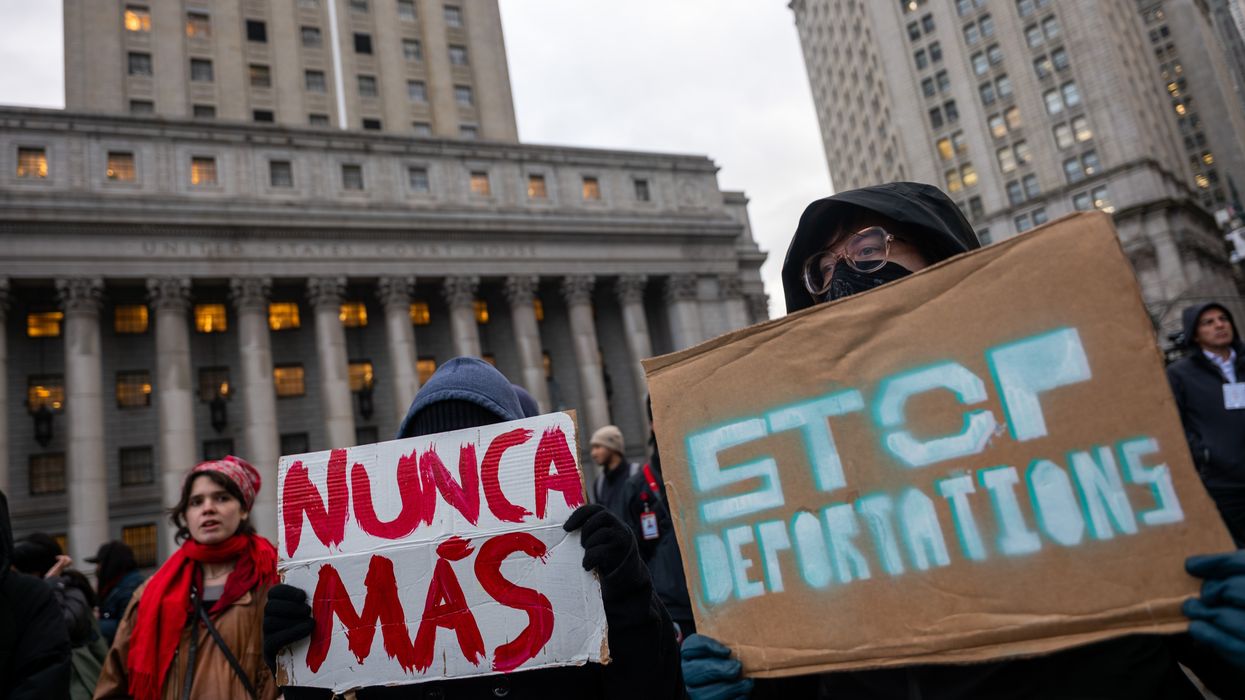
"Rather than viewing each executive action in isolation, we should take in totality: They are attempting to kick out and keep out as many immigrants as possible—whether here legally or not," said one advocate.
U.S. President Donald Trump's "flood the zone" strategy, characterized by a relentless stream of policies and proclamations, has extended to his anti-immigration agenda, with a "blizzard" of news stories this week detailing the administration's hostility toward and endangerment of asylum-seekers and immigrants across the country.
One immigrant rights organization on Friday advised the public not to lose sight of the overarching goal of the Trump administration and his MAGA movement as people try to make sense of the harms being imposed on their communities: to "embark on a radical reshaping of America that tramples on both our interests and our values."
America's Voice, which works to create a path to citizenship for 11 million undocumented immigrants in the U.S., said that "the sheer volume of immigration policy news is best viewed in the aggregate, taking into account the array of proposed and enacted policies and the larger through lines and implications."
This past week, as Common Dreams reported, Americans learned about the fates of about 300 people who had come from all over the world to seek safety in the U.S., only to be deported to Panama—which has agreed to serve as a "bridge" country in Trump's mass deporation operation—and locked in a hotel before many of them agreed to board flights back to their home countries. About 100 of them, including eight children, were sent to a remote detention camp near the sweltering Darién jungle where authorities confiscated their cellphones, cutting them off from contact with journalists.
"None of the actions taken are about public safety or our economic interests or even what's best for the lives and futures of Trump voters."
That news came ahead of reports that Trump was revoking Temporary Protected Status for Haitian migrants, making them eligible for deportation starting this summer even as "Haiti continues to be roiled by violence and disorder," as America's Voice executive director Vanessa Cárdenas said.
As Common Dreams reported on Wednesday, the U.S. Department of the Interior moved to cut off legal services for unaccompanied migrant children, ordering organizations that have helped tens of thousands of children to stop providing representation to them and ending funding for the legal programs.
On top of those developments were the shifting of Department of Homeland Security resources away from investigating drug dealers, suspected terrorists, and weapons trafficking to deportation operations—which have swept up thousands of people with no criminal records—and the firing of federal health inspectors at some border stations while the administration has said it plans to begin turning away migrants on the grounds that they could spread communicable diseases.
"The disconnect and hypocrisy was a particularly stark reminder that the administration isn't motivated by keeping the public safe as much as keeping out and kicking out immigrants as their top priority," said America's Voice.
Cárdenas said the policies of the past week have made clear that "the Trump administration's anti-immigrant obsession comes at a high cost to all of us."
"Rather than viewing each executive action in isolation, we should take in totality: they are attempting to kick out and keep out as many immigrants as possible—whether here legally or not," said Cárdenas. "It is particularly egregious that this administration is going yet again after children by preventing their access to legal representation. None of the actions taken are about public safety or our economic interests or even what's best for the lives and futures of Trump voters, as their immigration agenda and plans for indiscriminate mass deportations will harm each of those measures. Instead, it's part of a larger effort to remake the nation in MAGA's preferred image."
As the administration introduced new policies and the human impacts of its anti-immigration agenda were made increasingly clear, the White House released an "ASMR" video this week featuring the sounds of handcuffs and chains being used in Trump's mass deportations. It also posted to social media a Valentine's Day message threatening to deport people who are unauthorized to be in the United States.
"Trump's intention is not to solve a problem but to create one as he puts on a show of cruelty for his supporters with his plan for mass deportations," wrote Maribel Hastings, a columnist with America's Voice. "Trump 'thrives' on the chaos he creates he purposely provokes to maintain a narrative and justify actions such as indiscriminate detentions and deportations."

Nearly 100 asylum-seekers are being held in a sweltering camp with "fenced cages," one woman reported.
An Iranian Christian woman who is one of nearly 100 people being held in a detention camp in Panama after being deported by the Trump administration described the site as looking "like a zoo" on Wednesday, with "fenced cages" and little sustenance provided by authorities.
"They gave us a stale piece of bread," Artemis Ghasemzadeh told The New York Times before officials reportedly confiscated the deported asylum-seekers' phones. "We are sitting on the floor."
The Times reported that eight children are among the asylum-seekers being held in the camp, called San Vicente.
Ghasemzadeh was one of about 300 people who were sent to Panama on a deportation flight earlier this week—first to be locked in rooms at the Decapolis Hotel in downtown Panama City, and then, in the case of about a third of the migrants, to be loaded onto buses headed for the camp near the Darién jungle.
At the hotel, the United Nations International Organization for Migration (IOM) met with the asylum-seekers, none of whom have criminal records, according to Panamanian officials—despite the Trump administration's repeated claims that people who have committed violent crimes will be prioritized for its wide-scale deportation operation.
"There is no world in which this is acceptable."
Officials confiscated the asylum-seekers' passports after they arrived at the hotel. At least one person attempted suicide while locked in the hotel, and another broke his leg while trying to escape.
"There is no world in which this is acceptable," said Elizabeth Dickinson, a senior analyst with the International Crisis Group, of the migrants' deportation and detention.
The IOM offered to coordinate flights to the migrants' home countries, but Ghasemzadeh, other Iranian Christians in the group, and some of the other people said they risk retribution—including possibly being put to death—if they return to the countries they left in order to seek asylum in the United States.
The BBC reported that 171 of the migrants—who came to the U.S. from India, China, Uzbekistan, Iran, Vietnam, Turkey, Nepal, Pakistan, Afghanistan, and Sri Lanka—agreed to be sent back to their home countries.
A local attorney seeking to provide some of the refugees with legal counsel, journalists, and aid groups have been blocked from speaking with the detained people and from seeing the conditions at San Vicente, the Times reported.
Times reporters gained information from two of the migrants who shared their locations using their cellphones, but Ghasemzadeh informed them Wednesday morning that officials at San Vicente were confiscating the phones.
"Please try to help us," she told the reporters after describing the camp as being extremely hot and "overrun with cats and dogs."
The treatment of the refugees, said Gillian Branstetter of the ACLU, is "a moral stain on all of us."
Panama's national security minister, Frank Ábrego, told a local news program Wednesday that the asylum-seekers are being held "for their own protection."
The Trump administration, which has arrested at least 41,169 people in its deportation raids, applied intense pressure to the Panamanian government to convince officials there to detain people who couldn't be deported to their home countries.
The government agreed Panama would be a "bridge" country for deportation flights after Secretary of State Marco Rubio visited the country, which followed Trump's threats to use military force to "recover" U.S. control of the Panama Canal.
In Panama, it is illegal to detain people for more than 24 hours without a court order.
On Thursday, a deportation flight is set to arrive in Costa Rica with 200 people from Central Asia and India. Costa Rica has also agreed to be a "bridge" country for Trump's deportation operation.
The news of the conditions in which the deported people are being detained came a day after the White House posted an "ASMR" video featuring the sounds of Trump's anti-immigration operation: the jangling of chains, locking of handcuffs around people's wrists, and steps taken by refugees as they board flights.
"ASMR, or autonomous sensory meridian response, is the pleasurable tingling some people experience in response to certain stimuli, often sound. There are millions of social media videos dedicated to the genre," wrote Natasha Lennard at The Intercept. "For the Trump administration, that pleasure is derived from the sounds of human bondage and racist exclusion."
"To me, the sound was a clarion call," she continued. "The thundering of a fascist machine that demands people of conscience stand up to gum up its works, that the clink of those chains should be silenced with blockages and blockades."
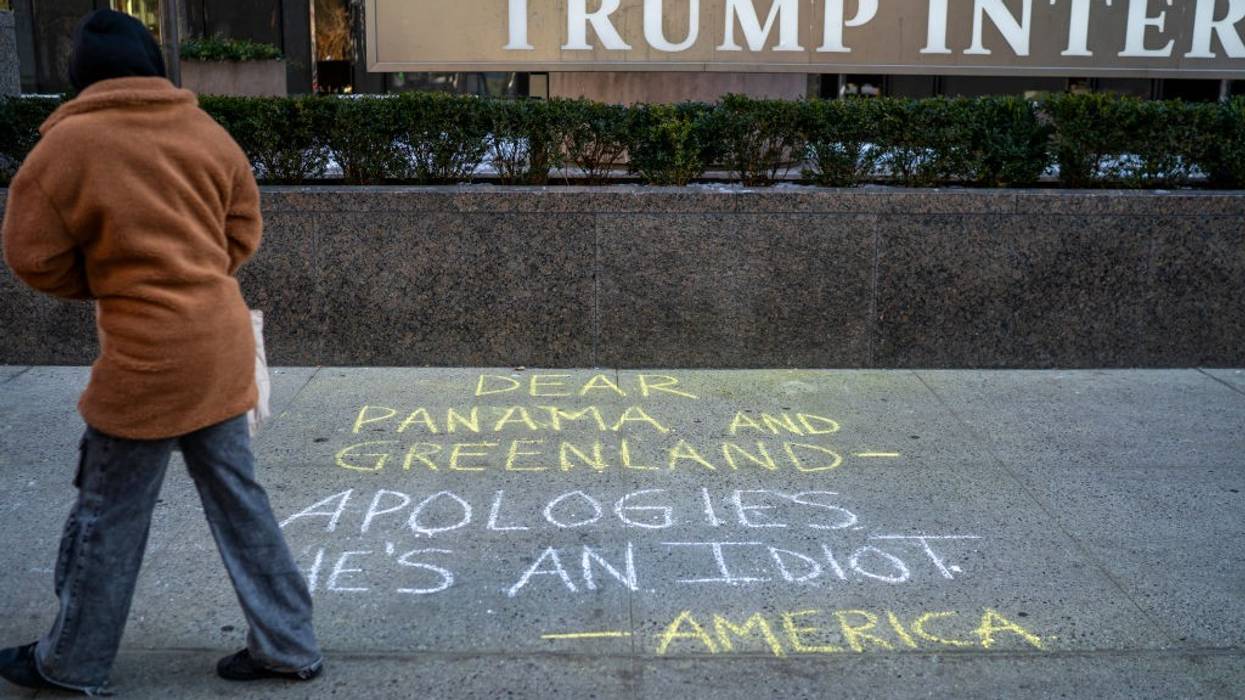
"These findings demonstrate the unpopularity of Trump's stated intention for the U.S. to illegally and/or forcibly take over various areas across the globe," said one pollster.
As President Donald Trump proposes territorial expansion reminiscent of 19th-century imperialist ambitions, polling published Wednesday reveals most Americans oppose a U.S. takeover of Canada, Greenland, or Gaza—while opinion is more evenly split on conquering the Panama Canal.
According to the Data for Progress poll of 1,201 likely U.S. voters, first published by Zeteo, 61% of respondents oppose a U.S. takeover of Canada, which Trump has repeatedly said should become the "51st state."
Voters also oppose taking ownership of the Panama Canal, Greenland, Canada, and Gaza — and owning Gaza is the least popular of the four. www.dataforprogress.org/blog/2025/2/...
[image or embed]
— Data for Progress (@dataforprogress.org) February 12, 2025 at 7:54 AM
An even higher percentage—62%—are against the U.S. taking control of Gaza. After being told about Trump's proposal to ethnically cleanse the local Palestinian population following more than a year and a half of Israeli bombardment, invasion, and siege, and to develop Gaza into the "Riviera of the Middle East," that rose to 64%. Nearly 7 in 10 respondents also oppose sending U.S. troops to invade Gaza, a scenario Trump says is possible.
When it comes to Greenland, the autonomous Danish territory that hosts hundreds of U.S. troops—and one lost thermonuclear bomb—a narrow majority of 53% oppose Trump's proposed American takeover.
Then there's the Panama Canal, which, much to the chagrin of Panamanians, the United States controlled, including through use of deadly force, until then-President Jimmy Carter transferred sovereignty in the late 1970s. While 46% of survey respondents oppose a U.S. takeover of the crucial waterway linking the Atlantic and Pacific oceans, 41% support such a move.
However, there were major political and racial variances, with over seven times as many Republican respondents strongly favoring a U.S. takeover of the canal as Democrats and more than four times as many whites as Blacks strongly backing the proposal.
Overall, young, college-educated, female, Black, Latino, and Democratic respondents were least likely to align with Trump's imperialist agenda, while Republicans were the most likely to support the president's proposals. Republican support was strongest for taking over the Panama Canal, with two-thirds of GOP respondents favoring the action.
"These findings demonstrate the unpopularity of Trump's stated intention for the U.S. to illegally and/or forcibly take over various areas across the globe, especially Gaza," Data for Progress deputy executive director Ryan O'Donnell said Wednesday.
"More broadly, it reflects a pattern of expansionist policies pushed by both Trump and Israeli Prime Minister Benjamin Netanyahu—policies that fuel instability rather than resolve conflict," O'Donnell continued. "A strong majority of voters are opposed to the U.S. taking over Gaza and resettling the Palestinians who live there, and even more respondents reject the idea of the U.S. sending troops to the Middle East to accomplish this plan."
"Public opinion on this is clear: The American public rejects this unrealistic and destabilizing proposal," he added.
This article has been updated to correct the figures related to a U.S. takeover of Gaza.
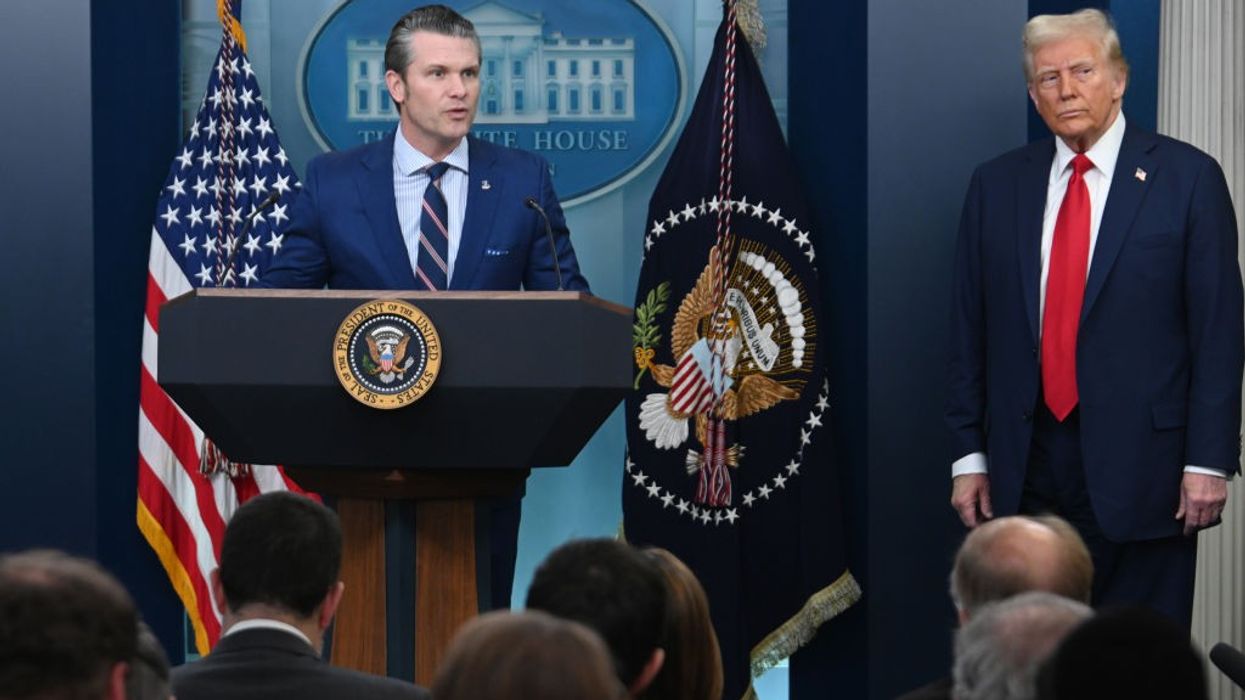
It may seem laughable to hear Trump lusting after Canada and Greenland, but his vision of U.S. domination indicates we need to take him and his imperial threats very seriously.
Even as Donald Trump and his MAGA movement have seized virtually complete control of the Republican Party, there remain at least two factions competing for dominance of foreign policy: an isolationist gang and a warmongering interventionist cabal. The strains between them seemingly remain unresolved, and there are real strategic debates and disagreements about what direction Trump’s foreign policy should take.
But what Trump himself is signaling as most important—more than which side wins any particular debate—is the proud (re)commitment to an expansionist (and expanding) U.S. empire dominating the world. That commitment to imperialism, more explicit than we’ve seen for a while, remains a crucial unifying point among his supporters. Disagreements over whether to prioritize economic power and pressure vs. military threats and direct engagement—along with reliance on presidential fiat in either situation—matter far less than the strategic agreement on the ultimate goal.
Empire, after all, is not a new idea—Trump’s version is simply to be much more publicly embraced, indeed celebrated.
It started a few days before Christmas, less than a month before he would be sworn in as president. In a Phoenix speech and later in social media holiday greetings, Trump named the presents he was hoping for: Canada, Greenland, and the Panama Canal. (Soon he would add the Gulf of America and Denali, the “Tall One” in the local Indigenous language, now to be called Mt. McKinley once again, as it was before Biden officially recognized the name that the Koyukon people have called it for centuries.)
While old and new forms of colonialism are a longstanding part of U.S. history, the public pronouncement of a plan not only to carry the U.S. flag to new horizons, but actually to “expand our territory” is new for the 21st century.
As is so often the case with Trump, inconvenient facts—that Canada had no interest in becoming the 51st state, Greenland was not for sale, and the Panama Canal belonged to, well, Panama—had no bearing on his holiday wish list. And for a while it seemed that even in the context of his extremist plans (not to mention the Heritage Foundation’s 900-page opus of implementation instructions for those plans), Trump’s global aspirations seemed just a bit too far over the top to have to take them seriously.
The last time the Panama Canal was a U.S. electoral issue was almost 50 years ago, about three-quarters of a century after France began building the Canal in the 1880s. The U.S. had taken over the project in 1904, and the so-called “Canal Zone”—actually a piece of Panama’s own territory—remained a U.S. colony. Negotiations over ending U.S. control sputtered on and off for decades, and in 1976 Reagan tried to bolster his presidential campaign by loudly rejecting anything that smacked of “giving away” the canal. In language taken directly from the playbooks of far-right racist southern senators Strom Thurmond and Jesse Helms, Reagan thundered “we built it, we bought it, and we’re going to keep it.” It didn’t work. Treaties to end U.S. control of the Canal were signed a year later. And Reagan lost.
Trump had tried to buy Greenland during his first term, but the Greenlanders’ immediate “we’re open for business, not for sale” put an eventual stop to that campaign. And Canadian officials shrugged off the idea of a U.S.-Canadian union as a joke, something Trump had raised numerous times during his first term, only to be consistently rebuffed by Prime Minister Justin Trudeau.
But then came Trump’s inaugural speech. Far from the traditional anodyne calls for post-electoral unity, and even going significantly beyond the “American carnage” themes of his first term, his 2025 speech included not only a full-throated proclamation of U.S. grievances and a glowing image of those problems disappearing under his presidency, but a clear checklist of what he planned to do to get there. It may have seemed laughable to hear Trump lusting after Canada and Greenland, but his vision of U.S. domination—global, not limited to the Arctic and our northern border—as laid out in his inauguration speech, indicates we need to take him and his imperial threats very seriously.
Trump described a set of multi-faceted, interconnected crises. At home, the U.S. government fails to protect its own citizens “but provides sanctuary and protection for dangerous criminals” that have illegally entered the United States. Our health care system doesn’t deliver for people but is the most expensive in the world. Our education system teaches children “to be ashamed of themselves … to hate our country.”
And internationally, the United States has allegedly been so feeble that other nations have taken advantage of our weakness.
But now, Trump went on, “America’s decline is over.” With him in the White House, a “golden age of America begins right now.”
“From this day forward,” he said, “our country will flourish and be respected again all over the world. We will be the envy of every nation, and we will not allow ourselves to be taken advantage of any longer.” In that golden age, the quests of empire will concurrently solve the domestic crises and make the U.S. “the envy of every nation.”
U.S. citizens, now emerging from both personal/national and global carnage, will soon see the simultaneous end to those crises as the country rebuilds its strength at home and reclaims its rightful hegemonic place in the world. “So as we liberate our nation, we will lead it to new heights of victory and success. We will not be deterred. Together, we will end the chronic disease epidemic and keep our children safe, healthy and disease free. The United States will once again consider itself a growing nation.”
And this homage to future growth was very direct—the kind of enlargement “that increases our wealth, expands our territory, builds our cities, raises our expectations and carries our flag into new and beautiful horizons.” All the language of 19th century empire was there: “the spirit of the frontier is written into our hearts.” Americans are “explorers” and “pioneers.”
Despite the claimed long decline, Trump continues to weave U.S. exceptionalism through his rhetoric. “Our American ancestors turned a small group of colonies on the edge of a vast continent into a mighty republic of the most extraordinary citizens on Earth. No one comes close.”
Oh yes, Manifest Destiny and racist western expansion make explicit appearances, as “Americans pushed thousands of miles through a rugged land of untamed wilderness. They crossed deserts, scaled mountains, braved untold dangers, won the Wild West…” Indigenous peoples who were slaughtered to “tame” the land were not mentioned. Seizing half of what was then Mexico was ignored. “We are going to be changing the name of the Gulf of Mexico to the Gulf America,” he said. Because it’s ours. Renaming the Alaska peak Mt. McKinley was not only an attack on the Indigenous communities who had long fought for Denali—it was also designed to honor the U.S. president responsible for expanding the U.S. empire across the oceans, claiming Cuba, Guam, Hawai’i, Puerto Rico, and the Philippines.
And bringing his 19th century-style imperial dreams into the 21st century, Trump promised to “pursue our manifest destiny into the stars, launching American astronauts to plant the Stars and Stripes on the planet Mars.” The moon isn’t good enough anymore. (Of course, at that mention the cameras all swiveled away from Trump to his tech-bro Elon Musk, ensconced with the rest of the billionaire boys club just behind the president.)
Those astronauts almost certainly won’t be sent by NASA, it will be Musk’s SpaceX or another private company that will plant the U.S. flag in space. Neo-colonial resource extractivism isn’t really as “neo” as it sometimes appears; the privatization of colonial exploration and land-seizures is actually an old story. Europe’s royals, in particular, often outsourced their colonial campaigns to private companies—Britain gave key rights to the British East India Company to claim India and encouraged the Jamestown settlement by the Virginia Company, the Dutch East India Company managed the colonization of Indonesia.
It was all done with the approval and collusion of the Roman Catholic church, whose 15th century Doctrine of Discovery assured Europe’s would-be explorers that any land inhabited by non-Christians—no exception for other planets—was fair game for colonial theft. It would not be until March 2023 that Pope Francis formally repudiated the doctrine—but apparently Trump never got the memo.
With a secretary of defense beholden to a president driven only by personal wealth and power, and unaccountable to any faction of the U.S. ruling class, the danger of a new military escalation looms.
So while old and new forms of colonialism are a longstanding part of U.S. history, the public pronouncement of a plan not only to carry the U.S. flag to new horizons, but actually to “expand our territory” is new for the 21st century. So while Trump’s calls for absorbing Canada, renaming the Gulf of Mexico, buying Greenland and/or reclaiming Panama’s canal may seem performative (and as specific examples do not seem like serious threats), they do reflect an eagerness to assert global as well as domestic power. And these broad commitments to a future of global domination do not even include the immediate international crises and challenges (Palestine, Ukraine, Taiwan) that Trump has pledged to “solve on day one” (or at least quickly), often at the expense of the peoples most impacted.
Certainly Trump’s long-threatened tariffs will be imposed as part of that power policy, supposedly to replace higher taxes on corporations and billionaires. In his inauguration speech, he bragged that “instead of taxing our citizens to enrich other countries, we will tariff and tax foreign countries to enrich our citizens. … It will be massive amounts of money pouring into our treasury coming from foreign sources.” Not quite the way tariffs work, of course.
But that doesn’t mean tariffs will replace the military. Trump’s plan, once he reverses all efforts to desegregate and build equity into the armed forces, is to “build the strongest military the world has ever seen.” Within 24 hours of his speech, he had issued an executive order to halt all foreign aid—leaving refugees who had gone through and passed exhaustive vetting by United Nations and United States agencies, and were in many cases en route to airports to catch flights to the U.S. to start their already-approved new lives, stuck in limbo with nowhere to turn for safety. But an exception was made to continue billions of dollars of military aid to Israel and to Egypt, and Trump made sure to reverse Biden’s May 2024 temporary hold on a shipment of additional 2,000-pound bombs Israel used to destroy homes and neighborhoods in Gaza and Lebanon.
And with the Senate’s confirmation of Pete Hegseth to head the Pentagon, the angry veteran accused of sexual assault and known for financial mismanagement and an utter lack of managerial experience is now empowered to oversee 3.2 million employees and overrule or get rid of any generals he finds annoying. This is the same man who called the rules of war “burdensome” and claimed they “make it impossible for us to win these wars.” Hegseth said he “thought very deeply about the balance between legality and lethality,” and clearly lethality won out. His job, as he understands it, is to ensure that the troops “have the opportunity to destroy…the enemy, and that lawyers aren’t the ones getting in the way.” Between that understanding, the power to dismiss officers who follow the laws of war, and Hegseth’s commitment to follow whatever Trump demands, the world may soon face a potentially out-of-control military, bolstered by 750+ military bases scattered across the globe and a budget approaching a trillion dollars.
With a secretary of defense beholden to a president driven only by personal wealth and power, and unaccountable to any faction of the U.S. ruling class, the danger of a new military escalation looms. At some rather random point in his speech Trump claimed that his “proudest legacy will be that of a peacemaker.” But in his drive for empire, he will be describing an imperial scenario much closer to that passed down by the great historian Tacitus: “the Romans brought devastation, and they called it peace.”
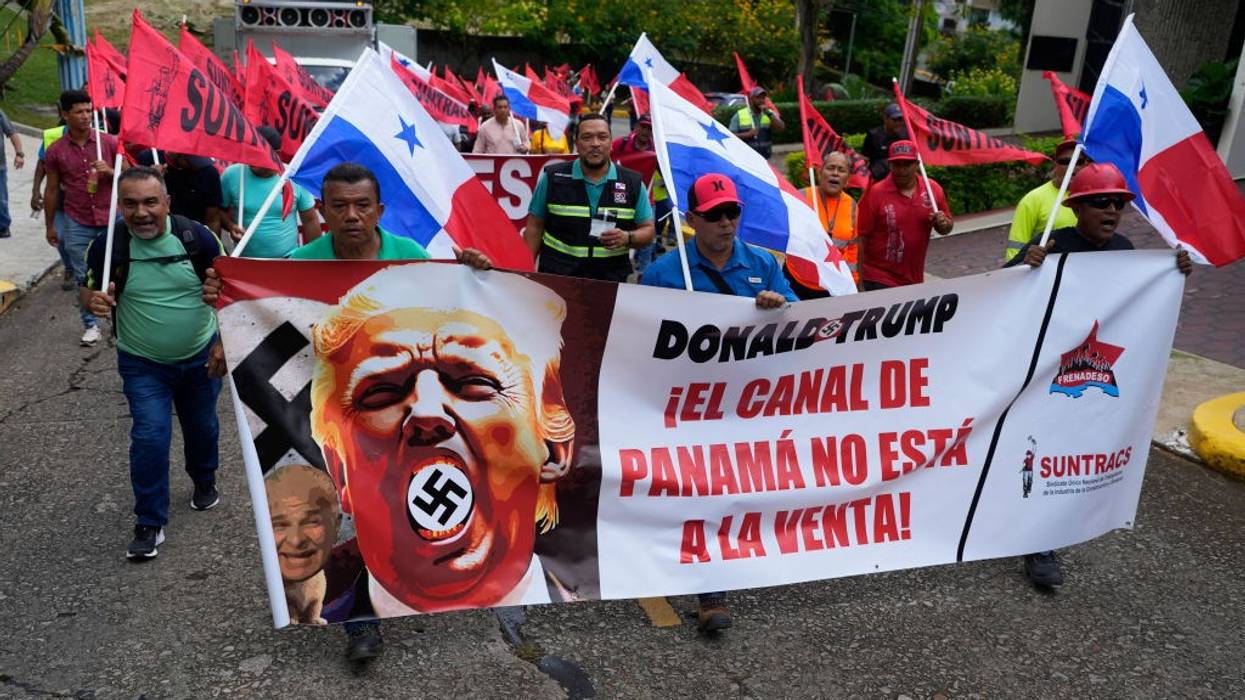
One former Swedish prime minister called the Republican president's pledge to grow U.S. territory "a recipe for global instability."
While the global far-right cheered President Donald Trump's return to the White House on Monday, world leaders, elected officials, activists, and others from across the rest of the political spectrum reacted with trepidation as the Republican vowed to expand the nation's territory for the first time in nearly 80 years and threatened the sovereignty of a U.S. trade and security partner.
In his second inaugural address, Trump promised a foreign policy that "expands our territory," as well as the renewed pursuit of "Manifest Destiny"—the 19th-century belief that God intended the United States to control the continent from coast to coast—beyond Earth by "launching American astronauts to plant the stars and stripes on the planet Mars."
"That's a dangerous statement in itself, but then others around the world might also be inspired to do the same."
In the United States, Monday's inauguration coincided with the federal holiday honoring the assassinated civil rights champion Rev. Martin Luther King Jr., whom Trump mentioned in his speech. Some observers noted the incongruity of Trump's message with King's anti-war ethos.
"How dare Donald Trump invoke Dr. King," pan-African studies professor and Black Lives Matter Los Angeles co-founder Melina Abdullah fumed on social media. "Trump IS the embodiment of the three evils that MLK warned of: racism, materialism, and militarism."
Indigenous voices reminded listeners that belief in Manifest Destiny fueled genocidal violence against Native Americans.
"Trump is really going after Native Americans with references to Manifest Destiny, the frontier, Wild West, and erasing Denali's name," attorney Brett Chapman, a direct descendant of the Ponca Cshief White Eagle, said on social media. "This anti-Indigenous inaugural address sounds like one from the 1800s when presidents deployed the U.S. military on Native Americans seeking rights."
In his speech, Trump falsely accused China of "running the Panama Canal," said that Panama—which was last invaded by American forces in 1989—is overcharging U.S. ships to use the crucial waterway, and warned that "we're taking it back."
As angry demonstrators rallied outside the U.S. Embassy in Panama City, right-wing Panamanian President José Raúl Mulino issued a statement refuting Trump's threats and accusations and declaring that "the canal is and will continue to be Panamanian."
Trump's threat follows his refusal earlier this month to rule out the use of military force in order to conquer the Panama Canal or Greenland, a territory of NATO ally Denmark.
South American progressives were left stunned by parts of Trump's address.
"In his inauguration speech, Donald Trump made it clear that reality surpasses fiction," Carol Dartora, a leftist lawmaker in the lower chamber of Brazil's National Congress, said in a video posted online. "Then the U.S. president exuded machismo, imperialism, and xenophobia, especially against immigrants."
Across the Atlantic, former center-right Swedish Prime Minister Carl Bildt said: "Now we know that President Trump wants to 'expand our territory.' That's a dangerous statement in itself, but then others around the world might also be inspired to do the same. It's a recipe for global instability."
German author, filmmaker, and journalist Annette Dittert
responded to Trump's expansionist pledge with a popular three-letter internet acronym: "'We will become a nation that expands our territory?' WTF?"
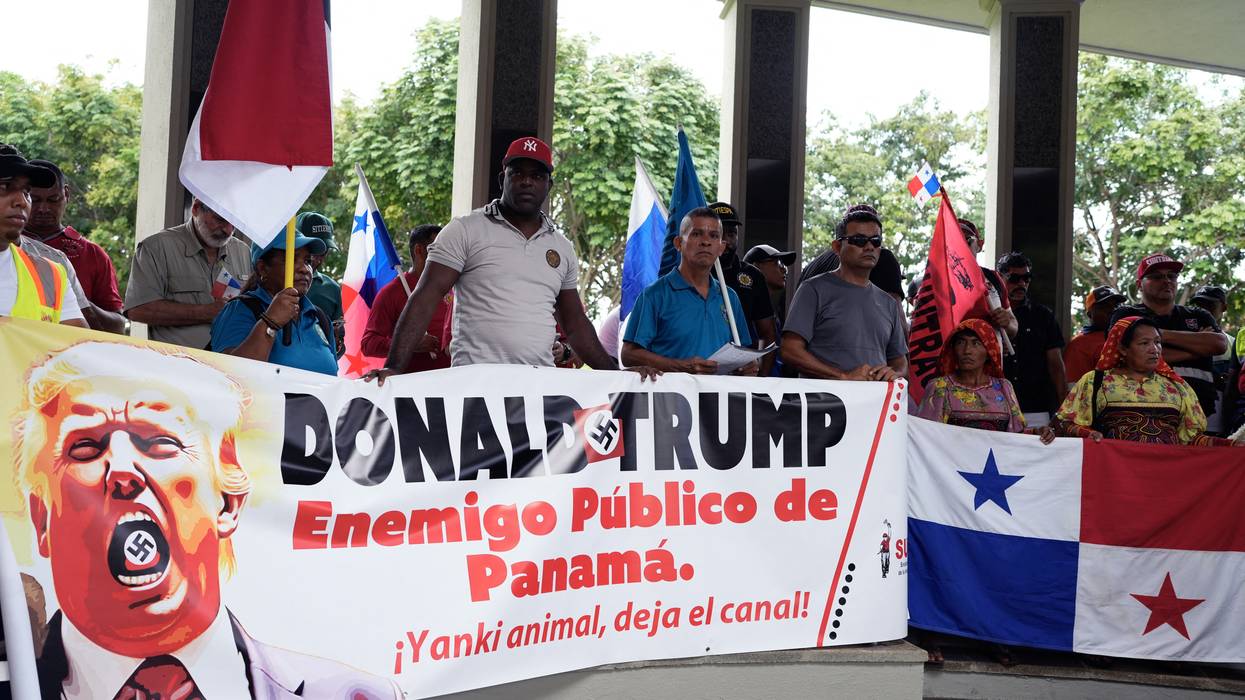
Trump claimed both the canal and the Danish territory are needed for U.S. "economic security."
U.S. President-elect Donald Trump has been rebuked in recent days by the leaders of both Panama and Denmark for his insistence that the Panama Canal and Danish territory Greenland must be under American control, and his latest comments on Tuesday were expected to garner more anger—and eye-rolling—from abroad.
At a press conference at his Florida resort, Mar-a-Lago, the Republican leader refused to rule out using military force to take over the canal and Greenland.
"It might be that you'll have to do something. The Panama Canal is vital to our country," said Trump. "We need Greenland for national security purposes."
He added that both the canal and Greenland, the world's largest island and home to a U.S. military base, are needed for U.S. "economic security."
Under President Jimmy Carter, who died late last month, the U.S. signed a treaty returning the Panama Canal Zone to Panama in 1979, and the waterway connecting the Atlantic and Pacific Oceans has been solely controlled by the Panamanian government since 1999.
Trump repeated a false claim that the canal is being "operated by China."
Last month, after the president-elect demanded "that the Panama Canal be returned to the United States of America in full, quickly and without question," Panamanian President José Raúl Mulino posted a video to social media in response.
"As president, I want to clearly state that every square meter of the Panama Canal and its adjoining zone is Panama's and will remain so," Mulino said. "The sovereignty and independence of our country is non-negotiable."
Trump's comments came as his son, Donald Trump Jr., joined right-wing activist Charlie Kirk and other Trump allies on a visit to Greenland.
The president-elect suggested in a social media post that the trip was made in an official capacity, writing: "The reception has been great. They, and the Free World, need safety, security, strength, and PEACE! This is a deal that must happen. MAGA. MAKE GREENLAND GREAT AGAIN!"
But Greenland officials clarified that Trump Jr. was visiting only as a "private individual" and said no representatives would be meeting with him.
Trump said at his press conference that "people really don't even know if Denmark has any legal right to [Greenland], but if they do they should give it up because we need it for national security."
Greenland is home to 60,000 people, and is self-ruling with its own legislature while its foreign and defense policy are controlled by Denmark. The Arctic island lies in a region where global powers are vying for military and economic control.
Trump also expressed a desire to purchase Greenland during his first term, a goal that was dismissed at the time as "absurd" by Danish Prime Minister Mette Frederiksen.
"Greenland belongs to the Greenlanders," Frederiksen reiterated on Tuesday.
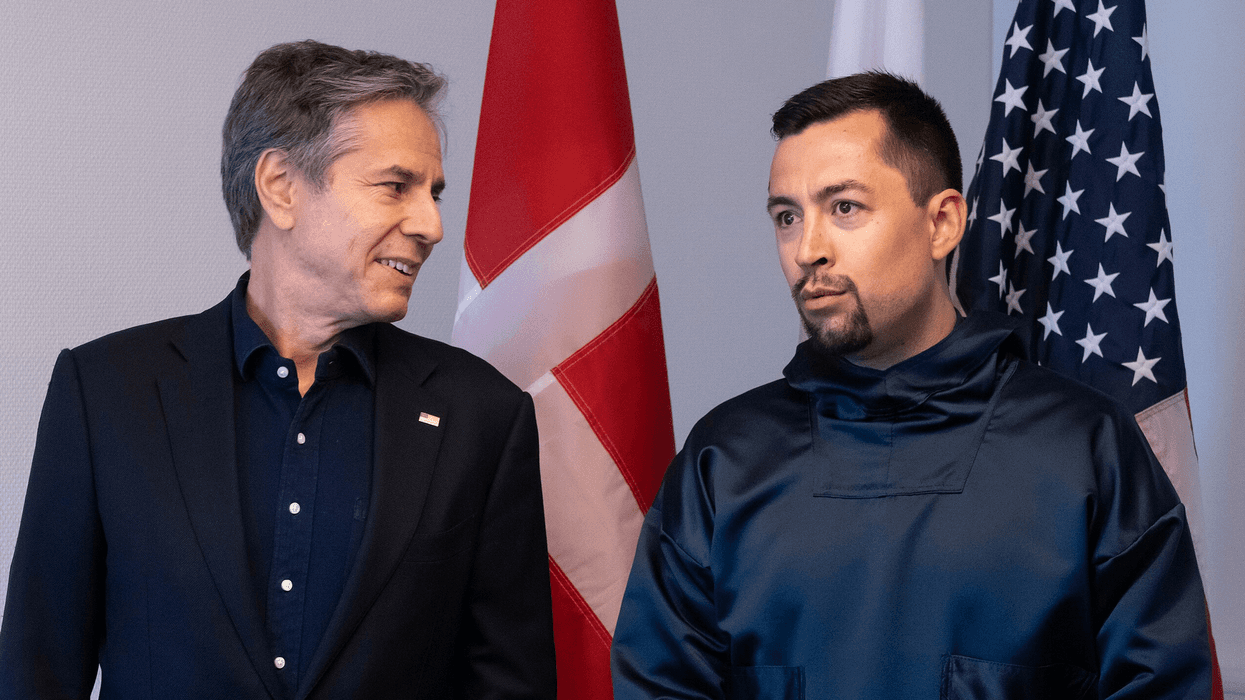
"A whole lot of gullible people were telling me he was the anti-war, anti-imperial candidate," one observer said of Trump.
"Greenland is ours. We are not for sale and will never be for sale. We must not lose our long struggle for freedom."
That was the message from leftist Greenlandic Prime Minister Múte Egede on Monday after U.S. President-elect Donald Trump once again called for American ownership of the autonomous Danish territory—the latest in a string of what critics have called imperialistic statements by the Republican leader.
"For purposes of National Security and Freedom throughout the World, the United States of America feels that the ownership and control of Greenland is an absolute necessity," Trump wrote on his Truth Social platform Sunday in a post announcing his nomination of PayPal co-founder Ken Howery as ambassador to Denmark.
During his first term, Trump directed his aides to examine whether the United States could purchase Greenland, which is home to the U.S. Space Force's Pituffik Space Base. Danish Prime Minister Mette Frederiksen, who is still in office, dismissed the idea as "absurd," prompting Trump to cancel a planned state visit to the Nordic nation.
Aaja Chemnitz, a member of Egede's democratic socialist Inuit Ataqatigiit (Community of the People) party representing Greenland in the Danish Parliament, told Ritzau that it is "very disrespectful" of Trump to treat Greenland as something that could be bought.
"I think the words 'ownership' and 'control' from a future president of the United States, which controls the entire Western world's foreign and security policy, is a reasonably clear signal that the intention is to buy Greenland," she said.
Chemnitz also took aim at "disrespectful" Danish politicians who "say that it's only a decision for Denmark."
"This would be a decision for Greenland and the people of Greenland," she said. "We have extended autonomy in Greenland. And as far as I know, no political party in Greenland wishes to become American citizens."
Greenlanders have a complicated relationship with the United States. While a majority of people polled in a 2021 survey wanted closer relations with the U.S., many remain wary over incidents including the 1968 "broken arrow" loss of four thermonuclear warheads when a B-52 bomber crashed into the sea ice of Wolstenholme Fjord. The accident caused widespread radioactive contamination and the nuclear fuel components of one of the bombs remain unrecovered to this day.
Trump's latest remarks on Greenland came on the same day he threatened to retake control of the Panama Canal and after he suggested making Canada the "51st state." Trump and senior members of his transition team are also reportedly mulling the question, "How much should we invade Mexico?"
The U.S. seized half of Mexico's territory after invading the country under false pretenses in 1846, one of at least 10 invasions of the southern neighbor. More recently, U.S. forces invaded Panama in 1989 after turning on erstwhile ally Gen. Manuel Noriega over his involvement in narco-trafficking. At least hundreds and as many as 2,000-3,000 Panamanian civilians and 23 U.S. troops were killed.
In the last week Trump has referred to Canada as the 51st state and its Prime Minister as "Governor," has discussed a "soft invasion" into Mexico, and is now discussing taking over Panama. These are the rantings of an aspiring autocrat & should be taken seriously—because he isn't joking.
— Qasim Rashid, Esq. (@qasimrashid.com) December 22, 2024 at 4:23 PM
Right-wing Panamanian President José Raúl Mulino responded to Trump's threat on social media Sunday, saying, "Every square meter of the Panama Canal and the surrounding area belongs to Panama and will continue to."
To which Trump replied, "We'll see about that!"
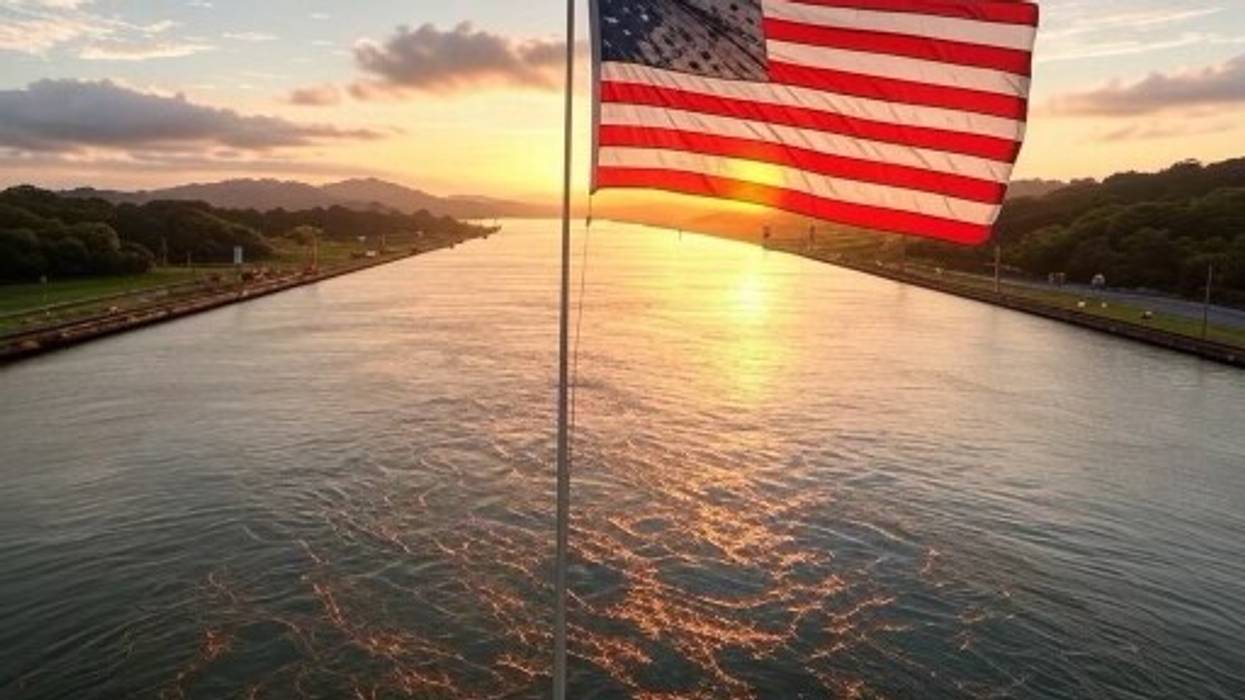
On December 22, 2024, the elected president of the United States, Donald Trump, announced that he would demand that Panama "give him back the canal."
Washington, D.C. January 22, 1903—Secretary of State John Hay and the Colombian commercial attaché in the United States, Tomás Herrán, signed the treaty that would give the United States the right to resume construction of the Panama Canal that the French had abandoned when they were almost halfway done. Colombia would agree to cede a strip of land on its isthmus to the United States for 100 years in exchange for ten million in a single payment and $250,000 per year. A few miles off the coast of Panama, the warship Wisconsin remains stranded to provide moral support for the negotiations.
Congress in Washington immediately approved the treaty, but it was rejected in Bogotá. There were doubts about sovereignty and about the benefits derived from this agreement. Mathematics, also practiced in that country, said that it would take the Colombian people 120 years to receive the same compensation that had been offered to be paid in one lump sum to the New Panama Canal Co.
On April 15, the United States envoy, Mr. Beaupre, sent a telegram to the secretary of state about the mood of the Colombian people: “There is at least one clear fact. If the treaty were put to the free consideration of the people, it would not be approved.” The Colombian Senate voted unanimously against its ratification.
Without ever having set foot outside his country, on August 27, President Theo Roosevelt wrote three letters describing the Colombians as “ignorant,” “greedy,” “despicable little men,” and “corrupting idiots and murderers.” Also, “I could never respect a country full of that kind of people… Trying to deal with Colombia as one deals with Switzerland, Belgium, or Holland is simply absurd.” Days later, he sends some packages with dollars to organize a revolt that will be called Revolution.
Problem solved. On November 18, the Hay-Bunau-Varilla treaty was signed in Washington, by which “the United States guarantees the freedom of Panama” in exchange for Panama ceding authority and all rights over the canal, free of any tax. As usual, the Panamanians were not invited to sign the new treaty. The $250,000 annually previously offered to Colombia would not be paid until a decade after the canal’s opening. There is nothing like having a powerful navy to do good business. The previous Treaty of Peace and Commerce signed by Colombia and the United States in 1846 was also violated. As in Cuba, as in Puerto Rico, article, now article 136 assured Washington the power to intervene in any inconvenient situation. Still, rebellions are symbolic. Washington has decreed that citizens of that country cannot acquire weapons. Imperial practice is old: Treaties are signed so the weak will comply.
In the United States, voices are raised against what several congressmen call dishonesty and imperialism. Sen. Edward Carmack protests, “The idea of a revolution in Panama is a crude lie; the only man who took up arms was our president.” Sen. George Frisbie Hoar, a member of the commission investigating the war crimes that will go unpunished in the Philippines, rejects the versions about the Revolution in Panama and adds, “I hope not to live long enough to see the day when the interests of my country are put above its honor.”
Of course, this matter of honor can be fixed. The president resorts to the old resource of “we were attacked first.” As President James Polk did to justify the invasion of Mexico in 1846 or President William McKinley to occupy Cuba in 1898, Roosevelt invents a story about threats to the security of certain American citizens in the area. Like Secretary of State Henry Kissinger, when he denied in front of television cameras any involvement in the military coup in Chile in 1973, Roosevelt assured Congress and the public that Washington was not involved in the Revolution in Panama. On December 6, 1904, he gave a speech before Congress on the need to once again expand the Monroe Doctrine “to see our neighbors stable, orderly, and prosperous.” Otherwise, “intervention by a civilized nation will be necessary… The United States must, whether it wants to or not, intervene to solve any serious problem by exercising the power of international police.”
In 1906, Roosevelt visited the construction sites in Panama. He would be the first American president to dare to leave his country. On board, the USS Louisiana, Roosevelt wrote to his son Kermit, “With admirable energy, men, and machines work together; the whites supervise the construction sites and operate the machines while tens of thousands of blacks do the hard work where it is not worth the trouble to use machines.”
Despite the hard work of Panamanians, they are portrayed as lazy. Journalist Richard Harding Davis had already echoed the sentiment of the time: “[Panama] has fertile lands, iron, and gold, but it has been cursed by God with lazy people and corrupt men who govern it… These people are a menace and an insult to civilization.”
In 1909, the Senate Foreign Affairs Committee, based on Roosevelt’s boastful statements to a class at a California university, investigated “the unilateral decision of a former president to take Panama from the Republic of Colombia without consulting Congress.” Considering Colombia’s requests to The Hague, the commission will question different protagonists. On November 6, 1903, three days after the revolution in Panama, the State Department sent a cable to its consul in Colombia informing that “the people of Panama, apparently unanimously, have resolved to dissolve their ties with the Republic of Colombia.”
Congressman Henry Thomas Rainey reads the cable from Washington in Congress. Rainey clarifies: “I do not believe any of this is true… When the Revolution occurred, only 10 or 12 rebels knew of the plans, apart from the Panama Railroad and Steamship Co. managers.”
It would be necessary to wait until 1977 when President Jimmy Carter’s government signed an agreement that the United States would return the canal to Central American country on the last day of 1999, three years before the mandatory rental period expired. A year earlier, at an event in Texas, the former governor of California and future president, Ronald Reagan, would declare: “It does not matter which ram dictator is in power in Panama. We built it! We paid for the canal! It’s ours, and we’re going to keep it.”
Omar Torrijos will be the dictator Reagan alluded to. Torrijos will claim sovereignty over the canal and will die, like other rebel leaders from the south, in a plane crash.
Imperialism is a disease that not only kills those who resist it but also does not let those who carry it inside live.