

SUBSCRIBE TO OUR FREE NEWSLETTER
Daily news & progressive opinion—funded by the people, not the corporations—delivered straight to your inbox.
5
#000000
#FFFFFF
To donate by check, phone, or other method, see our More Ways to Give page.
Daily news & progressive opinion—funded by the people, not the corporations—delivered straight to your inbox.

"As the world watched a genocide unfold in Gaza while AIPAC and Trump cheered it on, it has officially lost the PR battle."
The most powerful pro-Israel lobby group in the US has "lost the PR battle," said one progressive campaigner Tuesday as new polling in Michigan—where the American Israel Public Affairs Committee poured roughly $30 million into a failed attempt to defeat Abdul El-Sayed in the Democratic Senate primary this year—found that a majority of voters there disapprove of the organization.
Progress Michigan and Public Policy Polling found that with more than half of Michiganders expressing an unfavorable opinion of AIPAC and just 1-in-5 supporting the group, AIPAC is even less popular than President Donald Trump and the National Rifle Association (NRA) in the crucial swing state.
Forty-seven percent of respondents to the Michigan poll said they have an unfavorable view of the NRA, which has come to be seen as increasingly "politically toxic" as it's opposed broadly supported gun control measures and has come to be associated with an epidemic of gun violence, including mass shootings, in the US in recent decades.
“For years, pundits and political analysts have warned AIPAC to avoid receiving a similar fate to the NRA after Parkland and other avoidable tragedies from gun violence,” said Levi Teitel, communications director of Progress Michigan. “But as the world watched a genocide unfold in Gaza while AIPAC and Trump cheered it on, it has officially lost the PR battle."
While the NRA "is under legal investigations, AIPAC continues to have bipartisan influence in Michigan politics," said Teitel, as Progress Michigan suggested that its power over voters appears to be significantly waning two years into Israel's US-backed assault on Gaza, as well as attacks on free expression regarding Israel and Palestine in the US.
"AIPAC is simply out of touch with the majority of Michiganders, and this polling confirms that.”
Fifty-three percent of Michiganders said they have a "very unfavorable" view of Trump, and another 5% said their opinion of him is somewhat unfavorable, in a midterm election year in which Democratic candidates and campaigners are tying Republicans' to the president's anti-immigrant agenda, his war on Iran, and his commitment to boosting corporate profits for tech and fossil fuel companies.
AIPAC, said Teitel, "promotes an agenda that is indistinguishable" from that of Trump and Israeli Prime Minister Benjamin Netanyahu.
"Michiganders are deeply frustrated by endless wars in the Middle East that the two governments are facilitating," he added. "AIPAC is simply out of touch with the majority of Michiganders, and this polling confirms that.”
It's not the first time candidates and lawmakers who continue to align with AIPAC have received a clear warning that the group is not aligned with a majority of voters.
Nearly a year ago, the Democratic polling firm Upswing Strategies found that almost half of voters in swing districts in Michigan, Illinois, Pennsylvania, and Minnesota said they would "never" support a candidate who received funding from the group.
A clear majority of voters also told Quinnipiac University pollsters last year that they opposed the US continuing to send weapons to Israel.
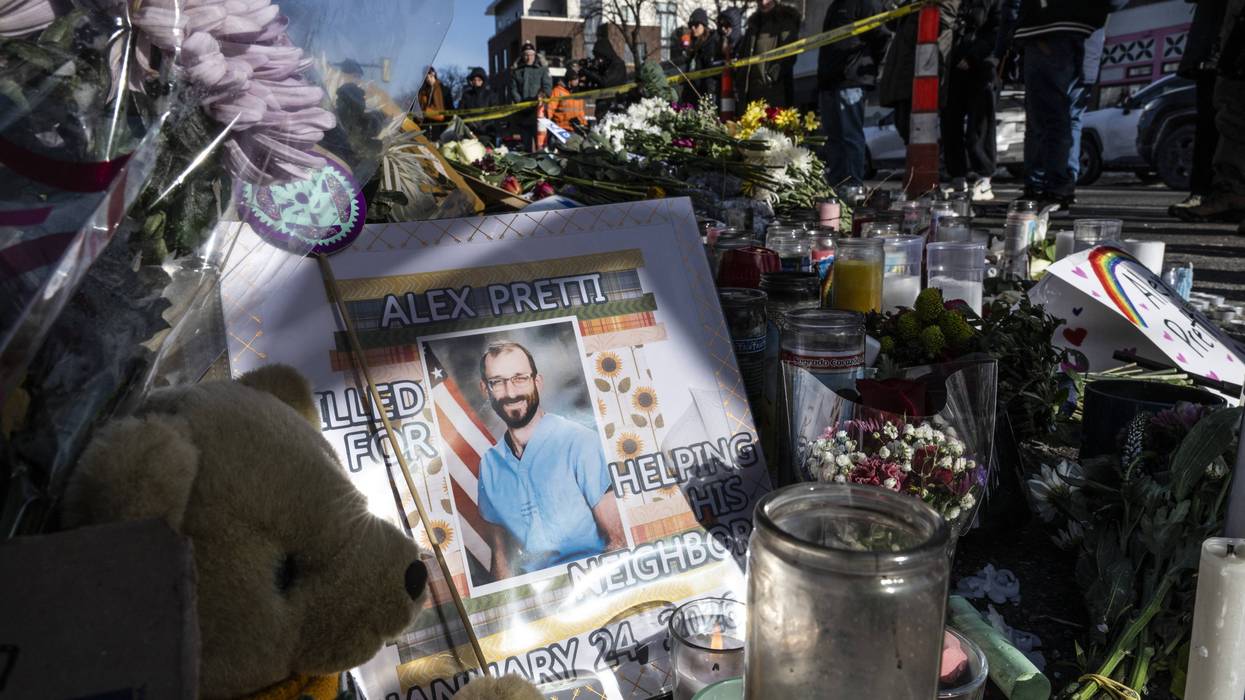
"The American people didn’t vote for these scenes and you can’t continue to order them to not believe their lying eyes,” the New York Post editorial board wrote.
"The Trump administration spin on this simply isn’t believable."
That's what the editorial board of the right-wing Wall Street Journal wrote Sunday calling for a "pause" in Immigration and Customs Enforcement's (ICE) anti-immigrant blitz following Saturday's killing of 37-year-old intensive care nurse Alex Petti—who was disarmed before being shot by federal agents in Minneapolis—and top administration officials' claims that the man who helped save US military veterans' lives was a "domestic terrorist."
The Journal's editors called Pretti's killing “the worst incident to date in what is becoming a moral and political debacle” for President Donald Trump and his administration.
The Journal wasn't alone. Other right-wing outlets owned by the Murdoch media empire, including the New York Post, published editorials calling for a suspension of Trump's crackdown on undocumented immigrants, during which dozens of people have died in ICE custody and federal enforcers have killed two Americans. Even staunchly pro-Trump Fox News challenged administration officials over the shooting.
"It's time to de-escalate in Minneapolis, Mr. President," the Post's editorial board wrote Sunday.
"Not because you’re wrong to enforce immigration law, nor to go after fraudsters who’ve stolen billions in federal funds—but because these enforcement tactics won’t turn the tide, and instead are backfiring," the editors clarified. "Swing voters—Hispanics and independents who turned to you at the last election—see US citizens dying at federal agents’ hands, and recoil in horror."
"The hasty and misleading rhetoric coming out of the administration needs to stop," the Post said. "And while Pretti was horribly misguided, there is no evidence he was a 'terrorist' intent on a 'massacre' of law enforcement."
As they did with Renee Good, the 37-year-old mother and poet who was shot dead by an ICE agent in Minneapolis earlier this month, Trump and some of his senior officials accused Pretti of being a "domestic terrorist"—a move in line with the administration's designation of left-wing activism as terrorism.
US Border Patrol Commander Gregory Bovino said that it looked like Pretti—who eyewitnesses said died while trying to help a woman who had been pepper-sprayed by ICE—“wanted to do maximum damage and massacre law enforcement."
White House Deputy Chief of Staff Stephen Miller attempted to smear Pretti as an "assassin" who "tried to murder federal agents."
Homeland Security Secretary Kristi Noem accused Pretti of "domestic terrorism."
As the Wall Street Journal's editors put it, "Alex Pretti made a mistake, but he wasn’t a ‘domestic terrorist.'"
"Videos of an event aren’t always definitive, but this is how it looks to us," they wrote. "Pretti attempted, foolishly, to assist a woman who had been pepper-sprayed by agents. Multiple agents then tackled Pretti, and he had a phone in one hand as he lay on the ground. An agent discovered a concealed gun on Pretti, and disarmed him. An agent then shot Pretti, and multiple shots followed."
The Post editors concluded, "Mr. President, the American people didn’t vote for these scenes, and you can’t continue to order them to not believe their lying eyes."
Meanwhile, more than 60 CEOs of Minnesota-based companies including Target, Best Buy, UnitedHealth, 3M, and General Mills published an open letter Sunday calling for "an immediate deescalation of tensions and for state, local, and federal officials to work together to find real solutions."
Gun rights groups including the National Rifle Association have called for a full investigation of Pretti's killing. The NRA pushed back against arguments that Pretti should not have brought a gun—which he was legally carrying—to a protest, calling such assertions "dangerous and wrong."
"Responsible public voices should be awaiting a full investigation, not making generalizations and demonizing law-abiding citizens," added the NRA, which was criticized for its initial silence following the killing of Philando Castile, a Black man who was legally carrying a gun when he was shot dead by police in front of his girlfriend and her 4-year-old daughter during a 2016 traffic stop in suburban Minneapolis.
Even Republican lawmakers who support Trump have expressed their dismay over Pretti's killing, with Sen. Bill Cassidy of Louisiana calling the incident "incredibly disturbing."
Chris Madel, an attorney who provided legal counsel to Jonathan Ross—the ICE agent who killed Good—was, until Monday, also a Republican candidate for Minnesota governor. However, Madel said that he dropped out of the race and implied that he would quit the GOP because he “cannot support the national Republicans’ stated retribution on the citizens of our state."
“Nor can I count myself a member of a party that would do so," he said.
I am ending my campaign for Minnesota Governor. I describe why in the below video. Please watch until the end. (It is 10 minutes, 52 seconds.)
Thank you,
Chris pic.twitter.com/2nfyAyTzNZ
— Chris Madel (@CWMadel) January 26, 2026
" United States citizens, particularly those of color, live in fear," Madel continued. "United States citizens are carrying papers to prove their citizenship. That’s wrong."
“At the end of the day, I have to look my daughters in the eye and tell them I believe I did what is right," he added. "I am doing that today."
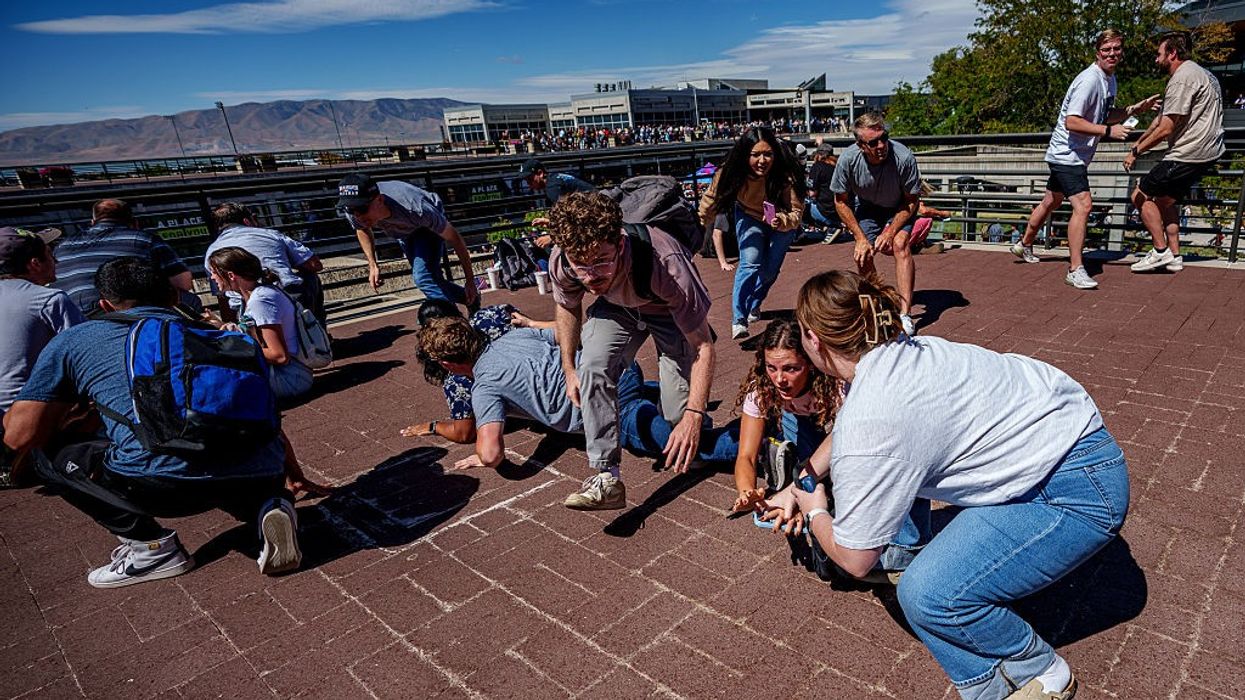
Melissa Hortman was a strong advocate of gun control laws. Charlie Kirk opposed them. Both are dead by gunfire, along with hundreds of children and adults so far this year.
“I think it’s worth to have a cost of, unfortunately, some gun deaths every single year so that we can have the Second Amendment to protect our other God-given rights. That is a prudent deal. It is rational.”—Charlie Kirk
Republican Charlie Kirk is dead. So is former Democratic Minnesota House Speaker Melissa Hortman and her husband, Mark.
Two clearly political assassinations in the past four months.
And a new study published in The Journal of the American Medical Association’s journal Pediatrics suggests that most of the deaths from the more than 250 mass shootings in America so far this year could also be classified as resulting from politics.
How did we get here, and what do we do?
In 2008, the in-the-National Rifle Association’s (NRA)-pocket Republican Supreme Court Justice Antonin Scalia did much the same thing that Sam Alito would later do with his Dobbs anti-abortion ruling: He reached back hundreds of years to look for a definition at the time the Second Amendment was written for how people then viewed the phrase “bear arms” and then twisted it beyond recognition.
The result was the corrupt Heller decision, as I lay out in The Hidden History of Guns and the Second Amendment, which unleashed a new wave of guns on an unsuspecting America.
It was followed two years later by McDonald v Chicago, another NRA-purchased, all-Republican decision striking down Chicago’s gun control laws and forcing cities and blue states to accept more weapons whether their people—through their elected officials—wanted that tsunami of guns in their communities or not.
As Justice John Paul Stevens wrote in his dissent in McDonald:
Although the Court’s decision in this case might be seen as a mere adjunct to its decision in Heller, the consequences could prove far more destructive—quite literally—to our Nation’s communities and to our constitutional structure.
As we saw Wednesday with the right’s new martyr, and have been seeing in the daily toll of gun deaths that America—alone among all other nations in the world—suffers from, Stevens was prescient.
We are literally the only country in the world that is experiencing this magnitude of gun crisis. Half of the guns in civilian hands in the entire world are here in the United States, so it shouldn’t surprise anybody that the leading cause of childhood death in the US is bullets and political assassinations have become routine.
The study in Pediatrics looked at child gun deaths in America before and after the 2010 McDonald decision. What they found is shocking.
Hopefully the assassination of a far-right “gun rights” icon will cause at least a few Republicans to break with their party’s fealty to the weapons industry.
That decision caused two major changes in gun laws across America. The first was that nearly every red state loosened their gun laws, sometimes in the extreme, even allowing open carry of semiautomatic weapons of war without any permit or regulation. Most blue states, on the other hand, looked for and found ways around the decision to actually tighten their gun control laws.
The result was astonishing. Between 2011 and 2023, the study period, red states that had loosened their gun laws saw 7,453 more children killed by firearms than the pre-McDonald statistical trends would have predicted had the Republicans on the court not further loosened gun laws.
In blue states that maintained or strengthened their gun laws, though, child gun deaths remained the same as before McDonald and Heller, and, to quote the study:
“Four states (California, Maryland, New York, and Rhode Island) had decreased pediatric firearm mortality after McDonald v Chicago, all of which were in the strict firearms law group.” (emphasis added)
Melissa Hortman was a strong advocate of gun control laws. Charlie Kirk opposed them. Both are dead by gunfire, along with hundreds of children and adults so far this year.
When Hortman was murdered by a politically-inspired right-wing thug, some conservatives on X and other platforms celebrated.
Utah Republican Sen. Mike Lee, for example, tweeted, “This is what happens When Marxists don’t get their way,” along with a picture of the shooter. An hour later, again showing the suspect’s picture, Sen. Lee wrote: “Nightmare on Waltz Street,” apparently trying to humorously reference Minnesota’s Democratic Gov. Tim Walz and his advocacy for gun control.
Yesterday, in the wake of Charlie Kirk’s murder, some liberals were posting the equivalent of “good riddance” to social media platforms, some making Lee’s obscene posts seem tame.
Both are reprehensible.
Instead, let’s take this moment to reflect on how the NRA’s work over the past decades—often funded and supported by Vladimir Putin’s Russia (where gun control is rigid)—killed both of them. And tens of thousands of children and adults over the years.
This week NPR reported that school shootings have spawned a $4 billion industry selling everything from bulletproof backpacks to “panic buttons, bullet-resistant whiteboards, facial recognition technology, training simulators, body armor, guns, and tasers.” They note:
Tom McDermott, with the metal detector manufacturer CEIA USA, says schools used to be a small fraction of their US business. Now they’re the majority.
"It’s not right. We need to solve this problem. It’s good for business, but we don't need to be selling to schools," McDermott says.
Sarah McNeeley, a sales manager with SAM Medical, is selling trauma kits, which include tourniquets, clotting agents, and chest seals. She says their customers are traditionally EMTs, fire departments, and military medics, but increasingly, school districts.
It’s insane that America’s answer to five corrupt Republicans on the Supreme Court and the NRA flooding our country with deadly weapons is to create a multibillion-dollar industry to stop bullets or ameliorate their damage in our public schools.
The vast majority of Americans want rational gun control laws instead of this Wild West insanity. Every other developed country in the world has them; not a single one forces their children through the trauma of active shooter drills or subjects them to metal detectors and requires them to occasionally come face-to-face with murderous psychopaths armed to the teeth.
It’s way past time for our politicians to wake the hell up, and hopefully the assassination of a far-right “gun rights” icon will cause at least a few Republicans to break with their party’s fealty to the weapons industry and join with Democrats to Make America Safe Again.
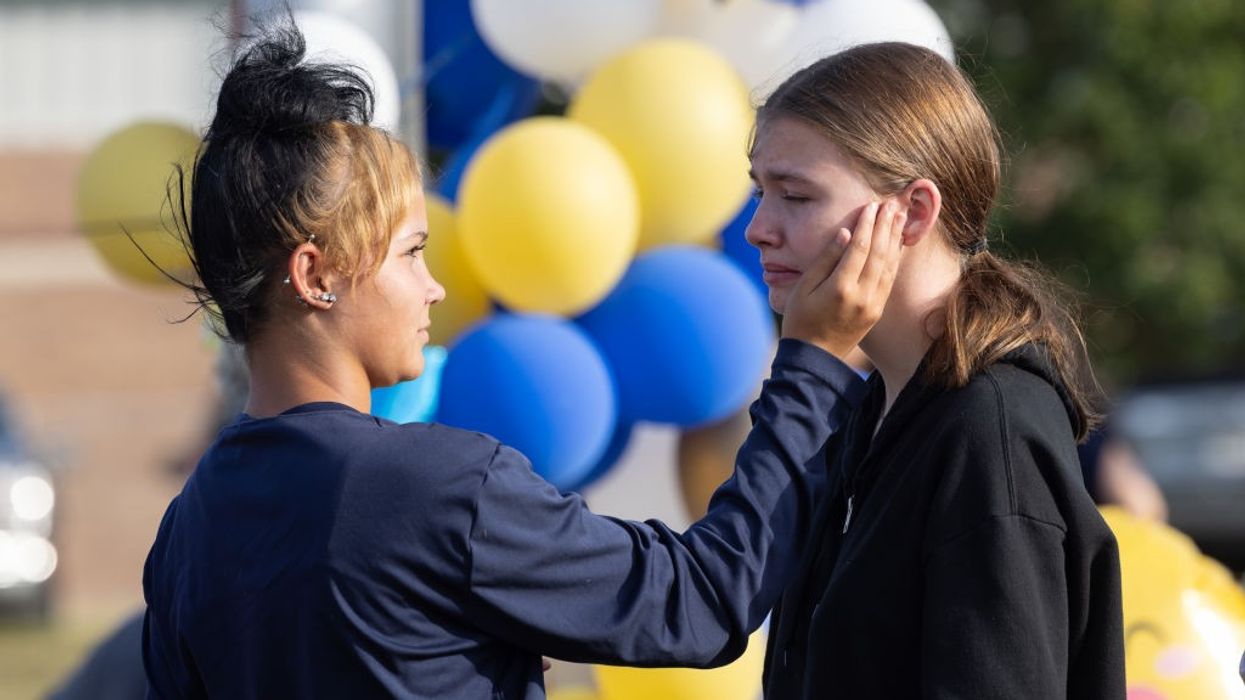
I’m using my voice to urge you and every other eligible voter, to please vote for gun violence prevention candidates in this upcoming election. Please vote for my life and future.
It’s official; the Republican Vice Presidential nominee declared school shootings “a fact of life.” That’s what JD Vance said at a rally in Arizona when asked about the recent shooting at Apalachee High School in Winder, Georgia, right after he told the crowd “We don’t have to like the reality that we live in, but it is the reality we live in.”
As a high school student, I’m terrified to know that the fate of students like me might soon be left in the hands of candidates who have accepted that we will always have to live in fear and whose only plan is to bring more guns into our schools. These reactive approaches only put students at greater risk and fail to address the root causes of the gun violence epidemic. High schoolers like me deserve more than that, don’t we?
I was 14 years old when I realized that school was not safe. I was riding the bus to school the day after the Uvalde shooting, where an 18-year-old killed 19 children and two teachers with an assault rifle in a Texas elementary school. My friend turned to me with concern in his eyes and asked, “You know what to do if this happens here, right?” I did know. Like most other kids in America, I’d been preparing for a school shooting since I was in elementary school. Lock the door. Cover the window. Hide as far away as possible—in a closet, or under a desk. Don’t let yourself become a target. Locate the first aid kit in case one of us is shot. Stop the bleeding. Wait for help.
So no, gun violence does not have to be a fact of life, and we refuse to accept it. We won’t “just get over it,” as Trump said after a school shooting in Perry, Iowa.
I’ve been preparing for a school shooting since I was five. While kids in other countries were at recess, I was huddled with my classmates in a corner being told to stay quiet and not move as people banged on the classroom door. They used to tell us we were practicing in case a bear got into the school, and I thought that was the most terrifying thing in the world—a bear in our school hallways. But now I know that the truth is far scarier––and far more likely. That day as a 14-year-old riding the bus to school, I realized that the real danger wasn’t some distant threat, but the “fact of life” that anyone could easily access a firearm and kill us. From then on, I became cautious about who I opened the door for at school. And I began to fear for my life every time my principal went over the speakers to announce a lockdown.
And I’ve done more than change my mindset—I’ve taken action. Two days after the Uvalde shooting, I helped students at my school lead a walkout to remember the victims and call for gun safety legislation. Since that first protest, I’ve devoted my time in high school to gun violence prevention, working with March For Our Lives, a youth-led gun violence prevention movement. To JD Vance and anyone who thinks similarly, let me tell you from the young people of America: we do not accept being killed by guns in our classrooms and in our communities as a “fact of life.” Our “fact of life” is that the time we’re meant to spend on school and with friends is instead spent doing what politicians should be doing for us: fighting for a future free of gun violence.
So no, gun violence does not have to be a fact of life, and we refuse to accept it. We won’t “just get over it,” as Trump said after a school shooting in Perry, Iowa. Instead, we will change these so-called facts of life. We will fight for a country where a 14-year-old can’t access an assault rifle from his dad, as in the recent Apalachee High School shooting. We will fight for a country where students like those at Apalachee will never have to drag their teacher’s dying body across the floor and use their clothes to try to stop his bleeding. And we will fight for a country where teachers and students won’t lose their lives simply for attending school.
In 2025, when the next mass shooting happens––statistically about twice a day in America––we will either have a president who tells us to “get over it,” or a president who demands, “We have to end this epidemic of gun violence in our country once and for all.” I want the latter. I want lawmakers who are determined to do what it takes to help students like me feel safe at school. I want an administration that keeps military-grade assault rifles out of the hands of dangerous civilians and will pass safe storage laws so that no one can access someone else's gun to hurt themselves or others.
But right now, what I want doesn’t matter. I’m not old enough to vote yet, and neither is the majority of young people and students who bear the brunt of the gun violence epidemic. So instead, I’m using my voice to urge you and every other eligible voter, to please vote for gun violence prevention candidates in this upcoming election. Please vote for my life and future. As Vice-President Harris reminded us, “It doesn’t have to be this way."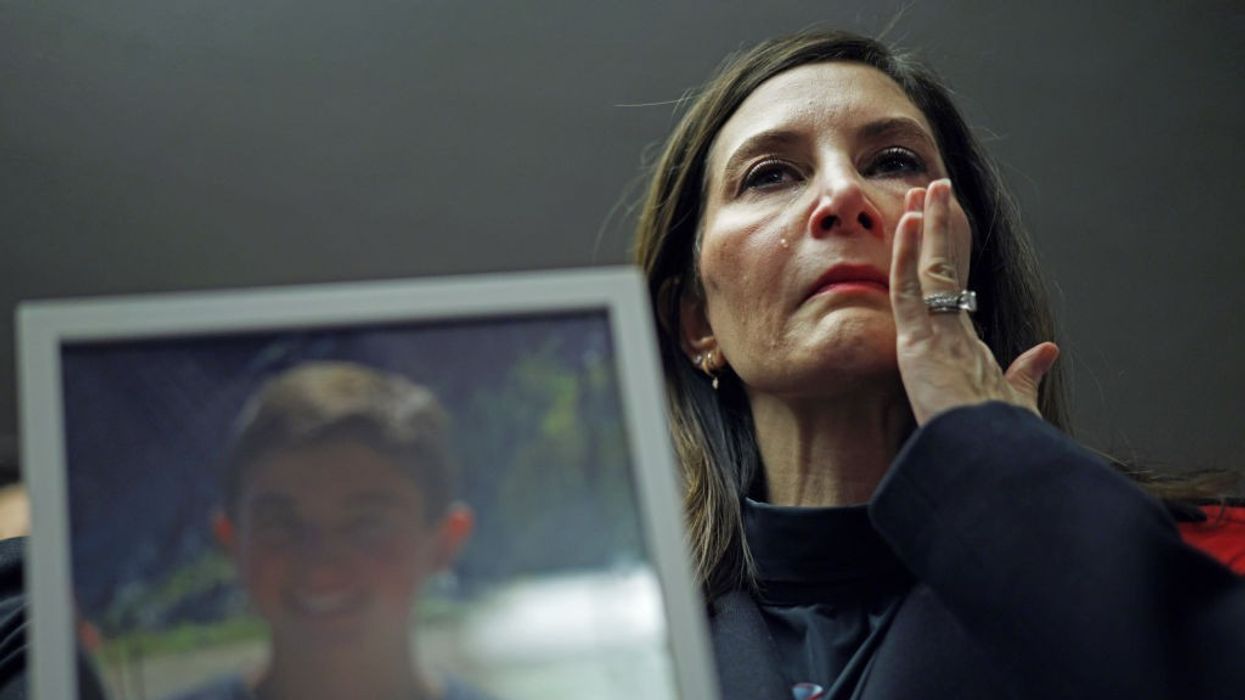
With just one month until election day, it’s time for American voters to come together and elect leaders who will fight to protect our communities from gun violence.
Warning: This piece discusses suicide, gun violence, and mental health. If you or someone you know is in crisis, please call or text 988, or visit 988lifeline.org/chat to chat with a counselor from the 988 Suicide & Crisis Lifeline.
Last year, I received a text that would change my life forever. I was told that my close friend, Jordan, had died by firearm suicide. Calls from classmates came crashing in and emails from my school flooded my inbox. A wave of shock rushed over me and it felt like time had frozen, even as I watched the world continue on.
My school held an assembly to honor Jordan’s memory, but it all became a blur between the tears, hugs, tissues, and funeral.
Jordan holds a special place in my heart. Not only because we were on the same lacrosse team, but because she was a shining light and a good friend. She was always there for me when I needed her, but little did I know Jordan was battling a thunderstorm on the inside.
Amidst all my grief, there was a part of me that was also angry because politicians sent their condolences, but no action was taken. I wanted something to change.
There are thousands of students and young people just like me across the country who are committed to creating a future free from gun violence.
The tragedy of this story isn’t just about Jordan; it’s the fact that her story is not unique. When there are over 3,000 young people who die by gun suicide in an average year, something has to change. Stronger gun safety measures, like secure storage requirements, in our country can save lives and prevent more friends and families from feeling the pain I’ve felt.
Firearm suicide has a deadly and devastating impact on my generation. Over the past decade, gun suicide rates for young people have increased faster than any other age group, reaching a near-record high. When it comes to attempted suicide, guns are especially deadly. We have to do more to reduce easy access to guns in a moment of crisis since the majority of people who survive a suicide attempt don’t go on to attempt again.
Those statistics should be a wake-up call for every gun owner, politician, and person in the United States on why it’s so important to prevent firearm access for someone contemplating suicide. That’s where laws like secure storage requirements come in.
Secure storage is the practice of gun owners making their homes and communities safer by storing their guns securely. This means storing a firearm unloaded, locked, and separate from ammunition. Research shows that most firearm suicides attempted by youth occur at home, and households that securely store guns and ammunition reduce this risk by 78% comapared to those that don’t.
There is a direct correlation between securely storing a gun at home and saving a life from firearm suicide. That’s why we need lawmakers at every level of government to increase awareness around secure storage practices and pass laws that require gun owners to store their guns securely.
With just one month until election day, it’s time for American voters to come together and elect leaders who will fight to protect our communities from gun violence. From electing Vice President Harris and Governor Walz at the top of the ticket to voting for gun sense candidates down ballot, these are the candidates that are fighting to end gun violence while the other side is doing absolutely nothing.
Even in the face of tragedy, I still have hope. Firearm suicide, just like all forms of gun violence, is preventable.
After the loss of my best friend, I felt devastated and I wanted to find a community that shared my similar experiences. I soon discovered Students Demand Action, the nation's largest youth-led gun prevention group, and started a chapter at my school. Since then, I have been actively involved in fighting for gun violence prevention in California, and I’m just getting started.
We should all be aware of the warning signs and how to help when someone is in crisis. Whether it’s having a private conversation to let someone know you’re there for them or sharing mental health resources, that one step could save a life.
There are thousands of students and young people just like me across the country who are committed to creating a future free from gun violence. Guns are the leading cause of death for my generation, meaning youth firearm suicide is just one piece of a much larger puzzle. When guns are accessible to anyone, anywhere, at any time—no one is safe.
But even in the face of tragedy, I still have hope. Firearm suicide, just like all forms of gun violence, is preventable. Joining Students Demand Action allowed me to turn my pain into purpose and together, we can end America’s gun violence epidemic by creating a future for our generation that’s free from gun violence.
How the nation's highest court supercharged the nation’s gun violence epidemic.
If you’re looking for someone to blame for the gun violence that has left our schools, streets, and communities soaked in blood, don’t point just at the National Rifle Association and their lackeys in the Republican Party. Raise another finger, ideally your middle one, toward a Supreme Court that has enabled the unceasing rise of gun-related carnage in all its ever-more-obscene forms.
The key decision came in 2008, when a 5-4 majority led by the late Justice Antonin Scalia ruled in District of Columbia v. Heller that the Second Amendment protects an individual right to own firearms. Prior to Heller, the combined weight of academic scholarship and legal precedent had construed the Second Amendment as protecting civilian gun ownership only in connection with long-antiquated state militias. This view was long seen as reflecting the spirit of the actual debates held during the Constitutional Convention of 1787.
Scalia and the other members of the conservative Heller majority purported to base their radical reinterpretation of the Second Amendment on their “originalist” understanding of the Founding Fathers’ intentions. But their novel conclusion essentially ignored the first 13 words of the Second Amendment regarding the necessity of preserving the militias.
This amounted to a distortion of American history. State militias played a critical role in the American Revolution, and before that, in maintaining order in the 13 colonies. As the Second Amendment historian Noah Shusterman has written:
The men writing the Bill of Rights wanted every citizen to be in the militia, and they wanted everyone in the militia to be armed. If someone was prohibited from participating in the militia, the leaders of the founders’ generation would not have wanted them to have access to weapons… Read the debates about the Constitution and the Bill of Rights, and the militia’s importance leaps off the page. Alexander Hamilton, writing in the Federalist Papers, called a well-regulated militia “the most natural defense of a free country.” His anti-Federalist critics agreed with the need for a citizens’ militia, writing that “a well-regulated militia, composed of the Yeomanry of the country, have ever been considered as the bulwark of a free people.”
Few errors of constitutional interpretation have had such deadly real-world consequences as Heller. Justice John Paul Stevens, who authored the principal dissent in Heller, later condemned the ruling as “the worst self-inflicted wound in the court’s history.”
Since Heller, both guns and gun deaths have surged in tandem in what the American Enlightenment Project calls the “Heller Inflection.” In 2008, there were 305 million guns in circulation and 31,500 reported gun deaths; there are now 470 million guns in circulation and over 45,000 reported gun deaths per year. Mass shootings, defined as events involving four or more victims, have grown as well—from 272 in 2014 to 653 last year, according to the Gun Violence Archive.
But as bad as Heller was, it still recognized that certain gun control measures remained “presumptively lawful.” In the words of Scalia:
Nothing in our opinion should be taken to cast doubt on longstanding prohibitions on the possession of firearms by felons and the mentally ill, or laws forbidding the carrying of firearms in sensitive places such as schools and government buildings, or laws imposing conditions and qualifications on the commercial sale of arms.
In 2010, in McDonald v. Chicago, the court extended Heller’s Second Amendment analysis to cover state and local governments in addition to federal enclaves. But in 2022, with Clarence Thomas’ 6-3 majority opinion in New York Rifle & Pistol Association v. Bruen, the court cast aside the limiting language of Heller about presumptively lawful gun-control restrictions.
Bruen struck down New York’s firearm permit system that had been on the books since 1909. To reach that result, the court rejected the traditional methods of judicial scrutiny used to determine the constitutionality of state and federal statutes that required judges to balance the governmental interests advanced by legislation against the competing rights of individuals. In place of interest balancing, Thomas and his cohorts substituted a specious “history and tradition” test based on the justices’ highly selective and subjective reading of history and their sense of tradition.
In fact, gun-control regulations like the New York permit system have been commonplace in the United States from colonial times to the present. The founders supported a variety of strict measures, including the registration of guns issued to militia members and prohibitions against carrying firearms in public. By the early 1900s, nearly every state had enacted laws requiring firearm licenses and banning concealed carry.
As a result of Bruen, however, that history has effectively been neutered. Judges now must regard gun-control measures as presumptively invalid. To overcome the presumption, the government must prove that even the most commonsense laws are firmly rooted, either explicitly or by analogy, in the “nation’s historical tradition of firearm regulation.”
Together with Heller and McDonald, Bruen has led to a surge in Second Amendment challenges to gun laws since 2008. Pre-Heller, the lower federal courts decided an average of 26 gun cases per year; they now hear nearly 700 per year. The challengers are also winning a higher percentage of cases compared to the pre-Heller era, especially in cases decided by Donald Trump-appointed judges appointed. “Trump judges are close to casting 50% of their votes in favor of gun rights, when the average for other Republicans is 28%,” one study has found.
Last term, the Supreme Court surprised many by upholding a federal law that bars anyone subject to a domestic-violence restraining order from possessing a gun. However, it did so without signaling that it is prepared to modify the hard Second Amendment lines drawn in Heller and Bruen. As long as the court is controlled by right-wing activists beholden to the gun lobby and the Republican Party, those lines and their horrendous consequences are here to stay.
For the first time, the NRA can’t buy their way out of this problem.
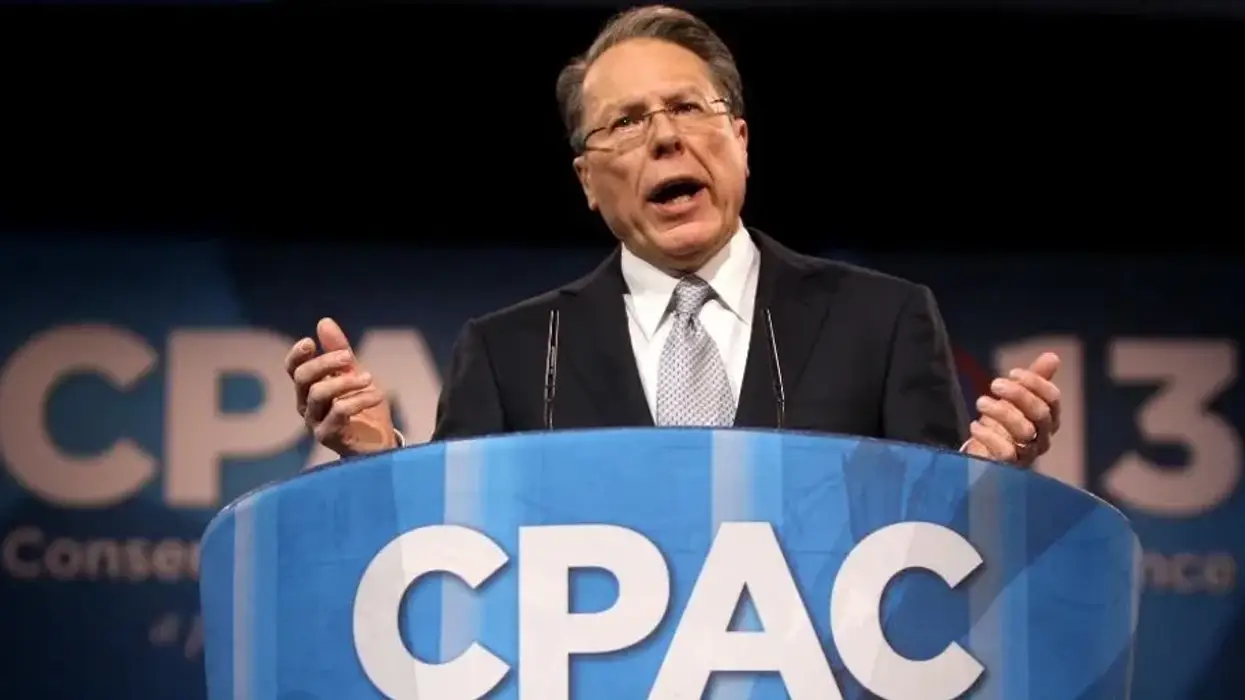
After a 30-year reign of terror and corruption, not even the NRA wants anything to do with their long-time leader, Wayne LaPierre.
In their opening arguments of the civil trial in New York—where a jury recently found LaPierre and the NRA liable for corruption—an attorney for the gun lobby said “The NRA is not this man” and called LaPierre’s resignation a “course correction.” No wonder they’d want one: The NRA is worse by every measure today than it was three decades ago when LaPierre turned the former sportsmen’s club into a radical political lobbying group. He is the architect behind the nation’s gun violence epidemic, leading the NRA’s reckless and profit-driven quest to put guns in the hands of as many Americans as possible that has stained its reputation beyond repair—all while abusing the meaning of the Second Amendment to selfishly line his own pockets. For his efforts, today, the NRA is broke, rudderless, and in serious legal jeopardy.
The NRA has lost over a million members. Membership dues are down by $14 million. And their lobbying influence has been waning since 2015.
Perhaps the only measure on which they’ve been successful is the amount of firepower pumped into our communities. Yearly gun sales are now roughly twice the level they were 15 or 20 years ago, and the tragic toll of gun-related deaths has skyrocketed with it. Under LaPierre’s watch, the number of gun suicides and gun murders reached record highs and active shooter incidents became drastically more common across the country-–-about seven times more common than in Canada, and 340 times more common than in the United Kingdom.
During this time, the NRA slowly lost the support of America. As gun violence shattered more and more families, public sentiment turned on them. A majority of U.S. adults now say gun laws should be stricter. About a third (32%) of parents with K-12 students say they are very or extremely worried about a shooting ever happening at their children’s school. And six in 10 Americans (61%) say it is too easy to legally obtain a gun in this country.
We’ve watched mass shooting after mass shooting devastate communities across the nation, from Orlando to El Paso to Boulder to Lewiston–each event and each death presenting an opportunity for the NRA to muster an ounce of courage and change the gun culture in this country that they single-handedly controlled. How did they respond instead?
On December 14, 2012, after a gunman shot and killed 20 children and six staff members at an elementary school in Newtown, Connecticut, LaPierre coined his infamous "good guy with a gun” argument. A decade later when nineteen children and two adults were killed in the deadliest school shooting in Texas history at Robb Elementary School on May 24, 2022, the NRA held their annual convention across the state in Houston days later defending Americans' right to own a gun.
The NRA is no longer the political powerhouse it once was, but the damage done is irreparable. The notion of a course correction is so far from possible. No reasonable person with any ambition would want to take LaPierre's job and inherit the mess he leaves behind—the personal reputation and professional risk are too high.
We would send our thoughts and prayers to LaPierre—but, this isn’t just about him. The gun violence prevention movement and the survivors of armed violence cannot move on, and neither can he. Every empty seat at the dinner table. Every birthday-turned-anniversary. Every stolen milestone. He will always hold responsibility. The scars of his legacy are irreparable and his damage to the organization makes it unsalvageable.
We wish we could give LaPierre all the credit for the downfall of the NRA—but, proudly, the gun violence prevention movement played a role as well. Guns Down America has fought back against the NRA and LaPierre’s agenda since our inception, from leading the “murder insurance” effort that fined the NRA $7 million to influencing Wells Fargo to break ties with the NRA contributing to the steady decline in relevance and influence.
For the first time, the NRA can’t buy their way out of this problem. So as one last parting gift to the organization in decline, we’ll offer them a free piece of advice: Sell your gun range at HQ in Virginia—maybe you’ll be able to afford your legal fees.
"The NRA has lost its leader, its power, and its wealth," said one campaigner. "Today's trial verdict is one more nail in the NRA's political coffin."
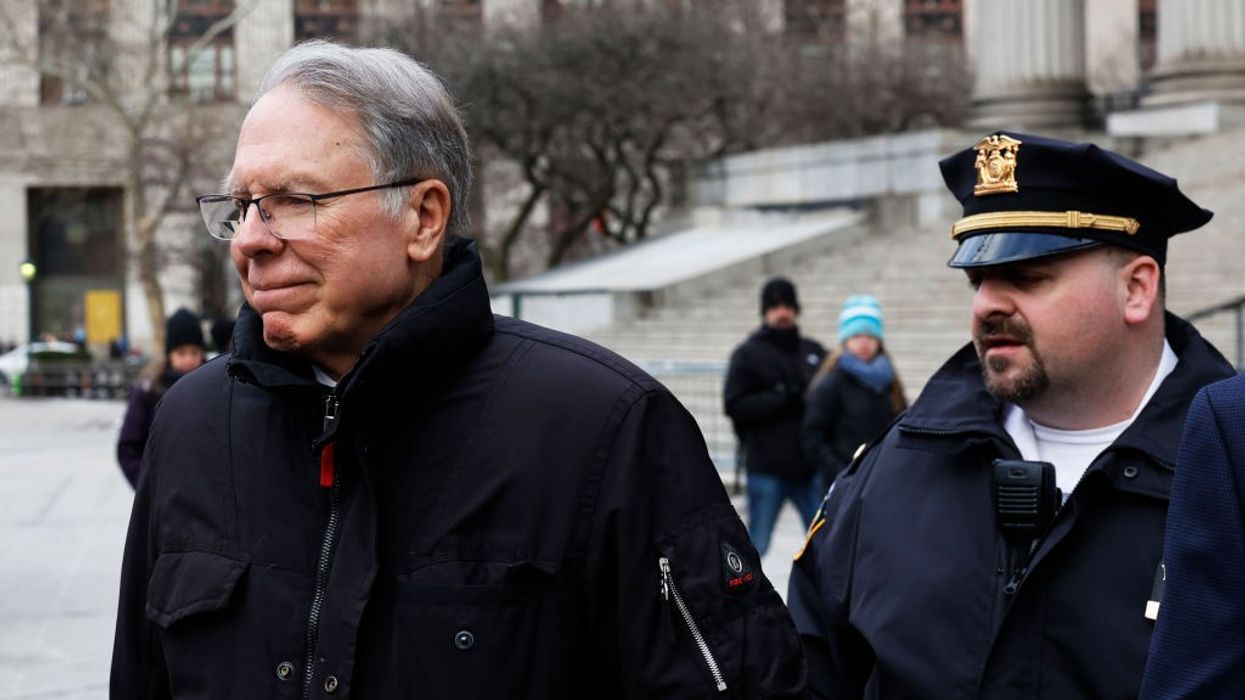
Democratic New York Attorney General Letitia James and gun control advocates nationwide celebrated on Friday after a Manhattan jury found the National Rifle Association and the NRA's longtime former leader liable in a civil corruption case.
James, who launched the case in 2020, said on social media that "in a major victory, my office won our case against the NRA and its senior leadership for years of corruption and greed. Wayne LaPierre and a senior executive at the NRA must pay $6.35 million for abusing the system and breaking our laws."
After over three decades as the NRA's CEO, LaPierre stepped down in January. The 74-year-old cited health reasons but his resignation from the powerful gun lobbying group came just before the trial began, sparking speculation that he was trying to dodge accountability.
"For years, Wayne LaPierre used charitable dollars to fund his lavish lifestyle. LaPierre spent millions on luxury travel, private planes, expensive clothes, insider contracts, and other perks for himself and his family," James said Friday. "Wayne LaPierre blatantly abused his position and broke the law. But today, LaPierre and the NRA are finally being held accountable for this rampant corruption and self-dealing."
"In New York, you cannot get away with corruption and greed, no matter how powerful or influential you think you may be," she added. "Everyone, even the NRA and Wayne LaPierre, must play by the same rules."
The jury found LaPierre liable for $5.4 million but, because he already repaid some of it, he has to give the group $4.35 million. However, he's not the only executive involved in the case. Jurors also found that NRA general counsel John Frazer must pay $2 million, and former treasurer Wilson "Woody" Phillips violated his official duties. James wants the trio banned from serving in any leadership roles for charities that do business in the state—which will be decided by a judge.
"Jurors also found that the NRA omitted or misrepresented information in its tax filings and violated New York law by failing to adopt a whistleblower policy," according to The Associated Press. The AP noted that "another former NRA executive turned whistleblower, Joshua Powell, settled with the state last month, agreeing to testify at the trial, pay the NRA $100,000, and forgo further involvement with nonprofits."
Welcoming the jury's decisions, Nick Suplina, senior vice president of law and policy at Everytown for Gun Safety, said in a statement that "we're two months into 2024 and the NRA has already managed to lose this trial, their longtime leader, and whatever political relevance it had left."
"This verdict," he added, "confirms what we've seen in recent elections, in state legislatures, and in the halls of Congress: The gun lobby has never been weaker and the gun safety movement has never been stronger."
The normalization of gun violence has already created a generation of youth who does not know a world absent the fear of mass shootings, schoolyards have become combat zones.
“I saw someone get shot and I saw blood splatter everywhere and they just fell off their chair,” described the unnamed young cousin of “Trisha” who was slaughtered during the Lewiston, Maine massacre. Children are victimized in every conceivable way because of America’s love affair with guns. “Why do people do this? I was more worried about am I gonna live . . .,” wondered 10-year-old Zoey Hutchinson after being grazed by a bullet in the October 25, 2023 Lewiston, ME mass shooting. Zoey was at the local bowling alley with her mother for youth night. Fourteen-year-old Aaron Young, who also attended the youth bowling night was killed, alongside his father during the massacre. Those incidents contributed to the more than 1695 children and teens killed in the U.S. in gun related incidents in 2023.
Gun violence has become an epidemic in the U.S. with children dying in record numbers due to homicides, suicides, and accidental shootings. Inadequate laws, and conflict resolution strategies and skills, inadequate and inaccessible mental health services, and a proliferation of access to firearms have all come together to create a perfect, deadly storm. Until we develop and employ effective strategies to address conflict resolution strategies in homes, schools and communities, and ensure access to mental health services, we will continue to see a rise in the gun violence that is robbing a generation of the innocence of childhood and youth.
On September 5, 2023 a father in Lithonia, Georgia emerged from a gas station to find his 7-year-old son dead from a gunshot. It is unclear whether the gunshot was self-inflicted, or whether it was at the hands of the victim’s 6-year-old sibling, who ran from the vehicle moments after the gunshot was heard. The father had left an unsecured firearm in the vehicle with his two children inside unsupervised. In April, 2023 a Memphis, Tennessee 12-year-old boy committed suicide after shooting his sister who also succumbed to her injuries. According to a survey conducted by the Pew Research Center, and an analysis of the Centers for Disease Control and Prevention mortality statistics gun deaths among U.S. kids rose 50% from 2019 to 2021. Centers for Disease Control data statistics show that boys account for 83% of gun deaths among children and teens.Children aged 12 to 17 account for 86% of gun deaths among children and teens.And, astonishingly, 184 children aged 5 and under were killed in gun violence incidents in 2021.
The disparities in firearm-related child and teen deaths do not end with differences in gender. The 2023 State of America’s Children report indicates that Black males are as much as six-times more likely than White males to be victims of homicides. In fact, in 2021, 46% of all firearm-related deaths among children and teens involved Black victims, even though only 14% of the U.S. population under 18 was Black. By comparison, only 32% of firearm-related deaths involved White victims, 17% Hispanic, and 1% Asian victims. The disproportionate impact of gun violence in the Black community, and involving children is wreaking havoc on those communities, particularly on Black male children. Black communities have a rate of attrition due to gun violence with which it can scarcely contend. In 2021, 84% of gun deaths involving Black children and teens were homicides, and 9% were suicides. Versus 66% of gun deaths involving White teens being suicides, and 24% homicides.
In 2020 and 2021 firearms contributed to more deaths of children and teens in the U.S. than any other type of injury or illness, and at a much higher rate than our peer nations. More than any other cause, even surpassing deaths due to motor vehicles, which had long been the number one cause of child deaths. The child firearm death rate in the U.S. has doubled from a low of 1.8 deaths per 100,000 in 2013 to 3.7 in 2021.
Child and teen deaths continue to rise in the U.S. and continue to garner interest on a national and world stage. Yet, we fail to make significant progress enacting common sense laws for the protection of children. “The U.S. remains stagnant on enacting adequate gun violence prevention measures.” This stagnation results in “the loss of young lives and (leaves) holes in families and communities that can never be filled. We cannot afford to continue to normalize the exceedingly persistent public health crisis of gun violence.” On February 14, 2024 a shooting injured four students at Atlanta’s Benjamin Mays High School. This occurred against the backdrop of a bill supported by the Georgia Senate to authorize a tax-free holiday for the purchase of guns and ammunition. Passage of bills of this nature do nothing to address the alarming trend of increasing child homicides, suicides, and massacres.
According to the Gun Violence Archive, there were 656 mass shootings in the U.S. in 2023. Instead of more cops on campuses, we need increased presence of school counselors. Instead of expulsions, we need more experiences that match children with their interests in school programming, to keep them in school and engaged. Instead of juries and arrests, we need jobs, to meet children at the very basic needs they are trying to address through gun violence.
The normalization of gun violence has already created a generation of youth who does not know a world absent the fear of mass shootings, schoolyards have become combat zones. In 2023, there were 137 shootings, 42 deaths, and 94 injuries in K-12 schools in America. Children born since the Columbine massacre have seen the incidence of and gun violence (including school shootings) steadily increase. Every year 19,000 children and teens are shot and killed or wounded and approximately 3 million are exposed to gun violence. “I never thought I’d grow up and get a bullet in my leg. It’s just like, why?” asks Zoey. How many more children must kill or be killed before America wakes up and addresses the gun violence epidemic that is plaguing the nation?

A new DOJ report on the shooting in Uvalde, Texas, is laced with vivid and horrifying detail on the failings of law enforcement, themselves fearing the AR-15 weaponry in the hands of the 18-year-old shooter.
Remember those twisted words by Wayne LaPierre, then leader of the National Rifle Association, just days after the
mass murder at Sandy Hook Elementary School in December 2012? Standing there proudly up on the stage, he said: “The only thing that stops a bad guy with a gun is a good guy with a gun.”
This January LaPierre resigned from his NRA leadership position ahead of the trial on charges of corruption by the State of New York. But his words after Sandy Hook sadly live on despite repeatedly being shown to be total bullshit. Glaringly so in the review of the 2022 mass shooting in Uvalde, Texas, by the Department of Justice (DOJ), released on January 18.
DOJ’s 575-page report, available in English and in Spanish, is laced with vivid and horrifying detail on the failings of law enforcement, themselves fearing the AR-15 weaponry in the hands of the 18-year-old shooter. Failings causing preventable death. Failings in providing adequate emergency medical care to wounded victims after law enforcement finally entered the classrooms. Failings as dozens of trained officers stood idly by without a leader armed to the teeth with their own AR-15-style firearms.
Here are the opening words by Associate Attorney General Vanita Gupta at the news briefing where the DOJ report was officially released, remarks following those by Attorney General Merrick Garland:
The Attorney General just gave a sense of the detailed timeline we have laid out, and the cascading failures that occurred over the course of the 77 minutes between when law enforcement arrived on the scene and when they finally entered the classroom. But we also know the pain—and the failures and missteps—did not end when law enforcement finally entered the classrooms and rescued the survivors.
It continued at minute 78, when it became clear that because there was no leader, there was no plan to triage the 35 victims in classrooms 111 and 112, many of whom had been shot. Victims were moved without appropriate precautions, victims who had already passed away were taken to the hospital in ambulances, while children with bullet wounds were put on school buses without any medical attention. In the commotion, one adult victim was placed on a walkway—on the ground outside—to be attended to. She died there.
As difficult as the vivid words in the report are to ignore, I am not naive. If history is any guide, some in Congress will mightily try to discount the DOJ report, continuing to block any subsequent movement on meaningful gun-control measures. Republican lawmakers in solidly Republican states, as a detailed article in The New York Times describes, are fraid their voter base would vote them out of office if they show any hint of supporting gun-control measures. Those Republicans are waiting for the report to fade away in the news cycle to collect dust.
But then, the victims of the gun carnage in Uvalde, and those before, deserve more than letting the report die buried in dust. They deserve someone taking the debate to the naysayers in Congress and state legislatures armed with hard facts about the effectiveness of gun-control measures, framed by the realities of having none in a gun-friendly state like Texas where the brutal carnage within Robb Elementary School happened. Yes, there is an association between lack of gun regulations in a state and the occurrence of mass shootings, as I describe below.
Here are some of the arguments I would make today replying to some of the naysaying comments (bolded below) common among members of Congress downplaying any need for gun control:
Gun control does not work and won’t reduce gun violence.
Wrong. Take requiring gun licenses, as required in a minority of states today. In his review of studies, Garen Wintemute, who directs the Violence Prevention Research Program at the University of California, Davis, writes in Health Affairs that license requirements for gun purchases “have repeatedly been associated with reduced rates of [gun] violence.” This body of research is clear.
Furthermore, Michael Siegel at Boston University and his research team found, as reported in Law and Human Behavior, that requiring one to get a permit to purchase firearms was associated with a 60% lower odds of a public mass shooting occurring in a state, controlling for state characteristics like population. Other researchers found the same thing.
Why? Because licenses to purchase firearms typically entail in-person applications and background checks involving multiple databases and, among other things, taking a gun safety course. Basically a more comprehensive examination than standalone background checks singularly taken at the point of a firearm sale.
Congress already passed the Bipartisan Safer Communities Act (BSCA) in 2022. Nothing more is needed.
Okay, but the BSCA basically only includes more funding for mental health initiatives.
Well, mental illness is the cause of most gun violence, especially mass shootings.
I agree mental troubles underlie many suicides, by firearms and otherwise. And extreme-risk or “red-flag” laws encouraged via funding in the BSCA have been shown to reduce suicides.
But research repeatedly finds that psychiatric disorders, as a comprehensive review by Rand Corporation concluded, are not the principal driver alone across the spectrum of firearm violence. And that includes not being a predictable factor in mass shootings. Sure, after a mass shooting, politicians and media search hard to find a motive and signs of mental troubles; retrospective interpretation to justify mental illness alone as cause. Retrospective interpretation, I submit, many of us not owning a gun would fail.
But an assaults weapon ban is going too far. Based only on the threatening appearance of guns, nothing more.
Maybe the 1994 ban automatically expiring in 2004 was based too much on physical appearance instead of functionality. But today, as criminologist Thomas Gabor and former ATF agent Julius Wachtel have each argued, a ban can be based on objective ballistic lethality, scoring firearms on components including caliber, muzzle velocity, firing rate, ammunition capacity, loading mechanism, and ability to add accessories that increase lethality.
Wachtel in his 2015 article in The Washington Post describes one extreme lethal ballistic feature about AR-15-style semi-automatic rifles. With “their most common calibers—7.62 and .223—these weapons discharge bullets whose extreme energy and velocity readily pierce protective garments commonly worn by police, opening cavities in flesh many times the diameter of the projectile and causing devastating wounds.” Hence, a herd of law enforcement personnel at Uvalde afraid of the weapon in the shooter’s hands milled around aimlessly for over an hour before doing anything.
And such carnage Wachtel describes was visited upon the children and teachers in Robb Elementary School on that fateful day in Uvalde, Texas.