SUBSCRIBE TO OUR FREE NEWSLETTER
Daily news & progressive opinion—funded by the people, not the corporations—delivered straight to your inbox.
5
#000000
#FFFFFF
To donate by check, phone, or other method, see our More Ways to Give page.
Daily news & progressive opinion—funded by the people, not the corporations—delivered straight to your inbox.
"The desperate plan that Trump embarked on to try and overturn the results of a legitimate election was reprehensible, irresponsible, and—the document shows—criminal," said one consumer advocate.
Jack Smith, the special counsel probing former U.S. President Donald Trump's attempt to subvert the 2020 presidential contest, on Wednesday presented a massive trove of fresh evidence supporting his election interference case against the 2024 Republican nominee.
Smith's sprawling and highly anticipated 165-page motion—which was partly unsealed Wednesday by presiding U.S. District Judge Tanya Chutkan—states that Trump "asserts that he is immune from prosecution for his criminal scheme to overturn the 2020 presidential election because, he claims, it entailed official conduct. Not so."
Trump—who in August 2023 was charged with conspiracy to defraud the United States, conspiracy to obstruct an official proceeding, obstruction of and attempt to obstruct an official proceeding, and conspiracy against rights—contends that his actions were taken in his official capacity as president and not as a private individual.
In July, the U.S. Supreme Court's right-wing justices—including three Trump appointees—ruled that the ex-president is entitled to "absolute immunity" for "official acts" taken while he was in office, raising questions about the future of this case. According to Smith's motion:
Although the defendant was the incumbent president during the charged conspiracies, his scheme was fundamentally a private one. Working with a team of private co-conspirators, the defendant acted as a candidate when he pursued multiple criminal means to disrupt, through fraud and deceit, the government function by which votes are collected and counted—a function in which the defendant, as president, had no official role.
In Trump v. United States... the Supreme Court held that presidents are immune from prosecution for certain official conduct—including the defendant's use of the Justice Department in furtherance of his scheme, as was alleged in the original indictment—and remanded to this court to determine whether the remaining allegations against the defendant are immunized.
The answer to that question is no. This motion provides a comprehensive account of the defendant's private criminal conduct; sets forth the legal framework created by Trump for resolving immunity claims; applies that framework to establish that none of the defendant's charged conduct is immunized because it either was unofficial or any presumptive immunity is rebutted; and requests the relief the government seeks, which is, at bottom, this: that the court determine that the defendant must stand trial for his private crimes as would any other citizen.
Smith's filing details what Trump told various people in his inner circle, including then-Vice President Mike Pence, his now-disgraced and twice-disbarred lawyer Rudy Giuliani, and leading White House and Republican Party figures—some of whose names remain undisclosed.
The motion also highlights Trump's actions on January 6, 2021, when his supporters stormed the U.S. Capitol in an attempt to stop Congress from certifying President Joe Biden's Electoral College victory. Trump is still pushing his "Big Lie" that Democrats stole the 2020 election; his running mate, U.S. Sen. J D Vance (R-Ohio), on Tuesday
refused to acknowledge that Trump lost to Biden when he was asked about the election during a vice presidential debate against Democratic Minnesota Gov. Tim Walz.
"Upon receiving a phone call alerting him that Pence had been taken to a secure location, [PERSON 15] rushed to the dining room to inform [Trump] in hopes that the defendant would take action to ensure Pence's safety," the filing states. "Instead, after [P15] delivered the news, the defendant looked at him and said only, 'So what?'"
Smith argued that deceit was central to Trump's efforts, specifically, "the defendant's and co-conspirators' knowingly false claims of election fraud," which they used to purvey the Big Lie.
The motion states:
When the defendant lost the 2020 presidential election, he resorted to crimes to try to stay in office. With private co-conspirators, the defendant launched a series of increasingly desperate plans to overturn the legitimate election results in seven states that he had lost—Arizona, Georgia, Michigan, Nevada, New Mexico, Pennsylvania, and Wisconsin (the "targeted states"). His efforts included lying to state officials in order to induce them to ignore true vote counts; manufacturing fraudulent electoral votes in the targeted states; attempting to enlist Pence, in his role as president of the Senate, to obstruct Congress' certification of the election by using the defendant's fraudulent electoral votes; and when all else had failed, on January 6, 2021, directing an angry crowd of supporters to the United States Capitol to obstruct the congressional certification.
For a historic second time, Trump was
impeached by the House of Representatives following his effort to subvert the election, although he was subsequently acquitted by the Senate.
Trump spokesperson Steven Cheung
blasted Smith's motion as "unconstitutional" and "falsehood-ridden."
"Deranged Jack Smith and Washington D.C. Radical Democrats are hell-bent on weaponizing the Justice Department in an attempt to cling to power," Cheung said in a statement aping Trump's habit of overcapitalizing words. "President Trump is dominating, and the Radical Democrats throughout the Deep State are freaking out. This entire case is a partisan, Unconstitutional Witch Hunt that should be dismissed entirely, together with ALL of the remaining Democrat hoaxes."
Democracy defenders, however, welcomed Smith's ruling.
"Jack Smith has shown us yet again the merits of his case against former President Trump," said Lisa Gilbert, co-president of the consumer advocacy group Public Citizen and co-chair of the Not Above the Law Coalition.
"In his filing, Smith clarifies that the alleged criminal actions occurred while Trump was acting as a private citizen," Gilbert added. "The desperate plan that Trump embarked on to try and overturn the results of a legitimate election was reprehensible, irresponsible, and—the document shows—criminal. Accountability to the American people and our democracy is our only path forward."
Judge Chutkan unsealed the motion five weeks before Trump will face off against Democratic Vice President Kamala Harris in a tight presidential election. If he wins, Trump will have the power to order the Department of Justice to drop the criminal charges against him.
They showed little appetite for questioning the party’s democracy-threatening turn—or much of any other right-wing orthodoxy, for that matter.
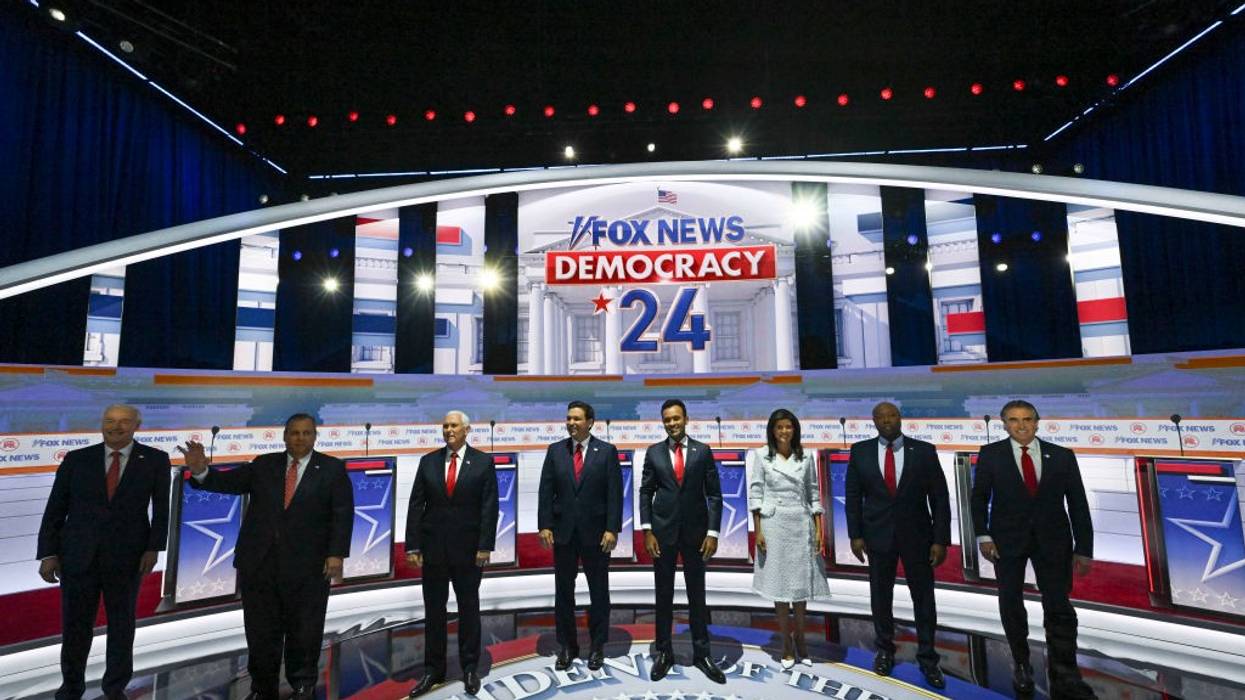
The latter half of this year brought us the first GOP debates of the 2024 election cycle. From August to December, the Republican candidates—save for frontrunner former President Donald Trump, who has refused to participate—faced off in four debates sponsored by the Republican National Committee.
Trump’s absence from all of the Republican primary debates has marginalized them in terms of their ostensible purpose of helping GOP voters choose a candidate. Far from fading out of the public’s consciousness, ABC News’ election-tracking page, FiveThirtyEight, shows that Trump has gained in the polls since the start of the debates: The day before the first debate, 52% of Republican voters said they would vote for him, a number that climbed to 61% by the fourth debate. In fact, the week after a debate often brought a surge in popularity for the former president.
The candidate who has consistently polled second—Florida Gov. Ron DeSantis—never surpassed 16% during the debate period, making the RNC debates more a ritual than a meaningful forum for picking a Republican standard bearer. Yet they still offered an opportunity to clarify where prominent members of the GOP stand on the most important issues to voters, and to put them on the record about Trump’s attacks on democracy. But the questions the journalist moderators asked revealed that they had little appetite for challenging the GOP’s democracy-threatening turn—or much of any other right-wing orthodoxy, for that matter.
One of the most important questions hanging over the 2024 presidential election is whether the country’s threadbare democracy will hold together in the face of GOP attacks on voting rights and rule of law, led by Trump but widely embraced in the party.
The first debate (8/23/23) was hosted by Fox News and moderated by Fox correspondents Bret Baier and Martha MacCallum. The second debate (9/27/23) was hosted by Fox Business and moderated by Dana Perino and Stuart Varney from Fox News and Ilia Calderón from Univision.
NBC News hosted the third debate (11/8/23), with moderators Lester Holt and Kristen Welker of NBC and Hugh Hewitt of Salem Radio Network.
The fourth and final RNC debate (12/6/23) was hosted by NewsNation and the CW. That debate was moderated by Megyn Kelly, who hosts the Megyn Kelly Show on SiriusXM; Elizabeth Vargas from NewsNation; and Eliana Johnson of The Washington Free Beacon.
FAIR recorded 218 questions across the four debates, assigning them to one or more issue categories. The topic that dominated every single debate was foreign policy, with 73 questions, closely followed by social issues (71), and then economics (38), non-policy (27), governance (19), immigration (16), and environment (1).
The economy is the top concern for voters overall, but especially for Republican voters (Pew, 6/21/23, Redfield & Wilton, 12/8/23), making the relative dearth of economy-related questions surprising.
The first question of the first debate (8/23/23) was about the economy, though Fox moderators Baier and MacCallum approached the topic in an unusual way: They played a montage of clips from President Joe Biden celebrating “Bidenomics,” juxtaposed with Republican voters lamenting inflation and mortgage rates.
The video concluded with a short clip of the song “Rich Men North of Richmond,” which was No. 1 on the Billboard charts at the time. MacCallum described the lyrics as rife with “alienation” and “deep frustration with the state of government and of this country.” (The song also includes an attack on “the obese milking welfare” and an apparent nod to the QAnon conspiracy theory.) She then asked DeSantis, “Why is this song striking such a nerve in this country right now? What do you think it means?”
Across all debates, the moderators asked no questions about economic policy proposals that are popular with both Democrats and Republicans but get next to no traction in the GOP or the media, like raising taxes on billionaires or raising the federal minimum wage.
The other candidates were each given an opportunity to weigh in, some with vague prompts and others with more leading ones, such as MacCallum’s question to South Carolina Sen. Tim Scott: “You have been a senator though for 10 years. So what have you done to rein in the increasing size of government?”
The second debate (9/27/23) saw a much bigger economic focus, opening with a discussion of the United Auto Workers strikes in Milwaukee. There were 15 total questions about the economy during the second debate, with subtopics ranging from surging gas prices to unaffordable childcare and economic competition with China.
NBC’s Welker (11/8/23) asked every single candidate in the third debate whether they would be “open to” cutting Social Security, leading off the questions with the framing: “Americans could see their Social Security benefits drastically cut in the next decade because the program is running out of money.”
Welker’s question repeated the longstanding media myth that Social Security is nearly bankrupt (see FAIR.org, 6/25/19). In fact, since all on-the-books workers pay into Social Security, it will never go bankrupt, though a relatively small shortfall is projected in the coming years. The shortfall could easily be fixed by removing the payroll tax cap that lets high earners exclude much of their income from the Social Security tax (CEPR, 2/28/23). And voters from both parties strongly prefer taxing the rich to cutting benefits (Data for Progress, 8/1/23)—but Welker didn’t press any of the candidates to make the rich pay their fair share.
Moderators of the fourth debate asked only three economy-related questions total. Across all debates, the moderators asked no questions about economic policy proposals that are popular with both Democrats and Republicans but get next to no traction in the GOP or the media, like raising taxes on billionaires or raising the federal minimum wage.
South Carolina Gov. Nikki Haley was asked more questions about the economy than any other candidate, despite DeSantis receiving more questions total—52 questions to Haley’s 43.
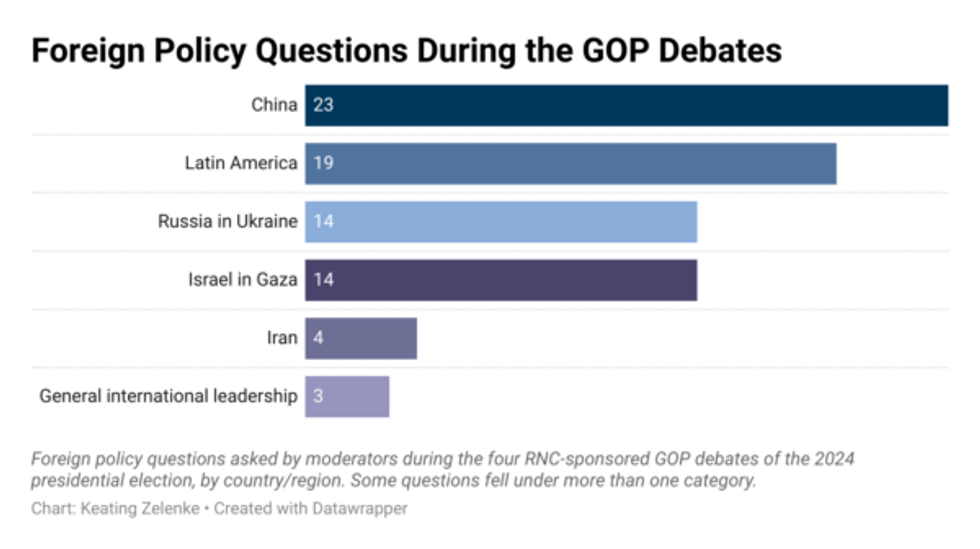
The foreign policy-related questions in the first two debates were dominated by three topics: how to “deter” China, policy towards Latin America concerning both drugs and migration, and the continuation of aid to Ukraine. During the two debates following Hamas’ October 7 attack, questions about each candidate’s approach to Israel’s assault on Gaza also became prominent.
The most frequent foreign policy topic did not have to do with either of the ongoing military campaigns in Ukraine (14 questions) or Gaza (14), both made possible with billions of dollars in funding from the United States. Rather, the spotlight fell on China, with 23 questions, nearly all of them framing China as a threat, either militarily or economically. Ten had to do with the candidates’ plans to ward off a hypothetical invasion of Taiwan. Others ranged from potential Chinese interference on TikTok, to Chinese economic and political competition, and even Chinese chemicals in fentanyl.
In one example, Baier (8/23/23) contextualized a question to North Dakota Gov. Doug Burgum by citing Chinese aggression towards Taiwan, the possibility of 1,500 Chinese nuclear warheads “in the coming years,” and Chinese spies in the U.S. military. “So the question is,” Baier asked, “how would you deter China, as President Burgum?”
Twelve out of the 19 Latin America questions regarded the flow of fentanyl from Latin America into the United States. The issue of drugs coming through the southern border was one of the only topics to be brought up in questions during every single debate.
Eight of those questions mentioned the use of lethal force, either at the border or in Mexico itself, to deter dealers, which some candidates had been promising. During only one exchange—between NewsNation’s Vargas and DeSantis—did a moderator question the legality of that strategy.
According to the Pew Research Center (6/21/23), 64% of Republicans and right-leaning independents indicated drug addiction was a “very big problem” facing the country. But every question in the RNC debates about the drug crisis focused on the importation of drugs; the moderators asked zero questions about drug treatment or mental healthcare related to drug use.
The conflict in Gaza came up in two debates. In the third debate (11/8/23), NBC’s moderators asked mostly vague questions about what the candidates would tell Israeli Prime Minister Benjamin Netanyahu to do, though Lester Holt’s question to Haley included the only mention of anything resembling de-escalation: “Would you consider humanitarian pause, for example?” Then Holt passed the baton to Matthew Brooks of the Republican Jewish Coalition, who asked Vivek Ramaswamy what he would “say to university presidents and college presidents who have not met the moral clarity moment to forcefully condemn Hamas terrorism.”
In the fourth debate (12/6/23), the Israel/Gaza questions turned more hawkish. NewsNation’s Vargas asked multiple candidates whether they would “send in American troops” to rescue the American citizens taken hostage in Israel on October 7. The Washington Free Beacon’s Johnson then pressed Ramaswamy: “The Hamas terror attack left dozens of Americans dead and was the deadliest attack on Jews since the Holocaust. Why wouldn’t it be a good thing to finish Hamas?”
Moderators asked about Ukraine in three debates. In the first debate (8/23/23), the Fox hosts asked, “Is there anyone on stage who would not support the increase of more funding to Ukraine?” In the third debate, NBC’s Welker likewise asked about funding, but with a more leading set-up:
The United States has given Ukraine financial and military support since the war began more than 600 days ago. President Zelensky told me on Sunday, if Russia isn’t stopped now, “The price will be higher for the United States,” and Americans would be forced to “send your sons and daughters to defend NATO countries.”
But perhaps the most leading Ukraine question came in the second debate (9/27/23), the only Ukraine question asked in that debate. Fox‘s Perino asked DeSantis:
Today, the Republican Party is at odds over aid to Ukraine. The price tag so far is $76 billion. But is it in our best interest to degrade Russia’s military for less than 5% of what we pay annually on defense, especially when there are no U.S. soldiers in the fight?
This came after an ad by Republicans for Ukraine, and echoed the argument of the ad (Daily Kos, 9/28/23).
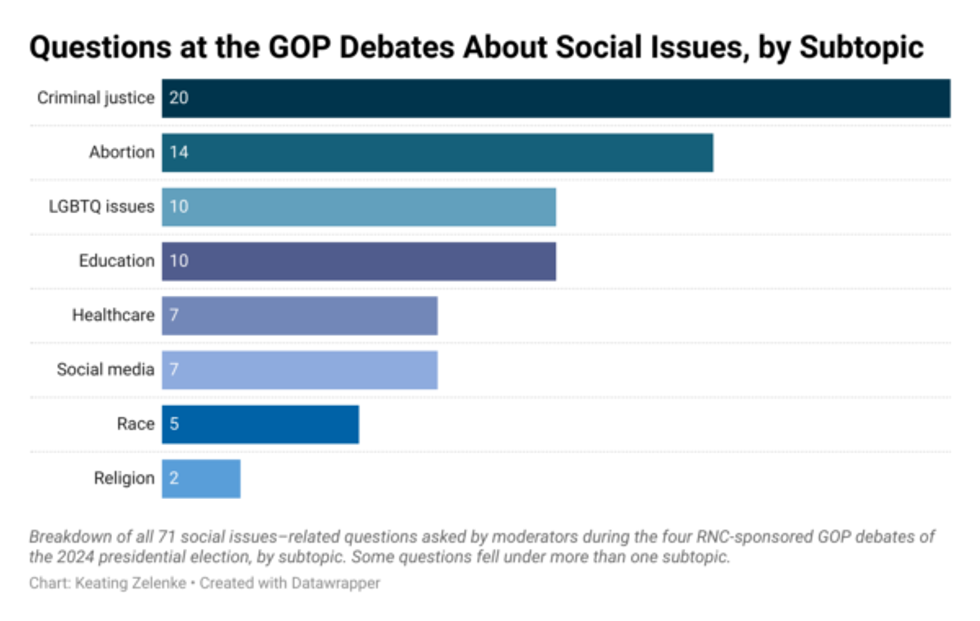
FAIR categorized as “social issues” a number of topics, which included criminal justice (20), abortion (14), LGBTQ issues (10), education (10), healthcare (7), social media (7), race (5), and religion (2).
The low number of healthcare questions was striking, given that the Pew poll found the second most important issue among U.S. voters to be the affordability of healthcare, with 64% of respondents indicating it was a “very big problem.” Among Republican and right-leaning independent voters specifically, this percentage drops down to 54%—lower, but still the majority of conservative voters.
DeSantis was the only candidate asked about health insurance on two different occasions; both questions pointed out Florida’s high rate of uninsured people.
The abortion questions were overwhelmingly framed in terms of the issue’s impact on Republicans—as a “losing issue”—and asked how candidates could find a winning “path forward.” Only one question alluded to the impact of abortion policy on pregnant people, and even that was framed electorally, when Fox’s MacCallum (8/23/23) asked Haley:
Abortion has been a losing issue for Republicans since the Dobbs decision. In six state referendums, all have upheld abortion rights in this country. And even in red states, there are more swing state referendums that are coming up as we head into the elections, as well on this. So, Governor Haley, what do you say to your party and to your state, which today confirmed a six-week abortion law as well, especially the impact on women suburban voters across this country?
Moderators occasionally asked questions that challenged GOP talking points on social issues. Univision’s Calderon (9/27/23), for instance, pushed Burgum on gun violence:
For the first time ever, a Univision poll found that mass shootings and gun safety are one of the most important issues for Latino voters. Mental health concerns are not unique to the United States, but gun violence is. What is your specific plan to curb gun violence?
But many questions and their lead-ins were strongly skewed to the right, as when SiriusXM’s Kelly (12/6/23) posed this LGBTQ-related question to former New Jersey Gov. Chris Christie:
Governor Christie, you do not favor a ban on trans medical treatments for minors, saying it’s a parental rights issue. The surgeries done on minors involve cutting off body parts, at a time when these kids cannot even legally smoke a cigarette. Kids who go from puberty blockers to cross-sex hormones are at a much greater likelihood of winding up sterile. How is it that you think a parent should be able to OK these surgeries, nevermind the sterilization of a child, and aren’t you way too out of step on this issue to be the Republican nominee?
Similarly, Fox’s Baier and MacCallum larded a question to former Vice President Mike Pence (8/23/23) with misleading right-wing talking points about crime, homelessness, and lockdowns:
Murders in Los Angeles, New York, Chicago, all up 30% between 2019 and 2022. Homelessness is up 11%, the largest jump in recorded history. Vice President Pence, a lot of this began in the Covid era. How much of what we are seeing happening around this country is a result of those Covid lockdowns? And is your administration in part to blame for how we got here?
Studies have found no positive correlation between Covid restrictions and homicide rates (e.g., Criminology and Public Policy, 8/21; Statistics and Public Policy, 6/22).
Meanwhile, homelessness had been on the rise pre-Covid, and actually leveled off during the pandemic—when federal aid and eviction moratoriums helped keep people in their homes, despite rising housing costs. It has only spiked again now that that aid has run out (NPR, 12/15/23).
Rather than use their only reference to homelessness across four debates to attack Covid lockdowns, the moderators might have more usefully asked Arkansas Gov. Asa Hutchinson why he turned away federal Emergency Rental Assistance funding last year when evictions were soaring in his state (Arkansas Democrat-Gazette, 5/22/22).
One of the most important questions hanging over the 2024 presidential election is whether the country’s threadbare democracy will hold together in the face of GOP attacks on voting rights and rule of law, led by Trump but widely embraced in the party. Yet the moderators asked only 19 questions about governance, only 10 of which touched on this core issue—and nine of those came in the first debate.
Baier noted that all candidates had signed a pledge (required by the RNC for participation in the debates) to support the eventual party nominee, and asked for a show of hands of those who would still support Trump if he were “convicted in a court of law.” (All of the candidates except for former New Jersey Gov. Chris Christie and Hutchinson indicated they would.) He asked three candidates to explain their position, and, as a follow-up, MacCallum asked five of the candidates whether Pence “did the right thing on January 6″—referring to his certification of the election.
The 10th question about election integrity was not asked until the fourth debate (12/6/23), by guest questioner Tom Fitton of the right-wing activist group Judicial Watch, who offered an unsurprising right-wing spin:
Many Republicans are concerned about the legitimacy of elections. A federal judge just ruled that Pennsylvania must count undated mail-in ballots, and, unlike Alabama, many states still don’t require any identification to vote. What should states do now to increase election integrity and voter confidence for the 2024 election?
One of the most striking things almost entirely ignored in the debates was the climate crisis. Across all four debates, a single question was asked about the issue, and not by a journalist moderator but a guest questioner, Alexander Diaz from Young America’s Foundation, during the first debate (8/23/23):
Polls consistently show that young people’s No. 1 issue is climate change. How would you, as both president of the United States and leader of the Republican Party, calm their fears that the Republican Party doesn’t care about climate change?
But rather than asking candidates to answer Diaz’s question, Fox’s MacCallum reframed it: “So, we want to start on this with a show of hands. Do you believe in human behavior is causing climate change? Raise your hand if you do.”
After DeSantis jumped in to try to thwart the hand-raising exercise and redirect the conversation away from the climate crisis, pharmaceutical executive Ramaswamy interrupted to announce, “I’m the only person on the stage who isn’t bought and paid for, so I can say this—the climate change agenda is a hoax.” He added that “more people are dying of bad climate change policies than they are of actual climate change.”
Fox’s Baier, rather than focusing on Ramaswamy’s outrageous climate claims, proceeded to ask Haley and Scott whether they were “bought and paid for”—and then went to a commercial break, bringing the climate conversation to an abrupt end.
Even in 2015 the Republican primary debates featured more climate questions, with six across four debates (FAIR.org, 12/14/15).
Moderators, especially in the earlier debates, seemed especially interested in hearing from DeSantis. In the first debate, Fox’s Baier and MacCallum singled out DeSantis nearly twice as much as any other single candidate, with 10 direct questions, compared to most other candidates’ six.
Despite this apparent tilt in DeSantis’ favor, recaps of the debate from mainstream media mostly expressed disappointment about his performance. Politico (8/24/23) wrote that DeSantis “faded into the crowd” in their summary of the night, while Vox (8/24/23) noted that he was “hardly ever the center of attention.” The Hill (8/24/23) reported: “DeSantis arrived in Milwaukee needing a big night. He didn’t get it.”
Things evened out considerably during the second debate, though DeSantis still came away with the most direct questions.
Haley, who gained the most in the polls over the course of the four debates, and DeSantis received 14 questions apiece during the third debate. The NBC-hosted debate was, in general, a much more level playing field between all of the candidates, perhaps because fewer candidates meant more time for each one; almost every question was fielded to the whole slate of candidates. Tim Scott followed close behind DeSantis and Haley with 13 direct questions, while Christie and Ramaswamy took 11 questions each.
Though DeSantis’ lead over the others on stage had narrowed substantially by the fourth and final debate, he once again pulled away with the most direct questions from the moderators (13). The other three candidates were all addressed roughly the same amount of times—Nikki Haley got nine questions from the moderators, Chris Christie got eight, and Vivek Ramaswamy came away with seven.
Despite their differences, the Republican presidential field found unity in the belief that what America needs is a stronger authoritarian hand ruling over the people.
After two hours of debate during which the 2024 Republican presidential hopefuls mostly shouted over each other, it’s reasonable to ask why the GOP continues to subject itself to so much avoidable humiliation.
Donald Trump, the front-runner for the nomination, made early headlines after announcing he would skip Wednesday’s primary debate. In retrospect that seems like a shrewd decision, because nobody who took the stage in California emerged stronger for their efforts. What the American people saw at the Reagan Presidential Library was a Republican Party in full-on fracture, where none of the feuding candidates could lay claim to a constituency large enough to be taken seriously in the face of Trump’s dominating polling lead.
Faced with the increasingly public brawls between Republicans’ far-right flank and their establishment base—a battle also unfolding as Congress weighs a potential government shutdown—few of the candidates on stage even bothered to frame their campaigns around coherent policy ideas. Those few individuals excepted, Wednesday’s proceedings quickly devolved into a sort of grievance Olympics. Each candidate vied to outdo the others in painting a picture of Republicans as hopelessly oppressed, politically censored, and socially marginalized victims. It was a deeply embarrassing night in a campaign cycle marked by too many embarrassing nights.
This GOP is fixated not on building a better future but on settling scores both foreign and domestic without concern for the long-term consequences.
“Every time I hear you I feel a little bit dumber,” former U.N. Ambassador Nikki Haley sniped at Vivek Ramaswamy after the first-time candidate’s particularly rambling answer to a question about TikTok and national security. The back-and-forth marked an escalation in Haley’s battle with Ramaswamy; Haley’s team clearly felt that if Republican voters liked her attacks on Ramaswamy during the first debate, they’d certainly love even more of the same, delivered with even sharper elbows.
But in a sign of just how valueless the modern Republican Party is, Haley’s critics were quick to note that she held a much brighter opinion of Ramaswamy only a few months ago. In a gushing blurb on the back of Ramaswamy’s book, Capitalist Punishment, Haley confidently declares that “Vivek speaks the truth without fear,” adding, “His combination of honesty, intellect, and foresight are exactly what we need.”
Ramaswamy deserved much of the criticism lobbed his way—his evening was spent pushing obvious falsehoods in true Trumpian style, apparently in the hopes that the sheer volume of untruths would stymie efforts to fact-check any of their dubious accuracy. Ramaswamy seemed confused about the current unemployment rate (among the lowest levels in modern history). Former Vice President Mike Pence slammed his spotty voting record. Ron DeSantis’s struggling Never Back Down PAC kept an almost real-time feed of Ramaswamy’s flip-flops from the first debate. It wasn’t the night Ramaswamy probably expected, but it was certainly the one he deserved.
Despite their differences, the Republican presidential field found unity in the belief that what America needs is a stronger authoritarian hand ruling over the people.
Faced with a question on crime, Pence’s solution was to federally expedite the death penalty to ensure executions happen faster, overlooking entirely the fact that even our slower-paced system has resulted in the deaths of dozens of verifiably innocent Americans falsely convicted of death-eligible crimes. Thirty innocent death row inmates have been exonerated in DeSantis’s home state of Florida alone.
Haley, who tried to position herself after the first debate as the grown-up in the race, openly declared that Mexico was a bad partner to the United States. That would have been cringe-inducing enough, but Haley doubled down, arguing that Mexcio’s struggles policing their illicit drug trade justified invading the nation, an American ally. That was condemnable when DeSantis said it during the first debate; the thought is even less defensible coming from a former top American diplomat.
But the disappointments kept coming for Haley, who followed up her call to send U.S. military forces into Mexico by saying she’d also consider using American special operations forces to combat China. It doesn’t take a foreign policy expert to see that any candidate counseling a warpath against China does not have the best interests of the United States at heart. Whatever good Haley did for her campaign coming out of last month’s debate, she stumbled badly on Wednesday.
Yesterday’s debate showcased a Republican Party consumed by anger: anger at themselves, at Donald Trump, at Mexico, at the whole wide world. Voters looking for a positive conservative vision of the future should look elsewhere. This GOP is fixated not on building a better future but on settling scores both foreign and domestic without concern for the long-term consequences. The American people must reject a Republican ideology that would lead us into civil strife at home and years of global conflict abroad.
As traditional pensions continue to disappear, Social Security is more vital to American workers’ economic security than ever.
On Labor Day, we celebrate the contributions of workers. The best way to honor those contributions is to increase their economic security. A key component of economic security is retirement security, which we can substantially improve by protecting and expanding Social Security for current and future generations of American workers.
Social Security and Medicare are deferred compensation. Just as we earn our current cash compensation, we earn our Social Security and Medicare with every paycheck. Sadly, too often these earnings are inadequate.
Today’s workers are facing a retirement income crisis, where too many will never be able to retire without drastic reductions in their standards of living. As traditional pensions continue to disappear, replaced (if they are) by riskier, less reliable, inadequate 401(k)s, Social Security is more vital to American workers’ economic security than ever.
While President Joe Biden and Democrats in Congress want to protect and expand Social Security, Donald Trump and other Republican presidential candidates want to slash Social Security benefits—or worse.
Social Security has many strengths. It is extremely efficient, secure, nearly universal, excellent for both long-term and mobile workers, and fair. Its one shortcoming is that its benefits are too low. By expanding those modest Social Security benefits, we are renewing our promise to workers and promoting the security of all American workers for generations to come.
In recognition of Social Security’s increasing importance for workers and their families, several bills have been introduced during this Congress to expand Social Security’s modest benefits.
Representative John Larson’s (D-Conn.) Social Security 2100 Act, which has over 175 cosponsors, would increase benefits across-the-board for all current and future Social Security beneficiaries. It would improve the annual Cost-of-Living Adjustments (COLAs) to better match the true costs that seniors face. The bill would improve benefits for widows and widowers, students, children living with grandparents, public servants, the most elderly Americans, lower-income seniors, those with disabilities, students, and more. And it pays for all of this by making the wealthy finally pay their fair share.
Similarly, Senators Bernie Sanders (I-Vt.) and Elizabeth Warren (D-Mass.) have introduced the Social Security Expansion Act. Their proposal would increase Social Security benefits across-the-board by $200 a month and update the way that COLAs are determined to better reflect the costs seniors and other beneficiaries face. Further, it would update and increase the minimum Social Security benefit and restore student benefits. Again, it would pay for all of these increases and restore Social Security to long-range actuarial balance by requiring millionaires and billionaires to pay their fair share.
Additional bills that would make positive changes to Social Security have been introduced as well. All of these bills not only address our nation’s looming retirement income crisis, but other challenges as well, including rising income and wealth inequality. In fact, rising inequality has cost Social Security billions of dollars each year. Those are billions of dollars that should go to expanding Social Security.
While President Joe Biden and Democrats in Congress want to protect and expand Social Security, Donald Trump and other Republican presidential candidates want to slash Social Security benefits—or worse.
As president, Trump released budget proposals that would cut Social Security and Medicare every year he was in office. He even attempted to defund Social Security by threatening to eliminate the system’s primary dedicated revenue source, payroll contributions. And, after leaving office, he stated that Social Security cuts are on the agenda if he is elected to a second term.
The other Republican presidential candidates are even more open about their designs on our earned Social Security. Former Vice President Mike Pence wants to raise the retirement age for younger Americans and privatize Social Security. Former New Jersey Governor Chris Christie also wants to raise the retirement age for Social Security, and he wants to subject our earned Social Security benefits to a means test, transforming them from deferred compensation to welfare.
Florida Governor Ron DeSantis and Senator Tim Scott both supported Paul Ryan’s infamous Social Security and Medicare-cutting budget proposals when they were in Congress. Former South Carolina Governor Nikki Haley also wants to raise the retirement age and means test Social Security. Vivek Ramaswamy wants to get rid of civil service protections and fire 75% of federal employees. Imagine trying to get help from the Social Security Administration under a President Ramaswamy, with up to three-quarters of the SSA staff missing and out of action.
This is a moment to build upon the legacy of President Franklin D. Roosevelt and the other founders of our visionary Social Security system, not a moment to undo the vast, essential gains to workers’ economic security represented by Social Security. The choice in the upcoming presidential election could not be starker.
Every generation has built on the strong foundation laid down 88 years ago, when Roosevelt—and his Secretary of Labor, Frances Perkins (the first woman ever to serve in a presidential cabinet)—shepherded Social Security into law. Now it is our turn. Expanding Social Security is the best way to honor our nation’s workers in the Labor Days to follow this one.
It was the spiritual equivalent of a World’s Ugliest Dog contest, each contestant was more unappealing than the next—with the exception of the biggest ugly dog of them all, who had bones to pick elsewhere.
The 2024 Republican primary officially kicked off on August 23—my birthday—with its first presidential debate. It’s been comical to see headlines about the debate’s “biggest highlights.” Biggest highlights? Were there that many to choose from? You could make a more appealing “highlight” reel from a dentist’s video of the bacteria in your gums.
Pundits might describe the debate as a circus. That’s unfair to the Big Top. It wasn’t a circus. It was the spiritual equivalent of a World’s Ugliest Dog contest. Each contestant was more unappealing than the next—with the exception of the biggest ugly dog of them all, who had bones to pick elsewhere.
(A friend of my wife’s once had an astonishingly ugly dog, with a body like a moldy potato and a Picasso-esque nightmare head. He had eyes in different quadrants of his face and a single tooth that might have been passed around by the Furies of Greek mythology. But I digress.)
They say unhinged, lying, and hateful things while pursuing policies that hurt and kill.
While the GOP candidates had a certain vulpine quality, they seemed to lack the empathy inherent in canines and some humans. Their mirror neurons have rusted over so badly they must look like old beer cans in sea water.
Their words and demeanor were, by any objective standard, abnormal. Their presentation was utterly detached from real people and real-life problems. And yet, they were taken seriously by pundits and politicians. That reflects a deep social psychosis, a detachment from reality so profound it would call for clinical treatment in a human being.
I didn’t watch the debate on my birthday—what a grim augury for the year that would have been—but now I have. I will live with these memories forever. Seeing these characters arrayed from left to right was like those M.C. Escher drawings of staircases where, no matter which way you go, you’re always headed down.
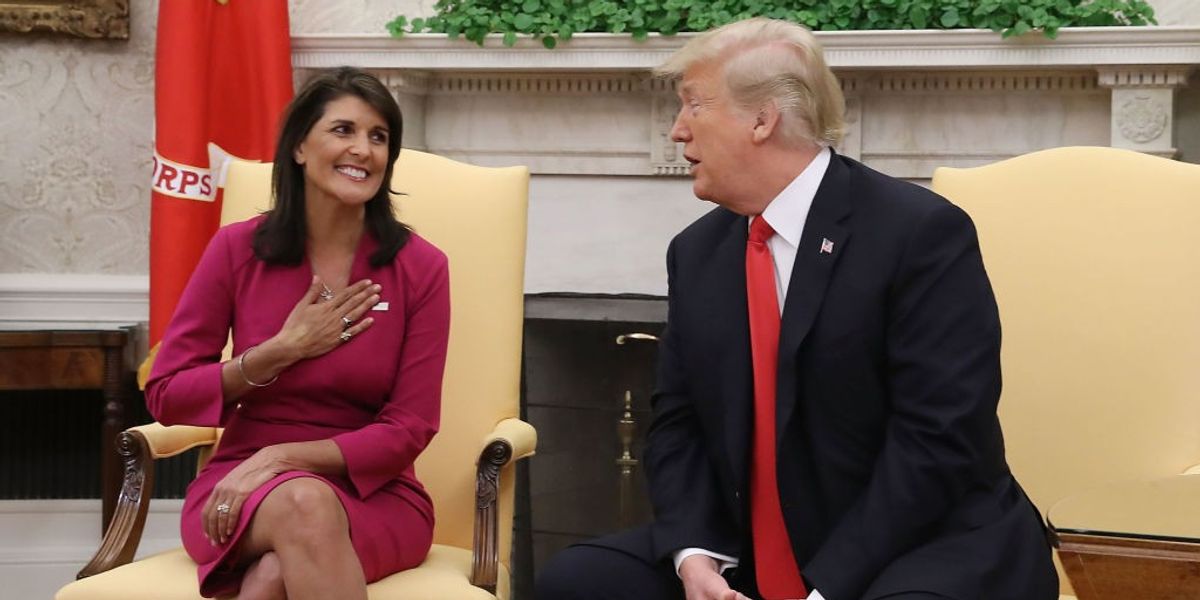
Former U.S. President Donald Trump in the White House as he accepted the resignation of Nikki Haley as U.S. Ambassador to the United Nations, on October 9, 2018, in Washington, D.C.
(Photo by Mark Wilson/Getty Images)“I think it’s time for an accountant in the White House,” Nikki Haley told the audience, which means she’s cornered the vision thing. “Our kids are never going to forgive us” for emergency Covid-19 spending, she added, a statement that’s not only implausible but requires our kids to be alive.
I saw Haley address a conservative women’s dinner a while back. Her speech was typical right-wing red meat, the kind she served up when she ran for governor with the backing of Sarah Palin and the Tea Party. Haley hewed to xenophobic tropes, dismissing the United Nations as a “club” and diplomatic norms as “a culture.”
“When I first came to the U.N.,” Haley said, “I told my colleagues that the United States was taking names. Taking names of the countries that didn’t have our back.” That seems like an unnecessary bookkeeping chore. Why not put down the pencil and pad and just look up the countries we’ve bombed and sanctioned?
The media loves to treat Haley with legitimacy because she’s a former U.N. Ambassador. But she was reprimanded in that job by a federal ethics watchdog for improperly endorsing a political candidate as a political appointee. An independent ethics group also called for an investigation of Haley’s flights on wealthy executives’ private jets, a perk whose value she reportedly failed to fully disclose.
And yet, for all her extremism and questionable ethics, Haley can still seen like a class act—at least, compared to the other guys. Like, for example...
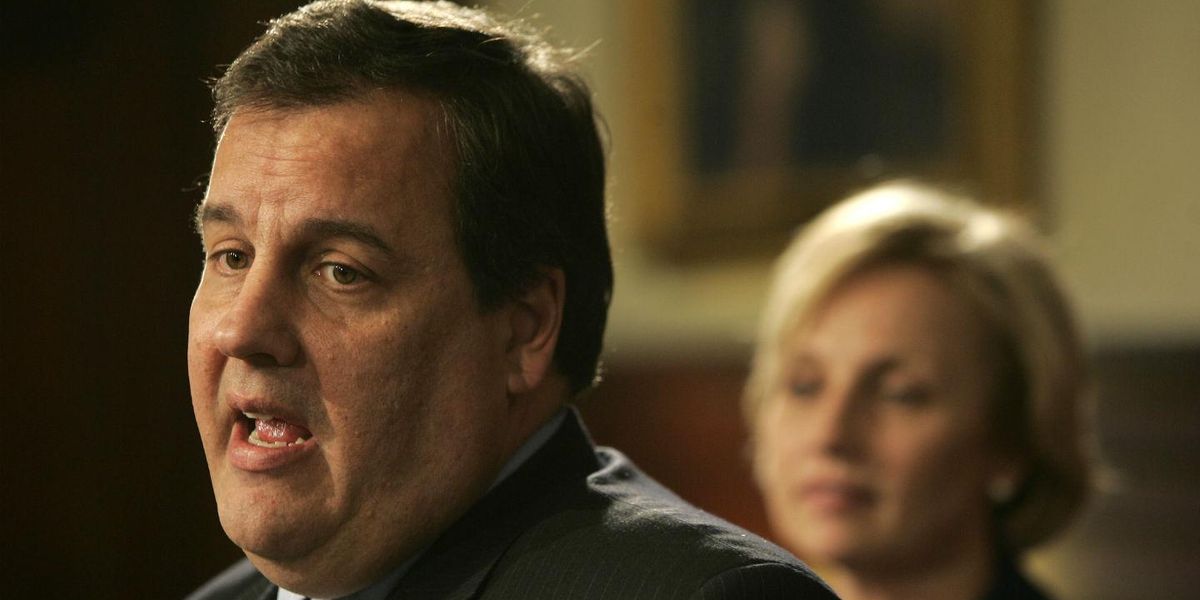
Former New Jersey Governor Chris Christie speaks.
(Photo: AP/Rich Schultz)
Him again? We’ve seen his schtick before. Sure, it’s fun to hear him attack former President Donald Trump, although he didn’t do much of that in the debate. And yes, he’s funnier and slightly more watchable than the others, but that’s because he makes fun of people. He’s the political equivalent of Triumph, the Insult Comic Dog. But Triumph is funnier and has better politics.
Back in 2012 I wrote about Christie’s hostility to women, his servility toward lobbyists, and his overall nastiness. Please don’t make me do it again. Christie displayed utter contempt toward working people that year, insulting the jobless and the elderly. As governor, he was a bully and probably corrupt.
Nothing has changed since then, except his newfound tendency to insult other Republicans. He should stick to that.
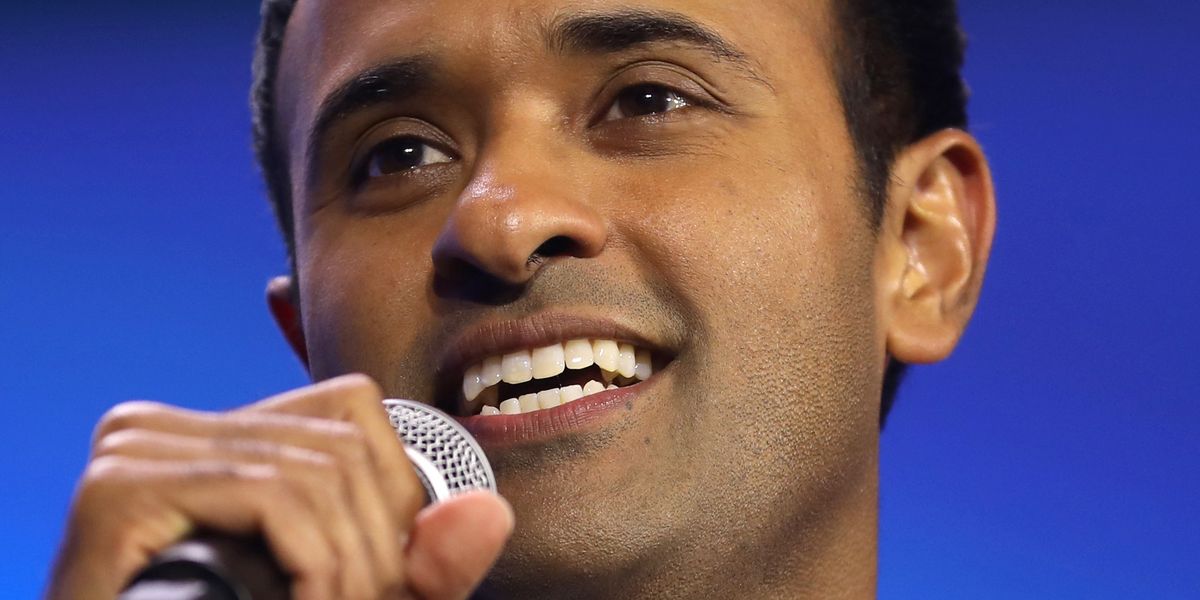
Vivek Ramaswamy speaking at an event in West Palm Beach, Florida.
(Photo: Gage Skidmore/ via Wikipedia)
Back in 1961 in Utica, New York, there was a little kid—we’ll call him “Brucie”—who went from house to house singing a song called “Artificial Flowers” for all the moms in their kitchens. If that sounds like it might be a bad song, friend, you don’t know the half of it. It was about a poor little orphan girl who survives by selling those flowers—but not for long, what with (spoiler alert!) winter coming on and all. All the moms would “ooh” and “aah” over crooning little Brucie.
All of ‘em except my mom, that is. Her face, God love her, was a grim mask as she endured the maudlin tune. The compliment she finally mustered was transparently insincere. Not that it mattered. Brucie was extremely pleased with his performance; the possibility that anyone else might feel differently never crossed his mind.
Which brings us to Vivek Ramaswamy.
Christie said Ramaswamy “sounds like ChatGPT,” which was probably the truest thing said all night.
Ramaswamy is a salesman, a hustler, a pitchman. What he sells is as artificial as the orphan girl’s flowers. Sure, he hits all the right buttons for a conservative crowd, which means he says things that are clinically insane. But who knows what he really thinks? He’s all nerve ends, and the signals coursing through each one of them spell out “always be closing” in Morse code.
Also, he’s a phony. “My parents came to this country with no money 40 years ago,” he said. “I have gone on to found multibillion-dollar companies.” He leaves out the part about his father and mother being well-to-do professionals during his childhood—his father as an engineer and patent attorney for General Electric and his mother as a psychiatrist—and he omits his fancy education at a private high school, Harvard, and then Yale Law School.
Vivek constantly says things like, “I’m not a politician. I’m an entrepreneur.” That’s like the flu product whose advertising says it was “invented by a teacher, not a doctor.” It sounds good until you think about it for a second.
An entrepreneur is the last thing we should want for a president. That is, unless you think the problem with our politics is that there’s too much substance and too little salesmanship...
Christie said Ramaswamy “sounds like ChatGPT,” which was probably the truest thing said all night. But Vivek doesn’t just talk like an AI output. His entire being seems like something you’d get by typing a few phrases into an AI program—phrases like “insufferability incarnate,” “unwarranted self-love,” “Dr. Sardonicus death-rictus smile,” “the kid everybody hated in junior high,” and, “what’s with the hair?”
Said young Vivek:
“This isn’t that complicated, guys, unlock American energy, drill, frack, burn coal and embrace nuclear, put people back to work by no longer paying them more to stay at home, reform the U.S. Fed, stabilize the U.S. dollar, and go to war.”
With that sentence, Ramaswamy finally outpaced Mike Pence in the category of “Most likely to portray the Antichrist in a direct-to-video movie.”
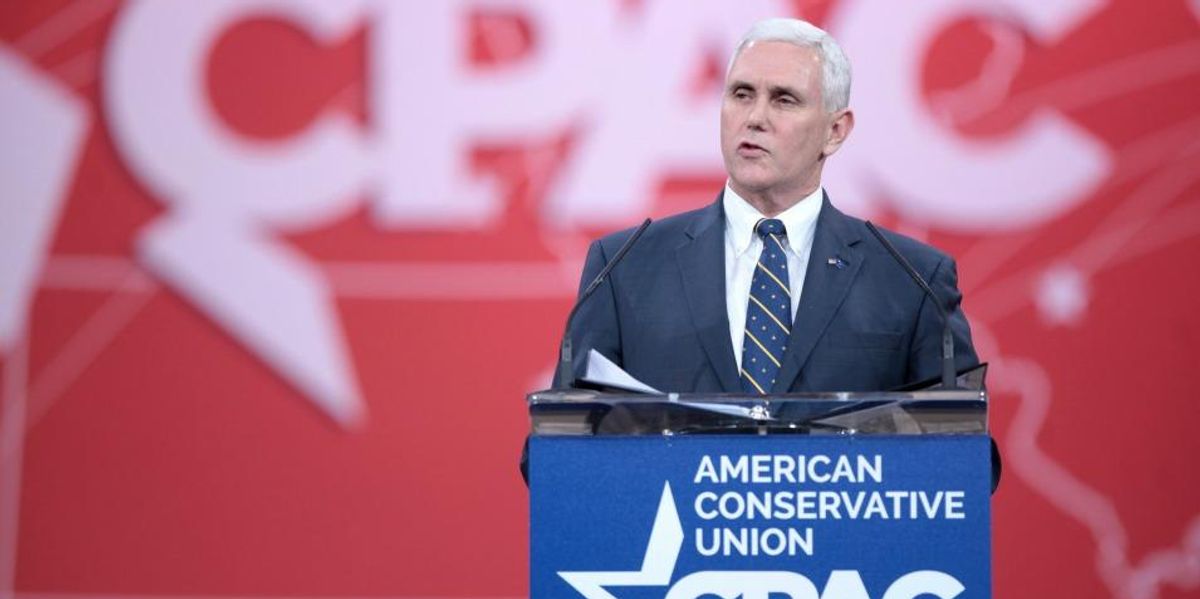
Former Vice President Mike Pence gives a speech.
(Photo: Gage Skidmore/flickr/cc)
Mike Pence did the right thing on January 6. But then there’s the rest of his life, which shouldn’t be left out of the conversation. Besides, obeying the law doesn’t make somebody qualified for the presidency. It doesn’t even make them a good person, necessarily. Deterrence theory relies heavily on fear of punishment, and if there’s one thing that shines through Pence’s personality it’s fear of punishment—divine and otherwise.
Pence has a long record of right-wing extremism and the forceful insertion of his private religious beliefs into the public sphere.
Poor ol’ Mike was his usual joyless self in the debate. He isn’t just wrong; he’s also, unfortunately, quite dull. (His court testimony, however, should be interesting.)
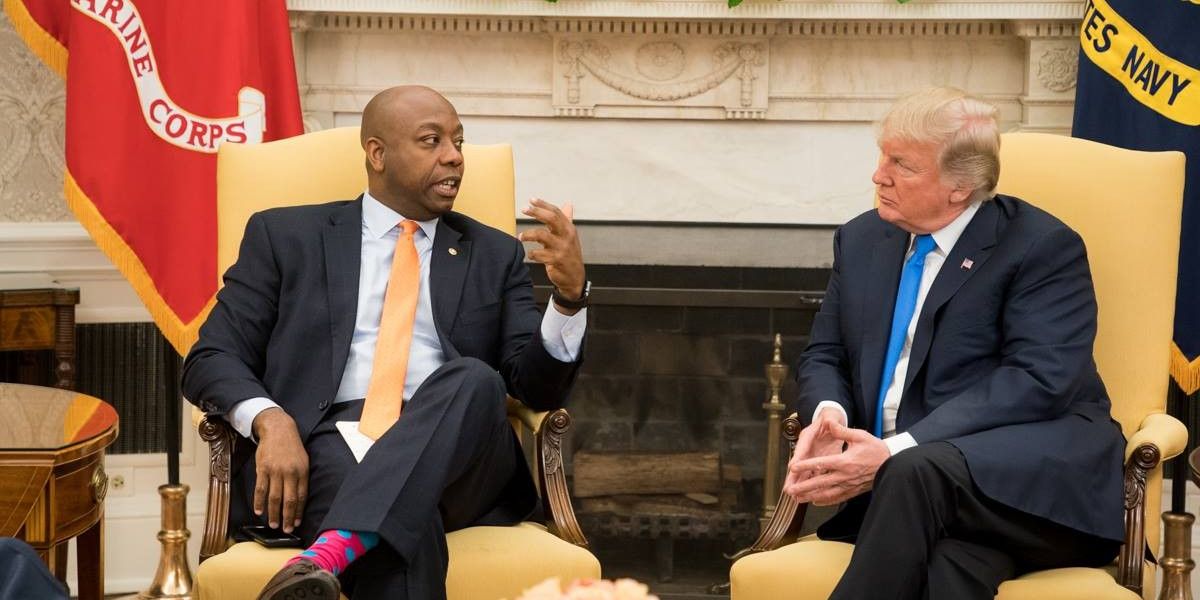
Senator Tim Scott speaks with then-President Donald Trump in 2017.
(Photo: The White House/ via Wikipedia)
“I regard all life as sacred,” Tim Scott says via his website. Then he says, “I will rebuild a military so lethal and powerful that our adversaries will fear us and our allies will respect us.”
And yet: Scott maligns lifesaving programs like Medicare, Medicaid, and Social Security as “the entitlement state” and says things like, “We have to wrestle this beast to the ground.” Apparently, some lives are more sacred than others.
That privileged group includes insurance executives. While calling to tame the costs of “entitlements,” Scott sided with other Republicans to protect the siphoning off of Medicare funds to private wealth under the so-called “Medicare Advantage” scheme.
For all the hype—if you can call Scott’s sporadic coverage “hype”—it turns out he’s just a typical Republican.
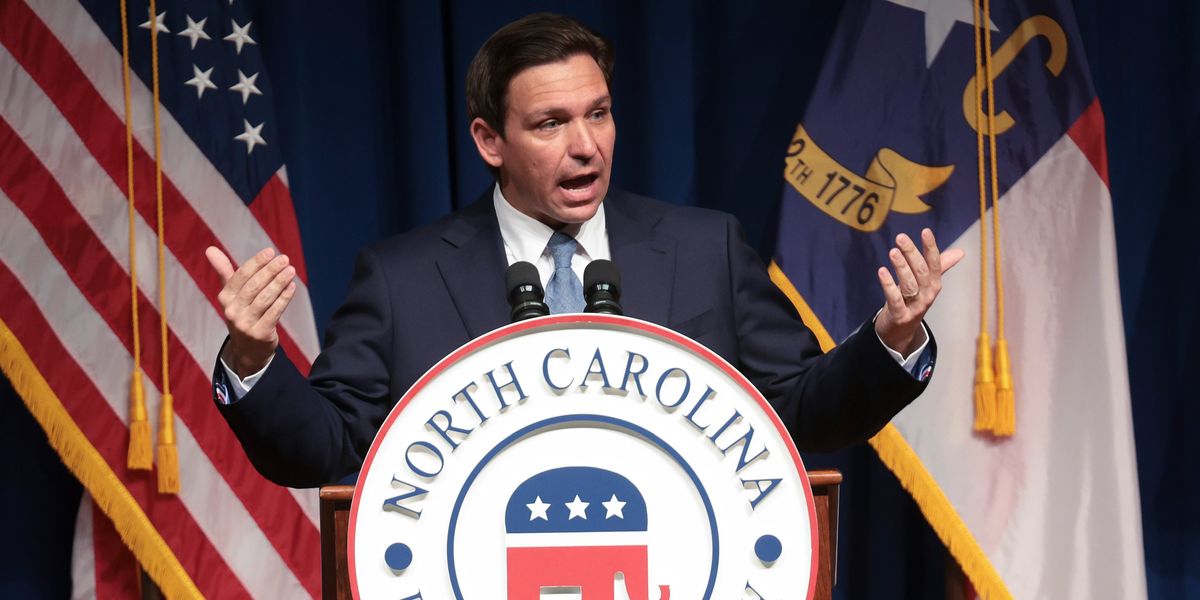
Florida Gov. Ron DeSantis speaks in North Carolina.
(Photo: Win McNamee/Getty Images)Do we have to? Oh, okay. Everybody knows what he’s been up to in Florida, so we’ll stick to his debate performance.
It was sad.
On Wednesday night, DeSantis mentioned yet again that he was “deployed with the Navy SEALS in Iraq.” Naturally, that left everyone with the impression that he was a Navy SEAL. He wasn’t. The elite-educated DeSantis served as an attorney, not a combat soldier.
By choosing his words carefully enough to leave a false impression without actually lying, DeSantis sounded like a fighter but demonstrated what he really is: a lawyer.

Former Arkansas Gov. Asa Hutchinson speaks before a meeting of the Republican Party of Orange County.
(Photo: Leonard Ortiz/MediaNews Group/Orange County Register via Getty Images)Somebody said that Asa Hutchinson seems like a decent man.
You mean the Asa Hutchinson who pandered to Islamophobic bigotry by pledging to close his state to innocent Syrian refugees? The Asa Hutchinson who, after serving in the Department of Homeland Security, made a million dollars with a secretive company that trades with that department? The Hutchinson who carried out a hasty and chaotic spree of death row executions in his state soon after taking office, almost certainly killing at least one innocent man? Who urged businesses not to comply with mandated protections to public health and worker safety and dictatorially forbade local communities from democratically deciding how to protect their own health?
You mean that Asa Hutchinson?
“Decent” is not a synonym for “occasionally takes a break from doing execrable things.”
Nah.
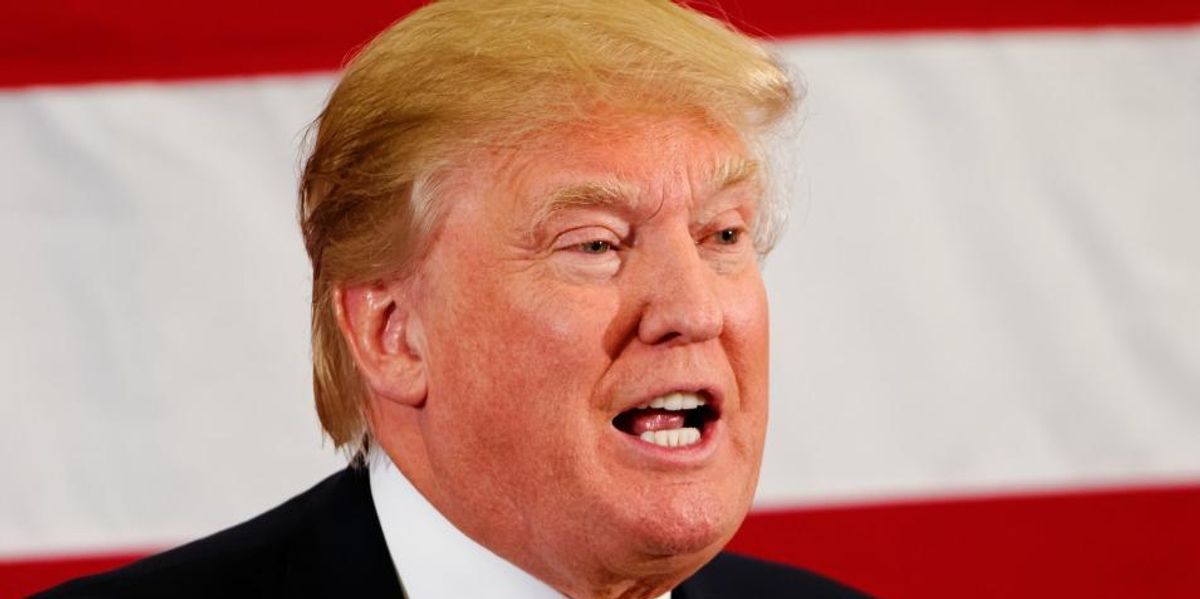
Donald Trump speaks
(Photo: Michael Vadon/flickr/cc)As the debate groaned on, Tucker Carlson released a one-on-one interview with Donald Trump where, like any good wingman, he made his alpha pal look good by making himself even less attractive. Carlson lobbed extremely crazy statements to Trump, whose responses—being merely very crazy—looked sane by comparison. But crazy is as crazy does.
Incidentally, these comments aren’t personal. Nikki Haley and her compatriots were very nice at that dinner. Some of the Republican senators and representatives I’ve met have been nice, too. Hey, I was on Tucker’s program once and I even liked him, just as I’ve liked other Fox hosts. (Not you, though, Hannity.)
But their public personae are—politically, historically, existentially—who they really are. And what they really are is bad. They say unhinged, lying, and hateful things while pursuing policies that hurt and kill. It’s insane to treat them like serious political figures. That our media and political cultures do so reflects a profound societal sickness.
If Trump doesn’t lead his party again next year, one of these yo-yos probably will. The fact that the Democrats could lose to them—which they could—says more about the state of our nation than many of us would ever care to know. That’s understandable. After all, to see insanity is to risk becoming insane yourself.
PS: I apologize to ugly dogs everywhere, including my wife’s friend’s dog. He was a good boy.
"There is no way I can get a fair trial with the judge 'assigned' to the ridiculous freedom of speech/fair elections case," Trump posted in all capital letters on Truth Social Sunday morning.
Former President Donald Trump lashed out on social media Sunday against the judge who was assigned to try his case in an indictment charging him with conspiring to remain in power after losing the 2020 presidential election.
U.S. District Judge Tanya Chutkan, who was appointed by former president Barack Obama, has handed down some of the toughest sentences to rioters involved with the January 6, 2021, insurrection at the U.S. Capitol, according to The Associated Press.
"There is no way I can get a fair trial with the judge 'assigned' to the ridiculous freedom of speech/fair elections case," Trump posted in all capital letters on Truth Social Sunday morning. "Everybody knows this, and so does she!"
Trump added that his team would be asking for the judge's recusal "on very powerful grounds" and also for the trial to be held outside of Washington, D.C.
Trump's post came just two days after he posted a vaguely threatening message on Truth Social, saying, "If you go after me, I'm coming after you!"
The same day, prosecutors cited his message to Judge Chutkan as they asked her to issue a protective order for evidence in the case, barring Trump or his legal team from sharing certain details with the public. Judge Chutkan gave Trump's team a deadline of 5 pm Monday to respond and denied their request for an extension, as CNN reported.
Trump was indicted Tuesday with four charges of conspiracy and obstruction related to attempts to overturn the results of the 2020 election. On Thursday, he pleaded not guilty to the charges.
"Since being charged, Trump has gone after the prosecutor, the judges, and a major witness."
On Friday, he issued his vague warning to anyone who went after him. Then on Saturday, he attacked former Vice President and current rival in the Republican presidential primary Mike Pence, who testified in April to the federal grand jury investigating the election charges and has repeatedly said that Trump asked him to "choose between him and the Constitution," though he has also said he wouldn't rule out a pardon for Trump if elected, according to CNN.
"WOW, it's finally happened! Liddle' Mike Pence, a man who was about to be ousted as Governor [of] Indiana until I came along and made him V.P., has gone to the Dark Side," Trump posted on Truth Social.
Trump denied ever asking Pence to place him above the Constitution and called the former vice president "delusional."
Then, earlier on Sunday, Trump singled out Special Counsel Jack Smith, calling him "deranged" and lambasting "our highly partisan, and very corrupt, department of injustice."
"By our count, since being charged, Trump has gone after the prosecutor, the judges, and a major witness," Citizens for Responsibility and Ethics in Washington tweeted in response to the news. "He's also made a vague threat against potential witnesses and jurors. Not mistake for a second what he's trying to do."
"We are the majority!" said one abortion rights leader. "It's time to take our court back. It's time to take our government back."
As rights advocates took stock on Saturday of the catastrophic effects of the U.S. Supreme Court's overturning of Roe v. Wade exactly a year after the court's right-wing majority gutted abortion rights for millions, campaigners rallied to demand bold action from the Democratic Party and the White House to protect reproductive freedom.
" Republicans are across the way right now lobbying for a national abortion ban with their hero Mike Pence," said NARAL Pro-Choice America President Mini Timmaraju, despite the fact that "poll after poll after poll has shown Americans are with us. They don't want a national abortion ban, they want Congress to codify abortion access."
NARAL is among the rights groups that have demanded the passage of the Women's Health Protection Act (WHPA), which was obstructed last year when right-wing Democratic Sen. Joe Manchin of West Virginia joined the Republican Party in blocking it. The law would affirm the right to abortion care at the federal level.
The Dobbs v. Jackson Women's Health Organization ruling last year, handed down just weeks after the WHPA was blocked, paved the way for at least 14 states to ban most abortions. Republicans including Sen. Lindsey Graham (R-S.C.) and former Vice President Mike Pence, who is running for president in 2024, have called for a nationwide 15-week abortion ban.
After leading the crowd in a chant of, "We are the majority!" Timmaraju said, "It's time to take our court back. It's time to take our government back."
Along with Planned Parenthood and other national rights organizations, NARAL in recent months has joined the push for an expansion of the Supreme Court, which has been done by Congress seven times in the past.
In Charlotte, North Carolina, Vice President Kamala Harris on Saturday addressed a packed house at the Grady Cole Center, where she noted that "more than 350 new laws to restrict these freedoms and the right to have access to reproductive healthcare" have been proposed or passed in states, leaving 23 million women of reproductive age living in states with extreme abortion bans.
"Extremist Republicans in Congress have proposed to ban abortion nationwide. But I have news for them. We're not having that. We're not standing for that. We won't let that happen. And by the way, the majority of Americans are with us," said Harris. "The United States Congress must put back in place what the Supreme Court took away."
The effects of abortion bans have been well-documented in the past 12 months, as pregnant patients have been denied care by doctors fearing prosecution, even as their pregnancies threatened their health. A survey of OB/GYNs this week found that 68% of doctors said Dobbs has made managing pregnancy-related medical emergencies more difficult and 64% said the ruling has worsened pregnancy-related mortality.
As the anniversary drew near this week, President Joe Biden signed an executive order expanding access to birth control and Arizona Gov. Katie Hobbs (D) took action to block county prosecutions of people who have abortions. A 15-week abortion ban is in effect in Hobbs's state.
Amnesty International USA national programs director Tarah Demant said that even in states where bans are not in effect, "a climate of fear is being purposefully sewn to restrict women, girls, and people who can get pregnant from finding legal abortion care."
"Yet despite these coordinated and vitriolic attacks on our rights, Americans continue to overwhelmingly support access to safe and legal abortion, multiple states have added new protections, and activists across states continue to advocate for their rights," said Demant. "Abortion is a human right and basic healthcare, and activists across the country and around the world are more determined than ever to ensure that people across the USA will be able to access this right."
"They want to cut and privatize Social Security and take away our young people's futures," said Democratic Rep. Pramila Jayapal.
Former Vice President Mike Pence, a possible 2024 presidential candidate, has voiced support for a Social Security privatization scheme that the George W. Bush administration unsuccessfully pushed nearly two decades ago.
In a closed-door event Thursday hosted by the National Association of Wholesale-Distributors, a corporate trade group, Pence said he believes that "the day could come when we can replace the New Deal with a better deal, literally give younger Americans the ability to take a portion of their Social Security withholdings and put that into a private savings account that the government would oversee."
"I mean, a very simple fund that could generate 2% would give the average American twice what they're going to get back on their Social Security today. And it could save the government money doing it," Pence said, according to video footage obtained by the Democratic-aligned group American Bridge 21st Century.
Watch:
Experts have forcefully rejected the notion that private savings accounts of the kind Pence endorsed—which would allow workers to divert a portion of their payroll tax contributions into private investment accounts—would be more beneficial than Social Security's guaranteed benefits, as the former vice president suggested.
"The popular argument that Social Security privatization would provide higher returns for all current and future workers is misleading, because it ignores transition costs and differences across programs in the allocation of aggregate and household risk," Olivia Mitchell, John Geanakopolos, and Stephen Zeldes—economists sympathetic to the idea of privatization—wrote in a 2000 paper.
Experts have also said private accounts would not, as Pence put it, "save the government money."
In 2005, analysts with the Center on Budget and Policy Priorities (CBPP) estimated that a privatization plan put forth by former Sen. John Sununu (R-N.H.) and former Rep. Paul Ryan (R-Wis.) would "create $85.8 trillion in additional debt (equal to 93.7% of GDP) by 2050" while not boosting Social Security's long-term solvency—something Republicans claim they want to do.
"Creation of a system of private accounts would not change the amount of revenue coming into the federal government, but it would increase government spending, because the federal government would be making regular payments into the private accounts," the CBPP analysts explained. "These payments would represent new government spending. This increase in spending, unaccompanied by an increase in revenues, would widen annual deficits."
Despite the myriad drawbacks of private accounts as a partial or full-scale alternative to Social Security, Republicans have continued to promote them.
Last year, the Republican Study Committee—a panel that Pence chaired during the Bush administration—released a budget proposal that urged lawmakers to "consider legislative options that allow employers and employees to reduce their payroll tax liability and use those savings to invest in private retirement options."
Pence's remarks Thursday came as the White House and House Republicans are locked in a high-stakes standoff over the debt ceiling, which the GOP does not want to raise without also inflicting steep cuts to federal spending.
As part of their sweeping austerity push, House Republicans have suggested raising the retirement age, which would cut Social Security benefits across the board.
"Republicans keeping saying the quiet part out loud: They want to cut and privatize Social Security and take away our young people's futures," Rep. Pramila Jayapal (D-Wash.), chair of the Congressional Progressive Caucus, tweeted late Saturday. "Democrats will never let this happen."
Multiple potential candidates for the GOP's 2024 presidential primary race support former President Donald Trump's plot to make it easier to purge civil servants deemed disloyal to their prospective administrations, Axios revealed Wednesday.
"These impartial civil servants... deserve protection from political interference from a president who would place preserving his power above following the law."
Noah Bookbinder, president and CEO of the government watchdog Citizens for Responsibility and Ethics in Washington (CREW), responded with alarm to the new reporting.
"It is distressing that leading contenders from one of our major political parties--not just Donald Trump--are reportedly committed to undercutting nonpolitical government employees, another step to significantly weaken our system of checks and balances," he said.
Former Secretary of State Mike Pompeo and Sen. Ted Cruz (R-Texas) confirmed they "support using a measure like Schedule F to reform the federal bureaucracy," according to Axios' Alayna Treene.
Florida Gov. Ron DeSantis along with Sens. Josh Hawley (R-Mo.), Marco Rubio (R-Fla.), and Rick Scott (R-Fla.) "wouldn't speak to Schedule F specifically, but they showed openness to the approach," Treene noted.
Meanwhile, former Vice President Mike Pence, former U.S. Ambassador to the United Nations Nikki Haley, Sen. Tom Cotton (R-Ark.), and Rep. Liz Cheney (R-Wyo.) declined to comment.
Shortly before losing the 2020 presidential election, Trump signed an executive order to create a new Schedule F category of federal employees who are easier to fire.
Though President Joe Biden rescinded the order, if Trump runs again in two years and wins, he is expected to revive the plan to reclassify thousands of workers, which has been condemned as "authoritarianism 101" and "a fascist takeover of our government."
Donald Moynihan, a professor at Georgetown University's McCourt School of Public Policy, recently wrote for Slate that "Schedule F would burn down the civil service system. It would be a government of the lawless leading the incompetent."
Fears about a Republican administration taking such action have grown since U.S. Rep. Chip Roy (R-Texas) last week unveiled the Public Service Reform Act, which he said would "empower federal agencies to swiftly address misconduct and remove underperforming or ill-willed employees."
As Common Dreams reported, Don Kettl, professor emeritus and former dean of the University of Maryland School of Public Policy, said of Roy's move that "this is obviously a huge and major change, an effort to gear up a major assault on the federal employment system."
Kettl also warned that such efforts "aren't just Trump necessarily, and if Republicans take control of Congress following the midterms, this may very well go from idea to specific action."
Democrats--and a few Republicans--in Congress have responded with efforts to protect federal workers.
As U.S. Rep. Gerry Connolly (D-Va.) wrote in late July for The Washington Post:
Our federal workforce consists of roughly two million federal employees hired based on their acumen, and they work each day for the American people--serving in myriad capacities to improve this nation and America's posture abroad. These impartial civil servants research vaccines, help families in the wake of hurricanes and deadly fires, and inspect our food[s] to ensure they are free of disease. They deserve protection from political interference from a president who would place preserving his power above following the law.
Congress must assert itself and ensure no future president can repeat what Trump has already tried to do once, and now is reportedly planning to do again. For nearly two years, I have been trying to warn congressional leadership that protecting our 139-year, merit-based, civil service is fundamental to protecting our democracy.
That is why I have introduced the Preventing a Patronage System Act. The bipartisan legislation, co-sponsored by Rep. Brian Fitzpatrick (R-Pa.), was passed by the House this month but has yet to be taken up by the Senate.
Though Sens. Ben Cardin (D-Md.), Dianne Feinstein (D-Calif.), Tim Kaine (D-Va.), Alex Padilla (D-Calif.), Chris Van Hollen (D-Md.), and Mark Warner (D-Va.) introduced the legislation in the upper chamber on Tuesday, it would require GOP support to reach Biden's desk.
Multiple news reports revealed Monday that two top aides to former Vice President Mike Pence recently were subpoenaed and appeared before the federal grand jury probing the January 6, 2021 attack on the U.S. Capitol.
Marc Short, who served as Pence's chief of staff, "was caught by an ABC News camera departing D.C. District Court on Friday alongside his attorney, Emmet Flood," the outlet reported, sharing a still from the footage and citing sources familiar with the matter.
While spokespeople for Short and the U.S. attorney's office declined to comment, sources also confirmed his appearance to The New York Times and The Wall Street Journal.
Journalists and others noted that Short is now the highest-ranking official from former President Donald Trump's administration known to have cooperated with the U.S. Department of Justice (DOJ) investigation.
"This is movement in the right direction. Because #JusticeMatters," tweeted Glenn Kirschner, an MSNBC and NBC News legal analyst, about Short's testimony, which reportedly lasted two to three hours.
Noah Bookbinder, president of the watchdog group Citizens for Responsibility and Ethics in Washington (CREW), said that "we don't totally know what this means, but it's clearly good news for accountability."
In a series of tweets, Just Security's Ryan Goodman, a former Defense Department special counsel, laid out the potential significance of Short cooperating with the probe.
"Most importantly, Marc Short has significant testimony he could give that implicates Trump. Also importantly, he can give testimony that significantly implicates Mark Meadows," Goodman said, referencing the former president's White House chief of staff.
Greg Jacob, Pence's top White House attorney, also recently appeared before the grand jury under subpoena, according to the Journal.
The newspaper noted that the DOJ recently added prosecutors and resources to the probe and suggested that the new interviews signal investigators "are targeting a senior circle of Trump associates who pushed for the former vice president" to halt the certification of President Joe Biden's 2020 victory.
As the Journal detailed:
One area of interest to prosecutors was a January 4, 2021 Oval Office meeting where conservative lawyer John Eastman pushed Mr. Pence, in Mr. Trump's presence, to either reject the electoral votes outright or suspend the proceedings and ask several state legislatures to reexamine the results.
Last month, Mr. Jacob testified at length before the January 6 congressional committee about that meeting, which included Messrs. Trump, Pence, Short, Eastman, and Jacob. During the meeting, Mr. Eastman admitted his proposals would violate the law but wanted to proceed anyway, Mr. Jacob said.
"During that meeting on the fourth, I think I raised the problem that both of Mr. Eastman's proposals would violate several provisions of the Electoral Count Act. Mr. Eastman acknowledged that that was the case, that even what he viewed as the more politically palatable option would violate several provisions," Mr. Jacob told the committee.
During a press conference last week, U.S. Attorney General Merrick Garland said that "there is a lot of speculation about what the Justice Department is doing, what it's not doing, what our theories are, what our theories aren't, and there will continue to be that speculation."
"That's because a central tenet of the way in which the Justice Department investigates and a central tenet of the rule of law is that we do not do our investigations in public," he continued. "This is the most wide-ranging investigation and the most important investigation that the Justice Department has ever entered into."
"We have to get this right," he stressed. "And for people who are concerned--as I think every American should be--about protecting democracy, we have to do two things: We have to hold accountable every person who is criminally responsible for trying to overturn a legitimate election, and we must do it in a way filled with integrity and professionalism."
Garland later added that "no person is above the law in this country."