SUBSCRIBE TO OUR FREE NEWSLETTER
Daily news & progressive opinion—funded by the people, not the corporations—delivered straight to your inbox.
5
#000000
#FFFFFF
To donate by check, phone, or other method, see our More Ways to Give page.
Daily news & progressive opinion—funded by the people, not the corporations—delivered straight to your inbox.
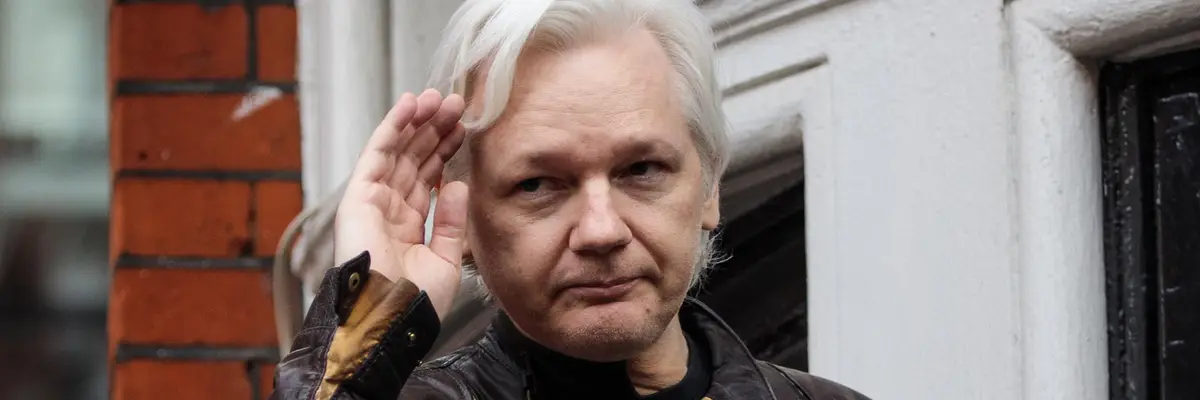
Julian Assange gestures as he speaks to the media from the balcony of the Embassy Of Ecuador on May 19, 2017 in London, England. (Photo: Jack Taylor/Getty Images)
The government of Ecuador announced Wednesday that it cut off Julian Assange's internet access.
Among his supporters denouncing the development was Megaupload founder Kim Dotcom--himself facing possible extradition to the U.S.--who said that Ecuador was "making a grave mistake. The internet will rise up against this injustice."
Ecuador granted the WikiLeaks founder asylum in August 2012, and he's been living in the Ecuadoran embassy in London ever since. And while Sweden dropped its investigation into him, he still faces the threat of arrest in the U.K. and extradition to the United States.
Ecuador said the cutoff, which began Tuesday, was due to Assange purportedly having violated a written agreement from 2017 that he would not send messages that might cause an "interference" with regard to other nations. It did not reference a specific message or tweet.
Assange's most recent tweet was from Tuesday morning. It included a link to a Reuters article that referenced British foreign affairs minister Alan Duncan saying, "It's about time that this miserable little worm walked out of the embassy and gave himself up to British justice." Assange tweeted in response: "As a political prisoner detained without charge for 8 years, in violation of 2 UN rulings, I suppose I must be 'miserable'; yet nothing wrong with being a 'little' person although I'm rather tall; and better a 'worm.' a healthy creature that invigorates the soil, than a snake."
On Monday one of his tweets was about former Catalan president Carles Puigdemont, who was arrested on Sunday in Germany on a European arrest warrant.
In a series of other tweets on Monday, he criticized the U.S. expulsion of Russian diplomats following a nerve agent attack on a former Russian spy in the living in the U.K., and called the evidence thus far showing Russia is behind the attempted murder "circumstantial."
Dotcom is urging people to send messages to Ecuadoran President Lenin Moreno to pressure him to restore the access.
A similar call was made in a joint statement by Greek economist and former minister Yanis Varoufakis and noted British music producer Brian Eno.
The pair argues,"Only extraordinary pressure from the U.S. and the Spanish governments can explain why Ecuador's authorities should have taken such appalling steps in isolating Julian."
They go on to assert that "the only reason Julian is holed up in Ecuador's London Embassy--and why Ecuador gave him asylum in the first place--is precisely because he empowered whistleblowers' freedom of expression and defended our right to know the truth about practices of the U.S. and other Western powers that the latter found 'inconvenient' once exposed to the light of day."
Dear Common Dreams reader, It’s been nearly 30 years since I co-founded Common Dreams with my late wife, Lina Newhouser. We had the radical notion that journalism should serve the public good, not corporate profits. It was clear to us from the outset what it would take to build such a project. No paid advertisements. No corporate sponsors. No millionaire publisher telling us what to think or do. Many people said we wouldn't last a year, but we proved those doubters wrong. Together with a tremendous team of journalists and dedicated staff, we built an independent media outlet free from the constraints of profits and corporate control. Our mission has always been simple: To inform. To inspire. To ignite change for the common good. Building Common Dreams was not easy. Our survival was never guaranteed. When you take on the most powerful forces—Wall Street greed, fossil fuel industry destruction, Big Tech lobbyists, and uber-rich oligarchs who have spent billions upon billions rigging the economy and democracy in their favor—the only bulwark you have is supporters who believe in your work. But here’s the urgent message from me today. It's never been this bad out there. And it's never been this hard to keep us going. At the very moment Common Dreams is most needed, the threats we face are intensifying. We need your support now more than ever. We don't accept corporate advertising and never will. We don't have a paywall because we don't think people should be blocked from critical news based on their ability to pay. Everything we do is funded by the donations of readers like you. When everyone does the little they can afford, we are strong. But if that support retreats or dries up, so do we. Will you donate now to make sure Common Dreams not only survives but thrives? —Craig Brown, Co-founder |
The government of Ecuador announced Wednesday that it cut off Julian Assange's internet access.
Among his supporters denouncing the development was Megaupload founder Kim Dotcom--himself facing possible extradition to the U.S.--who said that Ecuador was "making a grave mistake. The internet will rise up against this injustice."
Ecuador granted the WikiLeaks founder asylum in August 2012, and he's been living in the Ecuadoran embassy in London ever since. And while Sweden dropped its investigation into him, he still faces the threat of arrest in the U.K. and extradition to the United States.
Ecuador said the cutoff, which began Tuesday, was due to Assange purportedly having violated a written agreement from 2017 that he would not send messages that might cause an "interference" with regard to other nations. It did not reference a specific message or tweet.
Assange's most recent tweet was from Tuesday morning. It included a link to a Reuters article that referenced British foreign affairs minister Alan Duncan saying, "It's about time that this miserable little worm walked out of the embassy and gave himself up to British justice." Assange tweeted in response: "As a political prisoner detained without charge for 8 years, in violation of 2 UN rulings, I suppose I must be 'miserable'; yet nothing wrong with being a 'little' person although I'm rather tall; and better a 'worm.' a healthy creature that invigorates the soil, than a snake."
On Monday one of his tweets was about former Catalan president Carles Puigdemont, who was arrested on Sunday in Germany on a European arrest warrant.
In a series of other tweets on Monday, he criticized the U.S. expulsion of Russian diplomats following a nerve agent attack on a former Russian spy in the living in the U.K., and called the evidence thus far showing Russia is behind the attempted murder "circumstantial."
Dotcom is urging people to send messages to Ecuadoran President Lenin Moreno to pressure him to restore the access.
A similar call was made in a joint statement by Greek economist and former minister Yanis Varoufakis and noted British music producer Brian Eno.
The pair argues,"Only extraordinary pressure from the U.S. and the Spanish governments can explain why Ecuador's authorities should have taken such appalling steps in isolating Julian."
They go on to assert that "the only reason Julian is holed up in Ecuador's London Embassy--and why Ecuador gave him asylum in the first place--is precisely because he empowered whistleblowers' freedom of expression and defended our right to know the truth about practices of the U.S. and other Western powers that the latter found 'inconvenient' once exposed to the light of day."
The government of Ecuador announced Wednesday that it cut off Julian Assange's internet access.
Among his supporters denouncing the development was Megaupload founder Kim Dotcom--himself facing possible extradition to the U.S.--who said that Ecuador was "making a grave mistake. The internet will rise up against this injustice."
Ecuador granted the WikiLeaks founder asylum in August 2012, and he's been living in the Ecuadoran embassy in London ever since. And while Sweden dropped its investigation into him, he still faces the threat of arrest in the U.K. and extradition to the United States.
Ecuador said the cutoff, which began Tuesday, was due to Assange purportedly having violated a written agreement from 2017 that he would not send messages that might cause an "interference" with regard to other nations. It did not reference a specific message or tweet.
Assange's most recent tweet was from Tuesday morning. It included a link to a Reuters article that referenced British foreign affairs minister Alan Duncan saying, "It's about time that this miserable little worm walked out of the embassy and gave himself up to British justice." Assange tweeted in response: "As a political prisoner detained without charge for 8 years, in violation of 2 UN rulings, I suppose I must be 'miserable'; yet nothing wrong with being a 'little' person although I'm rather tall; and better a 'worm.' a healthy creature that invigorates the soil, than a snake."
On Monday one of his tweets was about former Catalan president Carles Puigdemont, who was arrested on Sunday in Germany on a European arrest warrant.
In a series of other tweets on Monday, he criticized the U.S. expulsion of Russian diplomats following a nerve agent attack on a former Russian spy in the living in the U.K., and called the evidence thus far showing Russia is behind the attempted murder "circumstantial."
Dotcom is urging people to send messages to Ecuadoran President Lenin Moreno to pressure him to restore the access.
A similar call was made in a joint statement by Greek economist and former minister Yanis Varoufakis and noted British music producer Brian Eno.
The pair argues,"Only extraordinary pressure from the U.S. and the Spanish governments can explain why Ecuador's authorities should have taken such appalling steps in isolating Julian."
They go on to assert that "the only reason Julian is holed up in Ecuador's London Embassy--and why Ecuador gave him asylum in the first place--is precisely because he empowered whistleblowers' freedom of expression and defended our right to know the truth about practices of the U.S. and other Western powers that the latter found 'inconvenient' once exposed to the light of day."