SUBSCRIBE TO OUR FREE NEWSLETTER
Daily news & progressive opinion—funded by the people, not the corporations—delivered straight to your inbox.
5
#000000
#FFFFFF
To donate by check, phone, or other method, see our More Ways to Give page.
Daily news & progressive opinion—funded by the people, not the corporations—delivered straight to your inbox.
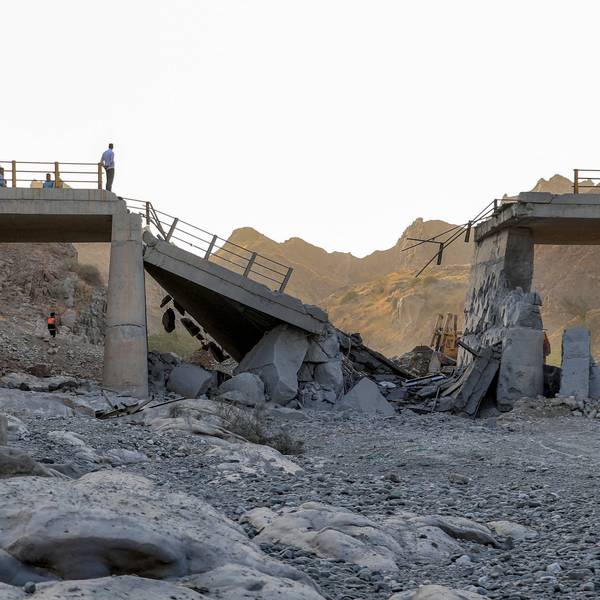
Amid "unrelenting attacks on civilians and on civilian infrastructure" and as a new campaign aims to block the Obama administration from selling $1.15 billion worth of weapons to Saudi Arabia, new reporting sheds further light on the devastation the kingdom's military coalition, backed by the U.S. and U.K., has wrought on Yemen's population.
Over one-third of all the coalition's air strikes in Yemen have hit civilian targets like schools and hospitals, the Guardian reports Friday.
In fact, there have been "repeated strikes on school buildings and hospitals."
In five of the past 18 months, the Guardian continues, "the Saudi-led coalition hit more non-military sites than military."
The revelation is based on a survey of the strikes conducted by the Yemen Data Project. From the Guardian:
The independent and non-partisan survey, based on open-source data, including research on the ground, records more than 8,600 air attacks between March 2015, when the Saudi-led campaign began, and the end of August this year. Of these, 3,577 were listed as having hit military sites and 3,158 struck non-military sites. [...]
Staff at the Yemen Data Project said they adopted rigorous standards, using news reports aligned with both sides in the conflict and crosschecked against other sources, such as social media, non-governmental organizations and evidence on the ground.
The findings, the paper writes, "will refocus attention on U.K. arms sales to Saudi Arabia" and its role in the war.
Asked about the findings, Saudi foreign minister Adel bin Ahmed al-Jubeir dismissed the claim that civilian sites were targeted, telling the Guardian that Houthi rebels "turned schools and hospitals and mosques into command and control centers. They have turned them into weapons depots."
On the other side of the Atlantic, human rights campaigners continue their efforts to block the pending arms deal. Several online petitions have already been circulating, and Human Rights Watch this week launched a campaign calling on people to tell their senators to stop the deal by instead backing a bipartisan resolution.
As the organization's Kristine Beckerle Finberg and John Sifton wrote earlier this month,
Senators should be asking tough questions about this sale, which, if it goes ahead, is sending precisely the wrong message at a crucial time. The same week the Obama administration notified Congress about the sale, the Saudi-led coalition bombed another civilian factory, killing 10 civilians. A few days later, an airstrike hit a Doctors Without Borders-supported hospital, killing 19. The most recent attacks follow dozens of unlawful strikes investigated by Human Rights Watch and others, including those using US-made weapons.
The new campaign page states:
This Senate Resolution of Disapproval would attempt to block the latest U.S. arms sales to Saudi Arabia and send a strong bipartisan signal to the Saudi government that the U.S. is not going to continue arming Saudi Arabia so long as its military continues to commit abuses in Yemen without any accountability. Tell your Senator to support this resolution now.
The human rights organization say the Senate is set to vote on the resolution Sept. 20.
Additional reporting this week by the Associated Press puts a human face on the high levels of child malnourishment gripping the port city and surrounding area of Hodeidah.
"There is an accelerating increase in the number of children suffering malnutrition," Ossan al-Abbsi, a pediatrician at Hodeidah's central hospital, told AP. "We used to have five cases while the rest of the beds were empty on any given day. Now, you can never find an empty bed in our unit."
In the country overall, the UN says, 1.5 million children suffer from life-threatening malnutrition.
Last month, Julien Harneis, UNICEF representative in Yemen, said, "Children are paying the heaviest price of the conflict in Yemen."
U.N. humanitarian coordinator for Yemen Jamie McGoldrick said recently that he was "deeply disturbed by the unrelenting attacks on civilians and on civilian infrastructure throughout Yemen by all parties to the conflict, which are further destroying Yemen's social fabric and increasing humanitarian needs, particularly for medical attention at a time when the health sector is collapsing."
McGoldrick said last month that the death toll from the ongoing conflict surpassed 10,000.
Dear Common Dreams reader, It’s been nearly 30 years since I co-founded Common Dreams with my late wife, Lina Newhouser. We had the radical notion that journalism should serve the public good, not corporate profits. It was clear to us from the outset what it would take to build such a project. No paid advertisements. No corporate sponsors. No millionaire publisher telling us what to think or do. Many people said we wouldn't last a year, but we proved those doubters wrong. Together with a tremendous team of journalists and dedicated staff, we built an independent media outlet free from the constraints of profits and corporate control. Our mission has always been simple: To inform. To inspire. To ignite change for the common good. Building Common Dreams was not easy. Our survival was never guaranteed. When you take on the most powerful forces—Wall Street greed, fossil fuel industry destruction, Big Tech lobbyists, and uber-rich oligarchs who have spent billions upon billions rigging the economy and democracy in their favor—the only bulwark you have is supporters who believe in your work. But here’s the urgent message from me today. It's never been this bad out there. And it's never been this hard to keep us going. At the very moment Common Dreams is most needed, the threats we face are intensifying. We need your support now more than ever. We don't accept corporate advertising and never will. We don't have a paywall because we don't think people should be blocked from critical news based on their ability to pay. Everything we do is funded by the donations of readers like you. When everyone does the little they can afford, we are strong. But if that support retreats or dries up, so do we. Will you donate now to make sure Common Dreams not only survives but thrives? —Craig Brown, Co-founder |
Amid "unrelenting attacks on civilians and on civilian infrastructure" and as a new campaign aims to block the Obama administration from selling $1.15 billion worth of weapons to Saudi Arabia, new reporting sheds further light on the devastation the kingdom's military coalition, backed by the U.S. and U.K., has wrought on Yemen's population.
Over one-third of all the coalition's air strikes in Yemen have hit civilian targets like schools and hospitals, the Guardian reports Friday.
In fact, there have been "repeated strikes on school buildings and hospitals."
In five of the past 18 months, the Guardian continues, "the Saudi-led coalition hit more non-military sites than military."
The revelation is based on a survey of the strikes conducted by the Yemen Data Project. From the Guardian:
The independent and non-partisan survey, based on open-source data, including research on the ground, records more than 8,600 air attacks between March 2015, when the Saudi-led campaign began, and the end of August this year. Of these, 3,577 were listed as having hit military sites and 3,158 struck non-military sites. [...]
Staff at the Yemen Data Project said they adopted rigorous standards, using news reports aligned with both sides in the conflict and crosschecked against other sources, such as social media, non-governmental organizations and evidence on the ground.
The findings, the paper writes, "will refocus attention on U.K. arms sales to Saudi Arabia" and its role in the war.
Asked about the findings, Saudi foreign minister Adel bin Ahmed al-Jubeir dismissed the claim that civilian sites were targeted, telling the Guardian that Houthi rebels "turned schools and hospitals and mosques into command and control centers. They have turned them into weapons depots."
On the other side of the Atlantic, human rights campaigners continue their efforts to block the pending arms deal. Several online petitions have already been circulating, and Human Rights Watch this week launched a campaign calling on people to tell their senators to stop the deal by instead backing a bipartisan resolution.
As the organization's Kristine Beckerle Finberg and John Sifton wrote earlier this month,
Senators should be asking tough questions about this sale, which, if it goes ahead, is sending precisely the wrong message at a crucial time. The same week the Obama administration notified Congress about the sale, the Saudi-led coalition bombed another civilian factory, killing 10 civilians. A few days later, an airstrike hit a Doctors Without Borders-supported hospital, killing 19. The most recent attacks follow dozens of unlawful strikes investigated by Human Rights Watch and others, including those using US-made weapons.
The new campaign page states:
This Senate Resolution of Disapproval would attempt to block the latest U.S. arms sales to Saudi Arabia and send a strong bipartisan signal to the Saudi government that the U.S. is not going to continue arming Saudi Arabia so long as its military continues to commit abuses in Yemen without any accountability. Tell your Senator to support this resolution now.
The human rights organization say the Senate is set to vote on the resolution Sept. 20.
Additional reporting this week by the Associated Press puts a human face on the high levels of child malnourishment gripping the port city and surrounding area of Hodeidah.
"There is an accelerating increase in the number of children suffering malnutrition," Ossan al-Abbsi, a pediatrician at Hodeidah's central hospital, told AP. "We used to have five cases while the rest of the beds were empty on any given day. Now, you can never find an empty bed in our unit."
In the country overall, the UN says, 1.5 million children suffer from life-threatening malnutrition.
Last month, Julien Harneis, UNICEF representative in Yemen, said, "Children are paying the heaviest price of the conflict in Yemen."
U.N. humanitarian coordinator for Yemen Jamie McGoldrick said recently that he was "deeply disturbed by the unrelenting attacks on civilians and on civilian infrastructure throughout Yemen by all parties to the conflict, which are further destroying Yemen's social fabric and increasing humanitarian needs, particularly for medical attention at a time when the health sector is collapsing."
McGoldrick said last month that the death toll from the ongoing conflict surpassed 10,000.
Amid "unrelenting attacks on civilians and on civilian infrastructure" and as a new campaign aims to block the Obama administration from selling $1.15 billion worth of weapons to Saudi Arabia, new reporting sheds further light on the devastation the kingdom's military coalition, backed by the U.S. and U.K., has wrought on Yemen's population.
Over one-third of all the coalition's air strikes in Yemen have hit civilian targets like schools and hospitals, the Guardian reports Friday.
In fact, there have been "repeated strikes on school buildings and hospitals."
In five of the past 18 months, the Guardian continues, "the Saudi-led coalition hit more non-military sites than military."
The revelation is based on a survey of the strikes conducted by the Yemen Data Project. From the Guardian:
The independent and non-partisan survey, based on open-source data, including research on the ground, records more than 8,600 air attacks between March 2015, when the Saudi-led campaign began, and the end of August this year. Of these, 3,577 were listed as having hit military sites and 3,158 struck non-military sites. [...]
Staff at the Yemen Data Project said they adopted rigorous standards, using news reports aligned with both sides in the conflict and crosschecked against other sources, such as social media, non-governmental organizations and evidence on the ground.
The findings, the paper writes, "will refocus attention on U.K. arms sales to Saudi Arabia" and its role in the war.
Asked about the findings, Saudi foreign minister Adel bin Ahmed al-Jubeir dismissed the claim that civilian sites were targeted, telling the Guardian that Houthi rebels "turned schools and hospitals and mosques into command and control centers. They have turned them into weapons depots."
On the other side of the Atlantic, human rights campaigners continue their efforts to block the pending arms deal. Several online petitions have already been circulating, and Human Rights Watch this week launched a campaign calling on people to tell their senators to stop the deal by instead backing a bipartisan resolution.
As the organization's Kristine Beckerle Finberg and John Sifton wrote earlier this month,
Senators should be asking tough questions about this sale, which, if it goes ahead, is sending precisely the wrong message at a crucial time. The same week the Obama administration notified Congress about the sale, the Saudi-led coalition bombed another civilian factory, killing 10 civilians. A few days later, an airstrike hit a Doctors Without Borders-supported hospital, killing 19. The most recent attacks follow dozens of unlawful strikes investigated by Human Rights Watch and others, including those using US-made weapons.
The new campaign page states:
This Senate Resolution of Disapproval would attempt to block the latest U.S. arms sales to Saudi Arabia and send a strong bipartisan signal to the Saudi government that the U.S. is not going to continue arming Saudi Arabia so long as its military continues to commit abuses in Yemen without any accountability. Tell your Senator to support this resolution now.
The human rights organization say the Senate is set to vote on the resolution Sept. 20.
Additional reporting this week by the Associated Press puts a human face on the high levels of child malnourishment gripping the port city and surrounding area of Hodeidah.
"There is an accelerating increase in the number of children suffering malnutrition," Ossan al-Abbsi, a pediatrician at Hodeidah's central hospital, told AP. "We used to have five cases while the rest of the beds were empty on any given day. Now, you can never find an empty bed in our unit."
In the country overall, the UN says, 1.5 million children suffer from life-threatening malnutrition.
Last month, Julien Harneis, UNICEF representative in Yemen, said, "Children are paying the heaviest price of the conflict in Yemen."
U.N. humanitarian coordinator for Yemen Jamie McGoldrick said recently that he was "deeply disturbed by the unrelenting attacks on civilians and on civilian infrastructure throughout Yemen by all parties to the conflict, which are further destroying Yemen's social fabric and increasing humanitarian needs, particularly for medical attention at a time when the health sector is collapsing."
McGoldrick said last month that the death toll from the ongoing conflict surpassed 10,000.