SUBSCRIBE TO OUR FREE NEWSLETTER
Daily news & progressive opinion—funded by the people, not the corporations—delivered straight to your inbox.
5
#000000
#FFFFFF
To donate by check, phone, or other method, see our More Ways to Give page.
Daily news & progressive opinion—funded by the people, not the corporations—delivered straight to your inbox.
At least 4,000 people have died in the catastrophic 7.8-magnitude earthquake and severe aftershocks that hit Nepal over the weekend, a number which is expected to rise in the coming days as international aid groups continue to assess the full scale of the destruction.
Relief organizations began arriving in Nepal in large groups on Sunday as Kathmandu's international airport reopened.
Some agencies were able to send medical staff and equipment into nearby Pokhara, which was also hit hard by the earthquake.
"That means supplies could potentially come in overland from India. That is a positive sign," Ben Pickering, Save the Children's humanitarian adviser in Britain, told USA Today. "The airport opening is a small miracle."
Along with several NGOs, relief efforts were launched by the U.S., China, and India, but officials said they were having trouble getting into some of the more rural areas outside of Nepal's capital city.
"We don't know the situation which is west of Kathmandu, where a lot of damage was done," said Indian Foreign Secretary Subrahmanyam Jaishankar during a press conference on Monday.
Amid heavy damage to roads and infrastructure which prevented aid from spreading as far as it was needed, many survivors were left to fend for themselves. "We don't have anyplace to go," one man, Muhammed Kabil, told the New York Times on Monday. "We don't have any clothes, we don't have enough food, we don't have medicine, we don't know when we can go back into our homes."
"Everyone is scared," added another survivor, Samir Thapa. "Everyone is saying it will come again. No one is going to sleep at home."
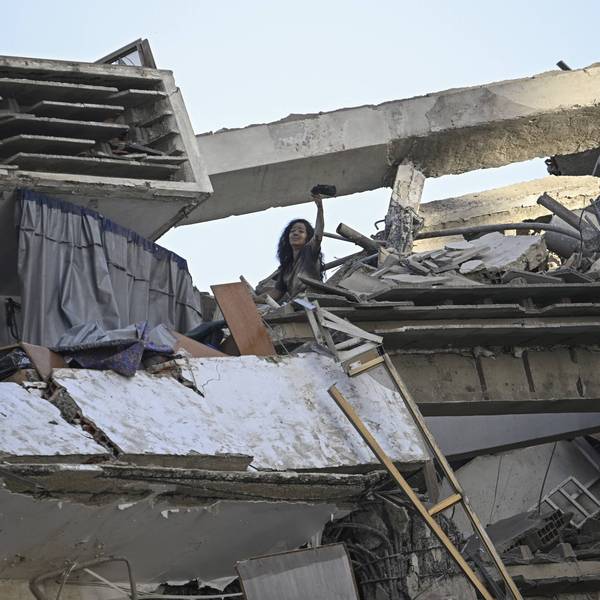
Instead, survivors are forced to sleep in the open and stay away from standing buildings, walking through debris in the streets instead of on sidewalks. At least 60 aftershocks increased the damage countrywide after Saturday's initial quake.
According to the United Nations Children's Fund (UNICEF), the earthquake is also likely to have a severe impact on Nepal's children, who make up half the country's population.
The agency reported: "There have been reports of dwindling supplies of water and food, power outages, and downed communication networks. Hundreds of thousands of people spent the night sleeping in open areas, out of fear of more tremors. Heavy rain is now also reported which can further worsen the conditions. This crisis leaves children particularly vulnerable--limited access to safe water and sanitation will put children at great risk from waterborne diseases, while some children may have become separated from their families."
In addition to human loss, the earthquake devastated many of Nepal's historic sites, both natural and cultural.
"As we are receiving more information from the ground, I am deeply aggrieved by the magnitude of human loss caused by the earthquake in Nepal. I am also shocked by its devastating impact on the unique cultural heritage in the country, in particular extensive and irreversible damage at the World Heritage site of Kathmandu Valley," said Irina Bokova, the director-general of UNESCO.
That includes some of the country's most cherished temples, which were turned to rubble in Kathmandu's historic districts.
One survivor, Sri Kitav Sangoala, told the Times that those buildings were "what made Kathmandu special."
"So many sites are destroyed," he said. "Our history is gone."
Dear Common Dreams reader, It’s been nearly 30 years since I co-founded Common Dreams with my late wife, Lina Newhouser. We had the radical notion that journalism should serve the public good, not corporate profits. It was clear to us from the outset what it would take to build such a project. No paid advertisements. No corporate sponsors. No millionaire publisher telling us what to think or do. Many people said we wouldn't last a year, but we proved those doubters wrong. Together with a tremendous team of journalists and dedicated staff, we built an independent media outlet free from the constraints of profits and corporate control. Our mission has always been simple: To inform. To inspire. To ignite change for the common good. Building Common Dreams was not easy. Our survival was never guaranteed. When you take on the most powerful forces—Wall Street greed, fossil fuel industry destruction, Big Tech lobbyists, and uber-rich oligarchs who have spent billions upon billions rigging the economy and democracy in their favor—the only bulwark you have is supporters who believe in your work. But here’s the urgent message from me today. It's never been this bad out there. And it's never been this hard to keep us going. At the very moment Common Dreams is most needed, the threats we face are intensifying. We need your support now more than ever. We don't accept corporate advertising and never will. We don't have a paywall because we don't think people should be blocked from critical news based on their ability to pay. Everything we do is funded by the donations of readers like you. When everyone does the little they can afford, we are strong. But if that support retreats or dries up, so do we. Will you donate now to make sure Common Dreams not only survives but thrives? —Craig Brown, Co-founder |
At least 4,000 people have died in the catastrophic 7.8-magnitude earthquake and severe aftershocks that hit Nepal over the weekend, a number which is expected to rise in the coming days as international aid groups continue to assess the full scale of the destruction.
Relief organizations began arriving in Nepal in large groups on Sunday as Kathmandu's international airport reopened.
Some agencies were able to send medical staff and equipment into nearby Pokhara, which was also hit hard by the earthquake.
"That means supplies could potentially come in overland from India. That is a positive sign," Ben Pickering, Save the Children's humanitarian adviser in Britain, told USA Today. "The airport opening is a small miracle."
Along with several NGOs, relief efforts were launched by the U.S., China, and India, but officials said they were having trouble getting into some of the more rural areas outside of Nepal's capital city.
"We don't know the situation which is west of Kathmandu, where a lot of damage was done," said Indian Foreign Secretary Subrahmanyam Jaishankar during a press conference on Monday.
Amid heavy damage to roads and infrastructure which prevented aid from spreading as far as it was needed, many survivors were left to fend for themselves. "We don't have anyplace to go," one man, Muhammed Kabil, told the New York Times on Monday. "We don't have any clothes, we don't have enough food, we don't have medicine, we don't know when we can go back into our homes."
"Everyone is scared," added another survivor, Samir Thapa. "Everyone is saying it will come again. No one is going to sleep at home."
Instead, survivors are forced to sleep in the open and stay away from standing buildings, walking through debris in the streets instead of on sidewalks. At least 60 aftershocks increased the damage countrywide after Saturday's initial quake.
According to the United Nations Children's Fund (UNICEF), the earthquake is also likely to have a severe impact on Nepal's children, who make up half the country's population.
The agency reported: "There have been reports of dwindling supplies of water and food, power outages, and downed communication networks. Hundreds of thousands of people spent the night sleeping in open areas, out of fear of more tremors. Heavy rain is now also reported which can further worsen the conditions. This crisis leaves children particularly vulnerable--limited access to safe water and sanitation will put children at great risk from waterborne diseases, while some children may have become separated from their families."
In addition to human loss, the earthquake devastated many of Nepal's historic sites, both natural and cultural.
"As we are receiving more information from the ground, I am deeply aggrieved by the magnitude of human loss caused by the earthquake in Nepal. I am also shocked by its devastating impact on the unique cultural heritage in the country, in particular extensive and irreversible damage at the World Heritage site of Kathmandu Valley," said Irina Bokova, the director-general of UNESCO.
That includes some of the country's most cherished temples, which were turned to rubble in Kathmandu's historic districts.
One survivor, Sri Kitav Sangoala, told the Times that those buildings were "what made Kathmandu special."
"So many sites are destroyed," he said. "Our history is gone."
At least 4,000 people have died in the catastrophic 7.8-magnitude earthquake and severe aftershocks that hit Nepal over the weekend, a number which is expected to rise in the coming days as international aid groups continue to assess the full scale of the destruction.
Relief organizations began arriving in Nepal in large groups on Sunday as Kathmandu's international airport reopened.
Some agencies were able to send medical staff and equipment into nearby Pokhara, which was also hit hard by the earthquake.
"That means supplies could potentially come in overland from India. That is a positive sign," Ben Pickering, Save the Children's humanitarian adviser in Britain, told USA Today. "The airport opening is a small miracle."
Along with several NGOs, relief efforts were launched by the U.S., China, and India, but officials said they were having trouble getting into some of the more rural areas outside of Nepal's capital city.
"We don't know the situation which is west of Kathmandu, where a lot of damage was done," said Indian Foreign Secretary Subrahmanyam Jaishankar during a press conference on Monday.
Amid heavy damage to roads and infrastructure which prevented aid from spreading as far as it was needed, many survivors were left to fend for themselves. "We don't have anyplace to go," one man, Muhammed Kabil, told the New York Times on Monday. "We don't have any clothes, we don't have enough food, we don't have medicine, we don't know when we can go back into our homes."
"Everyone is scared," added another survivor, Samir Thapa. "Everyone is saying it will come again. No one is going to sleep at home."
Instead, survivors are forced to sleep in the open and stay away from standing buildings, walking through debris in the streets instead of on sidewalks. At least 60 aftershocks increased the damage countrywide after Saturday's initial quake.
According to the United Nations Children's Fund (UNICEF), the earthquake is also likely to have a severe impact on Nepal's children, who make up half the country's population.
The agency reported: "There have been reports of dwindling supplies of water and food, power outages, and downed communication networks. Hundreds of thousands of people spent the night sleeping in open areas, out of fear of more tremors. Heavy rain is now also reported which can further worsen the conditions. This crisis leaves children particularly vulnerable--limited access to safe water and sanitation will put children at great risk from waterborne diseases, while some children may have become separated from their families."
In addition to human loss, the earthquake devastated many of Nepal's historic sites, both natural and cultural.
"As we are receiving more information from the ground, I am deeply aggrieved by the magnitude of human loss caused by the earthquake in Nepal. I am also shocked by its devastating impact on the unique cultural heritage in the country, in particular extensive and irreversible damage at the World Heritage site of Kathmandu Valley," said Irina Bokova, the director-general of UNESCO.
That includes some of the country's most cherished temples, which were turned to rubble in Kathmandu's historic districts.
One survivor, Sri Kitav Sangoala, told the Times that those buildings were "what made Kathmandu special."
"So many sites are destroyed," he said. "Our history is gone."