SUBSCRIBE TO OUR FREE NEWSLETTER
Daily news & progressive opinion—funded by the people, not the corporations—delivered straight to your inbox.
5
#000000
#FFFFFF
To donate by check, phone, or other method, see our More Ways to Give page.


Daily news & progressive opinion—funded by the people, not the corporations—delivered straight to your inbox.
The future of solar energy, often envisioned as an island of reflective panels amid an ecologically sensitive desert outpost, may have a more simple, and more local solution.
A Stanford University study published earlier this week found that utility-scale solar development built alongside existing infrastructure, on rooftops or in backyards, may be more than enough to power whole communities.
The research, published in Nature Climate Change, modeled land-use efficiency in California, a global solar energy hotspot. The study examined how urban areas could be made more efficient by developing more localized sources for renewable energy.
"The quantity of accessible energy potentially produced from photovoltaic (PV) and concentrating solar power (CSP) within the built environment exceeds current statewide demand," the study found.
Common criticisms of large solar arrays are that they can pose a threat to wildlife and crowd out other land uses.
"Our results show that we do not need to trade these places of environmental value for the production of renewable energy as ample land and space exists elsewhere," said Rebecca Hernandez, study lead author and an environmental earth system scientist at Stanford. "Additionally, developing renewable power generation in places close to where it is consumed reduces costs and loss of electricity associated with transmission."
Further, Hernandez notes, rooftops, vacant lots and industrial sites within urban areas are ideal for solar development, as they pose the "least environmental conflict."
The abstract points out that such development "may be an overlooked opportunity for meeting sustainable energy needs in places with land and environmental constraints."

Dear Common Dreams reader, It’s been nearly 30 years since I co-founded Common Dreams with my late wife, Lina Newhouser. We had the radical notion that journalism should serve the public good, not corporate profits. It was clear to us from the outset what it would take to build such a project. No paid advertisements. No corporate sponsors. No millionaire publisher telling us what to think or do. Many people said we wouldn't last a year, but we proved those doubters wrong. Together with a tremendous team of journalists and dedicated staff, we built an independent media outlet free from the constraints of profits and corporate control. Our mission has always been simple: To inform. To inspire. To ignite change for the common good. Building Common Dreams was not easy. Our survival was never guaranteed. When you take on the most powerful forces—Wall Street greed, fossil fuel industry destruction, Big Tech lobbyists, and uber-rich oligarchs who have spent billions upon billions rigging the economy and democracy in their favor—the only bulwark you have is supporters who believe in your work. But here’s the urgent message from me today. It's never been this bad out there. And it's never been this hard to keep us going. At the very moment Common Dreams is most needed, the threats we face are intensifying. We need your support now more than ever. We don't accept corporate advertising and never will. We don't have a paywall because we don't think people should be blocked from critical news based on their ability to pay. Everything we do is funded by the donations of readers like you. When everyone does the little they can afford, we are strong. But if that support retreats or dries up, so do we. Will you donate now to make sure Common Dreams not only survives but thrives? —Craig Brown, Co-founder |
The future of solar energy, often envisioned as an island of reflective panels amid an ecologically sensitive desert outpost, may have a more simple, and more local solution.
A Stanford University study published earlier this week found that utility-scale solar development built alongside existing infrastructure, on rooftops or in backyards, may be more than enough to power whole communities.
The research, published in Nature Climate Change, modeled land-use efficiency in California, a global solar energy hotspot. The study examined how urban areas could be made more efficient by developing more localized sources for renewable energy.
"The quantity of accessible energy potentially produced from photovoltaic (PV) and concentrating solar power (CSP) within the built environment exceeds current statewide demand," the study found.
Common criticisms of large solar arrays are that they can pose a threat to wildlife and crowd out other land uses.
"Our results show that we do not need to trade these places of environmental value for the production of renewable energy as ample land and space exists elsewhere," said Rebecca Hernandez, study lead author and an environmental earth system scientist at Stanford. "Additionally, developing renewable power generation in places close to where it is consumed reduces costs and loss of electricity associated with transmission."
Further, Hernandez notes, rooftops, vacant lots and industrial sites within urban areas are ideal for solar development, as they pose the "least environmental conflict."
The abstract points out that such development "may be an overlooked opportunity for meeting sustainable energy needs in places with land and environmental constraints."
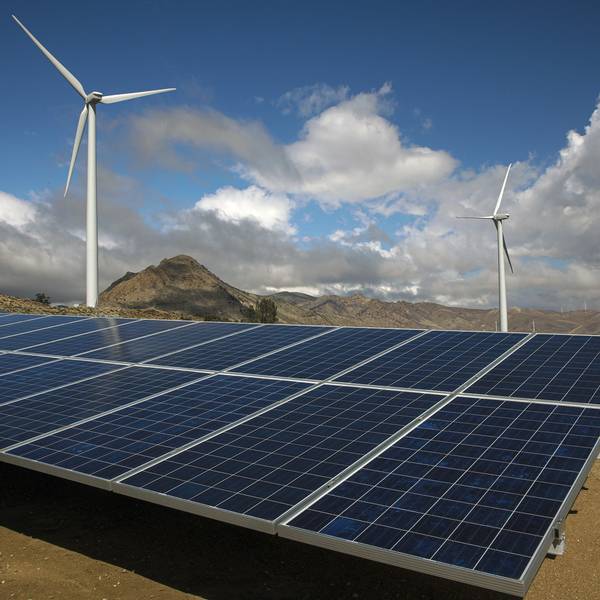
The future of solar energy, often envisioned as an island of reflective panels amid an ecologically sensitive desert outpost, may have a more simple, and more local solution.
A Stanford University study published earlier this week found that utility-scale solar development built alongside existing infrastructure, on rooftops or in backyards, may be more than enough to power whole communities.
The research, published in Nature Climate Change, modeled land-use efficiency in California, a global solar energy hotspot. The study examined how urban areas could be made more efficient by developing more localized sources for renewable energy.
"The quantity of accessible energy potentially produced from photovoltaic (PV) and concentrating solar power (CSP) within the built environment exceeds current statewide demand," the study found.
Common criticisms of large solar arrays are that they can pose a threat to wildlife and crowd out other land uses.
"Our results show that we do not need to trade these places of environmental value for the production of renewable energy as ample land and space exists elsewhere," said Rebecca Hernandez, study lead author and an environmental earth system scientist at Stanford. "Additionally, developing renewable power generation in places close to where it is consumed reduces costs and loss of electricity associated with transmission."
Further, Hernandez notes, rooftops, vacant lots and industrial sites within urban areas are ideal for solar development, as they pose the "least environmental conflict."
The abstract points out that such development "may be an overlooked opportunity for meeting sustainable energy needs in places with land and environmental constraints."