
Chairman of Joint Chiefs: We Are 'Certainly Considering' US Combat Troops for Iraq
Statement comes days after Obama authorized doubling the number of U.S. troops deployed to the country
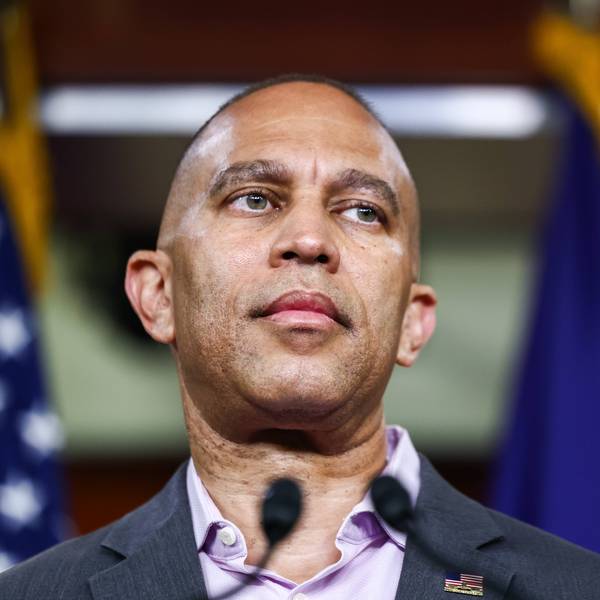
General Martin Dempsey, the Chairman of the Joint Chiefs of Staff and President Obama's top military adviser, told members of Congress on Thursday that the U.S. is actively considering deploying a limited number of U.S. combat troops to fight alongside Iraqi soldiers moving to retake Mosul and other areas under the control of Islamic State (ISIS) militants in Iraq.
"I'm not predicting at this point that I would recommend that those forces in Mosul and along the border would need to be accompanied by U.S. forces, but we're certainly considering it," Dempsey told the House Armed Services Committee.
The statement comes just days after Obama authorized doubling the number of U.S. troops in Iraq, further indicating that U.S. forces will have the "boots on the ground" presence that Obama initially pledged against. Thus far, Obama has authorized the deployment of 3,100 U.S. advisers, trainers, and support personnel for Iraq, but has promised American forces would not be used in direct combat roles.
Critics point out that by most measures, the U.S. has already returned to ground combat in Iraq.
"If there are US troops on the front lines in al-Anbar, where ISIL has been expanding its reach in recent months, then unfortunately there are likely to be US casualties," Juan Cole said on Saturday. "These are boots on the ground, even if there are not combat platoons going into battle by themselves."
And as the Center for Constitutional Rights tweeted on Thursday, subsequent to Dempsey's testimony:
The Guardian reports:
Even with potential US involvement in ground combat looming, Dempsey and his boss, defense secretary Chuck Hagel, said further troop increases would be "modest," and not on the order of the 150,000 US troops occupying Iraq at the height of the 2003-2011 war.
"I just don't foresee a circumstance when it would be in our interest to take this fight on ourselves with a large military contingent," Dempsey said.
But should the Iraqi military prove unwilling to take back "al-Anbar province and Ninewa province"--the majority of territory in Iraq seized by Isis--or should new Iraqi prime minister Haider al-Abadi exclude Sunnis from power, "I will have to adjust my recommendations," Dempsey said.
An Urgent Message From Our Co-Founder
Dear Common Dreams reader, It’s been nearly 30 years since I co-founded Common Dreams with my late wife, Lina Newhouser. We had the radical notion that journalism should serve the public good, not corporate profits. It was clear to us from the outset what it would take to build such a project. No paid advertisements. No corporate sponsors. No millionaire publisher telling us what to think or do. Many people said we wouldn't last a year, but we proved those doubters wrong. Together with a tremendous team of journalists and dedicated staff, we built an independent media outlet free from the constraints of profits and corporate control. Our mission has always been simple: To inform. To inspire. To ignite change for the common good. Building Common Dreams was not easy. Our survival was never guaranteed. When you take on the most powerful forces—Wall Street greed, fossil fuel industry destruction, Big Tech lobbyists, and uber-rich oligarchs who have spent billions upon billions rigging the economy and democracy in their favor—the only bulwark you have is supporters who believe in your work. But here’s the urgent message from me today. It's never been this bad out there. And it's never been this hard to keep us going. At the very moment Common Dreams is most needed, the threats we face are intensifying. We need your support now more than ever. We don't accept corporate advertising and never will. We don't have a paywall because we don't think people should be blocked from critical news based on their ability to pay. Everything we do is funded by the donations of readers like you. When everyone does the little they can afford, we are strong. But if that support retreats or dries up, so do we. Will you donate now to make sure Common Dreams not only survives but thrives? —Craig Brown, Co-founder |
General Martin Dempsey, the Chairman of the Joint Chiefs of Staff and President Obama's top military adviser, told members of Congress on Thursday that the U.S. is actively considering deploying a limited number of U.S. combat troops to fight alongside Iraqi soldiers moving to retake Mosul and other areas under the control of Islamic State (ISIS) militants in Iraq.
"I'm not predicting at this point that I would recommend that those forces in Mosul and along the border would need to be accompanied by U.S. forces, but we're certainly considering it," Dempsey told the House Armed Services Committee.
The statement comes just days after Obama authorized doubling the number of U.S. troops in Iraq, further indicating that U.S. forces will have the "boots on the ground" presence that Obama initially pledged against. Thus far, Obama has authorized the deployment of 3,100 U.S. advisers, trainers, and support personnel for Iraq, but has promised American forces would not be used in direct combat roles.
Critics point out that by most measures, the U.S. has already returned to ground combat in Iraq.
"If there are US troops on the front lines in al-Anbar, where ISIL has been expanding its reach in recent months, then unfortunately there are likely to be US casualties," Juan Cole said on Saturday. "These are boots on the ground, even if there are not combat platoons going into battle by themselves."
And as the Center for Constitutional Rights tweeted on Thursday, subsequent to Dempsey's testimony:
The Guardian reports:
Even with potential US involvement in ground combat looming, Dempsey and his boss, defense secretary Chuck Hagel, said further troop increases would be "modest," and not on the order of the 150,000 US troops occupying Iraq at the height of the 2003-2011 war.
"I just don't foresee a circumstance when it would be in our interest to take this fight on ourselves with a large military contingent," Dempsey said.
But should the Iraqi military prove unwilling to take back "al-Anbar province and Ninewa province"--the majority of territory in Iraq seized by Isis--or should new Iraqi prime minister Haider al-Abadi exclude Sunnis from power, "I will have to adjust my recommendations," Dempsey said.
General Martin Dempsey, the Chairman of the Joint Chiefs of Staff and President Obama's top military adviser, told members of Congress on Thursday that the U.S. is actively considering deploying a limited number of U.S. combat troops to fight alongside Iraqi soldiers moving to retake Mosul and other areas under the control of Islamic State (ISIS) militants in Iraq.
"I'm not predicting at this point that I would recommend that those forces in Mosul and along the border would need to be accompanied by U.S. forces, but we're certainly considering it," Dempsey told the House Armed Services Committee.
The statement comes just days after Obama authorized doubling the number of U.S. troops in Iraq, further indicating that U.S. forces will have the "boots on the ground" presence that Obama initially pledged against. Thus far, Obama has authorized the deployment of 3,100 U.S. advisers, trainers, and support personnel for Iraq, but has promised American forces would not be used in direct combat roles.
Critics point out that by most measures, the U.S. has already returned to ground combat in Iraq.
"If there are US troops on the front lines in al-Anbar, where ISIL has been expanding its reach in recent months, then unfortunately there are likely to be US casualties," Juan Cole said on Saturday. "These are boots on the ground, even if there are not combat platoons going into battle by themselves."
And as the Center for Constitutional Rights tweeted on Thursday, subsequent to Dempsey's testimony:
The Guardian reports:
Even with potential US involvement in ground combat looming, Dempsey and his boss, defense secretary Chuck Hagel, said further troop increases would be "modest," and not on the order of the 150,000 US troops occupying Iraq at the height of the 2003-2011 war.
"I just don't foresee a circumstance when it would be in our interest to take this fight on ourselves with a large military contingent," Dempsey said.
But should the Iraqi military prove unwilling to take back "al-Anbar province and Ninewa province"--the majority of territory in Iraq seized by Isis--or should new Iraqi prime minister Haider al-Abadi exclude Sunnis from power, "I will have to adjust my recommendations," Dempsey said.