SUBSCRIBE TO OUR FREE NEWSLETTER
Daily news & progressive opinion—funded by the people, not the corporations—delivered straight to your inbox.
5
#000000
#FFFFFF
To donate by check, phone, or other method, see our More Ways to Give page.
Daily news & progressive opinion—funded by the people, not the corporations—delivered straight to your inbox.
Demanding a stepped-up global response to the Ebola crisis, especially in the hardest hit areas of West Africa, the World Health Organization warned on Tuesday that if efforts to combat the deadly virus are not improved there could be as many as 10,000 new cases per week within two months.
WHO assistant director-general Dr. Bruce Aylward explained at a media briefing on Tuesday that if significant changes are not made within 60 days, "a lot more people will die" and that the real need is for trained people to be "on the ground" in Sierra Leone, Liberia, and Guinea where the number of cases continues to spiral.
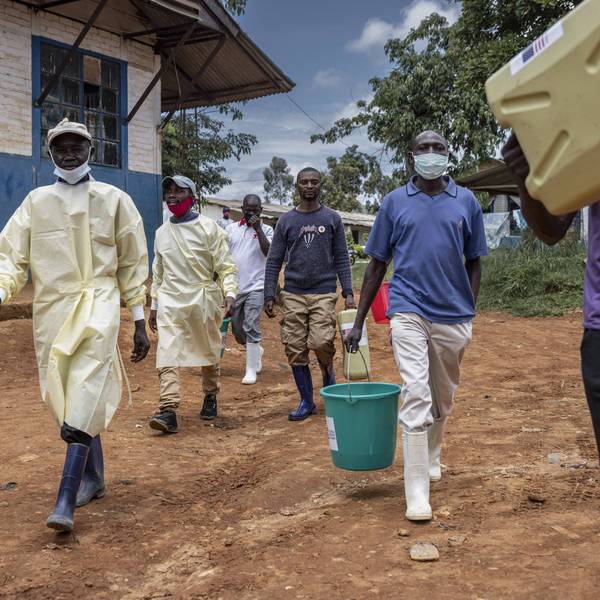
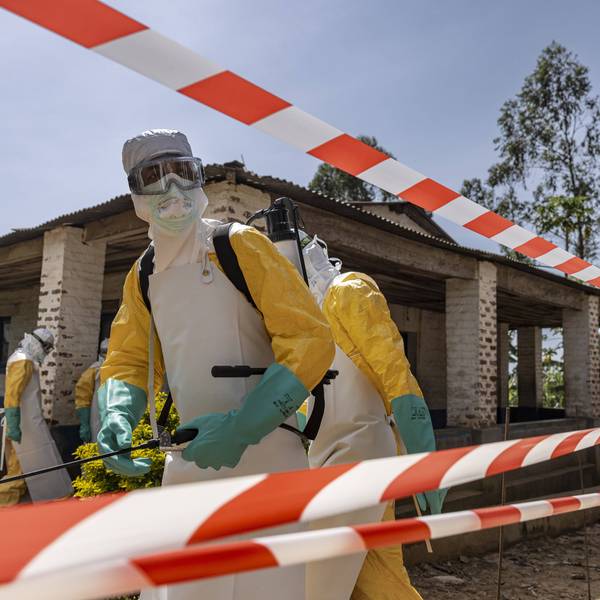
Aylward was specific to explain that the key in the approach was not to isolate those that have come in contact with the virus or become infected. Instead, he said, aggressive containment, prevention teachniques, and high-quality treatment of those exposed will be essential. "It would be horrifically unethical to say that we're just going to isolate people," he said, noting that new strategies like handing out protective equipment to families and setting up very basic clinics was a priority for the WHO.
According to AP:
Aylward said for the last four weeks, there have been about 1,000 new cases per week, though that figure includes suspected, confirmed and probable cases. He said WHO is aiming to have 70 percent of cases isolated within two months to reverse the outbreak.
WHO increased its Ebola death toll tally to 4,447, nearly all of them in West Africa, and the group said the number of probable and suspected cases was 8,914.
Sierra Leone, Guinea and Liberia have been hardest hit. Aylward said WHO was very concerned about the continued spread of Ebola in the three countries' capital cities --Freetown, Conakry and Monrovia. He noted that while certain areas were seeing cases decline, "that doesn't mean they will get to zero."
He said the agency was still focused on trying to treat Ebola patients, despite the huge demands on the broken health systems in West Africa.
Also on Tuesday, the WHO said the mortality rate from Ebola is now estimated at seventy percent. That is up from a fifty percent rate previously used by the agency.
Dear Common Dreams reader, It’s been nearly 30 years since I co-founded Common Dreams with my late wife, Lina Newhouser. We had the radical notion that journalism should serve the public good, not corporate profits. It was clear to us from the outset what it would take to build such a project. No paid advertisements. No corporate sponsors. No millionaire publisher telling us what to think or do. Many people said we wouldn't last a year, but we proved those doubters wrong. Together with a tremendous team of journalists and dedicated staff, we built an independent media outlet free from the constraints of profits and corporate control. Our mission has always been simple: To inform. To inspire. To ignite change for the common good. Building Common Dreams was not easy. Our survival was never guaranteed. When you take on the most powerful forces—Wall Street greed, fossil fuel industry destruction, Big Tech lobbyists, and uber-rich oligarchs who have spent billions upon billions rigging the economy and democracy in their favor—the only bulwark you have is supporters who believe in your work. But here’s the urgent message from me today. It's never been this bad out there. And it's never been this hard to keep us going. At the very moment Common Dreams is most needed, the threats we face are intensifying. We need your support now more than ever. We don't accept corporate advertising and never will. We don't have a paywall because we don't think people should be blocked from critical news based on their ability to pay. Everything we do is funded by the donations of readers like you. When everyone does the little they can afford, we are strong. But if that support retreats or dries up, so do we. Will you donate now to make sure Common Dreams not only survives but thrives? —Craig Brown, Co-founder |
Demanding a stepped-up global response to the Ebola crisis, especially in the hardest hit areas of West Africa, the World Health Organization warned on Tuesday that if efforts to combat the deadly virus are not improved there could be as many as 10,000 new cases per week within two months.
WHO assistant director-general Dr. Bruce Aylward explained at a media briefing on Tuesday that if significant changes are not made within 60 days, "a lot more people will die" and that the real need is for trained people to be "on the ground" in Sierra Leone, Liberia, and Guinea where the number of cases continues to spiral.
Aylward was specific to explain that the key in the approach was not to isolate those that have come in contact with the virus or become infected. Instead, he said, aggressive containment, prevention teachniques, and high-quality treatment of those exposed will be essential. "It would be horrifically unethical to say that we're just going to isolate people," he said, noting that new strategies like handing out protective equipment to families and setting up very basic clinics was a priority for the WHO.
According to AP:
Aylward said for the last four weeks, there have been about 1,000 new cases per week, though that figure includes suspected, confirmed and probable cases. He said WHO is aiming to have 70 percent of cases isolated within two months to reverse the outbreak.
WHO increased its Ebola death toll tally to 4,447, nearly all of them in West Africa, and the group said the number of probable and suspected cases was 8,914.
Sierra Leone, Guinea and Liberia have been hardest hit. Aylward said WHO was very concerned about the continued spread of Ebola in the three countries' capital cities --Freetown, Conakry and Monrovia. He noted that while certain areas were seeing cases decline, "that doesn't mean they will get to zero."
He said the agency was still focused on trying to treat Ebola patients, despite the huge demands on the broken health systems in West Africa.
Also on Tuesday, the WHO said the mortality rate from Ebola is now estimated at seventy percent. That is up from a fifty percent rate previously used by the agency.
Demanding a stepped-up global response to the Ebola crisis, especially in the hardest hit areas of West Africa, the World Health Organization warned on Tuesday that if efforts to combat the deadly virus are not improved there could be as many as 10,000 new cases per week within two months.
WHO assistant director-general Dr. Bruce Aylward explained at a media briefing on Tuesday that if significant changes are not made within 60 days, "a lot more people will die" and that the real need is for trained people to be "on the ground" in Sierra Leone, Liberia, and Guinea where the number of cases continues to spiral.
Aylward was specific to explain that the key in the approach was not to isolate those that have come in contact with the virus or become infected. Instead, he said, aggressive containment, prevention teachniques, and high-quality treatment of those exposed will be essential. "It would be horrifically unethical to say that we're just going to isolate people," he said, noting that new strategies like handing out protective equipment to families and setting up very basic clinics was a priority for the WHO.
According to AP:
Aylward said for the last four weeks, there have been about 1,000 new cases per week, though that figure includes suspected, confirmed and probable cases. He said WHO is aiming to have 70 percent of cases isolated within two months to reverse the outbreak.
WHO increased its Ebola death toll tally to 4,447, nearly all of them in West Africa, and the group said the number of probable and suspected cases was 8,914.
Sierra Leone, Guinea and Liberia have been hardest hit. Aylward said WHO was very concerned about the continued spread of Ebola in the three countries' capital cities --Freetown, Conakry and Monrovia. He noted that while certain areas were seeing cases decline, "that doesn't mean they will get to zero."
He said the agency was still focused on trying to treat Ebola patients, despite the huge demands on the broken health systems in West Africa.
Also on Tuesday, the WHO said the mortality rate from Ebola is now estimated at seventy percent. That is up from a fifty percent rate previously used by the agency.