SUBSCRIBE TO OUR FREE NEWSLETTER
Daily news & progressive opinion—funded by the people, not the corporations—delivered straight to your inbox.
5
#000000
#FFFFFF
To donate by check, phone, or other method, see our More Ways to Give page.
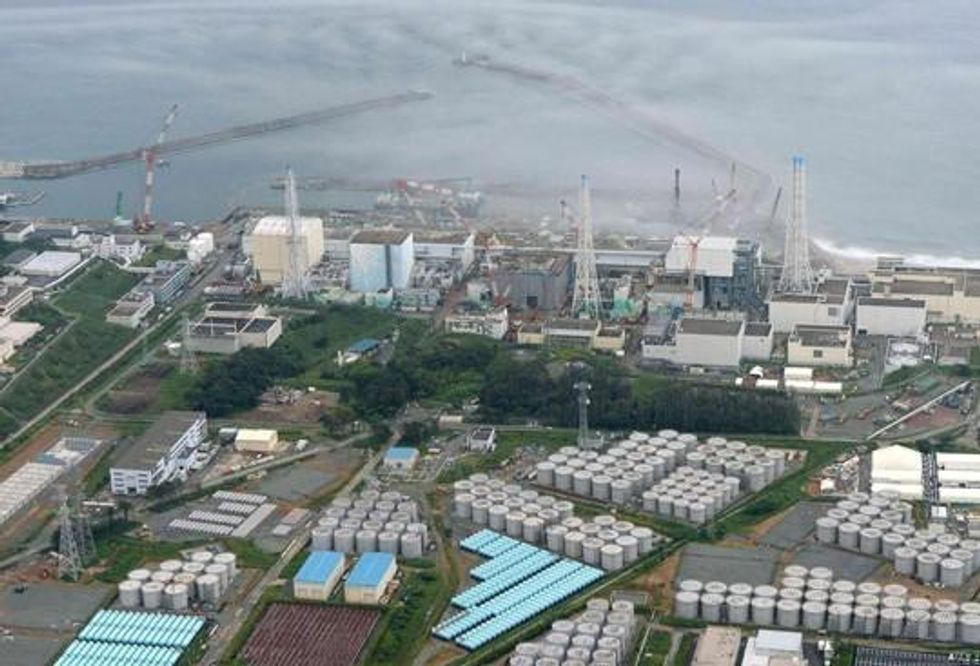
Radiated water leaking from tanks at Japan's crippled Fukushima nuclear plant is 18 times more dangerous than had been previously reported.
The Tokyo Electric Power Company (TEPCO), which owns the Dai-Ichi Fukushima plant, originally said the radiation emitted by the leaking water was 100 millisieverts an hour.
Now, the company admits, the testing equipment used in the previously announced August 22nd testing could only read measurements of up to a maximum of 100 millisieverts.
Saturday's test, using a more accurate device, showed a level of 1,800 millisieverts an hour, a level that Reuters says is "enough to kill an exposed person in four hours."
In addition, TEPCO announced Sunday that it has discovered a leak on another pipe emitting radiation levels of 230 millisieverts an hour. TEPCO said it halted the leak from a pipe connecting two water storage tanks by patching it with plastic tape just hours after stumbling upon the potentially lethal radioactive hot spot.
Japan Times reports Sunday:
The pipe, which was leaking a drop about every 90 seconds, was sealed using absorption material and plastic tape. A puddle of giving off 230 millisieverts per hour was found below it, TEPCO said.
"We have to suspect that the high radiation levels were caused by the toxic water oozing from the flange connections," a TEPCO spokesman said, adding that no conclusions had been reached.
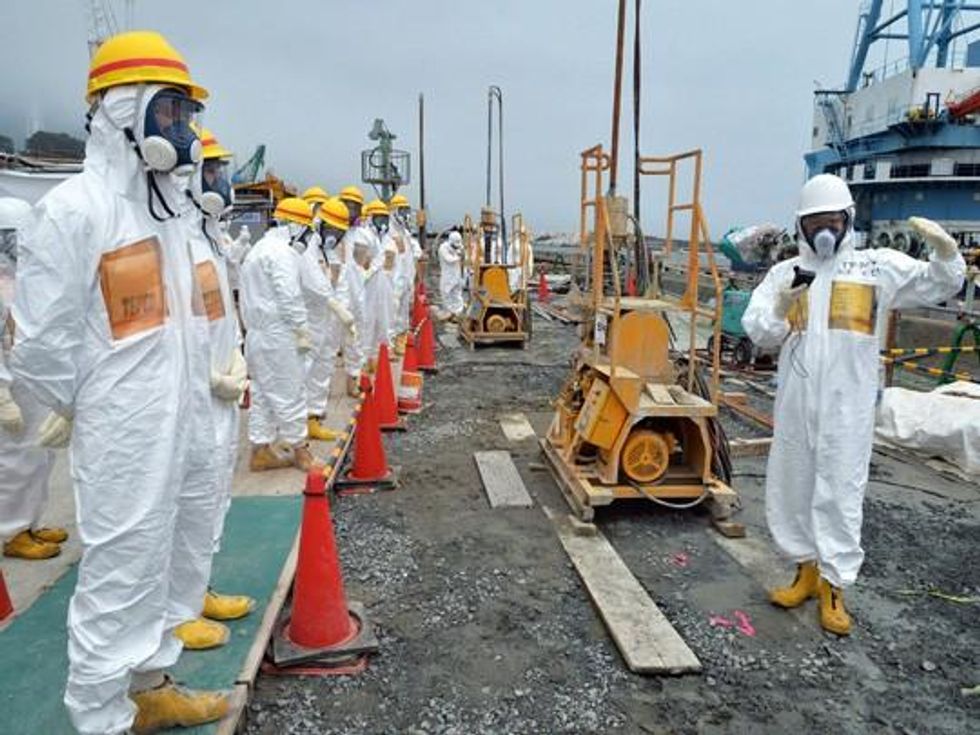
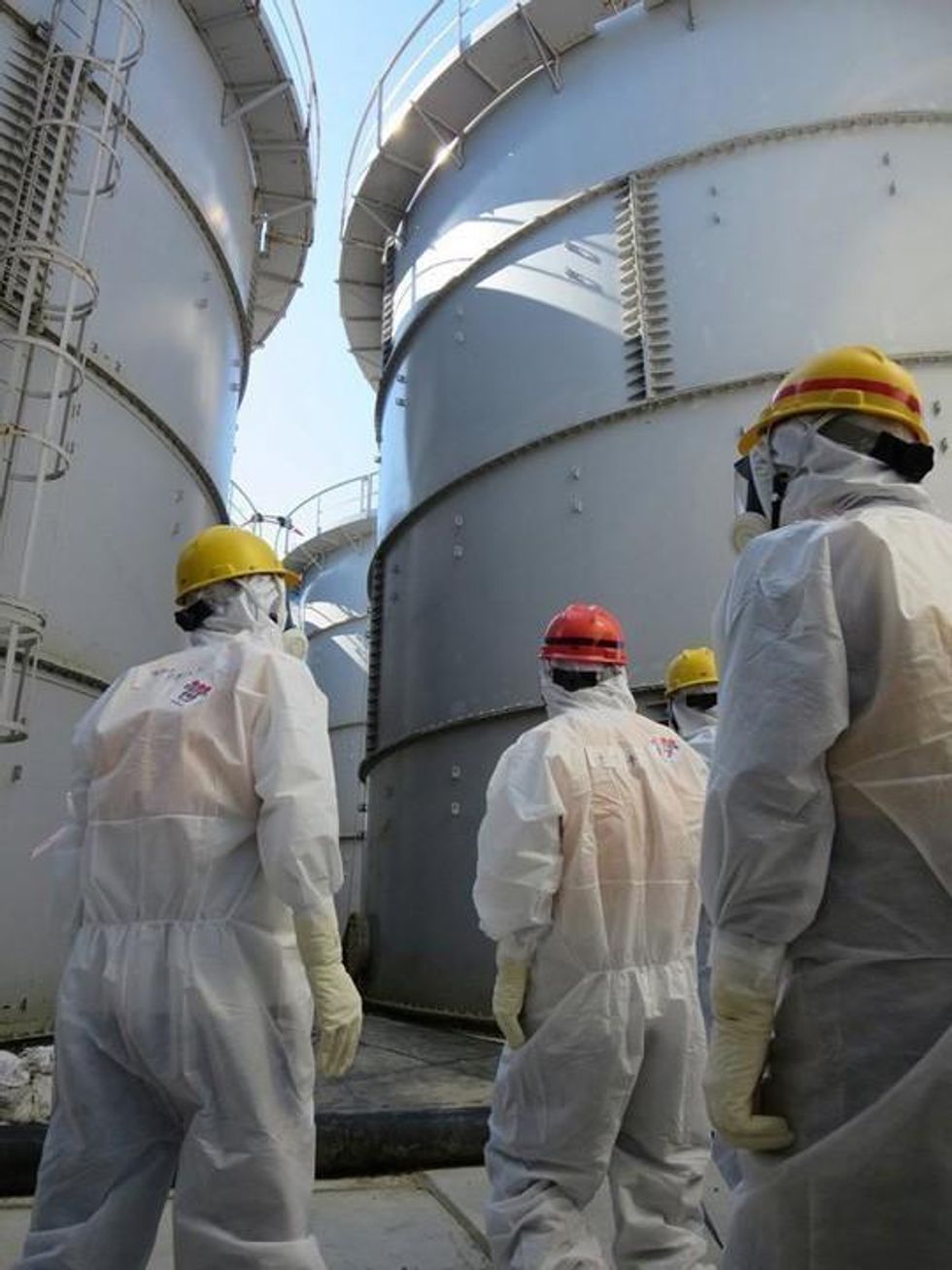
Radiated water leaking from tanks at Japan's crippled Fukushima nuclear plant is 18 times more dangerous than had been previously reported.
The Tokyo Electric Power Company (TEPCO), which owns the Dai-Ichi Fukushima plant, originally said the radiation emitted by the leaking water was 100 millisieverts an hour.
Now, the company admits, the testing equipment used in the previously announced August 22nd testing could only read measurements of up to a maximum of 100 millisieverts.
Saturday's test, using a more accurate device, showed a level of 1,800 millisieverts an hour, a level that Reuters says is "enough to kill an exposed person in four hours."
In addition, TEPCO announced Sunday that it has discovered a leak on another pipe emitting radiation levels of 230 millisieverts an hour. TEPCO said it halted the leak from a pipe connecting two water storage tanks by patching it with plastic tape just hours after stumbling upon the potentially lethal radioactive hot spot.
Japan Times reports Sunday:
The pipe, which was leaking a drop about every 90 seconds, was sealed using absorption material and plastic tape. A puddle of giving off 230 millisieverts per hour was found below it, TEPCO said.
"We have to suspect that the high radiation levels were caused by the toxic water oozing from the flange connections," a TEPCO spokesman said, adding that no conclusions had been reached.
Radiated water leaking from tanks at Japan's crippled Fukushima nuclear plant is 18 times more dangerous than had been previously reported.
The Tokyo Electric Power Company (TEPCO), which owns the Dai-Ichi Fukushima plant, originally said the radiation emitted by the leaking water was 100 millisieverts an hour.
Now, the company admits, the testing equipment used in the previously announced August 22nd testing could only read measurements of up to a maximum of 100 millisieverts.
Saturday's test, using a more accurate device, showed a level of 1,800 millisieverts an hour, a level that Reuters says is "enough to kill an exposed person in four hours."
In addition, TEPCO announced Sunday that it has discovered a leak on another pipe emitting radiation levels of 230 millisieverts an hour. TEPCO said it halted the leak from a pipe connecting two water storage tanks by patching it with plastic tape just hours after stumbling upon the potentially lethal radioactive hot spot.
Japan Times reports Sunday:
The pipe, which was leaking a drop about every 90 seconds, was sealed using absorption material and plastic tape. A puddle of giving off 230 millisieverts per hour was found below it, TEPCO said.
"We have to suspect that the high radiation levels were caused by the toxic water oozing from the flange connections," a TEPCO spokesman said, adding that no conclusions had been reached.