SUBSCRIBE TO OUR FREE NEWSLETTER
Daily news & progressive opinion—funded by the people, not the corporations—delivered straight to your inbox.
5
#000000
#FFFFFF
To donate by check, phone, or other method, see our More Ways to Give page.
A report released today shows that billions of dollars are still being invested in companies that produce cluster bombs, weapons banned by most of the world.
The report from IKV Pax Christi and FairFin, The "Worldwide Investments in Cluster Munitions, a shared responsibility," shows that banks and other financial institutions have invested more than $43billion (USD) in companies making cluster bombs since 2009.
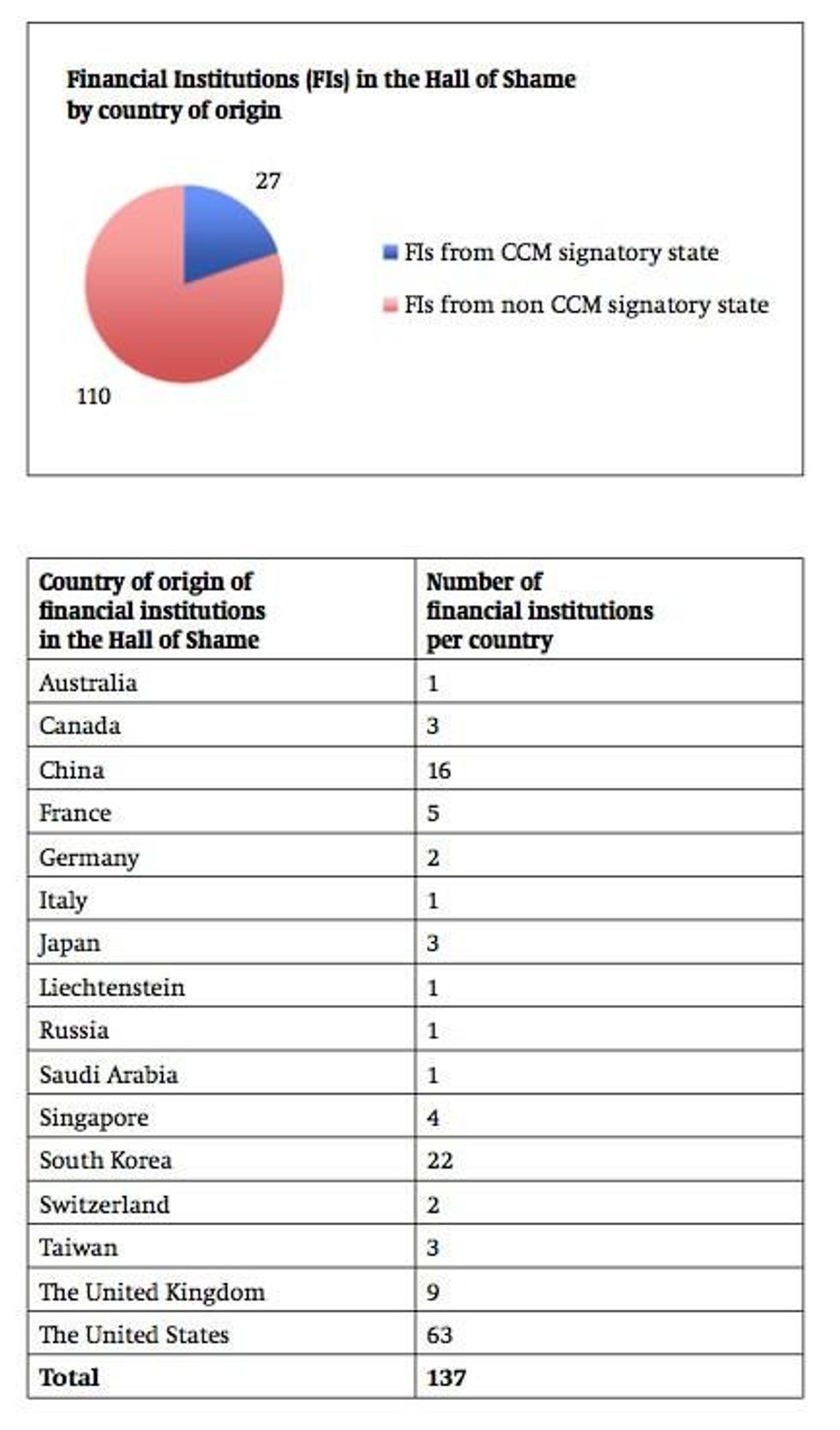
The report includes a "Hall of Shame" that lists the financial institutions investing in producers of cluster bombs.
Among the U.S.-based institutions in the Hall of Shame are AIG, Wells Fargo Bank, JP Morgan Chase and Goldman Sachs.
Reacting to the report, Laura Cheeseman, Director of the Cluster Munition Coalition, stated, "Most of the world has banned cluster bombs because of the severe and long-lasting impact they have, but even some countries that have joined the Convention are still allowing money to be invested in their production. The best way to prevent this is to explicitly legislate against it."
* * *
From "Worldwide Investments in Cluster Munitions, a shared responsibility" report:
* * *
Cluster Munition Coalition: Stop funding cluster bomb producers
Global report shows progress made but billions still invested in companies producing weapons banned by most of the world
(London, 14 June 2012): The Cluster Munition Coalition (CMC) is calling on governments to ban investments in companies producing cluster bombs, following news that billions of dollars are still being invested in producers of these weapons. The CMC believes that countries that have joined the Convention on Cluster Munitions have a legal obligation to halt such investments.
The "Worldwide Investments in Cluster Munitions, a shared responsibility" report by CMC members IKV Pax Christi and FairFin, launched today in Berlin, shows that since 2009 banks and other financial institutions from 16 countries have invested more than $43billion (USD) in companies making cluster bombs.
The bulk of these investments come from states that have not yet joined the Convention on Cluster Munitions (CCM), the global ban that prohibits the use, production, transfer and stockpiling of cluster bombs, as well as assistance in any of these acts.
"It is encouraging that an increasing number of banks are pulling funds from cluster bomb producers, and that countries are legislating to prevent this practice, but this report clearly shows that more needs to be done," said Laura Cheeseman, Director of the CMC.
"Most of the world has banned cluster bombs because of the severe and long-lasting impact they have, but even some countries that have joined the Convention are still allowing money to be invested in their production. The best way to prevent this is to explicitly legislate against it," Cheeseman added.
Today CMC campaigners in Canada, Belgium, France, Germany, Luxembourg, Spain, South Africa, Switzerland, the UK and elsewhere are urging their governments to take this step. They are also urging banks and financial institutions to recognize that their customers do not want their money being invested in deadly, indiscriminate weapons that have been banned by most of the world because of the devastation they cause.
Under the legal obligations of the Convention, states that have joined are not only legally bound to cease making cluster bombs themselves but also never to assist, encourage or induce anyone else to do so. While some States Parties to the Convention have enacted national laws that prohibit public or private financial institutions from providing such assistance, many others have not yet taken this step.
A report released today shows that billions of dollars are still being invested in companies that produce cluster bombs, weapons banned by most of the world.
The report from IKV Pax Christi and FairFin, The "Worldwide Investments in Cluster Munitions, a shared responsibility," shows that banks and other financial institutions have invested more than $43billion (USD) in companies making cluster bombs since 2009.
The report includes a "Hall of Shame" that lists the financial institutions investing in producers of cluster bombs.
Among the U.S.-based institutions in the Hall of Shame are AIG, Wells Fargo Bank, JP Morgan Chase and Goldman Sachs.
Reacting to the report, Laura Cheeseman, Director of the Cluster Munition Coalition, stated, "Most of the world has banned cluster bombs because of the severe and long-lasting impact they have, but even some countries that have joined the Convention are still allowing money to be invested in their production. The best way to prevent this is to explicitly legislate against it."
* * *
From "Worldwide Investments in Cluster Munitions, a shared responsibility" report:
* * *
Cluster Munition Coalition: Stop funding cluster bomb producers
Global report shows progress made but billions still invested in companies producing weapons banned by most of the world
(London, 14 June 2012): The Cluster Munition Coalition (CMC) is calling on governments to ban investments in companies producing cluster bombs, following news that billions of dollars are still being invested in producers of these weapons. The CMC believes that countries that have joined the Convention on Cluster Munitions have a legal obligation to halt such investments.
The "Worldwide Investments in Cluster Munitions, a shared responsibility" report by CMC members IKV Pax Christi and FairFin, launched today in Berlin, shows that since 2009 banks and other financial institutions from 16 countries have invested more than $43billion (USD) in companies making cluster bombs.
The bulk of these investments come from states that have not yet joined the Convention on Cluster Munitions (CCM), the global ban that prohibits the use, production, transfer and stockpiling of cluster bombs, as well as assistance in any of these acts.
"It is encouraging that an increasing number of banks are pulling funds from cluster bomb producers, and that countries are legislating to prevent this practice, but this report clearly shows that more needs to be done," said Laura Cheeseman, Director of the CMC.
"Most of the world has banned cluster bombs because of the severe and long-lasting impact they have, but even some countries that have joined the Convention are still allowing money to be invested in their production. The best way to prevent this is to explicitly legislate against it," Cheeseman added.
Today CMC campaigners in Canada, Belgium, France, Germany, Luxembourg, Spain, South Africa, Switzerland, the UK and elsewhere are urging their governments to take this step. They are also urging banks and financial institutions to recognize that their customers do not want their money being invested in deadly, indiscriminate weapons that have been banned by most of the world because of the devastation they cause.
Under the legal obligations of the Convention, states that have joined are not only legally bound to cease making cluster bombs themselves but also never to assist, encourage or induce anyone else to do so. While some States Parties to the Convention have enacted national laws that prohibit public or private financial institutions from providing such assistance, many others have not yet taken this step.
A report released today shows that billions of dollars are still being invested in companies that produce cluster bombs, weapons banned by most of the world.
The report from IKV Pax Christi and FairFin, The "Worldwide Investments in Cluster Munitions, a shared responsibility," shows that banks and other financial institutions have invested more than $43billion (USD) in companies making cluster bombs since 2009.
The report includes a "Hall of Shame" that lists the financial institutions investing in producers of cluster bombs.
Among the U.S.-based institutions in the Hall of Shame are AIG, Wells Fargo Bank, JP Morgan Chase and Goldman Sachs.
Reacting to the report, Laura Cheeseman, Director of the Cluster Munition Coalition, stated, "Most of the world has banned cluster bombs because of the severe and long-lasting impact they have, but even some countries that have joined the Convention are still allowing money to be invested in their production. The best way to prevent this is to explicitly legislate against it."
* * *
From "Worldwide Investments in Cluster Munitions, a shared responsibility" report:
* * *
Cluster Munition Coalition: Stop funding cluster bomb producers
Global report shows progress made but billions still invested in companies producing weapons banned by most of the world
(London, 14 June 2012): The Cluster Munition Coalition (CMC) is calling on governments to ban investments in companies producing cluster bombs, following news that billions of dollars are still being invested in producers of these weapons. The CMC believes that countries that have joined the Convention on Cluster Munitions have a legal obligation to halt such investments.
The "Worldwide Investments in Cluster Munitions, a shared responsibility" report by CMC members IKV Pax Christi and FairFin, launched today in Berlin, shows that since 2009 banks and other financial institutions from 16 countries have invested more than $43billion (USD) in companies making cluster bombs.
The bulk of these investments come from states that have not yet joined the Convention on Cluster Munitions (CCM), the global ban that prohibits the use, production, transfer and stockpiling of cluster bombs, as well as assistance in any of these acts.
"It is encouraging that an increasing number of banks are pulling funds from cluster bomb producers, and that countries are legislating to prevent this practice, but this report clearly shows that more needs to be done," said Laura Cheeseman, Director of the CMC.
"Most of the world has banned cluster bombs because of the severe and long-lasting impact they have, but even some countries that have joined the Convention are still allowing money to be invested in their production. The best way to prevent this is to explicitly legislate against it," Cheeseman added.
Today CMC campaigners in Canada, Belgium, France, Germany, Luxembourg, Spain, South Africa, Switzerland, the UK and elsewhere are urging their governments to take this step. They are also urging banks and financial institutions to recognize that their customers do not want their money being invested in deadly, indiscriminate weapons that have been banned by most of the world because of the devastation they cause.
Under the legal obligations of the Convention, states that have joined are not only legally bound to cease making cluster bombs themselves but also never to assist, encourage or induce anyone else to do so. While some States Parties to the Convention have enacted national laws that prohibit public or private financial institutions from providing such assistance, many others have not yet taken this step.