SUBSCRIBE TO OUR FREE NEWSLETTER
Daily news & progressive opinion—funded by the people, not the corporations—delivered straight to your inbox.
5
#000000
#FFFFFF
To donate by check, phone, or other method, see our More Ways to Give page.
Daily news & progressive opinion—funded by the people, not the corporations—delivered straight to your inbox.
"Those who own the country ought to govern it."
- Founding father, John Jay
There have been rumblings in the corners of the Tea party movement for some time, but the minute president Obama announced that he was going to ask wealthy Americans to kick in a small bit more in taxes to help pay for some infrastructure improvements in his jobs proposal, the Republicans have been clutching their pearls and gasping for breath like Aunt Pittypat awaiting the arrival of the marauding Yankees.
GOP leader Rush Limbaugh called for the smelling salts, saying "If [Obama] would get all of this actually passed, it would represent perhaps a fatal blow to the US private sector ... I don't know how anyone could even argue about the fact that this is on purpose anymore. To boldly lie that it's not class warfare? It is class warfare. Specifically and purposefully class warfare."
Republican economic guru Paul Ryan dolefully declared, "Class warfare may make for good politics, but it makes for rotten economics. We don't need a system that seeks to divide people. We don't need a system that seeks to prey on people's fear, envy, and anxiety." Indeed. What could be more destructive to the average American than to ask the upper one per cent to kick in what amounts to tip money? The guilt they will feel at such unfairness is bound to create a profound spiritual crisis throughout the land.
A false hope
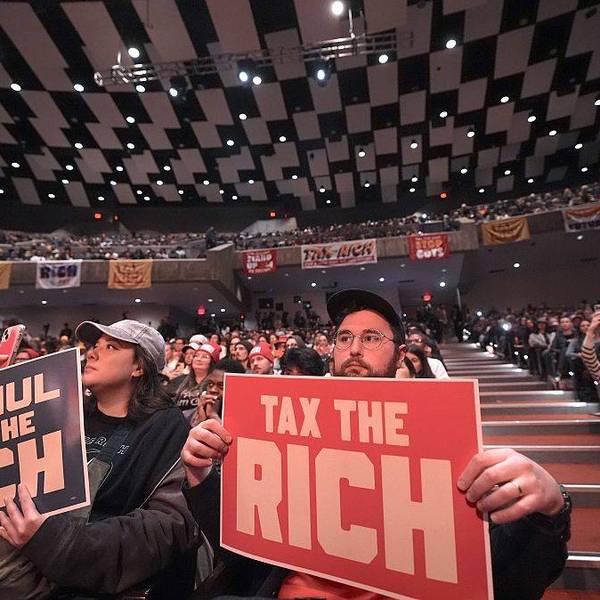
One would have thought that in 2011, the term "class warfare" would be as out of fashion as Nehru jackets, but after watching the Republicans spend the first two years of Obama's presidency apoplectic over what they defined as hard core socialism put in practice, it stands to reason the old standard would make a comeback. No matter what you call it, rich people complaining about taxes is evergreen. It is also completely ridiculous.
The fact is that the mega-rich have been gobbling up a greater and greater share of the national wealth for several decades now: in 1976 the top 1 per cent of households received 8.9 per cent of all pre-tax income - by 2008, its share had more than doubled to 21.0 per cent. Between 1979 and 2009, the top 5 per cent of American families saw their real incomes increase 72.7 per cent, according to Census data. Over the same period, the lowest-income fifth saw a decrease in real income of 7.4 per cent (by contrast, the 1947-79 period all income groups saw similar income gains, with the lowest income group actually seeing the largest gains). And perhaps most astonishingly, the tax rate for the highest earners was 91 per cent in 1960, 70 per cent in 1980 and only 35 per cent today, the lowest ever with the exception of a couple of years in the late 80s and early 90s.
And it's not as if these people have been suffering during this recession. Unlike the bottom 99 per cent, they've quite smartly recovered from the 2008 unpleasantness. For instance, according to a recent New York Times report, executive pay at 200 big US companies last year went up by an average 23 per cent over 2009 - the median executive salary was 10.8m USD. Meanwhile, the average American family's household net worth declined 23 per cent between 2007 and 2009.
Considering this somewhat ostentatious disparity, one would think that those who are doing well would decide to lay low and quietly count their money so as not to draw undue attention to their good fortune. One might even have expected them to take up good works and be especially generous in order to deflect the anger and resentment that any sentient being could see might result from such blatant unfairness. But no. They have instead waged a public campaign of extravagant whining, complaining incessantly that they are being scapegoated for the nation's economic ills and throwing tantrums at the mere suggestion that they might need to contribute a little bit more in taxes to make up for the carnage their bad bets left in their wake.
Read the full article at Al-Jazeera English.
Dear Common Dreams reader, It’s been nearly 30 years since I co-founded Common Dreams with my late wife, Lina Newhouser. We had the radical notion that journalism should serve the public good, not corporate profits. It was clear to us from the outset what it would take to build such a project. No paid advertisements. No corporate sponsors. No millionaire publisher telling us what to think or do. Many people said we wouldn't last a year, but we proved those doubters wrong. Together with a tremendous team of journalists and dedicated staff, we built an independent media outlet free from the constraints of profits and corporate control. Our mission has always been simple: To inform. To inspire. To ignite change for the common good. Building Common Dreams was not easy. Our survival was never guaranteed. When you take on the most powerful forces—Wall Street greed, fossil fuel industry destruction, Big Tech lobbyists, and uber-rich oligarchs who have spent billions upon billions rigging the economy and democracy in their favor—the only bulwark you have is supporters who believe in your work. But here’s the urgent message from me today. It's never been this bad out there. And it's never been this hard to keep us going. At the very moment Common Dreams is most needed, the threats we face are intensifying. We need your support now more than ever. We don't accept corporate advertising and never will. We don't have a paywall because we don't think people should be blocked from critical news based on their ability to pay. Everything we do is funded by the donations of readers like you. When everyone does the little they can afford, we are strong. But if that support retreats or dries up, so do we. Will you donate now to make sure Common Dreams not only survives but thrives? —Craig Brown, Co-founder |
"Those who own the country ought to govern it."
- Founding father, John Jay
There have been rumblings in the corners of the Tea party movement for some time, but the minute president Obama announced that he was going to ask wealthy Americans to kick in a small bit more in taxes to help pay for some infrastructure improvements in his jobs proposal, the Republicans have been clutching their pearls and gasping for breath like Aunt Pittypat awaiting the arrival of the marauding Yankees.
GOP leader Rush Limbaugh called for the smelling salts, saying "If [Obama] would get all of this actually passed, it would represent perhaps a fatal blow to the US private sector ... I don't know how anyone could even argue about the fact that this is on purpose anymore. To boldly lie that it's not class warfare? It is class warfare. Specifically and purposefully class warfare."
Republican economic guru Paul Ryan dolefully declared, "Class warfare may make for good politics, but it makes for rotten economics. We don't need a system that seeks to divide people. We don't need a system that seeks to prey on people's fear, envy, and anxiety." Indeed. What could be more destructive to the average American than to ask the upper one per cent to kick in what amounts to tip money? The guilt they will feel at such unfairness is bound to create a profound spiritual crisis throughout the land.
A false hope
One would have thought that in 2011, the term "class warfare" would be as out of fashion as Nehru jackets, but after watching the Republicans spend the first two years of Obama's presidency apoplectic over what they defined as hard core socialism put in practice, it stands to reason the old standard would make a comeback. No matter what you call it, rich people complaining about taxes is evergreen. It is also completely ridiculous.
The fact is that the mega-rich have been gobbling up a greater and greater share of the national wealth for several decades now: in 1976 the top 1 per cent of households received 8.9 per cent of all pre-tax income - by 2008, its share had more than doubled to 21.0 per cent. Between 1979 and 2009, the top 5 per cent of American families saw their real incomes increase 72.7 per cent, according to Census data. Over the same period, the lowest-income fifth saw a decrease in real income of 7.4 per cent (by contrast, the 1947-79 period all income groups saw similar income gains, with the lowest income group actually seeing the largest gains). And perhaps most astonishingly, the tax rate for the highest earners was 91 per cent in 1960, 70 per cent in 1980 and only 35 per cent today, the lowest ever with the exception of a couple of years in the late 80s and early 90s.
And it's not as if these people have been suffering during this recession. Unlike the bottom 99 per cent, they've quite smartly recovered from the 2008 unpleasantness. For instance, according to a recent New York Times report, executive pay at 200 big US companies last year went up by an average 23 per cent over 2009 - the median executive salary was 10.8m USD. Meanwhile, the average American family's household net worth declined 23 per cent between 2007 and 2009.
Considering this somewhat ostentatious disparity, one would think that those who are doing well would decide to lay low and quietly count their money so as not to draw undue attention to their good fortune. One might even have expected them to take up good works and be especially generous in order to deflect the anger and resentment that any sentient being could see might result from such blatant unfairness. But no. They have instead waged a public campaign of extravagant whining, complaining incessantly that they are being scapegoated for the nation's economic ills and throwing tantrums at the mere suggestion that they might need to contribute a little bit more in taxes to make up for the carnage their bad bets left in their wake.
Read the full article at Al-Jazeera English.
"Those who own the country ought to govern it."
- Founding father, John Jay
There have been rumblings in the corners of the Tea party movement for some time, but the minute president Obama announced that he was going to ask wealthy Americans to kick in a small bit more in taxes to help pay for some infrastructure improvements in his jobs proposal, the Republicans have been clutching their pearls and gasping for breath like Aunt Pittypat awaiting the arrival of the marauding Yankees.
GOP leader Rush Limbaugh called for the smelling salts, saying "If [Obama] would get all of this actually passed, it would represent perhaps a fatal blow to the US private sector ... I don't know how anyone could even argue about the fact that this is on purpose anymore. To boldly lie that it's not class warfare? It is class warfare. Specifically and purposefully class warfare."
Republican economic guru Paul Ryan dolefully declared, "Class warfare may make for good politics, but it makes for rotten economics. We don't need a system that seeks to divide people. We don't need a system that seeks to prey on people's fear, envy, and anxiety." Indeed. What could be more destructive to the average American than to ask the upper one per cent to kick in what amounts to tip money? The guilt they will feel at such unfairness is bound to create a profound spiritual crisis throughout the land.
A false hope
One would have thought that in 2011, the term "class warfare" would be as out of fashion as Nehru jackets, but after watching the Republicans spend the first two years of Obama's presidency apoplectic over what they defined as hard core socialism put in practice, it stands to reason the old standard would make a comeback. No matter what you call it, rich people complaining about taxes is evergreen. It is also completely ridiculous.
The fact is that the mega-rich have been gobbling up a greater and greater share of the national wealth for several decades now: in 1976 the top 1 per cent of households received 8.9 per cent of all pre-tax income - by 2008, its share had more than doubled to 21.0 per cent. Between 1979 and 2009, the top 5 per cent of American families saw their real incomes increase 72.7 per cent, according to Census data. Over the same period, the lowest-income fifth saw a decrease in real income of 7.4 per cent (by contrast, the 1947-79 period all income groups saw similar income gains, with the lowest income group actually seeing the largest gains). And perhaps most astonishingly, the tax rate for the highest earners was 91 per cent in 1960, 70 per cent in 1980 and only 35 per cent today, the lowest ever with the exception of a couple of years in the late 80s and early 90s.
And it's not as if these people have been suffering during this recession. Unlike the bottom 99 per cent, they've quite smartly recovered from the 2008 unpleasantness. For instance, according to a recent New York Times report, executive pay at 200 big US companies last year went up by an average 23 per cent over 2009 - the median executive salary was 10.8m USD. Meanwhile, the average American family's household net worth declined 23 per cent between 2007 and 2009.
Considering this somewhat ostentatious disparity, one would think that those who are doing well would decide to lay low and quietly count their money so as not to draw undue attention to their good fortune. One might even have expected them to take up good works and be especially generous in order to deflect the anger and resentment that any sentient being could see might result from such blatant unfairness. But no. They have instead waged a public campaign of extravagant whining, complaining incessantly that they are being scapegoated for the nation's economic ills and throwing tantrums at the mere suggestion that they might need to contribute a little bit more in taxes to make up for the carnage their bad bets left in their wake.
Read the full article at Al-Jazeera English.