SUBSCRIBE TO OUR FREE NEWSLETTER
Daily news & progressive opinion—funded by the people, not the corporations—delivered straight to your inbox.
5
#000000
#FFFFFF
To donate by check, phone, or other method, see our More Ways to Give page.
Daily news & progressive opinion—funded by the people, not the corporations—delivered straight to your inbox.
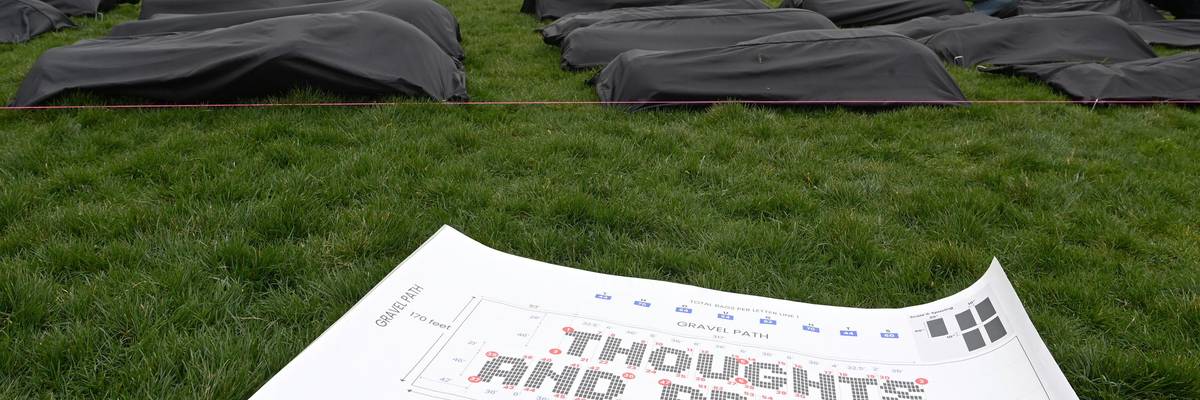
An installation is setup spelling Thoughts and Prayers with black bags that are meant to resemble body bags for the fourth anniversary of March For Our Lives on Thursday March 24, 2022 in Washington, DC. The event was started to bring gun control legislation after the deadly mass shooting at Marjory Stoneman Douglas High School in Parkland, FL. (Photo: Matt McClain/The Washington Post via Getty Images)
Golden State head coach Steve Kerr's comments went viral when in visible frustration he appropriately called out Republican Senators for holding the American public hostage on the background check bill supported by 90 percent of Americans. Yet, we have been here again, again, and again and the grisly brutality of 20 Sandy Hook children didn't move Republican NRA supported leaders then and the 2 adults and 19 children slaughtered at Robb Elementary School in Uvalde Texas will likely not today.
There are more of us who believe in Dr. King's vision of the U.S. and we need to reclaim it and organize with the new emerging movements to bring it about.
So many of us looking at the devastating killings and the lack of response and either quietly stewing with anger or beginning to feel numb believing there is nothing any of us can do. The history of American resistance and movement formation during the Black Freedom Movement of the 1960s demonstrate that momentous change cannot be predicted to happen at any particular moment, but it can be created by changing the way people understand and feel their place in the story of the United States and organizing a cross-racial, cross-class movement to achieve justice.
The dominant ideology motivating the current iteration of the extremist Senators holding up gun reform emerged in its current form as a backlash to the Civil Rights Movement of the 1960s, and until we nourish a countermovement that uses people power to overcome disadvantages in wealth, power, and institutional domination, we will continue to have little options but being quietly enraged or numb.
In 1964, Barry Goldwater was the Republican nominee for President and his campaign incited supporters by presenting a defiant story of the white forgotten men who made America great and were now under threat from the "mobs in the streets" by which he meant the Black Freedom Movement protestors. I prefer describing the countermovement for racial justice as the Black Freedom Movement rather than the Civil Rights Movement because the movement was for much more than civil liberties; it was a movement for economic, social, and political justice.
Goldwater's message did not go unopposed. Dr. Martin Luther King gave voice to a different vision of the United States being a single garment constructed by Blacks and whites alike, but its animating bond of "all men are created equal" having been torn from the start. The metaphor served to explain why Black and white Americans needed each other to redeem the country. As he put it in 1965 "For some strange reason I can never be what I ought to be until you are what you ought to be. And you can never be what you ought to be until I am what I ought to be."
To be sure, the Black Freedom Movement left many overlapping structures of injustice in place. Yet, the Black Freedom movement's tireless mobilization of millions of Americans yielded fruit. As King put it in his last book Where Do We Go From Here: "The 1960 sit-ins desegregated lunch counters in more than 150 cities within a year. The 1961 Freedom Rides put an end to segregation in interstate travel. The 1956 bus boycott in Montgomery, Alabama, ended segregation on the buses not only of that city but in practically every city of the South. The 1963 Birmingham movement and the climactic March on Washington won passage of the most powerful civil rights law in a century. The 1965 Selma movement brought enactment of the Voting Rights Act."
Yet, these coalitions of resistance fractured for many different reasons, including that it is much more difficult to build a coalition of the disadvantaged and less powerful in politics, that racial injustice in the midst of a Cold War linked any real efforts to address economic inequity to communism, that the Vietnam war depleted budgets and fractured cooperation between Black and white activists, and active targeting of influential members of the movement both by vigilantes who killed many of them and by the state through the efforts of the FBI's COINTELPRO. With these advantages, the proponents of Goldwater may have lost the battle of Goldwater's election but ultimately won the war for their exclusionary vision of taking back America for "real" Americans and used it to take-over governing institutions and mechanisms of translating those sentiments, such as talk radio, local news, Think Tanks, the politicization of evangelical churches, and extreme gerrymandering.
King's story of the United States as a torn garment that we can work to mend is still a possibility we can work towards realizing. Thousands of grass-roots organizations have formed and grown, infused by a new energy by young people who have flocked to groups dedicated to fighting for climate justice, economic justice, racial justice, and LGBTQ+ justice. The equivalent of Goldwater's "mobs in the street" emerged in force as the protests that occurred after the murder of George Floyd at which the New York Times estimated half a million people turned out in nearly 550 places across the U.S. making these protests the largest movement in the country's history. Those protests seem like an eternity ago, but they also can be the seeds of a Third Reconstruction, as Rev. Barber puts it: "a profoundly moral awakening of justice-loving people united in a fusion coalition powerful enough to reclaim the possibility of democracy."
We can help mend the torn garment. If you are angry, as bell hooks says, use that as compost. If you are numb, look at those children's pictures and look at the children around you who are still alive and pledge to work to mend our torn garment. There are more of us who believe in Dr. King's vision of the U.S. and we need to reclaim it and organize with the new emerging movements to bring it about. Change is not going to come from leaders leading, it is going to come from us making it in their self-interest to enact those changes. Until we have the collective ability to act in ways that affect those self-interests we will continue to stew or grow numb.
Dear Common Dreams reader, It’s been nearly 30 years since I co-founded Common Dreams with my late wife, Lina Newhouser. We had the radical notion that journalism should serve the public good, not corporate profits. It was clear to us from the outset what it would take to build such a project. No paid advertisements. No corporate sponsors. No millionaire publisher telling us what to think or do. Many people said we wouldn't last a year, but we proved those doubters wrong. Together with a tremendous team of journalists and dedicated staff, we built an independent media outlet free from the constraints of profits and corporate control. Our mission has always been simple: To inform. To inspire. To ignite change for the common good. Building Common Dreams was not easy. Our survival was never guaranteed. When you take on the most powerful forces—Wall Street greed, fossil fuel industry destruction, Big Tech lobbyists, and uber-rich oligarchs who have spent billions upon billions rigging the economy and democracy in their favor—the only bulwark you have is supporters who believe in your work. But here’s the urgent message from me today. It's never been this bad out there. And it's never been this hard to keep us going. At the very moment Common Dreams is most needed, the threats we face are intensifying. We need your support now more than ever. We don't accept corporate advertising and never will. We don't have a paywall because we don't think people should be blocked from critical news based on their ability to pay. Everything we do is funded by the donations of readers like you. When everyone does the little they can afford, we are strong. But if that support retreats or dries up, so do we. Will you donate now to make sure Common Dreams not only survives but thrives? —Craig Brown, Co-founder |
Golden State head coach Steve Kerr's comments went viral when in visible frustration he appropriately called out Republican Senators for holding the American public hostage on the background check bill supported by 90 percent of Americans. Yet, we have been here again, again, and again and the grisly brutality of 20 Sandy Hook children didn't move Republican NRA supported leaders then and the 2 adults and 19 children slaughtered at Robb Elementary School in Uvalde Texas will likely not today.
There are more of us who believe in Dr. King's vision of the U.S. and we need to reclaim it and organize with the new emerging movements to bring it about.
So many of us looking at the devastating killings and the lack of response and either quietly stewing with anger or beginning to feel numb believing there is nothing any of us can do. The history of American resistance and movement formation during the Black Freedom Movement of the 1960s demonstrate that momentous change cannot be predicted to happen at any particular moment, but it can be created by changing the way people understand and feel their place in the story of the United States and organizing a cross-racial, cross-class movement to achieve justice.
The dominant ideology motivating the current iteration of the extremist Senators holding up gun reform emerged in its current form as a backlash to the Civil Rights Movement of the 1960s, and until we nourish a countermovement that uses people power to overcome disadvantages in wealth, power, and institutional domination, we will continue to have little options but being quietly enraged or numb.
In 1964, Barry Goldwater was the Republican nominee for President and his campaign incited supporters by presenting a defiant story of the white forgotten men who made America great and were now under threat from the "mobs in the streets" by which he meant the Black Freedom Movement protestors. I prefer describing the countermovement for racial justice as the Black Freedom Movement rather than the Civil Rights Movement because the movement was for much more than civil liberties; it was a movement for economic, social, and political justice.
Goldwater's message did not go unopposed. Dr. Martin Luther King gave voice to a different vision of the United States being a single garment constructed by Blacks and whites alike, but its animating bond of "all men are created equal" having been torn from the start. The metaphor served to explain why Black and white Americans needed each other to redeem the country. As he put it in 1965 "For some strange reason I can never be what I ought to be until you are what you ought to be. And you can never be what you ought to be until I am what I ought to be."
To be sure, the Black Freedom Movement left many overlapping structures of injustice in place. Yet, the Black Freedom movement's tireless mobilization of millions of Americans yielded fruit. As King put it in his last book Where Do We Go From Here: "The 1960 sit-ins desegregated lunch counters in more than 150 cities within a year. The 1961 Freedom Rides put an end to segregation in interstate travel. The 1956 bus boycott in Montgomery, Alabama, ended segregation on the buses not only of that city but in practically every city of the South. The 1963 Birmingham movement and the climactic March on Washington won passage of the most powerful civil rights law in a century. The 1965 Selma movement brought enactment of the Voting Rights Act."
Yet, these coalitions of resistance fractured for many different reasons, including that it is much more difficult to build a coalition of the disadvantaged and less powerful in politics, that racial injustice in the midst of a Cold War linked any real efforts to address economic inequity to communism, that the Vietnam war depleted budgets and fractured cooperation between Black and white activists, and active targeting of influential members of the movement both by vigilantes who killed many of them and by the state through the efforts of the FBI's COINTELPRO. With these advantages, the proponents of Goldwater may have lost the battle of Goldwater's election but ultimately won the war for their exclusionary vision of taking back America for "real" Americans and used it to take-over governing institutions and mechanisms of translating those sentiments, such as talk radio, local news, Think Tanks, the politicization of evangelical churches, and extreme gerrymandering.
King's story of the United States as a torn garment that we can work to mend is still a possibility we can work towards realizing. Thousands of grass-roots organizations have formed and grown, infused by a new energy by young people who have flocked to groups dedicated to fighting for climate justice, economic justice, racial justice, and LGBTQ+ justice. The equivalent of Goldwater's "mobs in the street" emerged in force as the protests that occurred after the murder of George Floyd at which the New York Times estimated half a million people turned out in nearly 550 places across the U.S. making these protests the largest movement in the country's history. Those protests seem like an eternity ago, but they also can be the seeds of a Third Reconstruction, as Rev. Barber puts it: "a profoundly moral awakening of justice-loving people united in a fusion coalition powerful enough to reclaim the possibility of democracy."
We can help mend the torn garment. If you are angry, as bell hooks says, use that as compost. If you are numb, look at those children's pictures and look at the children around you who are still alive and pledge to work to mend our torn garment. There are more of us who believe in Dr. King's vision of the U.S. and we need to reclaim it and organize with the new emerging movements to bring it about. Change is not going to come from leaders leading, it is going to come from us making it in their self-interest to enact those changes. Until we have the collective ability to act in ways that affect those self-interests we will continue to stew or grow numb.
Golden State head coach Steve Kerr's comments went viral when in visible frustration he appropriately called out Republican Senators for holding the American public hostage on the background check bill supported by 90 percent of Americans. Yet, we have been here again, again, and again and the grisly brutality of 20 Sandy Hook children didn't move Republican NRA supported leaders then and the 2 adults and 19 children slaughtered at Robb Elementary School in Uvalde Texas will likely not today.
There are more of us who believe in Dr. King's vision of the U.S. and we need to reclaim it and organize with the new emerging movements to bring it about.
So many of us looking at the devastating killings and the lack of response and either quietly stewing with anger or beginning to feel numb believing there is nothing any of us can do. The history of American resistance and movement formation during the Black Freedom Movement of the 1960s demonstrate that momentous change cannot be predicted to happen at any particular moment, but it can be created by changing the way people understand and feel their place in the story of the United States and organizing a cross-racial, cross-class movement to achieve justice.
The dominant ideology motivating the current iteration of the extremist Senators holding up gun reform emerged in its current form as a backlash to the Civil Rights Movement of the 1960s, and until we nourish a countermovement that uses people power to overcome disadvantages in wealth, power, and institutional domination, we will continue to have little options but being quietly enraged or numb.
In 1964, Barry Goldwater was the Republican nominee for President and his campaign incited supporters by presenting a defiant story of the white forgotten men who made America great and were now under threat from the "mobs in the streets" by which he meant the Black Freedom Movement protestors. I prefer describing the countermovement for racial justice as the Black Freedom Movement rather than the Civil Rights Movement because the movement was for much more than civil liberties; it was a movement for economic, social, and political justice.
Goldwater's message did not go unopposed. Dr. Martin Luther King gave voice to a different vision of the United States being a single garment constructed by Blacks and whites alike, but its animating bond of "all men are created equal" having been torn from the start. The metaphor served to explain why Black and white Americans needed each other to redeem the country. As he put it in 1965 "For some strange reason I can never be what I ought to be until you are what you ought to be. And you can never be what you ought to be until I am what I ought to be."
To be sure, the Black Freedom Movement left many overlapping structures of injustice in place. Yet, the Black Freedom movement's tireless mobilization of millions of Americans yielded fruit. As King put it in his last book Where Do We Go From Here: "The 1960 sit-ins desegregated lunch counters in more than 150 cities within a year. The 1961 Freedom Rides put an end to segregation in interstate travel. The 1956 bus boycott in Montgomery, Alabama, ended segregation on the buses not only of that city but in practically every city of the South. The 1963 Birmingham movement and the climactic March on Washington won passage of the most powerful civil rights law in a century. The 1965 Selma movement brought enactment of the Voting Rights Act."
Yet, these coalitions of resistance fractured for many different reasons, including that it is much more difficult to build a coalition of the disadvantaged and less powerful in politics, that racial injustice in the midst of a Cold War linked any real efforts to address economic inequity to communism, that the Vietnam war depleted budgets and fractured cooperation between Black and white activists, and active targeting of influential members of the movement both by vigilantes who killed many of them and by the state through the efforts of the FBI's COINTELPRO. With these advantages, the proponents of Goldwater may have lost the battle of Goldwater's election but ultimately won the war for their exclusionary vision of taking back America for "real" Americans and used it to take-over governing institutions and mechanisms of translating those sentiments, such as talk radio, local news, Think Tanks, the politicization of evangelical churches, and extreme gerrymandering.
King's story of the United States as a torn garment that we can work to mend is still a possibility we can work towards realizing. Thousands of grass-roots organizations have formed and grown, infused by a new energy by young people who have flocked to groups dedicated to fighting for climate justice, economic justice, racial justice, and LGBTQ+ justice. The equivalent of Goldwater's "mobs in the street" emerged in force as the protests that occurred after the murder of George Floyd at which the New York Times estimated half a million people turned out in nearly 550 places across the U.S. making these protests the largest movement in the country's history. Those protests seem like an eternity ago, but they also can be the seeds of a Third Reconstruction, as Rev. Barber puts it: "a profoundly moral awakening of justice-loving people united in a fusion coalition powerful enough to reclaim the possibility of democracy."
We can help mend the torn garment. If you are angry, as bell hooks says, use that as compost. If you are numb, look at those children's pictures and look at the children around you who are still alive and pledge to work to mend our torn garment. There are more of us who believe in Dr. King's vision of the U.S. and we need to reclaim it and organize with the new emerging movements to bring it about. Change is not going to come from leaders leading, it is going to come from us making it in their self-interest to enact those changes. Until we have the collective ability to act in ways that affect those self-interests we will continue to stew or grow numb.