SUBSCRIBE TO OUR FREE NEWSLETTER
Daily news & progressive opinion—funded by the people, not the corporations—delivered straight to your inbox.
5
#000000
#FFFFFF
To donate by check, phone, or other method, see our More Ways to Give page.
Daily news & progressive opinion—funded by the people, not the corporations—delivered straight to your inbox.
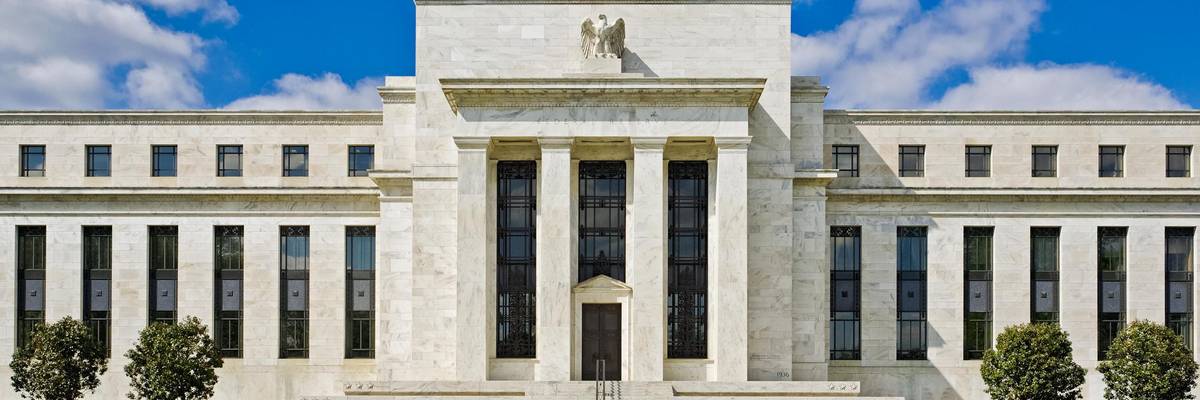
Federal Reserve Building in Washington, D.C. (Photo: Getty/stock photo)
The January jobs report from the Labor Department is heightening fears that a so-called "tight" labor market is fueling inflation, and therefore the Fed must put on the brakes by raising interest rates.
This line of reasoning is totally wrong.
Higher interest rates will harm millions of workers who will be involuntarily drafted into the inflation fight by losing jobs or long-overdue pay raises.
Among the biggest job gains in January were workers who are normally temporary and paid low wages (leisure and hospitality, retail, transport and warehousing). This January employers cut fewer of these low-wage temp workers than in most years, because of rising customer demand and the difficulties of hiring during Omicron. Due to the Bureau of Labor Statistics's "seasonal adjustment," cutting fewer workers than usual for this time of year appears as "adding lots of jobs."
Fed policymakers are poised to raise interest rates at their March meeting and then continue raising them, in order to slow the economy. They fear that a labor shortage is pushing up wages, which in turn are pushing up prices--and that this wage-price spiral could get out of control.
It's a huge mistake. Higher interest rates will harm millions of workers who will be involuntarily drafted into the inflation fight by losing jobs or long-overdue pay raises. There's no "labor shortage" pushing up wages. There's a shortage of good jobs paying adequate wages to support working families. Raising interest rates will worsen this shortage.
There's no "wage-price spiral," either (even though Fed chief Jerome Powell has expressed concern about wage hikes pushing up prices). To the contrary, workers' real wages have dropped because of inflation. Even though overall wages have climbed, they've failed to keep up with price increases - making most workers worse off in terms of the purchasing power of their dollars.
Wage-price spirals used to be a problem. Remember when John F. Kennedy "jawboned" steel executives and the United Steel Workers to keep a lid on wages and prices? But such spirals are no longer a problem. That's because the typical worker today has little or no bargaining power.
Only 6 percent of private-sector workers are now unionized. A half-century ago, more than a third were. Today, corporations can increase output by outsourcing just about anything anywhere because capital is global. A half-century ago, corporations needing more output had to bargain with their own workers to get it.
These changes have shifted power from labor to capital--increasing the share of the economic pie going to profits and shrinking the share going to wages. This power shift ended wage-price spirals.
Slowing the economy won't remedy either of the two real causes of today's inflation - continuing worldwide bottlenecks in the supply of goods, and the ease with which big corporations (with record profits) are passing these costs to customers in higher prices.
Supply bottlenecks are all around us. (Just take a look at all the ships with billions of dollars of cargo idling outside the Ports of Los Angeles and Long Beach, through which 40 percent of all U.S. seaborne imports flow.)
Big corporations have no incentive to absorb the rising costs of such supplies--even with profit margins at their highest level in 70 years. They have enough market power to pass these costs on to consumers, sometimes using inflation to justify even bigger price hikes. "A little bit of inflation is always good in our business," the CEO of Kroger said last June. "What we are very good at is pricing," the CEO of Colgate-Palmolive added in October.
In fact, the Fed's plan to slow the economy is the opposite of what's needed now or in the foreseeable future. COVID is still with us. Even in its wake, we'll be dealing with its damaging consequences for years--everything from long-term COVID, to school children months or years behind.
The January jobs report shows that the U.S. economy is still 2.9 million jobs below what it had in February 2020. Given the growth of the US population, it's 4.5 million short of what it would have by now had there been no pandemic.
Consumers are almost tapped out. Not only are real (inflation-adjusted) incomes down, but pandemic assistance has ended. Extra jobless benefits are gone. Child tax credits have expired. Rent moratoriums are over. Small wonder consumer spending fell 0.6 percent in December, the first decrease since last February.
Many people are understandably gloomy about the future. The University of Michigan consumer sentiment survey plummeted in January to its lowest level since late 2011, back when the economy was trying to recover from the global financial crisis. The Conference Board's index of confidence also dropped in January.
Given all this, the last thing average working people need is for the Fed to raise interest rates and slow the economy further. The problem most people face isn't inflation. It's a lack of good jobs.
Dear Common Dreams reader, It’s been nearly 30 years since I co-founded Common Dreams with my late wife, Lina Newhouser. We had the radical notion that journalism should serve the public good, not corporate profits. It was clear to us from the outset what it would take to build such a project. No paid advertisements. No corporate sponsors. No millionaire publisher telling us what to think or do. Many people said we wouldn't last a year, but we proved those doubters wrong. Together with a tremendous team of journalists and dedicated staff, we built an independent media outlet free from the constraints of profits and corporate control. Our mission has always been simple: To inform. To inspire. To ignite change for the common good. Building Common Dreams was not easy. Our survival was never guaranteed. When you take on the most powerful forces—Wall Street greed, fossil fuel industry destruction, Big Tech lobbyists, and uber-rich oligarchs who have spent billions upon billions rigging the economy and democracy in their favor—the only bulwark you have is supporters who believe in your work. But here’s the urgent message from me today. It's never been this bad out there. And it's never been this hard to keep us going. At the very moment Common Dreams is most needed, the threats we face are intensifying. We need your support now more than ever. We don't accept corporate advertising and never will. We don't have a paywall because we don't think people should be blocked from critical news based on their ability to pay. Everything we do is funded by the donations of readers like you. When everyone does the little they can afford, we are strong. But if that support retreats or dries up, so do we. Will you donate now to make sure Common Dreams not only survives but thrives? —Craig Brown, Co-founder |
The January jobs report from the Labor Department is heightening fears that a so-called "tight" labor market is fueling inflation, and therefore the Fed must put on the brakes by raising interest rates.
This line of reasoning is totally wrong.
Higher interest rates will harm millions of workers who will be involuntarily drafted into the inflation fight by losing jobs or long-overdue pay raises.
Among the biggest job gains in January were workers who are normally temporary and paid low wages (leisure and hospitality, retail, transport and warehousing). This January employers cut fewer of these low-wage temp workers than in most years, because of rising customer demand and the difficulties of hiring during Omicron. Due to the Bureau of Labor Statistics's "seasonal adjustment," cutting fewer workers than usual for this time of year appears as "adding lots of jobs."
Fed policymakers are poised to raise interest rates at their March meeting and then continue raising them, in order to slow the economy. They fear that a labor shortage is pushing up wages, which in turn are pushing up prices--and that this wage-price spiral could get out of control.
It's a huge mistake. Higher interest rates will harm millions of workers who will be involuntarily drafted into the inflation fight by losing jobs or long-overdue pay raises. There's no "labor shortage" pushing up wages. There's a shortage of good jobs paying adequate wages to support working families. Raising interest rates will worsen this shortage.
There's no "wage-price spiral," either (even though Fed chief Jerome Powell has expressed concern about wage hikes pushing up prices). To the contrary, workers' real wages have dropped because of inflation. Even though overall wages have climbed, they've failed to keep up with price increases - making most workers worse off in terms of the purchasing power of their dollars.
Wage-price spirals used to be a problem. Remember when John F. Kennedy "jawboned" steel executives and the United Steel Workers to keep a lid on wages and prices? But such spirals are no longer a problem. That's because the typical worker today has little or no bargaining power.
Only 6 percent of private-sector workers are now unionized. A half-century ago, more than a third were. Today, corporations can increase output by outsourcing just about anything anywhere because capital is global. A half-century ago, corporations needing more output had to bargain with their own workers to get it.
These changes have shifted power from labor to capital--increasing the share of the economic pie going to profits and shrinking the share going to wages. This power shift ended wage-price spirals.
Slowing the economy won't remedy either of the two real causes of today's inflation - continuing worldwide bottlenecks in the supply of goods, and the ease with which big corporations (with record profits) are passing these costs to customers in higher prices.
Supply bottlenecks are all around us. (Just take a look at all the ships with billions of dollars of cargo idling outside the Ports of Los Angeles and Long Beach, through which 40 percent of all U.S. seaborne imports flow.)
Big corporations have no incentive to absorb the rising costs of such supplies--even with profit margins at their highest level in 70 years. They have enough market power to pass these costs on to consumers, sometimes using inflation to justify even bigger price hikes. "A little bit of inflation is always good in our business," the CEO of Kroger said last June. "What we are very good at is pricing," the CEO of Colgate-Palmolive added in October.
In fact, the Fed's plan to slow the economy is the opposite of what's needed now or in the foreseeable future. COVID is still with us. Even in its wake, we'll be dealing with its damaging consequences for years--everything from long-term COVID, to school children months or years behind.
The January jobs report shows that the U.S. economy is still 2.9 million jobs below what it had in February 2020. Given the growth of the US population, it's 4.5 million short of what it would have by now had there been no pandemic.
Consumers are almost tapped out. Not only are real (inflation-adjusted) incomes down, but pandemic assistance has ended. Extra jobless benefits are gone. Child tax credits have expired. Rent moratoriums are over. Small wonder consumer spending fell 0.6 percent in December, the first decrease since last February.
Many people are understandably gloomy about the future. The University of Michigan consumer sentiment survey plummeted in January to its lowest level since late 2011, back when the economy was trying to recover from the global financial crisis. The Conference Board's index of confidence also dropped in January.
Given all this, the last thing average working people need is for the Fed to raise interest rates and slow the economy further. The problem most people face isn't inflation. It's a lack of good jobs.
The January jobs report from the Labor Department is heightening fears that a so-called "tight" labor market is fueling inflation, and therefore the Fed must put on the brakes by raising interest rates.
This line of reasoning is totally wrong.
Higher interest rates will harm millions of workers who will be involuntarily drafted into the inflation fight by losing jobs or long-overdue pay raises.
Among the biggest job gains in January were workers who are normally temporary and paid low wages (leisure and hospitality, retail, transport and warehousing). This January employers cut fewer of these low-wage temp workers than in most years, because of rising customer demand and the difficulties of hiring during Omicron. Due to the Bureau of Labor Statistics's "seasonal adjustment," cutting fewer workers than usual for this time of year appears as "adding lots of jobs."
Fed policymakers are poised to raise interest rates at their March meeting and then continue raising them, in order to slow the economy. They fear that a labor shortage is pushing up wages, which in turn are pushing up prices--and that this wage-price spiral could get out of control.
It's a huge mistake. Higher interest rates will harm millions of workers who will be involuntarily drafted into the inflation fight by losing jobs or long-overdue pay raises. There's no "labor shortage" pushing up wages. There's a shortage of good jobs paying adequate wages to support working families. Raising interest rates will worsen this shortage.
There's no "wage-price spiral," either (even though Fed chief Jerome Powell has expressed concern about wage hikes pushing up prices). To the contrary, workers' real wages have dropped because of inflation. Even though overall wages have climbed, they've failed to keep up with price increases - making most workers worse off in terms of the purchasing power of their dollars.
Wage-price spirals used to be a problem. Remember when John F. Kennedy "jawboned" steel executives and the United Steel Workers to keep a lid on wages and prices? But such spirals are no longer a problem. That's because the typical worker today has little or no bargaining power.
Only 6 percent of private-sector workers are now unionized. A half-century ago, more than a third were. Today, corporations can increase output by outsourcing just about anything anywhere because capital is global. A half-century ago, corporations needing more output had to bargain with their own workers to get it.
These changes have shifted power from labor to capital--increasing the share of the economic pie going to profits and shrinking the share going to wages. This power shift ended wage-price spirals.
Slowing the economy won't remedy either of the two real causes of today's inflation - continuing worldwide bottlenecks in the supply of goods, and the ease with which big corporations (with record profits) are passing these costs to customers in higher prices.
Supply bottlenecks are all around us. (Just take a look at all the ships with billions of dollars of cargo idling outside the Ports of Los Angeles and Long Beach, through which 40 percent of all U.S. seaborne imports flow.)
Big corporations have no incentive to absorb the rising costs of such supplies--even with profit margins at their highest level in 70 years. They have enough market power to pass these costs on to consumers, sometimes using inflation to justify even bigger price hikes. "A little bit of inflation is always good in our business," the CEO of Kroger said last June. "What we are very good at is pricing," the CEO of Colgate-Palmolive added in October.
In fact, the Fed's plan to slow the economy is the opposite of what's needed now or in the foreseeable future. COVID is still with us. Even in its wake, we'll be dealing with its damaging consequences for years--everything from long-term COVID, to school children months or years behind.
The January jobs report shows that the U.S. economy is still 2.9 million jobs below what it had in February 2020. Given the growth of the US population, it's 4.5 million short of what it would have by now had there been no pandemic.
Consumers are almost tapped out. Not only are real (inflation-adjusted) incomes down, but pandemic assistance has ended. Extra jobless benefits are gone. Child tax credits have expired. Rent moratoriums are over. Small wonder consumer spending fell 0.6 percent in December, the first decrease since last February.
Many people are understandably gloomy about the future. The University of Michigan consumer sentiment survey plummeted in January to its lowest level since late 2011, back when the economy was trying to recover from the global financial crisis. The Conference Board's index of confidence also dropped in January.
Given all this, the last thing average working people need is for the Fed to raise interest rates and slow the economy further. The problem most people face isn't inflation. It's a lack of good jobs.