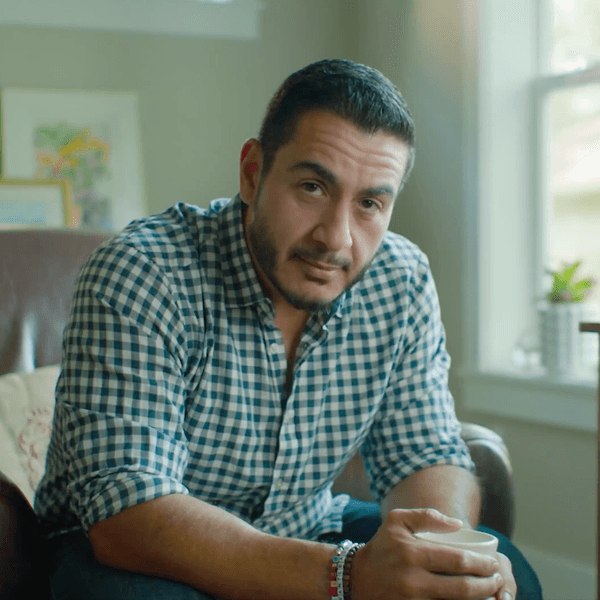
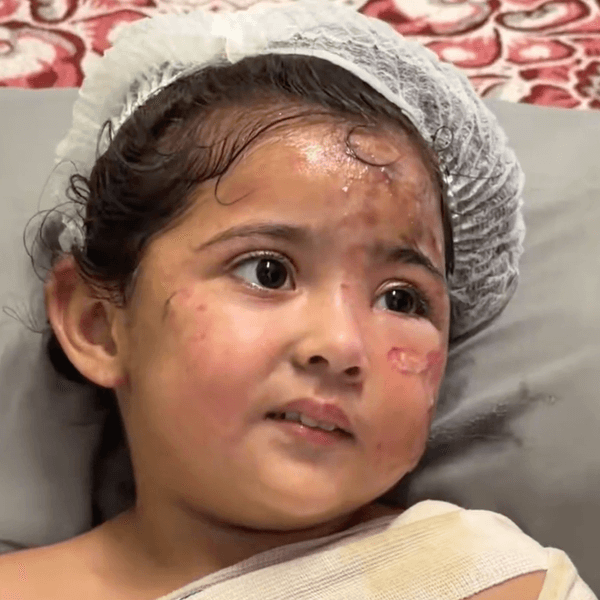
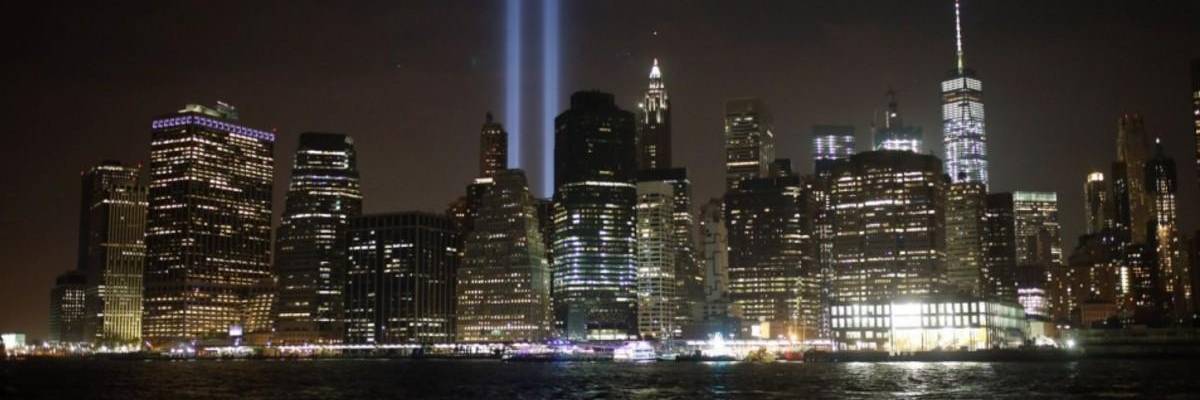
We haven't yet reckoned with our domestic reaction to that day--when many American Muslims lost their lives, too. (Photo by Mohammed Elshamy/Anadolu Agency/Getty Images)
We Still Need a Post-9/11 Reckoning
Because as much as American history is about triumphing over hardship, too often it's also been about finding a minority—of religion, of race, of sexuality, of immigration status—to blame for that hardship.
Like most New Yorkers, my life changed forever on Sept. 11, 2001. I was just 8 years old when two planes crashed into the twin towers on an otherwise ordinary Tuesday morning. At school in Astoria, teachers looked frantic, and we were just confused kids until an older student told us to look through the bathroom window. All I could see was smoke.
When I got home, the same video--of the second plane hitting the South Tower--was playing on loop on the news. Neighbors and friends, especially those who couldn't commute back to their own homes, were gathered in front of our TV. I remember one of them, an older woman, repeating the same eight words: "Things are never going to be the same."
As I was grieving a devastating attack on my city, the pride I had in who I was--the people I loved, the way I prayed, the clothes I wore--was replaced by shame as my community was villainized.
Before then, growing up in Queens, the most ethnically diverse place in the world, I had been able to blend in. As the daughter of Egyptian immigrants who spoke English as their second language, I was certainly different. But almost everyone I interacted with was, too. And then our city was attacked.
In hindsight, my identity became politicized overnight. After 9/11, what had simply been my religion became what defined me most. My identity as a Muslim New Yorker was ripped in two. As I was grieving a devastating attack on my city, the pride I had in who I was--the people I loved, the way I prayed, the clothes I wore--was replaced by shame as my community was villainized.
Meanwhile, men in my community were being rounded up, interrogated and deported. Of those who were able to stay in this country, many lost their jobs, homes and even friends, as people looked at their names, their places of birth, the beards on their faces, and saw terrorists. And the women in my community, myself included, were in a double bind; we were either terrorists ourselves or their oppressed daughters and wives who needed saving.
That narrative--parroted by the media, the political establishment in both parties, and even my own congresswoman, who dressed up in a burqa on the House floor to lament the oppression of Muslim women while praising President Bush for dropping "food as well as bombs" on Afghanistan--led our country into two wars, with consequences still felt today. But it also led to tremendous anti-Muslim violence here at home. I felt it personally when, at age 16, a stranger attacked me on the street and tried to rip off my hijab.
In the aftermath of that incident, women from my community rallied around me and helped me find safety and strength in the face of trauma--and even my own voice. And the organizing I've done since has helped me find power rather than shame in my story as a young Muslim woman.
Twenty years after 9/11, some things have changed. The wars we waged, fueled by lies and distortions, are finally coming to an end. There's political consensus on both sides of the aisle that our country erred in its overseas reaction to 9/11. There's been a reckoning of sorts, and major progress as the first two Muslim women were elected to Congress.
But it hasn't gone far enough. Twelve years after President Obama signed an executive order to shut down Guantanamo Bay, it's still open. While our official wars are coming to an end, drone strikes still continue across the Middle East. And even before President Trump's travel ban aimed primarily at Muslim-majority countries, it was harder for people from those countries to obtain visas to the United States.
What's more, we haven't yet reckoned with our domestic reaction to that day--when many American Muslims lost their lives, too. Even as police departments nationwide unconstitutionally surveilled communities like mine; even as hate crimes against us spiked, and then kept rising; even as our families were separated under the guise of keeping the rest of the country safe--there has been no reckoning. To this day, my congresswoman (who, in full disclosure, I'm running against in next year's Democratic primary) refuses to apologize for that stunt she pulled in a burqa on the House floor.
We can't learn from the past if we don't acknowledge our role in it. If we only say "this was wrong," and not "we were wrong." Without accountability, we won't know how to do better next time. And there will be a next time. Because as much as American history is about triumphing over hardship, too often it's also been about finding a minority--of religion, of race, of sexuality, of immigration status--to blame for that hardship.
This 9/11, the 20th anniversary of the day so many American lives were lost and so many were changed forever, we must remember that. And we must recommit ourselves to making America a place where all people are protected, prioritized, and able to realize the promise of this country. Even and especially in the wake of tragedy.
We are at a crossroads
This country and this world are at a monumental crossroads. In a few short weeks, US voters will have an opportunity to beat back the forces of fascism and confront the billionaires who are rigging the economy, our media system, and our democracy, making it increasingly impossible for ordinary people to get by. We’re not just talking about the election. We’re talking about what must be done once these fascist elements are vanquished from power. We need a bolder set of solutions than what either major party has so far been willing to offer and a working-class movement ready to fight like hell for it. Trump didn't emerge from nowhere. The conditions that fueled MAGA authoritarianism were created by decades of radical neoliberal economic policies and a corrupt political system dominated by corporate interests. They slashed taxes on the super-rich, promising that the benefits would trickle down. They said giveaways to the corporate titans would make life more affordable for the rest of us. It was all bullshit. And when a bitter, betrayed populace searches for someone to blame, right-wing demagogues have little trouble finding scapegoats. People know when they're being lied to, but you won't hear any of this from the corporate media. Only independent journalism—powered and funded by people who believe in building a better world—can deliver truly trustworthy daily news. Our Fall Campaign is underway, and we need your help. To power our newsroom through the rest of the year, we need to raise $125,000 by midnight on October 31. So if you share our vision, please contribute whatever you can to sustain our work. |
Like most New Yorkers, my life changed forever on Sept. 11, 2001. I was just 8 years old when two planes crashed into the twin towers on an otherwise ordinary Tuesday morning. At school in Astoria, teachers looked frantic, and we were just confused kids until an older student told us to look through the bathroom window. All I could see was smoke.
When I got home, the same video--of the second plane hitting the South Tower--was playing on loop on the news. Neighbors and friends, especially those who couldn't commute back to their own homes, were gathered in front of our TV. I remember one of them, an older woman, repeating the same eight words: "Things are never going to be the same."
As I was grieving a devastating attack on my city, the pride I had in who I was--the people I loved, the way I prayed, the clothes I wore--was replaced by shame as my community was villainized.
Before then, growing up in Queens, the most ethnically diverse place in the world, I had been able to blend in. As the daughter of Egyptian immigrants who spoke English as their second language, I was certainly different. But almost everyone I interacted with was, too. And then our city was attacked.
In hindsight, my identity became politicized overnight. After 9/11, what had simply been my religion became what defined me most. My identity as a Muslim New Yorker was ripped in two. As I was grieving a devastating attack on my city, the pride I had in who I was--the people I loved, the way I prayed, the clothes I wore--was replaced by shame as my community was villainized.
Meanwhile, men in my community were being rounded up, interrogated and deported. Of those who were able to stay in this country, many lost their jobs, homes and even friends, as people looked at their names, their places of birth, the beards on their faces, and saw terrorists. And the women in my community, myself included, were in a double bind; we were either terrorists ourselves or their oppressed daughters and wives who needed saving.
That narrative--parroted by the media, the political establishment in both parties, and even my own congresswoman, who dressed up in a burqa on the House floor to lament the oppression of Muslim women while praising President Bush for dropping "food as well as bombs" on Afghanistan--led our country into two wars, with consequences still felt today. But it also led to tremendous anti-Muslim violence here at home. I felt it personally when, at age 16, a stranger attacked me on the street and tried to rip off my hijab.
In the aftermath of that incident, women from my community rallied around me and helped me find safety and strength in the face of trauma--and even my own voice. And the organizing I've done since has helped me find power rather than shame in my story as a young Muslim woman.
Twenty years after 9/11, some things have changed. The wars we waged, fueled by lies and distortions, are finally coming to an end. There's political consensus on both sides of the aisle that our country erred in its overseas reaction to 9/11. There's been a reckoning of sorts, and major progress as the first two Muslim women were elected to Congress.
But it hasn't gone far enough. Twelve years after President Obama signed an executive order to shut down Guantanamo Bay, it's still open. While our official wars are coming to an end, drone strikes still continue across the Middle East. And even before President Trump's travel ban aimed primarily at Muslim-majority countries, it was harder for people from those countries to obtain visas to the United States.
What's more, we haven't yet reckoned with our domestic reaction to that day--when many American Muslims lost their lives, too. Even as police departments nationwide unconstitutionally surveilled communities like mine; even as hate crimes against us spiked, and then kept rising; even as our families were separated under the guise of keeping the rest of the country safe--there has been no reckoning. To this day, my congresswoman (who, in full disclosure, I'm running against in next year's Democratic primary) refuses to apologize for that stunt she pulled in a burqa on the House floor.
We can't learn from the past if we don't acknowledge our role in it. If we only say "this was wrong," and not "we were wrong." Without accountability, we won't know how to do better next time. And there will be a next time. Because as much as American history is about triumphing over hardship, too often it's also been about finding a minority--of religion, of race, of sexuality, of immigration status--to blame for that hardship.
This 9/11, the 20th anniversary of the day so many American lives were lost and so many were changed forever, we must remember that. And we must recommit ourselves to making America a place where all people are protected, prioritized, and able to realize the promise of this country. Even and especially in the wake of tragedy.
Like most New Yorkers, my life changed forever on Sept. 11, 2001. I was just 8 years old when two planes crashed into the twin towers on an otherwise ordinary Tuesday morning. At school in Astoria, teachers looked frantic, and we were just confused kids until an older student told us to look through the bathroom window. All I could see was smoke.
When I got home, the same video--of the second plane hitting the South Tower--was playing on loop on the news. Neighbors and friends, especially those who couldn't commute back to their own homes, were gathered in front of our TV. I remember one of them, an older woman, repeating the same eight words: "Things are never going to be the same."
As I was grieving a devastating attack on my city, the pride I had in who I was--the people I loved, the way I prayed, the clothes I wore--was replaced by shame as my community was villainized.
Before then, growing up in Queens, the most ethnically diverse place in the world, I had been able to blend in. As the daughter of Egyptian immigrants who spoke English as their second language, I was certainly different. But almost everyone I interacted with was, too. And then our city was attacked.
In hindsight, my identity became politicized overnight. After 9/11, what had simply been my religion became what defined me most. My identity as a Muslim New Yorker was ripped in two. As I was grieving a devastating attack on my city, the pride I had in who I was--the people I loved, the way I prayed, the clothes I wore--was replaced by shame as my community was villainized.
Meanwhile, men in my community were being rounded up, interrogated and deported. Of those who were able to stay in this country, many lost their jobs, homes and even friends, as people looked at their names, their places of birth, the beards on their faces, and saw terrorists. And the women in my community, myself included, were in a double bind; we were either terrorists ourselves or their oppressed daughters and wives who needed saving.
That narrative--parroted by the media, the political establishment in both parties, and even my own congresswoman, who dressed up in a burqa on the House floor to lament the oppression of Muslim women while praising President Bush for dropping "food as well as bombs" on Afghanistan--led our country into two wars, with consequences still felt today. But it also led to tremendous anti-Muslim violence here at home. I felt it personally when, at age 16, a stranger attacked me on the street and tried to rip off my hijab.
In the aftermath of that incident, women from my community rallied around me and helped me find safety and strength in the face of trauma--and even my own voice. And the organizing I've done since has helped me find power rather than shame in my story as a young Muslim woman.
Twenty years after 9/11, some things have changed. The wars we waged, fueled by lies and distortions, are finally coming to an end. There's political consensus on both sides of the aisle that our country erred in its overseas reaction to 9/11. There's been a reckoning of sorts, and major progress as the first two Muslim women were elected to Congress.
But it hasn't gone far enough. Twelve years after President Obama signed an executive order to shut down Guantanamo Bay, it's still open. While our official wars are coming to an end, drone strikes still continue across the Middle East. And even before President Trump's travel ban aimed primarily at Muslim-majority countries, it was harder for people from those countries to obtain visas to the United States.
What's more, we haven't yet reckoned with our domestic reaction to that day--when many American Muslims lost their lives, too. Even as police departments nationwide unconstitutionally surveilled communities like mine; even as hate crimes against us spiked, and then kept rising; even as our families were separated under the guise of keeping the rest of the country safe--there has been no reckoning. To this day, my congresswoman (who, in full disclosure, I'm running against in next year's Democratic primary) refuses to apologize for that stunt she pulled in a burqa on the House floor.
We can't learn from the past if we don't acknowledge our role in it. If we only say "this was wrong," and not "we were wrong." Without accountability, we won't know how to do better next time. And there will be a next time. Because as much as American history is about triumphing over hardship, too often it's also been about finding a minority--of religion, of race, of sexuality, of immigration status--to blame for that hardship.
This 9/11, the 20th anniversary of the day so many American lives were lost and so many were changed forever, we must remember that. And we must recommit ourselves to making America a place where all people are protected, prioritized, and able to realize the promise of this country. Even and especially in the wake of tragedy.