SUBSCRIBE TO OUR FREE NEWSLETTER
Daily news & progressive opinion—funded by the people, not the corporations—delivered straight to your inbox.
5
#000000
#FFFFFF
To donate by check, phone, or other method, see our More Ways to Give page.
Daily news & progressive opinion—funded by the people, not the corporations—delivered straight to your inbox.
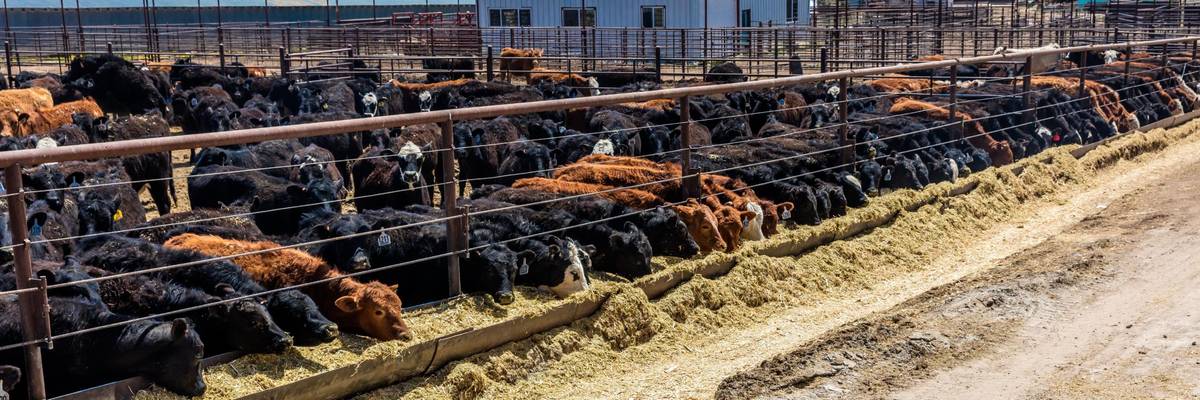
A cattle feedlot in LaSalle, Utah. (Photo: Joe Sohm/Visions of America/Universal Images Group via Getty Images)
Ahead of September's United Nations Food Systems Summit and this fall's U.N. Climate Summit (COP26) in Glasgow, Scotland, the Carbon Pricing Food Coalition is issuing an open letter calling on the heads of the U.N. member states with the highest meat consumption calling for the application of carbon pricing to meat and dairy products.
"Lower levels of animal protein consumption will not only improve national public health... but will also simultaneously reduce global greenhouse gas emissions and loss of biodiversity."
The Carbon Pricing Food Coalition, which supports this #futurefoodpricing initiative, is concerned about climate change and the lack of political decisiveness for taxing food with a high climate footprint and making climate-friendly food cheaper. World leaders are asked to look closely at a levy on meat and dairy.
The following letter is a call for change, for a better future. The aim is to make world leaders and politicians acquainted with the benefits of a meat tax, a fair meat price. According to surveys, a majority supports this plan, if tax revenues are used to compensate consumers and farmers.
Companies and organizations that already signed the letter come from the Netherlands, Poland, United Kingdom, USA, Switzerland, and other nations. The coalition is calling on advocacy organizations in 50 countries to sign, too.
Dear Head of State,
We are the Carbon Pricing for Food Coalition, a group of companies, non-profit organizations, and U.N. member nations. We are writing to you about your ambitious support to the Paris Climate Agreement and how you can improve your national determined contributions, by applying carbon pricing on food. We suggest starting with meat and dairy and reducing taxes on healthy food.
Lower levels of animal protein consumption will not only improve national public health, thus reducing health costs, but will also simultaneously reduce global greenhouse gas emissions and loss of biodiversity. If global meat and dairy consumption were to expand to higher levels per capita (business as usual) it will become impossible to keep global temperatures from rising to dangerous levels. Meat and dairy production accounts for at least 14.5% of all greenhouse gas (GHG) emissions and is projected to account for up to 81% of the 1.5degC emissions budget by 2050 if consumption continues unabated.
We call on 50 Member States (35 OECD and 15 other countries) engaged in the U.N. Food Systems Summit, CBD Biodiversity Conference, and Climate Change Conference (COP26) in 2021, to:
In your country, meat consumption levels are above (inter)national dietary health guidelines and exceeding the guidelines for food consumption that takes into account planetary boundaries. The EAT Lancet Commission advised a maximum consumption of 300 gram per week, or 16 kilograms of annual meat consumption per capita.
Countries with a meat consumption level above health guidelines should take the lead in reducing meat consumption. Reducing consumption of meat and dairy per capita in the 50 developed countries that have the highest meat consumption levels per capita has become imperative for human and planetary health.
We have already informed your ministers of climate, agriculture and finance. Please accept our proposal to consider or announce carbon pricing of meat and dairy, and reduce prices for healthy food. We propose that you make your announcement before the U.N. Summit for Food, Biodiversity or Climate. Thank you very much for your reply.
With kind regards,
Prof. Pier Vellinga; Chair, True Animal Protein Price Coalition
Jeroom Remmers; Director, True Animal Protein Price Coalition
This country and this world are at a monumental crossroads. US voters have an opportunity to beat back the forces of fascism and confront the billionaires who are rigging the economy, our media system, and our democracy, making it increasingly impossible for ordinary people to get by. We’re not just talking about the election. We’re talking about what must be done once these fascist elements are vanquished from power. We need a bolder set of solutions than what either major party has so far been willing to offer and a working-class movement ready to fight like hell for it. Trump didn't emerge from nowhere. The conditions that fueled MAGA authoritarianism were created by decades of radical neoliberal economic policies and a corrupt political system dominated by corporate interests. They slashed taxes on the super-rich, promising that the benefits would trickle down. They said giveaways to the corporate titans would make life more affordable for the rest of us. It was all bullshit. And when a bitter, betrayed populace searches for someone to blame, right-wing demagogues have little trouble finding scapegoats. People know when they're being lied to, but you won't hear any of this from the corporate media. Only independent journalism—powered and funded by people who believe in building a better world—can deliver truly trustworthy daily news. If you share our vision, please contribute whatever you can to sustain our work. |
Ahead of September's United Nations Food Systems Summit and this fall's U.N. Climate Summit (COP26) in Glasgow, Scotland, the Carbon Pricing Food Coalition is issuing an open letter calling on the heads of the U.N. member states with the highest meat consumption calling for the application of carbon pricing to meat and dairy products.
"Lower levels of animal protein consumption will not only improve national public health... but will also simultaneously reduce global greenhouse gas emissions and loss of biodiversity."
The Carbon Pricing Food Coalition, which supports this #futurefoodpricing initiative, is concerned about climate change and the lack of political decisiveness for taxing food with a high climate footprint and making climate-friendly food cheaper. World leaders are asked to look closely at a levy on meat and dairy.
The following letter is a call for change, for a better future. The aim is to make world leaders and politicians acquainted with the benefits of a meat tax, a fair meat price. According to surveys, a majority supports this plan, if tax revenues are used to compensate consumers and farmers.
Companies and organizations that already signed the letter come from the Netherlands, Poland, United Kingdom, USA, Switzerland, and other nations. The coalition is calling on advocacy organizations in 50 countries to sign, too.
Dear Head of State,
We are the Carbon Pricing for Food Coalition, a group of companies, non-profit organizations, and U.N. member nations. We are writing to you about your ambitious support to the Paris Climate Agreement and how you can improve your national determined contributions, by applying carbon pricing on food. We suggest starting with meat and dairy and reducing taxes on healthy food.
Lower levels of animal protein consumption will not only improve national public health, thus reducing health costs, but will also simultaneously reduce global greenhouse gas emissions and loss of biodiversity. If global meat and dairy consumption were to expand to higher levels per capita (business as usual) it will become impossible to keep global temperatures from rising to dangerous levels. Meat and dairy production accounts for at least 14.5% of all greenhouse gas (GHG) emissions and is projected to account for up to 81% of the 1.5degC emissions budget by 2050 if consumption continues unabated.
We call on 50 Member States (35 OECD and 15 other countries) engaged in the U.N. Food Systems Summit, CBD Biodiversity Conference, and Climate Change Conference (COP26) in 2021, to:
In your country, meat consumption levels are above (inter)national dietary health guidelines and exceeding the guidelines for food consumption that takes into account planetary boundaries. The EAT Lancet Commission advised a maximum consumption of 300 gram per week, or 16 kilograms of annual meat consumption per capita.
Countries with a meat consumption level above health guidelines should take the lead in reducing meat consumption. Reducing consumption of meat and dairy per capita in the 50 developed countries that have the highest meat consumption levels per capita has become imperative for human and planetary health.
We have already informed your ministers of climate, agriculture and finance. Please accept our proposal to consider or announce carbon pricing of meat and dairy, and reduce prices for healthy food. We propose that you make your announcement before the U.N. Summit for Food, Biodiversity or Climate. Thank you very much for your reply.
With kind regards,
Prof. Pier Vellinga; Chair, True Animal Protein Price Coalition
Jeroom Remmers; Director, True Animal Protein Price Coalition