SUBSCRIBE TO OUR FREE NEWSLETTER
Daily news & progressive opinion—funded by the people, not the corporations—delivered straight to your inbox.
5
#000000
#FFFFFF
To donate by check, phone, or other method, see our More Ways to Give page.
Daily news & progressive opinion—funded by the people, not the corporations—delivered straight to your inbox.
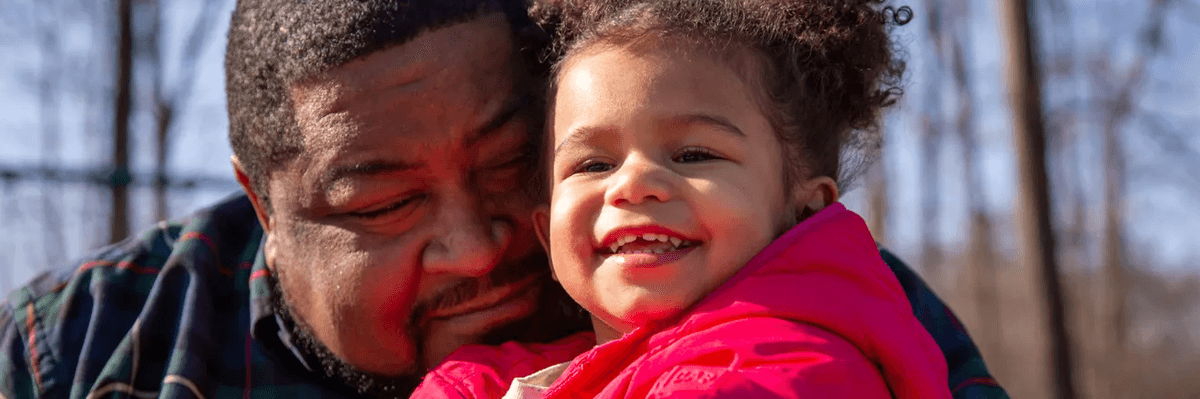
Robert Williams and his daughter, Rosie Williams. (Photo: ACLU of Michigan)
I never thought I would be a cautionary tale. More than that, I never thought I'd have to explain to my daughters why their daddy got arrested in front of them on our front lawn. How does one explain to two little girls that a computer got it wrong, but the police listened to it anyway--even if that meant arresting me for a crime I didn't commit?
That system incorrectly matched a photograph of me pulled from an old driver's license picture with the surveillance image.
This is what happened to me: As I was getting ready to head home from work one day in January of 2020, my wife called me and told me that a police officer had called and said I needed to turn myself in. She was scared and confused. The officers called me next, but wouldn't explain why I was supposed to turn myself in or what I was accused of, so I thought it was probably a prank. I couldn't imagine what else it could be. But as I pulled up to my house, a Detroit police squad car was waiting for me. The squad car swooped in from behind to block my SUV--as if I would make a run for it. One officer jumped out and asked if I was Robert Williams. I said I was. He told me I was under arrest.
By then, my wife, Melissa, was outside with our youngest in her arms, and my older daughter was peeking around my wife trying to see what was happening. I told my older daughter to go back inside, that the cops were making a mistake and that daddy would be back in a minute.
But I wasn't back in a minute. I was handcuffed and taken to the Detroit Detention Center.
As any other Black man would be, I had to consider what could happen if I asked too many questions.
As any other person would be, I was confused, scared--and yes, angry--that this was happening to me. And as any other Black man would be, I had to consider what could happen if I asked too many questions or displayed my anger openly, even though I knew I had done nothing wrong.
When we arrived at the detention center, I was patted down probably seven times, asked to remove the strings from my shoes and hoodie, and fingerprinted. They also took my mugshot and DNA sample. No one would tell me what crime they thought I'd committed.
After that, a full 18 hours went by. I spent the night sleeping on the cold concrete floor of a filthy, overcrowded cell next to an overflowing trash can. No one came to talk to me or explain what I was accused of--or why. Meanwhile, my family spent the night at home without me, scared for me and for what my false arrest would mean for all of us.
I eventually got more information after the American Civil Liberties Union of Michigan connected me with a defense attorney. Someone had stolen watches, and the store owner provided surveillance footage to the Detroit Police Department. They sent a blurry, shadowy image from that footage to the Michigan State Police, who then ran it through their facial recognition system. That system incorrectly matched a photograph of me pulled from an old driver's license picture with the surveillance image.
I've since learned that federal studies have shown that facial recognition systems misidentify Asian and Black people up to 100 times more often than white people. Why is law enforcement even allowed to use such technology when it obviously doesn't work? I get angry when I hear companies, politicians, and police talk about how this technology isn't dangerous or flawed or say that they only use it as an investigative tool. If any of that was true, I wouldn't have been arrested.
What's worse is that, before this happened to me, I actually believed them. I thought, "What's so terrible if they're not invading our privacy and all they're doing is using this technology to narrow in on a group of suspects?"
I get angry when I hear companies, politicians, and police talk about how this technology isn't dangerous or flawed ... If any of that was true, I wouldn't have been arrested.
Lawyers at the ACLU and the University of Michigan's Civil Rights Litigation Initiative filed a lawsuit against the police department on my behalf, but winning that case can't undo the damage to me and my family. My daughters can't unsee me being handcuffed and put into a police car. They continue to suffer that trauma. For example, after I returned from jail, they started playing cops and robbers games where they tell me that I'm in jail for stealing. And even today, when my daughters encounter the coverage about what happened to me, they are reduced to tears by their memory of those awful days. We just don't know what kind of long-term impact this might have on them; we do know that this was their first ever encounter with the police.
But my daughters can see me use this experience to bring some good into the world. That means helping make sure they don't grow up in a world where their driver's licenses or Facebook photos could be used to target, track, or harm them--or anyone else. That's why I brought the case with the ACLU and it's why Congress should stop law enforcement from using facial recognition technology. As it is, it's just too dangerous.
I keep thinking about how lucky I was to have spent only one night in jail, as traumatizing as it was. Many Black people won't be so lucky. My family and I don't want to live with that fear. I don't want anyone to live with that fear. Congress should do something to make sure no one else has to.
Dear Common Dreams reader, It’s been nearly 30 years since I co-founded Common Dreams with my late wife, Lina Newhouser. We had the radical notion that journalism should serve the public good, not corporate profits. It was clear to us from the outset what it would take to build such a project. No paid advertisements. No corporate sponsors. No millionaire publisher telling us what to think or do. Many people said we wouldn't last a year, but we proved those doubters wrong. Together with a tremendous team of journalists and dedicated staff, we built an independent media outlet free from the constraints of profits and corporate control. Our mission has always been simple: To inform. To inspire. To ignite change for the common good. Building Common Dreams was not easy. Our survival was never guaranteed. When you take on the most powerful forces—Wall Street greed, fossil fuel industry destruction, Big Tech lobbyists, and uber-rich oligarchs who have spent billions upon billions rigging the economy and democracy in their favor—the only bulwark you have is supporters who believe in your work. But here’s the urgent message from me today. It's never been this bad out there. And it's never been this hard to keep us going. At the very moment Common Dreams is most needed, the threats we face are intensifying. We need your support now more than ever. We don't accept corporate advertising and never will. We don't have a paywall because we don't think people should be blocked from critical news based on their ability to pay. Everything we do is funded by the donations of readers like you. When everyone does the little they can afford, we are strong. But if that support retreats or dries up, so do we. Will you donate now to make sure Common Dreams not only survives but thrives? —Craig Brown, Co-founder |
I never thought I would be a cautionary tale. More than that, I never thought I'd have to explain to my daughters why their daddy got arrested in front of them on our front lawn. How does one explain to two little girls that a computer got it wrong, but the police listened to it anyway--even if that meant arresting me for a crime I didn't commit?
That system incorrectly matched a photograph of me pulled from an old driver's license picture with the surveillance image.
This is what happened to me: As I was getting ready to head home from work one day in January of 2020, my wife called me and told me that a police officer had called and said I needed to turn myself in. She was scared and confused. The officers called me next, but wouldn't explain why I was supposed to turn myself in or what I was accused of, so I thought it was probably a prank. I couldn't imagine what else it could be. But as I pulled up to my house, a Detroit police squad car was waiting for me. The squad car swooped in from behind to block my SUV--as if I would make a run for it. One officer jumped out and asked if I was Robert Williams. I said I was. He told me I was under arrest.
By then, my wife, Melissa, was outside with our youngest in her arms, and my older daughter was peeking around my wife trying to see what was happening. I told my older daughter to go back inside, that the cops were making a mistake and that daddy would be back in a minute.
But I wasn't back in a minute. I was handcuffed and taken to the Detroit Detention Center.
As any other Black man would be, I had to consider what could happen if I asked too many questions.
As any other person would be, I was confused, scared--and yes, angry--that this was happening to me. And as any other Black man would be, I had to consider what could happen if I asked too many questions or displayed my anger openly, even though I knew I had done nothing wrong.
When we arrived at the detention center, I was patted down probably seven times, asked to remove the strings from my shoes and hoodie, and fingerprinted. They also took my mugshot and DNA sample. No one would tell me what crime they thought I'd committed.
After that, a full 18 hours went by. I spent the night sleeping on the cold concrete floor of a filthy, overcrowded cell next to an overflowing trash can. No one came to talk to me or explain what I was accused of--or why. Meanwhile, my family spent the night at home without me, scared for me and for what my false arrest would mean for all of us.
I eventually got more information after the American Civil Liberties Union of Michigan connected me with a defense attorney. Someone had stolen watches, and the store owner provided surveillance footage to the Detroit Police Department. They sent a blurry, shadowy image from that footage to the Michigan State Police, who then ran it through their facial recognition system. That system incorrectly matched a photograph of me pulled from an old driver's license picture with the surveillance image.
I've since learned that federal studies have shown that facial recognition systems misidentify Asian and Black people up to 100 times more often than white people. Why is law enforcement even allowed to use such technology when it obviously doesn't work? I get angry when I hear companies, politicians, and police talk about how this technology isn't dangerous or flawed or say that they only use it as an investigative tool. If any of that was true, I wouldn't have been arrested.
What's worse is that, before this happened to me, I actually believed them. I thought, "What's so terrible if they're not invading our privacy and all they're doing is using this technology to narrow in on a group of suspects?"
I get angry when I hear companies, politicians, and police talk about how this technology isn't dangerous or flawed ... If any of that was true, I wouldn't have been arrested.
Lawyers at the ACLU and the University of Michigan's Civil Rights Litigation Initiative filed a lawsuit against the police department on my behalf, but winning that case can't undo the damage to me and my family. My daughters can't unsee me being handcuffed and put into a police car. They continue to suffer that trauma. For example, after I returned from jail, they started playing cops and robbers games where they tell me that I'm in jail for stealing. And even today, when my daughters encounter the coverage about what happened to me, they are reduced to tears by their memory of those awful days. We just don't know what kind of long-term impact this might have on them; we do know that this was their first ever encounter with the police.
But my daughters can see me use this experience to bring some good into the world. That means helping make sure they don't grow up in a world where their driver's licenses or Facebook photos could be used to target, track, or harm them--or anyone else. That's why I brought the case with the ACLU and it's why Congress should stop law enforcement from using facial recognition technology. As it is, it's just too dangerous.
I keep thinking about how lucky I was to have spent only one night in jail, as traumatizing as it was. Many Black people won't be so lucky. My family and I don't want to live with that fear. I don't want anyone to live with that fear. Congress should do something to make sure no one else has to.
I never thought I would be a cautionary tale. More than that, I never thought I'd have to explain to my daughters why their daddy got arrested in front of them on our front lawn. How does one explain to two little girls that a computer got it wrong, but the police listened to it anyway--even if that meant arresting me for a crime I didn't commit?
That system incorrectly matched a photograph of me pulled from an old driver's license picture with the surveillance image.
This is what happened to me: As I was getting ready to head home from work one day in January of 2020, my wife called me and told me that a police officer had called and said I needed to turn myself in. She was scared and confused. The officers called me next, but wouldn't explain why I was supposed to turn myself in or what I was accused of, so I thought it was probably a prank. I couldn't imagine what else it could be. But as I pulled up to my house, a Detroit police squad car was waiting for me. The squad car swooped in from behind to block my SUV--as if I would make a run for it. One officer jumped out and asked if I was Robert Williams. I said I was. He told me I was under arrest.
By then, my wife, Melissa, was outside with our youngest in her arms, and my older daughter was peeking around my wife trying to see what was happening. I told my older daughter to go back inside, that the cops were making a mistake and that daddy would be back in a minute.
But I wasn't back in a minute. I was handcuffed and taken to the Detroit Detention Center.
As any other Black man would be, I had to consider what could happen if I asked too many questions.
As any other person would be, I was confused, scared--and yes, angry--that this was happening to me. And as any other Black man would be, I had to consider what could happen if I asked too many questions or displayed my anger openly, even though I knew I had done nothing wrong.
When we arrived at the detention center, I was patted down probably seven times, asked to remove the strings from my shoes and hoodie, and fingerprinted. They also took my mugshot and DNA sample. No one would tell me what crime they thought I'd committed.
After that, a full 18 hours went by. I spent the night sleeping on the cold concrete floor of a filthy, overcrowded cell next to an overflowing trash can. No one came to talk to me or explain what I was accused of--or why. Meanwhile, my family spent the night at home without me, scared for me and for what my false arrest would mean for all of us.
I eventually got more information after the American Civil Liberties Union of Michigan connected me with a defense attorney. Someone had stolen watches, and the store owner provided surveillance footage to the Detroit Police Department. They sent a blurry, shadowy image from that footage to the Michigan State Police, who then ran it through their facial recognition system. That system incorrectly matched a photograph of me pulled from an old driver's license picture with the surveillance image.
I've since learned that federal studies have shown that facial recognition systems misidentify Asian and Black people up to 100 times more often than white people. Why is law enforcement even allowed to use such technology when it obviously doesn't work? I get angry when I hear companies, politicians, and police talk about how this technology isn't dangerous or flawed or say that they only use it as an investigative tool. If any of that was true, I wouldn't have been arrested.
What's worse is that, before this happened to me, I actually believed them. I thought, "What's so terrible if they're not invading our privacy and all they're doing is using this technology to narrow in on a group of suspects?"
I get angry when I hear companies, politicians, and police talk about how this technology isn't dangerous or flawed ... If any of that was true, I wouldn't have been arrested.
Lawyers at the ACLU and the University of Michigan's Civil Rights Litigation Initiative filed a lawsuit against the police department on my behalf, but winning that case can't undo the damage to me and my family. My daughters can't unsee me being handcuffed and put into a police car. They continue to suffer that trauma. For example, after I returned from jail, they started playing cops and robbers games where they tell me that I'm in jail for stealing. And even today, when my daughters encounter the coverage about what happened to me, they are reduced to tears by their memory of those awful days. We just don't know what kind of long-term impact this might have on them; we do know that this was their first ever encounter with the police.
But my daughters can see me use this experience to bring some good into the world. That means helping make sure they don't grow up in a world where their driver's licenses or Facebook photos could be used to target, track, or harm them--or anyone else. That's why I brought the case with the ACLU and it's why Congress should stop law enforcement from using facial recognition technology. As it is, it's just too dangerous.
I keep thinking about how lucky I was to have spent only one night in jail, as traumatizing as it was. Many Black people won't be so lucky. My family and I don't want to live with that fear. I don't want anyone to live with that fear. Congress should do something to make sure no one else has to.