SUBSCRIBE TO OUR FREE NEWSLETTER
Daily news & progressive opinion—funded by the people, not the corporations—delivered straight to your inbox.
5
#000000
#FFFFFF
To donate by check, phone, or other method, see our More Ways to Give page.
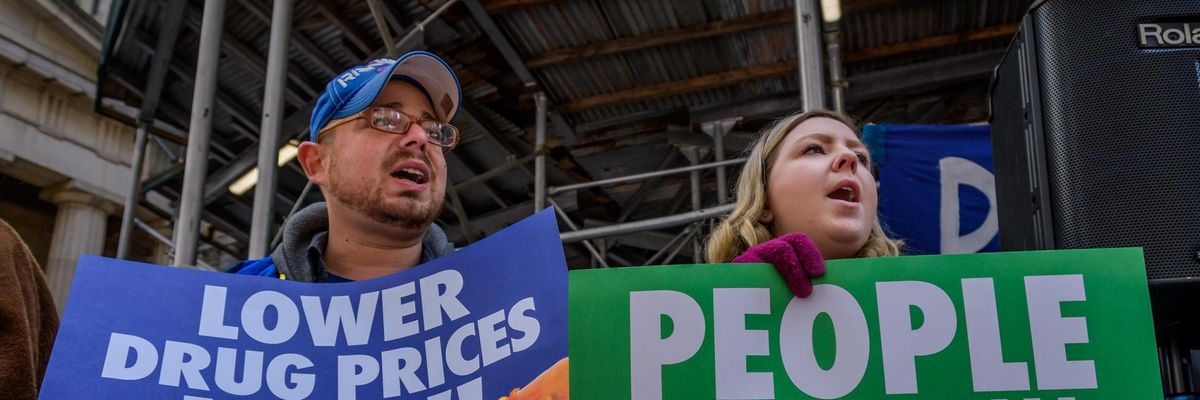
The deadly coronavirus pandemic laid bare many inequalities in American society--and perhaps no inequality more devastating than disparities in healthcare. As workers had their hours slashed and millions were laid off entirely, we saw that the chasm between who has health coverage and who doesn't remains one of the most harmful in America today.
It's clear and urgent that our recovery from the pandemic must include healthcare reform. Namely: expanding Medicare, one of our country's most foundational and popular federal programs. We can do so by dropping the eligibility age, lowering the cost of prescription drugs, and ensuring the program finally covers hearing, vision, and dental benefits.
The holes in Medicare coverage are harming seniors as we speak.
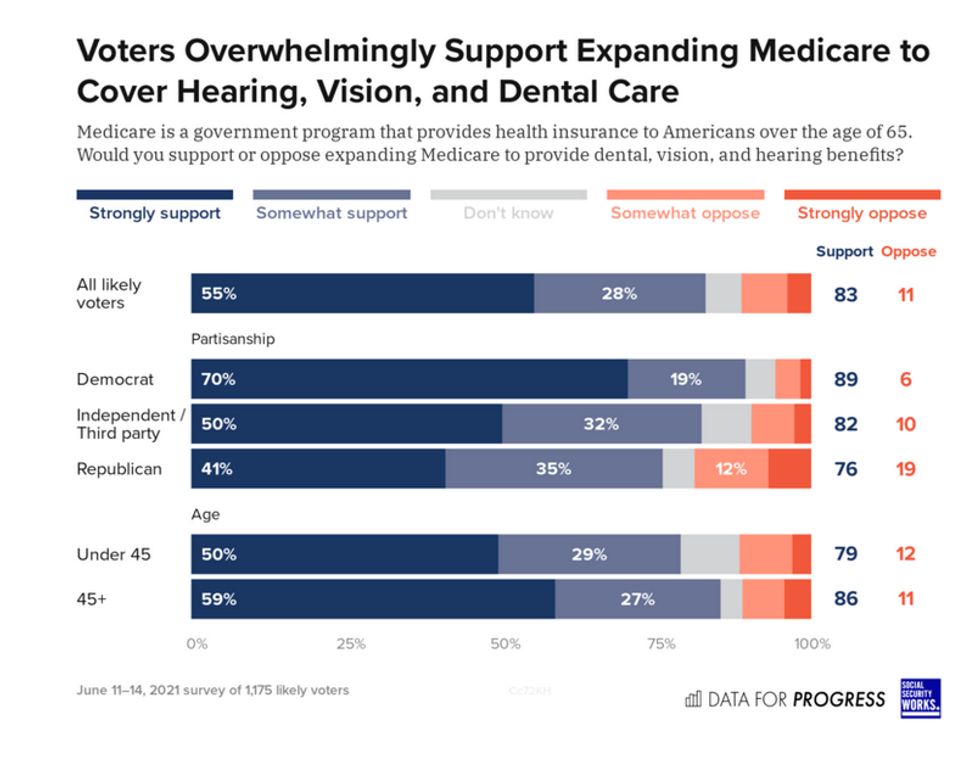
New polling from Data for Progress and Social Security Works proves just how popular these proposals are. A June survey of 1,175 likely voters shows a full 83 percent of voters support expanding Medicare to cover hearing, vision, and dental care, including 86 percent of those over the age of 45. That popularity crosses party lines: 89 percent of Democrats, 82 of Independents, and 76 percent of Republicans are in favor.
The holes in Medicare coverage are harming seniors as we speak. Researchers at Johns Hopkins University found that mild hearing loss doubled dementia risk. Poor oral health and untreated gum disease also leads to increased serious risk of heart attacks, strokes, rheumatoid arthritis, and worsened diabetes. And aging takes a toll on vision, leading to injury, cognitive impairment, and depression.
In the richest country in the world, the outrageous reality is that 75 percent of senior citizens who suffer from hearing loss do not have a hearing aid because of the prohibitive cost. Sixty-five percent of senior citizens have no dental insurance and no idea how they will be able to afford to go to a dentist.
During the pandemic, more than 10 percent of people 65 and older lost their jobs. That's about 1.1 million seniors. While nearly all workers 65 and older were Medicare beneficiaries, almost half had insurance coverage from their employer to cover medical expenses. Hearing, vision, and dental care could be pushed even further out of reach without that back-up coverage.
The numbers are even more devastating when we look at those below the current Medicare eligibility age. Nearly 6 million workers 55 years old and older lost their jobs in the spring of 2020--15% of total employment for this group--and we remain over 2 million jobs away from their employment levels before the pandemic hit. The U.S. Census Bureau found that for the first time in nearly 50 years, jobseekers (55 and older) are facing higher rates of unemployment and staying unemployed longer than those a few years younger. The decline in employment for Black, Hispanic, and Asian older workers was more than twice that of white older workers. And with older workers less likely to be able to telework coming into the pandemic, it stands to reason that Americans 55+ might have also left the workforce out of fear for their own safety. Research shows that this may be "particularly true for older workers of color who have been hit harder from both the health and economic aspects of the pandemic."
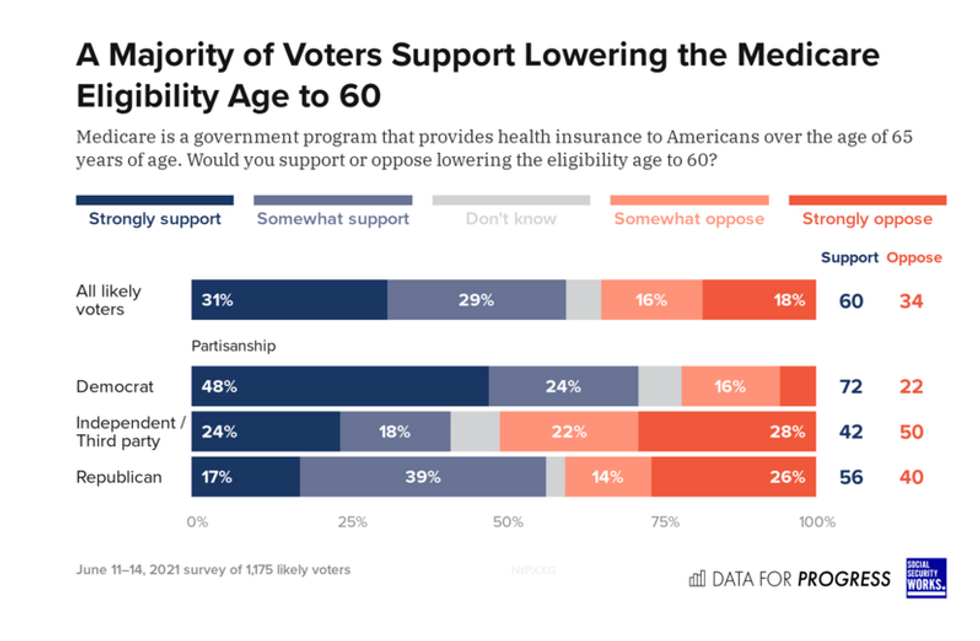
The COVID-19 pandemic is just the latest argument for why Medicare expansion must also include lowering the eligibility age. And the public is with us here too. As Data For Progress and Social Security Works' new research shows, 60 percent of likely voters--including 72 percent of Democrats and a majority of Republicans--favor lowering the eligibility age to 60. And the momentum is in our favor inside the halls of Congress too: more than 70 percent of Democrats in the House--including moderates, progressives, and those in some of the most vulnerable districts across the country--and many of our Senate colleagues are urging President Biden to include these critical proposals in his American Families Plan.
We also have an answer for the question that always arises around popular and necessary policies: how are we going to pay for it? The answer: by taking on the greed of the pharmaceutical industry and demanding that it stops ripping off taxpayers by charging us the highest prices in the world for lifesaving prescription drugs. It is a travesty that in the United States, one vial of insulin has gone from costing $21 in 1999 to $332 in 2019, reflecting a price increase of more than 1,000 percent.
By setting drug prices at the median price of other major countries like Canada, the United Kingdom, Germany, and France, the Congressional Budget Office estimates we'll save taxpayers at least $500 billion over a 10-year period. Additional cost-saving measures can raise the total saved to at least $650 billion. With those savings, we can finally make drug prices affordable for all Americans, guarantee Americans over 60 the security of having Medicare, and expand the benefits that Medicare provides to include dental, vision, and hearing for the first time.
We cannot come out of this national public health crisis only to retain the status quo--one that leaves at least 87 million uninsured or underinsured. We must do what is both popular and right, and expand Medicare.
The deadly coronavirus pandemic laid bare many inequalities in American society--and perhaps no inequality more devastating than disparities in healthcare. As workers had their hours slashed and millions were laid off entirely, we saw that the chasm between who has health coverage and who doesn't remains one of the most harmful in America today.
It's clear and urgent that our recovery from the pandemic must include healthcare reform. Namely: expanding Medicare, one of our country's most foundational and popular federal programs. We can do so by dropping the eligibility age, lowering the cost of prescription drugs, and ensuring the program finally covers hearing, vision, and dental benefits.
The holes in Medicare coverage are harming seniors as we speak.
New polling from Data for Progress and Social Security Works proves just how popular these proposals are. A June survey of 1,175 likely voters shows a full 83 percent of voters support expanding Medicare to cover hearing, vision, and dental care, including 86 percent of those over the age of 45. That popularity crosses party lines: 89 percent of Democrats, 82 of Independents, and 76 percent of Republicans are in favor.
The holes in Medicare coverage are harming seniors as we speak. Researchers at Johns Hopkins University found that mild hearing loss doubled dementia risk. Poor oral health and untreated gum disease also leads to increased serious risk of heart attacks, strokes, rheumatoid arthritis, and worsened diabetes. And aging takes a toll on vision, leading to injury, cognitive impairment, and depression.
In the richest country in the world, the outrageous reality is that 75 percent of senior citizens who suffer from hearing loss do not have a hearing aid because of the prohibitive cost. Sixty-five percent of senior citizens have no dental insurance and no idea how they will be able to afford to go to a dentist.
During the pandemic, more than 10 percent of people 65 and older lost their jobs. That's about 1.1 million seniors. While nearly all workers 65 and older were Medicare beneficiaries, almost half had insurance coverage from their employer to cover medical expenses. Hearing, vision, and dental care could be pushed even further out of reach without that back-up coverage.
The numbers are even more devastating when we look at those below the current Medicare eligibility age. Nearly 6 million workers 55 years old and older lost their jobs in the spring of 2020--15% of total employment for this group--and we remain over 2 million jobs away from their employment levels before the pandemic hit. The U.S. Census Bureau found that for the first time in nearly 50 years, jobseekers (55 and older) are facing higher rates of unemployment and staying unemployed longer than those a few years younger. The decline in employment for Black, Hispanic, and Asian older workers was more than twice that of white older workers. And with older workers less likely to be able to telework coming into the pandemic, it stands to reason that Americans 55+ might have also left the workforce out of fear for their own safety. Research shows that this may be "particularly true for older workers of color who have been hit harder from both the health and economic aspects of the pandemic."
The COVID-19 pandemic is just the latest argument for why Medicare expansion must also include lowering the eligibility age. And the public is with us here too. As Data For Progress and Social Security Works' new research shows, 60 percent of likely voters--including 72 percent of Democrats and a majority of Republicans--favor lowering the eligibility age to 60. And the momentum is in our favor inside the halls of Congress too: more than 70 percent of Democrats in the House--including moderates, progressives, and those in some of the most vulnerable districts across the country--and many of our Senate colleagues are urging President Biden to include these critical proposals in his American Families Plan.
We also have an answer for the question that always arises around popular and necessary policies: how are we going to pay for it? The answer: by taking on the greed of the pharmaceutical industry and demanding that it stops ripping off taxpayers by charging us the highest prices in the world for lifesaving prescription drugs. It is a travesty that in the United States, one vial of insulin has gone from costing $21 in 1999 to $332 in 2019, reflecting a price increase of more than 1,000 percent.
By setting drug prices at the median price of other major countries like Canada, the United Kingdom, Germany, and France, the Congressional Budget Office estimates we'll save taxpayers at least $500 billion over a 10-year period. Additional cost-saving measures can raise the total saved to at least $650 billion. With those savings, we can finally make drug prices affordable for all Americans, guarantee Americans over 60 the security of having Medicare, and expand the benefits that Medicare provides to include dental, vision, and hearing for the first time.
We cannot come out of this national public health crisis only to retain the status quo--one that leaves at least 87 million uninsured or underinsured. We must do what is both popular and right, and expand Medicare.
The deadly coronavirus pandemic laid bare many inequalities in American society--and perhaps no inequality more devastating than disparities in healthcare. As workers had their hours slashed and millions were laid off entirely, we saw that the chasm between who has health coverage and who doesn't remains one of the most harmful in America today.
It's clear and urgent that our recovery from the pandemic must include healthcare reform. Namely: expanding Medicare, one of our country's most foundational and popular federal programs. We can do so by dropping the eligibility age, lowering the cost of prescription drugs, and ensuring the program finally covers hearing, vision, and dental benefits.
The holes in Medicare coverage are harming seniors as we speak.
New polling from Data for Progress and Social Security Works proves just how popular these proposals are. A June survey of 1,175 likely voters shows a full 83 percent of voters support expanding Medicare to cover hearing, vision, and dental care, including 86 percent of those over the age of 45. That popularity crosses party lines: 89 percent of Democrats, 82 of Independents, and 76 percent of Republicans are in favor.
The holes in Medicare coverage are harming seniors as we speak. Researchers at Johns Hopkins University found that mild hearing loss doubled dementia risk. Poor oral health and untreated gum disease also leads to increased serious risk of heart attacks, strokes, rheumatoid arthritis, and worsened diabetes. And aging takes a toll on vision, leading to injury, cognitive impairment, and depression.
In the richest country in the world, the outrageous reality is that 75 percent of senior citizens who suffer from hearing loss do not have a hearing aid because of the prohibitive cost. Sixty-five percent of senior citizens have no dental insurance and no idea how they will be able to afford to go to a dentist.
During the pandemic, more than 10 percent of people 65 and older lost their jobs. That's about 1.1 million seniors. While nearly all workers 65 and older were Medicare beneficiaries, almost half had insurance coverage from their employer to cover medical expenses. Hearing, vision, and dental care could be pushed even further out of reach without that back-up coverage.
The numbers are even more devastating when we look at those below the current Medicare eligibility age. Nearly 6 million workers 55 years old and older lost their jobs in the spring of 2020--15% of total employment for this group--and we remain over 2 million jobs away from their employment levels before the pandemic hit. The U.S. Census Bureau found that for the first time in nearly 50 years, jobseekers (55 and older) are facing higher rates of unemployment and staying unemployed longer than those a few years younger. The decline in employment for Black, Hispanic, and Asian older workers was more than twice that of white older workers. And with older workers less likely to be able to telework coming into the pandemic, it stands to reason that Americans 55+ might have also left the workforce out of fear for their own safety. Research shows that this may be "particularly true for older workers of color who have been hit harder from both the health and economic aspects of the pandemic."
The COVID-19 pandemic is just the latest argument for why Medicare expansion must also include lowering the eligibility age. And the public is with us here too. As Data For Progress and Social Security Works' new research shows, 60 percent of likely voters--including 72 percent of Democrats and a majority of Republicans--favor lowering the eligibility age to 60. And the momentum is in our favor inside the halls of Congress too: more than 70 percent of Democrats in the House--including moderates, progressives, and those in some of the most vulnerable districts across the country--and many of our Senate colleagues are urging President Biden to include these critical proposals in his American Families Plan.
We also have an answer for the question that always arises around popular and necessary policies: how are we going to pay for it? The answer: by taking on the greed of the pharmaceutical industry and demanding that it stops ripping off taxpayers by charging us the highest prices in the world for lifesaving prescription drugs. It is a travesty that in the United States, one vial of insulin has gone from costing $21 in 1999 to $332 in 2019, reflecting a price increase of more than 1,000 percent.
By setting drug prices at the median price of other major countries like Canada, the United Kingdom, Germany, and France, the Congressional Budget Office estimates we'll save taxpayers at least $500 billion over a 10-year period. Additional cost-saving measures can raise the total saved to at least $650 billion. With those savings, we can finally make drug prices affordable for all Americans, guarantee Americans over 60 the security of having Medicare, and expand the benefits that Medicare provides to include dental, vision, and hearing for the first time.
We cannot come out of this national public health crisis only to retain the status quo--one that leaves at least 87 million uninsured or underinsured. We must do what is both popular and right, and expand Medicare.