SUBSCRIBE TO OUR FREE NEWSLETTER
Daily news & progressive opinion—funded by the people, not the corporations—delivered straight to your inbox.
5
#000000
#FFFFFF
To donate by check, phone, or other method, see our More Ways to Give page.
Daily news & progressive opinion—funded by the people, not the corporations—delivered straight to your inbox.
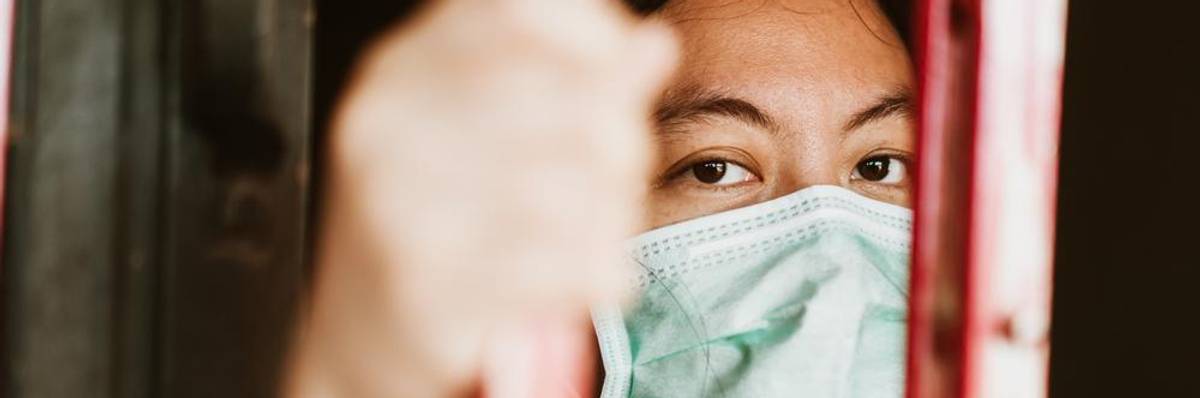
We've got over a million people in prison, nearly a million more in jail, and half a million in immigrant detention. (Photo: Shutterstock)
If you've ever had a parent or loved one incarcerated, you know how scary it can be. There's so much that can go wrong in prison, and neither you nor your loved one have much control over it.
Thanks to mass incarceration, millions live with this fear every day--64 percent of U.S. adults have had an immediate or extended family member incarcerated. And now, in addition to the familiar fears, they have to wonder if the coronavirus will kill the person they hold dear.
Outside the inhumane practice of solitary confinement, social distancing doesn't exist in America's overcrowded prisons. And hand sanitizer is a banned substance in many detention facilities. As a result, prisons have emerged as hotspots of COVID-19 infection. Four of the top five largest outbreak sites are prisons.
Take Tennessee, where a person in prison is nearly 5,000 percent more likely than someone walking the streets to contract the coronavirus, and 255 percent more likely to die from it.
In some states, infection rates sound like something out of a horror movie. Take Tennessee, where a person in prison is nearly 5,000 percent more likely than someone walking the streets to contract the coronavirus, and 255 percent more likely to die from it.
Or Marion Correctional Institution in Ohio, which has a nearly 90 percent infection rate. "The coronavirus is just spreading like wildfire [in here]," said a person incarcerated at the facility.
For people in prison and their families, this is a terrifying new reality.
And it isn't just the incarcerated who are at risk--it's the people who work in prisons. In Indiana, for example. someone who works at a prison is 1,116 percent more likely than your average Hoosier to be infected.
In prisons across the country, correctional officers, medical professionals, and other prison staff eventually clock out, go home to family or friends, pump gas, and shop at grocery stores. Those workers could inadvertently spread the virus throughout their communities.
Prison outbreaks threaten the entire public. Fortunately, there's a simple solution: release more people from prison.
I don't blame you if you think that sounds counterintuitive, but many states are actually trying it already. There is no uniform criteria for release, but they've usually emphasized people who are vulnerable and low-risk.
New York is releasing pregnant women convicted on nonviolent charges with under six months remaining on their sentences. Wisconsin has released over 1,000 people who were incarcerated for technical violations of probation or parole. And New Jersey has been releasing people to emergency medical-home confinement.
These moves are popular. In a recent Data for Progress poll, 66 percent of voters surveyed--including 59 percent of those who identify as "very conservative"--supported "measures to reduce overcrowding in prisons and jails as a response to the coronavirus."
Specifically, the poll found majority support both for releasing people who are within six months of completing their sentences, and releasing anyone charged with an offense that does not involve a serious physical safety risk to the community.
We've got over a million people in prison, nearly a million more in jail, and half a million in immigrant detention. The number of incarcerated folks contracting and dying from coronavirus will continue to rise in disproportionate fashion. And so will infection rates for prison staff and the risks to their communities--unless we do something about it.
Expanding early release programs isn't simply a smart public policy decision. It's an acknowledgement that people in prison were sentenced to terms of confinement, not death.
I take solace in the fact that early release policies are proliferating in jurisdictions nationwide. But states need to do more. If they fail, they're effectively sentencing hundreds of people to die who were never legally sentenced to such a fate.
Dear Common Dreams reader, It’s been nearly 30 years since I co-founded Common Dreams with my late wife, Lina Newhouser. We had the radical notion that journalism should serve the public good, not corporate profits. It was clear to us from the outset what it would take to build such a project. No paid advertisements. No corporate sponsors. No millionaire publisher telling us what to think or do. Many people said we wouldn't last a year, but we proved those doubters wrong. Together with a tremendous team of journalists and dedicated staff, we built an independent media outlet free from the constraints of profits and corporate control. Our mission has always been simple: To inform. To inspire. To ignite change for the common good. Building Common Dreams was not easy. Our survival was never guaranteed. When you take on the most powerful forces—Wall Street greed, fossil fuel industry destruction, Big Tech lobbyists, and uber-rich oligarchs who have spent billions upon billions rigging the economy and democracy in their favor—the only bulwark you have is supporters who believe in your work. But here’s the urgent message from me today. It's never been this bad out there. And it's never been this hard to keep us going. At the very moment Common Dreams is most needed, the threats we face are intensifying. We need your support now more than ever. We don't accept corporate advertising and never will. We don't have a paywall because we don't think people should be blocked from critical news based on their ability to pay. Everything we do is funded by the donations of readers like you. When everyone does the little they can afford, we are strong. But if that support retreats or dries up, so do we. Will you donate now to make sure Common Dreams not only survives but thrives? —Craig Brown, Co-founder |
If you've ever had a parent or loved one incarcerated, you know how scary it can be. There's so much that can go wrong in prison, and neither you nor your loved one have much control over it.
Thanks to mass incarceration, millions live with this fear every day--64 percent of U.S. adults have had an immediate or extended family member incarcerated. And now, in addition to the familiar fears, they have to wonder if the coronavirus will kill the person they hold dear.
Outside the inhumane practice of solitary confinement, social distancing doesn't exist in America's overcrowded prisons. And hand sanitizer is a banned substance in many detention facilities. As a result, prisons have emerged as hotspots of COVID-19 infection. Four of the top five largest outbreak sites are prisons.
Take Tennessee, where a person in prison is nearly 5,000 percent more likely than someone walking the streets to contract the coronavirus, and 255 percent more likely to die from it.
In some states, infection rates sound like something out of a horror movie. Take Tennessee, where a person in prison is nearly 5,000 percent more likely than someone walking the streets to contract the coronavirus, and 255 percent more likely to die from it.
Or Marion Correctional Institution in Ohio, which has a nearly 90 percent infection rate. "The coronavirus is just spreading like wildfire [in here]," said a person incarcerated at the facility.
For people in prison and their families, this is a terrifying new reality.
And it isn't just the incarcerated who are at risk--it's the people who work in prisons. In Indiana, for example. someone who works at a prison is 1,116 percent more likely than your average Hoosier to be infected.
In prisons across the country, correctional officers, medical professionals, and other prison staff eventually clock out, go home to family or friends, pump gas, and shop at grocery stores. Those workers could inadvertently spread the virus throughout their communities.
Prison outbreaks threaten the entire public. Fortunately, there's a simple solution: release more people from prison.
I don't blame you if you think that sounds counterintuitive, but many states are actually trying it already. There is no uniform criteria for release, but they've usually emphasized people who are vulnerable and low-risk.
New York is releasing pregnant women convicted on nonviolent charges with under six months remaining on their sentences. Wisconsin has released over 1,000 people who were incarcerated for technical violations of probation or parole. And New Jersey has been releasing people to emergency medical-home confinement.
These moves are popular. In a recent Data for Progress poll, 66 percent of voters surveyed--including 59 percent of those who identify as "very conservative"--supported "measures to reduce overcrowding in prisons and jails as a response to the coronavirus."
Specifically, the poll found majority support both for releasing people who are within six months of completing their sentences, and releasing anyone charged with an offense that does not involve a serious physical safety risk to the community.
We've got over a million people in prison, nearly a million more in jail, and half a million in immigrant detention. The number of incarcerated folks contracting and dying from coronavirus will continue to rise in disproportionate fashion. And so will infection rates for prison staff and the risks to their communities--unless we do something about it.
Expanding early release programs isn't simply a smart public policy decision. It's an acknowledgement that people in prison were sentenced to terms of confinement, not death.
I take solace in the fact that early release policies are proliferating in jurisdictions nationwide. But states need to do more. If they fail, they're effectively sentencing hundreds of people to die who were never legally sentenced to such a fate.
If you've ever had a parent or loved one incarcerated, you know how scary it can be. There's so much that can go wrong in prison, and neither you nor your loved one have much control over it.
Thanks to mass incarceration, millions live with this fear every day--64 percent of U.S. adults have had an immediate or extended family member incarcerated. And now, in addition to the familiar fears, they have to wonder if the coronavirus will kill the person they hold dear.
Outside the inhumane practice of solitary confinement, social distancing doesn't exist in America's overcrowded prisons. And hand sanitizer is a banned substance in many detention facilities. As a result, prisons have emerged as hotspots of COVID-19 infection. Four of the top five largest outbreak sites are prisons.
Take Tennessee, where a person in prison is nearly 5,000 percent more likely than someone walking the streets to contract the coronavirus, and 255 percent more likely to die from it.
In some states, infection rates sound like something out of a horror movie. Take Tennessee, where a person in prison is nearly 5,000 percent more likely than someone walking the streets to contract the coronavirus, and 255 percent more likely to die from it.
Or Marion Correctional Institution in Ohio, which has a nearly 90 percent infection rate. "The coronavirus is just spreading like wildfire [in here]," said a person incarcerated at the facility.
For people in prison and their families, this is a terrifying new reality.
And it isn't just the incarcerated who are at risk--it's the people who work in prisons. In Indiana, for example. someone who works at a prison is 1,116 percent more likely than your average Hoosier to be infected.
In prisons across the country, correctional officers, medical professionals, and other prison staff eventually clock out, go home to family or friends, pump gas, and shop at grocery stores. Those workers could inadvertently spread the virus throughout their communities.
Prison outbreaks threaten the entire public. Fortunately, there's a simple solution: release more people from prison.
I don't blame you if you think that sounds counterintuitive, but many states are actually trying it already. There is no uniform criteria for release, but they've usually emphasized people who are vulnerable and low-risk.
New York is releasing pregnant women convicted on nonviolent charges with under six months remaining on their sentences. Wisconsin has released over 1,000 people who were incarcerated for technical violations of probation or parole. And New Jersey has been releasing people to emergency medical-home confinement.
These moves are popular. In a recent Data for Progress poll, 66 percent of voters surveyed--including 59 percent of those who identify as "very conservative"--supported "measures to reduce overcrowding in prisons and jails as a response to the coronavirus."
Specifically, the poll found majority support both for releasing people who are within six months of completing their sentences, and releasing anyone charged with an offense that does not involve a serious physical safety risk to the community.
We've got over a million people in prison, nearly a million more in jail, and half a million in immigrant detention. The number of incarcerated folks contracting and dying from coronavirus will continue to rise in disproportionate fashion. And so will infection rates for prison staff and the risks to their communities--unless we do something about it.
Expanding early release programs isn't simply a smart public policy decision. It's an acknowledgement that people in prison were sentenced to terms of confinement, not death.
I take solace in the fact that early release policies are proliferating in jurisdictions nationwide. But states need to do more. If they fail, they're effectively sentencing hundreds of people to die who were never legally sentenced to such a fate.