SUBSCRIBE TO OUR FREE NEWSLETTER
Daily news & progressive opinion—funded by the people, not the corporations—delivered straight to your inbox.
5
#000000
#FFFFFF
To donate by check, phone, or other method, see our More Ways to Give page.
Daily news & progressive opinion—funded by the people, not the corporations—delivered straight to your inbox.
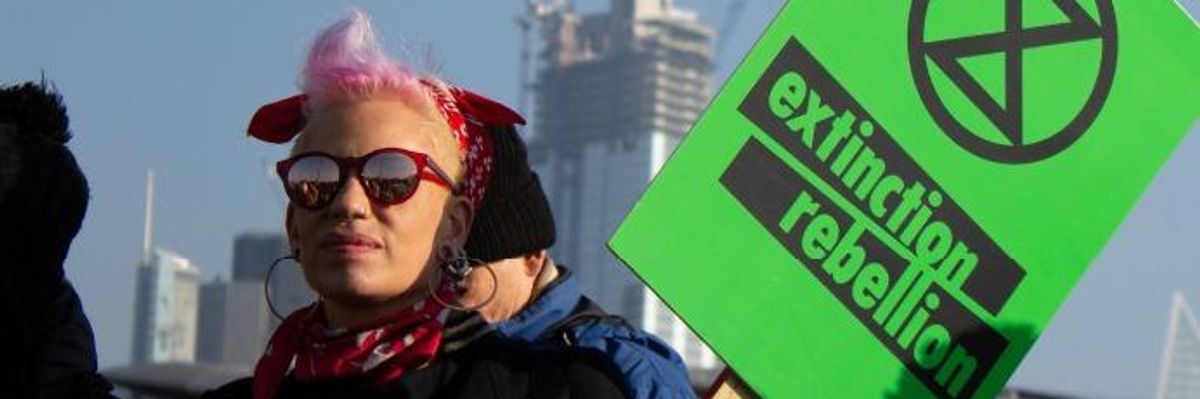
"We can't fix climate breakdown by continuing to do what we've always done - nor without tackling social division," the authors argue. (Photo: Julia Hawkins/flickr/cc)
"If you always do what you've always done, you always get what you've always gotten." Is there any better explanation for our collective failure so far to prevent climate breakdown and social division? As another year passes with global greenhouse gas emissions still rising, it's time to shake up what we've always done.
2018 was a thunderous year for the climate which gave us a glimpse of the new normal: record-breaking heat, a blazing Arctic, the northern hemisphere seemingly on fire. These, alongside a clanging alarm about the disastrous impacts of 1.5degC of global warming from the UN in October, contributed to growing public recognition that climate breakdown is very real and its effects serious.
2018 also saw growing momentum for climate movements in confronting political inaction. From the Extinction Rebellion movement in the UK, to thousands of school children on strike in Australia (and similar movements elsewhere). Climate demonstrations in Europe bigger than ever. A record 5,000 people joined civil disobedience to protest coal mines in Germany. A number of laws were also passed that pointed in the right direction: Ireland and a number of cities divested from fossil fuels; the EU gave backing to citizen and community-owned renewable energy, and Spain lifted the controversial 'sun tax'. The costs of renewable energy and energy storage also fell.
And yet fundamentally, and depressingly, little really changed on climate change. The UN climate talks in Poland at the end of 2018, sponsored by the coal industry, once again resulted in low ambition, loopholes to undermine action, and steps backwards on meaningful finance and equity for countries of the global South. In the three years since the Paris Agreement of 2015, major industrialised countries have pledged carbon cuts that would result in global warming twice as hot as the targeted 1.5degC. And most countries are not on track to meet even those.
One reason is that climate policy has been dominated by the neoliberal idea that the private sector can lead the transition to a low-carbon economy. Such approaches to climate action have failed spectacularly. They have not stopped the rise in fossil fuel use, despite growth in renewable energy. Rather, renewables have grown in tandem with fossil fuels and energy demand. Market-focused policies have constrained the roll-out of renewables and other climate friendly solutions - which are restricted according to their ability to generate profit for private interests. And they have resulted in growing energy poverty.
Market-first approaches have failed to reduce emissions as much as they have fallen short in terms of social justice. The Gilets Jaunes (yellow vests)protests in France have shown that unjust 'green' policies result in push-back from lower income people, who feel penalised and stand to gain nothing from them. They are challenging the current climate discourse. The climate movement must see these protests for what they are: a push back against neoliberal approaches which seek to unload risks and costs away from corporations and on to the shoulders of the working class majority. The fight to fix climate breakdown will never be won if workers and low-income households are excluded. Expecting them to pay for the costs of the pollution that they did not create will backfire.
In 2019, climate action must shift in a different, radical direction. The missing link is energy democracy. Energy democracy starts from the standpoint that energy is a common good - not a commodity to be bought and sold. Access to energy is a human right for everyone - a basic condition to participate in public life with dignity. Energy democracy calls for public and social ownership of energy, to serve both social and ecological needs: energy that is reliable, affordable and clean.
With energy socially owned and in democratic control, we can reduce energy waste and overall consumption, decarbonise, and empower communities to make their own energy choices. Democratic control would mean a much faster transformation to 100% renewable energy for all. It means inclusive solutions - tackling energy ownership, generation, savings, storage, and action on energy poverty together - that would improve millions of people's lives. Unlike the current profit-focused model, it does not ignore the dire need for quality energy efficient homes for all.
Energy democracy rejects profit-focused energy, which has seen large energy interests stubbornly cling to fossil fuels and resist action on energy poverty. It provides a path away from the destructive competition for "market share" - a legacy of privatisation. Servicing investor profit ties the large 'incumbent' companies to their existing capacity, forcing them to resist the introduction of renewables. All of this prevents the kind of planning, cooperation, and local input that the transition to a fossil-free economy demands.
We must encourage and support communities and municipalities to take control of their own energy needs and wants, putting solidarity as a central value. But energy democracy needs to operate at all levels - local communities, regional and national governments, and international institutions like the EU.
Energy democracy promotes a genuinely 'Just Transition', ensuring workers whose jobs could be impacted by the shift away from fossil fuels, are protected and actively included in decision making. And it allows for a planned and orderly transition, not one that's held captive to the enforced chaos of the market.
We can't fix climate breakdown by continuing to do what we've always done - nor without tackling social division. In 2019, let's put energy democracy centre-stage.
Dear Common Dreams reader, It’s been nearly 30 years since I co-founded Common Dreams with my late wife, Lina Newhouser. We had the radical notion that journalism should serve the public good, not corporate profits. It was clear to us from the outset what it would take to build such a project. No paid advertisements. No corporate sponsors. No millionaire publisher telling us what to think or do. Many people said we wouldn't last a year, but we proved those doubters wrong. Together with a tremendous team of journalists and dedicated staff, we built an independent media outlet free from the constraints of profits and corporate control. Our mission has always been simple: To inform. To inspire. To ignite change for the common good. Building Common Dreams was not easy. Our survival was never guaranteed. When you take on the most powerful forces—Wall Street greed, fossil fuel industry destruction, Big Tech lobbyists, and uber-rich oligarchs who have spent billions upon billions rigging the economy and democracy in their favor—the only bulwark you have is supporters who believe in your work. But here’s the urgent message from me today. It's never been this bad out there. And it's never been this hard to keep us going. At the very moment Common Dreams is most needed, the threats we face are intensifying. We need your support now more than ever. We don't accept corporate advertising and never will. We don't have a paywall because we don't think people should be blocked from critical news based on their ability to pay. Everything we do is funded by the donations of readers like you. When everyone does the little they can afford, we are strong. But if that support retreats or dries up, so do we. Will you donate now to make sure Common Dreams not only survives but thrives? —Craig Brown, Co-founder |
"If you always do what you've always done, you always get what you've always gotten." Is there any better explanation for our collective failure so far to prevent climate breakdown and social division? As another year passes with global greenhouse gas emissions still rising, it's time to shake up what we've always done.
2018 was a thunderous year for the climate which gave us a glimpse of the new normal: record-breaking heat, a blazing Arctic, the northern hemisphere seemingly on fire. These, alongside a clanging alarm about the disastrous impacts of 1.5degC of global warming from the UN in October, contributed to growing public recognition that climate breakdown is very real and its effects serious.
2018 also saw growing momentum for climate movements in confronting political inaction. From the Extinction Rebellion movement in the UK, to thousands of school children on strike in Australia (and similar movements elsewhere). Climate demonstrations in Europe bigger than ever. A record 5,000 people joined civil disobedience to protest coal mines in Germany. A number of laws were also passed that pointed in the right direction: Ireland and a number of cities divested from fossil fuels; the EU gave backing to citizen and community-owned renewable energy, and Spain lifted the controversial 'sun tax'. The costs of renewable energy and energy storage also fell.
And yet fundamentally, and depressingly, little really changed on climate change. The UN climate talks in Poland at the end of 2018, sponsored by the coal industry, once again resulted in low ambition, loopholes to undermine action, and steps backwards on meaningful finance and equity for countries of the global South. In the three years since the Paris Agreement of 2015, major industrialised countries have pledged carbon cuts that would result in global warming twice as hot as the targeted 1.5degC. And most countries are not on track to meet even those.
One reason is that climate policy has been dominated by the neoliberal idea that the private sector can lead the transition to a low-carbon economy. Such approaches to climate action have failed spectacularly. They have not stopped the rise in fossil fuel use, despite growth in renewable energy. Rather, renewables have grown in tandem with fossil fuels and energy demand. Market-focused policies have constrained the roll-out of renewables and other climate friendly solutions - which are restricted according to their ability to generate profit for private interests. And they have resulted in growing energy poverty.
Market-first approaches have failed to reduce emissions as much as they have fallen short in terms of social justice. The Gilets Jaunes (yellow vests)protests in France have shown that unjust 'green' policies result in push-back from lower income people, who feel penalised and stand to gain nothing from them. They are challenging the current climate discourse. The climate movement must see these protests for what they are: a push back against neoliberal approaches which seek to unload risks and costs away from corporations and on to the shoulders of the working class majority. The fight to fix climate breakdown will never be won if workers and low-income households are excluded. Expecting them to pay for the costs of the pollution that they did not create will backfire.
In 2019, climate action must shift in a different, radical direction. The missing link is energy democracy. Energy democracy starts from the standpoint that energy is a common good - not a commodity to be bought and sold. Access to energy is a human right for everyone - a basic condition to participate in public life with dignity. Energy democracy calls for public and social ownership of energy, to serve both social and ecological needs: energy that is reliable, affordable and clean.
With energy socially owned and in democratic control, we can reduce energy waste and overall consumption, decarbonise, and empower communities to make their own energy choices. Democratic control would mean a much faster transformation to 100% renewable energy for all. It means inclusive solutions - tackling energy ownership, generation, savings, storage, and action on energy poverty together - that would improve millions of people's lives. Unlike the current profit-focused model, it does not ignore the dire need for quality energy efficient homes for all.
Energy democracy rejects profit-focused energy, which has seen large energy interests stubbornly cling to fossil fuels and resist action on energy poverty. It provides a path away from the destructive competition for "market share" - a legacy of privatisation. Servicing investor profit ties the large 'incumbent' companies to their existing capacity, forcing them to resist the introduction of renewables. All of this prevents the kind of planning, cooperation, and local input that the transition to a fossil-free economy demands.
We must encourage and support communities and municipalities to take control of their own energy needs and wants, putting solidarity as a central value. But energy democracy needs to operate at all levels - local communities, regional and national governments, and international institutions like the EU.
Energy democracy promotes a genuinely 'Just Transition', ensuring workers whose jobs could be impacted by the shift away from fossil fuels, are protected and actively included in decision making. And it allows for a planned and orderly transition, not one that's held captive to the enforced chaos of the market.
We can't fix climate breakdown by continuing to do what we've always done - nor without tackling social division. In 2019, let's put energy democracy centre-stage.
"If you always do what you've always done, you always get what you've always gotten." Is there any better explanation for our collective failure so far to prevent climate breakdown and social division? As another year passes with global greenhouse gas emissions still rising, it's time to shake up what we've always done.
2018 was a thunderous year for the climate which gave us a glimpse of the new normal: record-breaking heat, a blazing Arctic, the northern hemisphere seemingly on fire. These, alongside a clanging alarm about the disastrous impacts of 1.5degC of global warming from the UN in October, contributed to growing public recognition that climate breakdown is very real and its effects serious.
2018 also saw growing momentum for climate movements in confronting political inaction. From the Extinction Rebellion movement in the UK, to thousands of school children on strike in Australia (and similar movements elsewhere). Climate demonstrations in Europe bigger than ever. A record 5,000 people joined civil disobedience to protest coal mines in Germany. A number of laws were also passed that pointed in the right direction: Ireland and a number of cities divested from fossil fuels; the EU gave backing to citizen and community-owned renewable energy, and Spain lifted the controversial 'sun tax'. The costs of renewable energy and energy storage also fell.
And yet fundamentally, and depressingly, little really changed on climate change. The UN climate talks in Poland at the end of 2018, sponsored by the coal industry, once again resulted in low ambition, loopholes to undermine action, and steps backwards on meaningful finance and equity for countries of the global South. In the three years since the Paris Agreement of 2015, major industrialised countries have pledged carbon cuts that would result in global warming twice as hot as the targeted 1.5degC. And most countries are not on track to meet even those.
One reason is that climate policy has been dominated by the neoliberal idea that the private sector can lead the transition to a low-carbon economy. Such approaches to climate action have failed spectacularly. They have not stopped the rise in fossil fuel use, despite growth in renewable energy. Rather, renewables have grown in tandem with fossil fuels and energy demand. Market-focused policies have constrained the roll-out of renewables and other climate friendly solutions - which are restricted according to their ability to generate profit for private interests. And they have resulted in growing energy poverty.
Market-first approaches have failed to reduce emissions as much as they have fallen short in terms of social justice. The Gilets Jaunes (yellow vests)protests in France have shown that unjust 'green' policies result in push-back from lower income people, who feel penalised and stand to gain nothing from them. They are challenging the current climate discourse. The climate movement must see these protests for what they are: a push back against neoliberal approaches which seek to unload risks and costs away from corporations and on to the shoulders of the working class majority. The fight to fix climate breakdown will never be won if workers and low-income households are excluded. Expecting them to pay for the costs of the pollution that they did not create will backfire.
In 2019, climate action must shift in a different, radical direction. The missing link is energy democracy. Energy democracy starts from the standpoint that energy is a common good - not a commodity to be bought and sold. Access to energy is a human right for everyone - a basic condition to participate in public life with dignity. Energy democracy calls for public and social ownership of energy, to serve both social and ecological needs: energy that is reliable, affordable and clean.
With energy socially owned and in democratic control, we can reduce energy waste and overall consumption, decarbonise, and empower communities to make their own energy choices. Democratic control would mean a much faster transformation to 100% renewable energy for all. It means inclusive solutions - tackling energy ownership, generation, savings, storage, and action on energy poverty together - that would improve millions of people's lives. Unlike the current profit-focused model, it does not ignore the dire need for quality energy efficient homes for all.
Energy democracy rejects profit-focused energy, which has seen large energy interests stubbornly cling to fossil fuels and resist action on energy poverty. It provides a path away from the destructive competition for "market share" - a legacy of privatisation. Servicing investor profit ties the large 'incumbent' companies to their existing capacity, forcing them to resist the introduction of renewables. All of this prevents the kind of planning, cooperation, and local input that the transition to a fossil-free economy demands.
We must encourage and support communities and municipalities to take control of their own energy needs and wants, putting solidarity as a central value. But energy democracy needs to operate at all levels - local communities, regional and national governments, and international institutions like the EU.
Energy democracy promotes a genuinely 'Just Transition', ensuring workers whose jobs could be impacted by the shift away from fossil fuels, are protected and actively included in decision making. And it allows for a planned and orderly transition, not one that's held captive to the enforced chaos of the market.
We can't fix climate breakdown by continuing to do what we've always done - nor without tackling social division. In 2019, let's put energy democracy centre-stage.