SUBSCRIBE TO OUR FREE NEWSLETTER
Daily news & progressive opinion—funded by the people, not the corporations—delivered straight to your inbox.
5
#000000
#FFFFFF
To donate by check, phone, or other method, see our More Ways to Give page.
Daily news & progressive opinion—funded by the people, not the corporations—delivered straight to your inbox.
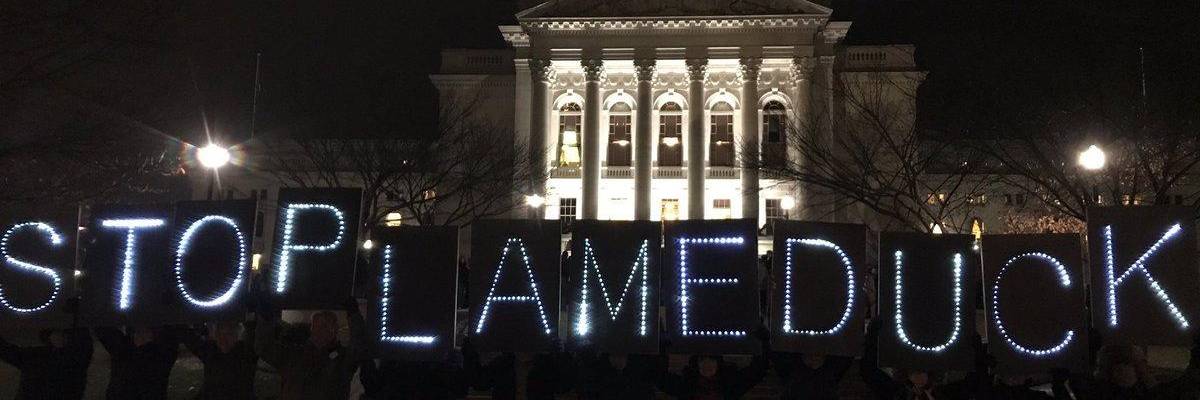
If the power grabs by Wisconsin Republicans against the popularly elected incoming statewide Democrats weren't enough, there is also a plan by Wisconsin GOP leadership to make cuts to early voting in order to limit turnout in future elections. (Photo: Screengrab)
Voters should have the final say in our democracy. But right now, Republicans in charge of legislatures in several Midwestern states are trying to rig the system -- because they didn't like the election results. Make no mistake, the blatant power grabs by these legislatures in the lame duck sessions are an effort to ignore the will of everyday voters. We cannot sit quietly by and let them get away with it
In Wisconsin, Republicans legislators are ramping up an effort to limit the power of incoming Governor Tony Evers and Attorney General Josh Kaul, both Democrats, before Republican Gov. Scott Walker leaves office. Ironically, both Evers and Kaul won the statewide popular vote in the 2018 election, however Republicans running for the State Assembly lost the statewide popular but won 63% of the seats in the chamber due to partisan gerrymandering. One of the proposals in the GOP's plan is to allow the legislature to sidestep the new Democratic attorney general and hire their own private attorneys, paid by taxpayers, to represent the state legislature in cases dealing with gerrymandering, voter ID, the Affordable Care Act, and other issues.
If the power grabs by Wisconsin Republicans against the popularly elected incoming statewide Democrats weren't enough, there is also a plan by Wisconsin GOP leadership to make cuts to early voting in order to limit turnout in future elections.
Things aren't much different in neighboring Michigan, where Republicans are rushing legislation to limit the power of the incoming Democratic governor, secretary of state, and attorney general before Republican Gov. Rick Snyder leaves office. Michigan Republicans are also considering changes to initiatives voters approved on the November 2018 ballot, including on marijuana legalization, voting rights, and gerrymandering reform. And that's not all. Michigan GOP legislators are pushing bills that repeal parts of minimum wage and paid sick leave legislation that the legislature passed in September to keep those issues off the ballot. They are also pushing a package of bad bills related to campaign finance, including banning state and local agencies from requiring the disclosure of donors from dark money groups that spend money in elections.
The situation in Ohio is somewhat different from what is happening in Michigan and Wisconsin. In Ohio, Republicans won all statewide offices in the November 2018 election, so GOP legislative leaders are not rushing to remove power from any incoming statewide elected Democrat. Instead, they seek to remove power from everyday Ohioans by attacking the citizen initiative process. A bill pending in the Ohio lame duck session would make it harder for Ohioans to collect signatures to put initiatives and constitutional amendments on the ballot and raise the threshold for some initiatives to pass. The move comes after the Ohio Fair Districts coalition, led by Common Cause Ohio and the League of Women Voters of Ohio, recently won two successful anti-gerrymandering ballot initiative campaigns to limit the legislature's power in the redistricting process. If that's not enough, Ohio legislators are also considering a bill to limit people's free speech rights and the right to protest.
While Midwestern states move legislation that ignores the will of voters and tries to limit the people's power in government, it is important to remember that North Carolina is the example that Midwest Republicans are using. It was North Carolina Republicans in the 2016 lame duck session that passed legislation to limit the power of incoming Democratic Governor Roy Cooper. Now, in the current lame duck session, North Carolina Republicans are rushing legislation to enact a voter ID law after they lost their veto-proof supermajorities in the November 2018 election.
What do Wisconsin, Michigan, Ohio, and North Carolina all have in common?
You guessed it: extreme partisan gerrymandering. These states have had unfair voting maps for four election cycles now, leaving the majority party in charge feeling more bullish and confident in their ability to defy the will of voters and push more extreme legislation.
This is why...
Dear Common Dreams reader, It’s been nearly 30 years since I co-founded Common Dreams with my late wife, Lina Newhouser. We had the radical notion that journalism should serve the public good, not corporate profits. It was clear to us from the outset what it would take to build such a project. No paid advertisements. No corporate sponsors. No millionaire publisher telling us what to think or do. Many people said we wouldn't last a year, but we proved those doubters wrong. Together with a tremendous team of journalists and dedicated staff, we built an independent media outlet free from the constraints of profits and corporate control. Our mission has always been simple: To inform. To inspire. To ignite change for the common good. Building Common Dreams was not easy. Our survival was never guaranteed. When you take on the most powerful forces—Wall Street greed, fossil fuel industry destruction, Big Tech lobbyists, and uber-rich oligarchs who have spent billions upon billions rigging the economy and democracy in their favor—the only bulwark you have is supporters who believe in your work. But here’s the urgent message from me today. It's never been this bad out there. And it's never been this hard to keep us going. At the very moment Common Dreams is most needed, the threats we face are intensifying. We need your support now more than ever. We don't accept corporate advertising and never will. We don't have a paywall because we don't think people should be blocked from critical news based on their ability to pay. Everything we do is funded by the donations of readers like you. When everyone does the little they can afford, we are strong. But if that support retreats or dries up, so do we. Will you donate now to make sure Common Dreams not only survives but thrives? —Craig Brown, Co-founder |
Voters should have the final say in our democracy. But right now, Republicans in charge of legislatures in several Midwestern states are trying to rig the system -- because they didn't like the election results. Make no mistake, the blatant power grabs by these legislatures in the lame duck sessions are an effort to ignore the will of everyday voters. We cannot sit quietly by and let them get away with it
In Wisconsin, Republicans legislators are ramping up an effort to limit the power of incoming Governor Tony Evers and Attorney General Josh Kaul, both Democrats, before Republican Gov. Scott Walker leaves office. Ironically, both Evers and Kaul won the statewide popular vote in the 2018 election, however Republicans running for the State Assembly lost the statewide popular but won 63% of the seats in the chamber due to partisan gerrymandering. One of the proposals in the GOP's plan is to allow the legislature to sidestep the new Democratic attorney general and hire their own private attorneys, paid by taxpayers, to represent the state legislature in cases dealing with gerrymandering, voter ID, the Affordable Care Act, and other issues.
If the power grabs by Wisconsin Republicans against the popularly elected incoming statewide Democrats weren't enough, there is also a plan by Wisconsin GOP leadership to make cuts to early voting in order to limit turnout in future elections.
Things aren't much different in neighboring Michigan, where Republicans are rushing legislation to limit the power of the incoming Democratic governor, secretary of state, and attorney general before Republican Gov. Rick Snyder leaves office. Michigan Republicans are also considering changes to initiatives voters approved on the November 2018 ballot, including on marijuana legalization, voting rights, and gerrymandering reform. And that's not all. Michigan GOP legislators are pushing bills that repeal parts of minimum wage and paid sick leave legislation that the legislature passed in September to keep those issues off the ballot. They are also pushing a package of bad bills related to campaign finance, including banning state and local agencies from requiring the disclosure of donors from dark money groups that spend money in elections.
The situation in Ohio is somewhat different from what is happening in Michigan and Wisconsin. In Ohio, Republicans won all statewide offices in the November 2018 election, so GOP legislative leaders are not rushing to remove power from any incoming statewide elected Democrat. Instead, they seek to remove power from everyday Ohioans by attacking the citizen initiative process. A bill pending in the Ohio lame duck session would make it harder for Ohioans to collect signatures to put initiatives and constitutional amendments on the ballot and raise the threshold for some initiatives to pass. The move comes after the Ohio Fair Districts coalition, led by Common Cause Ohio and the League of Women Voters of Ohio, recently won two successful anti-gerrymandering ballot initiative campaigns to limit the legislature's power in the redistricting process. If that's not enough, Ohio legislators are also considering a bill to limit people's free speech rights and the right to protest.
While Midwestern states move legislation that ignores the will of voters and tries to limit the people's power in government, it is important to remember that North Carolina is the example that Midwest Republicans are using. It was North Carolina Republicans in the 2016 lame duck session that passed legislation to limit the power of incoming Democratic Governor Roy Cooper. Now, in the current lame duck session, North Carolina Republicans are rushing legislation to enact a voter ID law after they lost their veto-proof supermajorities in the November 2018 election.
What do Wisconsin, Michigan, Ohio, and North Carolina all have in common?
You guessed it: extreme partisan gerrymandering. These states have had unfair voting maps for four election cycles now, leaving the majority party in charge feeling more bullish and confident in their ability to defy the will of voters and push more extreme legislation.
This is why...
Voters should have the final say in our democracy. But right now, Republicans in charge of legislatures in several Midwestern states are trying to rig the system -- because they didn't like the election results. Make no mistake, the blatant power grabs by these legislatures in the lame duck sessions are an effort to ignore the will of everyday voters. We cannot sit quietly by and let them get away with it
In Wisconsin, Republicans legislators are ramping up an effort to limit the power of incoming Governor Tony Evers and Attorney General Josh Kaul, both Democrats, before Republican Gov. Scott Walker leaves office. Ironically, both Evers and Kaul won the statewide popular vote in the 2018 election, however Republicans running for the State Assembly lost the statewide popular but won 63% of the seats in the chamber due to partisan gerrymandering. One of the proposals in the GOP's plan is to allow the legislature to sidestep the new Democratic attorney general and hire their own private attorneys, paid by taxpayers, to represent the state legislature in cases dealing with gerrymandering, voter ID, the Affordable Care Act, and other issues.
If the power grabs by Wisconsin Republicans against the popularly elected incoming statewide Democrats weren't enough, there is also a plan by Wisconsin GOP leadership to make cuts to early voting in order to limit turnout in future elections.
Things aren't much different in neighboring Michigan, where Republicans are rushing legislation to limit the power of the incoming Democratic governor, secretary of state, and attorney general before Republican Gov. Rick Snyder leaves office. Michigan Republicans are also considering changes to initiatives voters approved on the November 2018 ballot, including on marijuana legalization, voting rights, and gerrymandering reform. And that's not all. Michigan GOP legislators are pushing bills that repeal parts of minimum wage and paid sick leave legislation that the legislature passed in September to keep those issues off the ballot. They are also pushing a package of bad bills related to campaign finance, including banning state and local agencies from requiring the disclosure of donors from dark money groups that spend money in elections.
The situation in Ohio is somewhat different from what is happening in Michigan and Wisconsin. In Ohio, Republicans won all statewide offices in the November 2018 election, so GOP legislative leaders are not rushing to remove power from any incoming statewide elected Democrat. Instead, they seek to remove power from everyday Ohioans by attacking the citizen initiative process. A bill pending in the Ohio lame duck session would make it harder for Ohioans to collect signatures to put initiatives and constitutional amendments on the ballot and raise the threshold for some initiatives to pass. The move comes after the Ohio Fair Districts coalition, led by Common Cause Ohio and the League of Women Voters of Ohio, recently won two successful anti-gerrymandering ballot initiative campaigns to limit the legislature's power in the redistricting process. If that's not enough, Ohio legislators are also considering a bill to limit people's free speech rights and the right to protest.
While Midwestern states move legislation that ignores the will of voters and tries to limit the people's power in government, it is important to remember that North Carolina is the example that Midwest Republicans are using. It was North Carolina Republicans in the 2016 lame duck session that passed legislation to limit the power of incoming Democratic Governor Roy Cooper. Now, in the current lame duck session, North Carolina Republicans are rushing legislation to enact a voter ID law after they lost their veto-proof supermajorities in the November 2018 election.
What do Wisconsin, Michigan, Ohio, and North Carolina all have in common?
You guessed it: extreme partisan gerrymandering. These states have had unfair voting maps for four election cycles now, leaving the majority party in charge feeling more bullish and confident in their ability to defy the will of voters and push more extreme legislation.
This is why...