
They'll do exactly what we did: pass on health insurance and decline the few extra bucks to make sure we didn't go to bed hungry. What else are we supposed to do when the government forces us to choose between our families and our future?(Photo: Getty Images)
Trump Is Rewriting Our Immigration Law To Come After Families Like Mine
It feels like they’re using children as chess pieces in a twisted political contest to force immigrants into the shadows of a nation we helped build
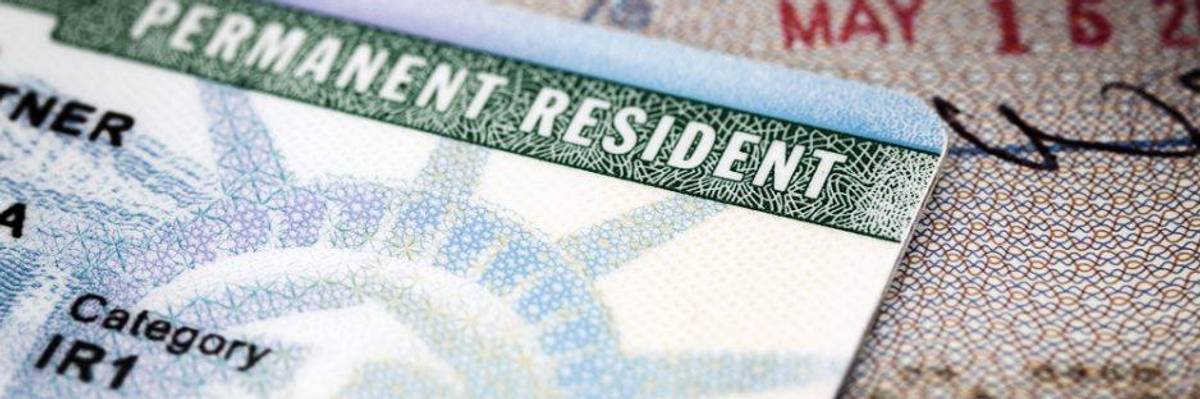
Late last month, the Trump administration released a draft rule that would change the way immigration works in the United States. Under the proposal, immigration officials will try to predict whether a person applying for a green card might receive government assistance, like Medicaid or the Supplemental Nutrition Assistant Program, at any point during their future life in the United States. If it seems possible -- because the applicant isn't wealthy or has a disability -- then the green card will be denied, even if the applicant has met all of the other criteria.
There have been rumors that this might happen for months. The first time I heard about it, I was sitting in my summer internship with the city of Dallas. One of my supervisors asked me if I was familiar with possible changes to the "public charge rule," which requires immigrants to prove that they will not use government benefits before they are granted permanent status. When I shook my head no, she gave me a handout that explained who would be affected.
Individuals with visas or legal permanent residents. Check.
Individuals who have used any federal assistance programs. Check.
I held my breath when I read it, my eyes darting from line to line while I felt the walls close in. This was about my family. They were looking for me.
My parents moved to Dallas from Chihuahua, Mexico in the early 90s. My brothers and I were all born in the United States. We used Medicaid and the Children's Health Insurance Program to get our standard vaccines as kids, and my parents got their health insurance through the Affordable Care Act. We followed all the rules and did exactly what we were supposed to do.
I always follow the rules. I just started my senior year of high school, and I have my days completely packed with extracurricular activities. That means debate on Mondays and Wednesdays, LULAC meetings Wednesday mornings, mock trial on Tuesdays, We Fight Fear meetings after school, volunteering Saturdays and Sundays, and SAT prep in between. I don't climb back into bed until 12 a.m., after finishing homework, sending emails, and setting up meetings.
I'm not just doing these things because I like them. I've never felt I have the option to turn down opportunities, because if I push myself hard enough to get a scholarship then all the late nights will be worth it.
I'm in the process of setting up my Common Application profile for college. I always knew that my parents wouldn't be able to afford my tuition, and that I would have to cobble together grants and scholarships to pay my way. So it's up to me to prove to colleges that they should pay for me to attend.
But when I heard about the new immigration rule this summer, I had to second-guess the one thing I was most certain about: going to college. If I applied for Pell Grants to cover tuition, was that going to count against my parents? If their income dipped below the threshold in this new immigration rule, would I need to stay home and get a job to ensure they weren't targeted? If I followed through on my dreams, and on all the work I've put in, would I be betraying my family?
If I applied for Pell Grants to cover tuition, was that going to count against my parents?
I'm not the only one who is scared. Once my mom found out about the rule, she told me she wasn't comfortable continuing my little brother's Medicaid coverage. He's only 3 years old, and he has so much growing left to do. The government knew it would create this risk when it announced the new rule: Documents from the Department of Homeland Security predict that people will receive less health care, and that disease rates will increase for U.S. citizens who have not been vaccinated yet.
Those documents are talking about my little brother.
When the rule finally came out last week, and I got to look at real words on paper instead of wading through a swirl of rumors, I got a tiny taste of relief. This version of the rule won't apply to people who already have green cards, and my mom just renewed hers. For now, I can daydream about college, and my parents can sign my brother up for health insurance.
Just a short while ago, we wouldn't have made the cut. There are hundreds of thousands of people who still won't. Those people, and those families, will see the opportunities they've worked so hard for finally within their children's reach, only to be forced to wave them away, in case it costs them everything. They'll do exactly what we did: pass on health insurance and decline the few extra bucks to make sure we didn't go to bed hungry. What else are we supposed to do when the government forces us to choose between our families and our future?
Even though I'm safe for now, I don't feel like I've won. This isn't a game. Not to me, not to my brothers or my parents.
But as I sit here and contemplate which college campus I'll be walking onto this time next fall, if I get to go to one at all, that's what it feels like. It feels like they're using children as chess pieces in a twisted political contest to force immigrants into the shadows of a nation we helped build.
An Urgent Message From Our Co-Founder
Dear Common Dreams reader, It’s been nearly 30 years since I co-founded Common Dreams with my late wife, Lina Newhouser. We had the radical notion that journalism should serve the public good, not corporate profits. It was clear to us from the outset what it would take to build such a project. No paid advertisements. No corporate sponsors. No millionaire publisher telling us what to think or do. Many people said we wouldn't last a year, but we proved those doubters wrong. Together with a tremendous team of journalists and dedicated staff, we built an independent media outlet free from the constraints of profits and corporate control. Our mission has always been simple: To inform. To inspire. To ignite change for the common good. Building Common Dreams was not easy. Our survival was never guaranteed. When you take on the most powerful forces—Wall Street greed, fossil fuel industry destruction, Big Tech lobbyists, and uber-rich oligarchs who have spent billions upon billions rigging the economy and democracy in their favor—the only bulwark you have is supporters who believe in your work. But here’s the urgent message from me today. It's never been this bad out there. And it's never been this hard to keep us going. At the very moment Common Dreams is most needed, the threats we face are intensifying. We need your support now more than ever. We don't accept corporate advertising and never will. We don't have a paywall because we don't think people should be blocked from critical news based on their ability to pay. Everything we do is funded by the donations of readers like you. When everyone does the little they can afford, we are strong. But if that support retreats or dries up, so do we. Will you donate now to make sure Common Dreams not only survives but thrives? —Craig Brown, Co-founder |
Late last month, the Trump administration released a draft rule that would change the way immigration works in the United States. Under the proposal, immigration officials will try to predict whether a person applying for a green card might receive government assistance, like Medicaid or the Supplemental Nutrition Assistant Program, at any point during their future life in the United States. If it seems possible -- because the applicant isn't wealthy or has a disability -- then the green card will be denied, even if the applicant has met all of the other criteria.
There have been rumors that this might happen for months. The first time I heard about it, I was sitting in my summer internship with the city of Dallas. One of my supervisors asked me if I was familiar with possible changes to the "public charge rule," which requires immigrants to prove that they will not use government benefits before they are granted permanent status. When I shook my head no, she gave me a handout that explained who would be affected.
Individuals with visas or legal permanent residents. Check.
Individuals who have used any federal assistance programs. Check.
I held my breath when I read it, my eyes darting from line to line while I felt the walls close in. This was about my family. They were looking for me.
My parents moved to Dallas from Chihuahua, Mexico in the early 90s. My brothers and I were all born in the United States. We used Medicaid and the Children's Health Insurance Program to get our standard vaccines as kids, and my parents got their health insurance through the Affordable Care Act. We followed all the rules and did exactly what we were supposed to do.
I always follow the rules. I just started my senior year of high school, and I have my days completely packed with extracurricular activities. That means debate on Mondays and Wednesdays, LULAC meetings Wednesday mornings, mock trial on Tuesdays, We Fight Fear meetings after school, volunteering Saturdays and Sundays, and SAT prep in between. I don't climb back into bed until 12 a.m., after finishing homework, sending emails, and setting up meetings.
I'm not just doing these things because I like them. I've never felt I have the option to turn down opportunities, because if I push myself hard enough to get a scholarship then all the late nights will be worth it.
I'm in the process of setting up my Common Application profile for college. I always knew that my parents wouldn't be able to afford my tuition, and that I would have to cobble together grants and scholarships to pay my way. So it's up to me to prove to colleges that they should pay for me to attend.
But when I heard about the new immigration rule this summer, I had to second-guess the one thing I was most certain about: going to college. If I applied for Pell Grants to cover tuition, was that going to count against my parents? If their income dipped below the threshold in this new immigration rule, would I need to stay home and get a job to ensure they weren't targeted? If I followed through on my dreams, and on all the work I've put in, would I be betraying my family?
If I applied for Pell Grants to cover tuition, was that going to count against my parents?
I'm not the only one who is scared. Once my mom found out about the rule, she told me she wasn't comfortable continuing my little brother's Medicaid coverage. He's only 3 years old, and he has so much growing left to do. The government knew it would create this risk when it announced the new rule: Documents from the Department of Homeland Security predict that people will receive less health care, and that disease rates will increase for U.S. citizens who have not been vaccinated yet.
Those documents are talking about my little brother.
When the rule finally came out last week, and I got to look at real words on paper instead of wading through a swirl of rumors, I got a tiny taste of relief. This version of the rule won't apply to people who already have green cards, and my mom just renewed hers. For now, I can daydream about college, and my parents can sign my brother up for health insurance.
Just a short while ago, we wouldn't have made the cut. There are hundreds of thousands of people who still won't. Those people, and those families, will see the opportunities they've worked so hard for finally within their children's reach, only to be forced to wave them away, in case it costs them everything. They'll do exactly what we did: pass on health insurance and decline the few extra bucks to make sure we didn't go to bed hungry. What else are we supposed to do when the government forces us to choose between our families and our future?
Even though I'm safe for now, I don't feel like I've won. This isn't a game. Not to me, not to my brothers or my parents.
But as I sit here and contemplate which college campus I'll be walking onto this time next fall, if I get to go to one at all, that's what it feels like. It feels like they're using children as chess pieces in a twisted political contest to force immigrants into the shadows of a nation we helped build.
Late last month, the Trump administration released a draft rule that would change the way immigration works in the United States. Under the proposal, immigration officials will try to predict whether a person applying for a green card might receive government assistance, like Medicaid or the Supplemental Nutrition Assistant Program, at any point during their future life in the United States. If it seems possible -- because the applicant isn't wealthy or has a disability -- then the green card will be denied, even if the applicant has met all of the other criteria.
There have been rumors that this might happen for months. The first time I heard about it, I was sitting in my summer internship with the city of Dallas. One of my supervisors asked me if I was familiar with possible changes to the "public charge rule," which requires immigrants to prove that they will not use government benefits before they are granted permanent status. When I shook my head no, she gave me a handout that explained who would be affected.
Individuals with visas or legal permanent residents. Check.
Individuals who have used any federal assistance programs. Check.
I held my breath when I read it, my eyes darting from line to line while I felt the walls close in. This was about my family. They were looking for me.
My parents moved to Dallas from Chihuahua, Mexico in the early 90s. My brothers and I were all born in the United States. We used Medicaid and the Children's Health Insurance Program to get our standard vaccines as kids, and my parents got their health insurance through the Affordable Care Act. We followed all the rules and did exactly what we were supposed to do.
I always follow the rules. I just started my senior year of high school, and I have my days completely packed with extracurricular activities. That means debate on Mondays and Wednesdays, LULAC meetings Wednesday mornings, mock trial on Tuesdays, We Fight Fear meetings after school, volunteering Saturdays and Sundays, and SAT prep in between. I don't climb back into bed until 12 a.m., after finishing homework, sending emails, and setting up meetings.
I'm not just doing these things because I like them. I've never felt I have the option to turn down opportunities, because if I push myself hard enough to get a scholarship then all the late nights will be worth it.
I'm in the process of setting up my Common Application profile for college. I always knew that my parents wouldn't be able to afford my tuition, and that I would have to cobble together grants and scholarships to pay my way. So it's up to me to prove to colleges that they should pay for me to attend.
But when I heard about the new immigration rule this summer, I had to second-guess the one thing I was most certain about: going to college. If I applied for Pell Grants to cover tuition, was that going to count against my parents? If their income dipped below the threshold in this new immigration rule, would I need to stay home and get a job to ensure they weren't targeted? If I followed through on my dreams, and on all the work I've put in, would I be betraying my family?
If I applied for Pell Grants to cover tuition, was that going to count against my parents?
I'm not the only one who is scared. Once my mom found out about the rule, she told me she wasn't comfortable continuing my little brother's Medicaid coverage. He's only 3 years old, and he has so much growing left to do. The government knew it would create this risk when it announced the new rule: Documents from the Department of Homeland Security predict that people will receive less health care, and that disease rates will increase for U.S. citizens who have not been vaccinated yet.
Those documents are talking about my little brother.
When the rule finally came out last week, and I got to look at real words on paper instead of wading through a swirl of rumors, I got a tiny taste of relief. This version of the rule won't apply to people who already have green cards, and my mom just renewed hers. For now, I can daydream about college, and my parents can sign my brother up for health insurance.
Just a short while ago, we wouldn't have made the cut. There are hundreds of thousands of people who still won't. Those people, and those families, will see the opportunities they've worked so hard for finally within their children's reach, only to be forced to wave them away, in case it costs them everything. They'll do exactly what we did: pass on health insurance and decline the few extra bucks to make sure we didn't go to bed hungry. What else are we supposed to do when the government forces us to choose between our families and our future?
Even though I'm safe for now, I don't feel like I've won. This isn't a game. Not to me, not to my brothers or my parents.
But as I sit here and contemplate which college campus I'll be walking onto this time next fall, if I get to go to one at all, that's what it feels like. It feels like they're using children as chess pieces in a twisted political contest to force immigrants into the shadows of a nation we helped build.