SUBSCRIBE TO OUR FREE NEWSLETTER
Daily news & progressive opinion—funded by the people, not the corporations—delivered straight to your inbox.
5
#000000
#FFFFFF
To donate by check, phone, or other method, see our More Ways to Give page.
Daily news & progressive opinion—funded by the people, not the corporations—delivered straight to your inbox.
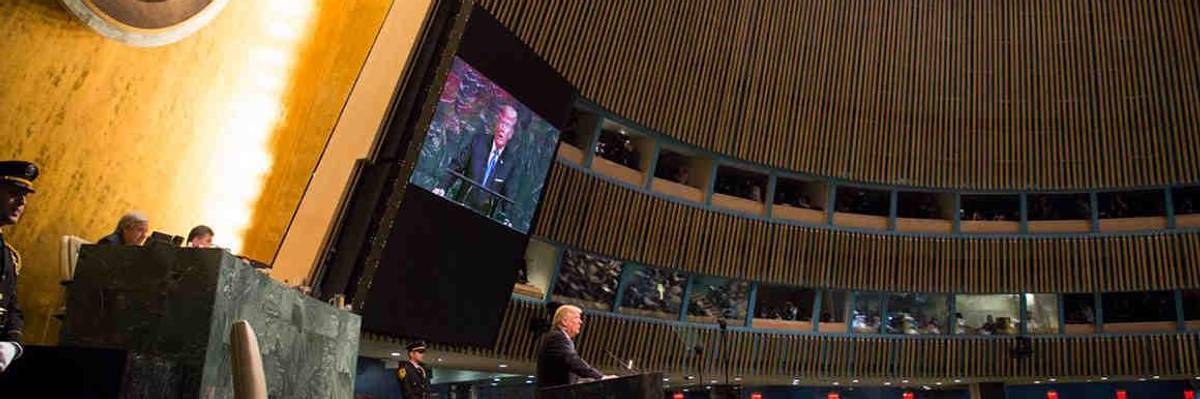
We can plainly see Trump's hostility towards the international community. (Photo: White House/Flickr)
The world has now witnessed the human costs of Trump's self-defeating "America First" policies: the inhumanity of family separation, the ruined lives from repeal of the Deferred Action for Childhood Arrivals (DACA) program, and the suffering caused by slashing the numbers of refugees allowed to enter the U.S., to name just a few.
By pushing xenophobic policies that defy international law, the Trump administration is pitting the United States against the very system of multilateralism that our country worked so hard to create in the years after World War II. This system was designed to benefit the entire world--including the U.S.--by promoting peace, security, and human rights while deterring chaos and violence. That's why undermining it is harmful to everyone, including Americans.
Here are five examples from the past year where the Trump administration has threatened or attempted to weaken multilateralism and international human rights bodies:
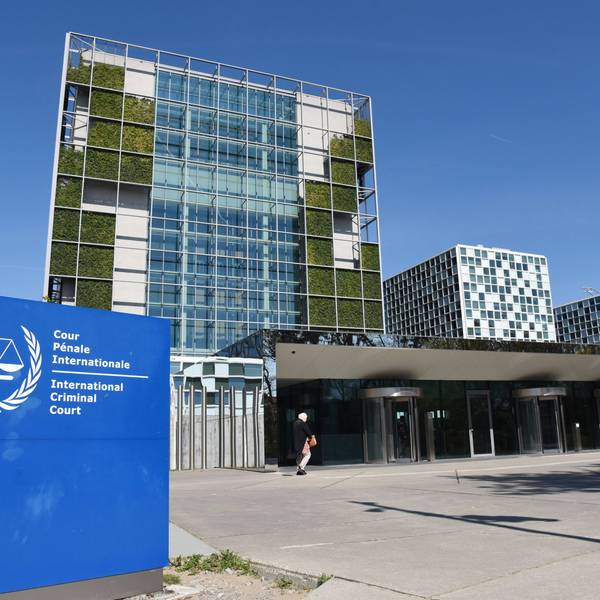
Earlier this month, National Security Advisor John Bolton made outrageous threats against the International Criminal Court, which holds people accountable for war crimes, crimes against humanity, and genocide. Bolton went so far as to threaten the court's judges and prosecutors with U.S. criminal prosecution as well as a travel ban and financial sanctions. The White House has said that its threats are related to the potential of a full ICC investigation into U.S. involvement with war crimes in Afghanistan, such as torture.
U.S. Ambassador to the U.N. Nikki Haley announced in June that the U.S. was leaving the U.N. Human Rights Council. The United States is the first nation to ever withdraw from the council and one of only four nations in the world that does not participate in its proceedings. And last month, National Security Advisor John Bolton threatened to cut U.S. funding to the Office of the UN High Commissioner for Human Rights, which monitors rights violations around the world and supports the work of independent human rights experts. That includes the work of Professor Philip Alston, who was attacked by Ambassador Haley for daring to write a report on poverty in America.
In December, the U.S. chose to leave negotiations for the Global Compact on Migration, an international agreement on managing safe, orderly, and regular migration around the globe. The final text of the Global Compact, which will formally be adopted in Morocco later this year, contains a commitment from 192 states to work to end child immigration detention. The Trump administration deemed these worthy objectives as incompatible to its immigration policies and an infringement on U.S. sovereignty.
The Trump administration declared its plan in October 2017 to withdraw from membership in the U.N. Educational, Scientific, and Cultural Organization by January 2019 and move it to permanent observer status. While the Trump administration claims the decision was based on the U.N. body's bias towards Israel, it is doubtful this was the only motivation to pull out, thereby harming critical global work deemed antithetical to Trump's agenda. In addition to promoting democracy and freedom of the press, UNESCO advances literacy and science education, reports on the negative impacts of climate change, and runs projects on Holocaust awareness and anti-Semitism.
Last month, the Trump administration said that it would no longer provide aid to the U.N. Reliefs and Works Agency, which is the primary organization dedicated to supporting and advocating for displaced Palestinian refugees. The U.S. was the agency's largest funder, giving it over $350 million annually. Now it's left with a budget deficit of over $270 million.
We can plainly see Trump's hostility towards the international community. But the public has a right to full transparency about how exactly these unprecedented and hugely damaging actions are coming about. To get some answers, the ACLU has filed Freedom of Information Act requests with the administration demanding records on these counterproductive decisions.
We previously filed FOIA requests about U.S. withdrawals from the U.N. Human Rights Council and UNESCO, as well as its moves to defund international human rights bodies and leave treaties.
Today we're filing a new FOIA request demanding answers about the administration's policy toward the International Criminal Court. Does the Justice Department actually believe that it can charge ICC judges with violating U.S. laws? Or were Bolton's threats just baseless grandstanding in a craven attempt to evade consequences for U.S. torture in Afghanistan?
No one should stand by idly in the face of Trump's assault on human rights and the international institutions in place to defend them.
Dear Common Dreams reader, It’s been nearly 30 years since I co-founded Common Dreams with my late wife, Lina Newhouser. We had the radical notion that journalism should serve the public good, not corporate profits. It was clear to us from the outset what it would take to build such a project. No paid advertisements. No corporate sponsors. No millionaire publisher telling us what to think or do. Many people said we wouldn't last a year, but we proved those doubters wrong. Together with a tremendous team of journalists and dedicated staff, we built an independent media outlet free from the constraints of profits and corporate control. Our mission has always been simple: To inform. To inspire. To ignite change for the common good. Building Common Dreams was not easy. Our survival was never guaranteed. When you take on the most powerful forces—Wall Street greed, fossil fuel industry destruction, Big Tech lobbyists, and uber-rich oligarchs who have spent billions upon billions rigging the economy and democracy in their favor—the only bulwark you have is supporters who believe in your work. But here’s the urgent message from me today. It's never been this bad out there. And it's never been this hard to keep us going. At the very moment Common Dreams is most needed, the threats we face are intensifying. We need your support now more than ever. We don't accept corporate advertising and never will. We don't have a paywall because we don't think people should be blocked from critical news based on their ability to pay. Everything we do is funded by the donations of readers like you. When everyone does the little they can afford, we are strong. But if that support retreats or dries up, so do we. Will you donate now to make sure Common Dreams not only survives but thrives? —Craig Brown, Co-founder |
The world has now witnessed the human costs of Trump's self-defeating "America First" policies: the inhumanity of family separation, the ruined lives from repeal of the Deferred Action for Childhood Arrivals (DACA) program, and the suffering caused by slashing the numbers of refugees allowed to enter the U.S., to name just a few.
By pushing xenophobic policies that defy international law, the Trump administration is pitting the United States against the very system of multilateralism that our country worked so hard to create in the years after World War II. This system was designed to benefit the entire world--including the U.S.--by promoting peace, security, and human rights while deterring chaos and violence. That's why undermining it is harmful to everyone, including Americans.
Here are five examples from the past year where the Trump administration has threatened or attempted to weaken multilateralism and international human rights bodies:
Earlier this month, National Security Advisor John Bolton made outrageous threats against the International Criminal Court, which holds people accountable for war crimes, crimes against humanity, and genocide. Bolton went so far as to threaten the court's judges and prosecutors with U.S. criminal prosecution as well as a travel ban and financial sanctions. The White House has said that its threats are related to the potential of a full ICC investigation into U.S. involvement with war crimes in Afghanistan, such as torture.
U.S. Ambassador to the U.N. Nikki Haley announced in June that the U.S. was leaving the U.N. Human Rights Council. The United States is the first nation to ever withdraw from the council and one of only four nations in the world that does not participate in its proceedings. And last month, National Security Advisor John Bolton threatened to cut U.S. funding to the Office of the UN High Commissioner for Human Rights, which monitors rights violations around the world and supports the work of independent human rights experts. That includes the work of Professor Philip Alston, who was attacked by Ambassador Haley for daring to write a report on poverty in America.
In December, the U.S. chose to leave negotiations for the Global Compact on Migration, an international agreement on managing safe, orderly, and regular migration around the globe. The final text of the Global Compact, which will formally be adopted in Morocco later this year, contains a commitment from 192 states to work to end child immigration detention. The Trump administration deemed these worthy objectives as incompatible to its immigration policies and an infringement on U.S. sovereignty.
The Trump administration declared its plan in October 2017 to withdraw from membership in the U.N. Educational, Scientific, and Cultural Organization by January 2019 and move it to permanent observer status. While the Trump administration claims the decision was based on the U.N. body's bias towards Israel, it is doubtful this was the only motivation to pull out, thereby harming critical global work deemed antithetical to Trump's agenda. In addition to promoting democracy and freedom of the press, UNESCO advances literacy and science education, reports on the negative impacts of climate change, and runs projects on Holocaust awareness and anti-Semitism.
Last month, the Trump administration said that it would no longer provide aid to the U.N. Reliefs and Works Agency, which is the primary organization dedicated to supporting and advocating for displaced Palestinian refugees. The U.S. was the agency's largest funder, giving it over $350 million annually. Now it's left with a budget deficit of over $270 million.
We can plainly see Trump's hostility towards the international community. But the public has a right to full transparency about how exactly these unprecedented and hugely damaging actions are coming about. To get some answers, the ACLU has filed Freedom of Information Act requests with the administration demanding records on these counterproductive decisions.
We previously filed FOIA requests about U.S. withdrawals from the U.N. Human Rights Council and UNESCO, as well as its moves to defund international human rights bodies and leave treaties.
Today we're filing a new FOIA request demanding answers about the administration's policy toward the International Criminal Court. Does the Justice Department actually believe that it can charge ICC judges with violating U.S. laws? Or were Bolton's threats just baseless grandstanding in a craven attempt to evade consequences for U.S. torture in Afghanistan?
No one should stand by idly in the face of Trump's assault on human rights and the international institutions in place to defend them.
The world has now witnessed the human costs of Trump's self-defeating "America First" policies: the inhumanity of family separation, the ruined lives from repeal of the Deferred Action for Childhood Arrivals (DACA) program, and the suffering caused by slashing the numbers of refugees allowed to enter the U.S., to name just a few.
By pushing xenophobic policies that defy international law, the Trump administration is pitting the United States against the very system of multilateralism that our country worked so hard to create in the years after World War II. This system was designed to benefit the entire world--including the U.S.--by promoting peace, security, and human rights while deterring chaos and violence. That's why undermining it is harmful to everyone, including Americans.
Here are five examples from the past year where the Trump administration has threatened or attempted to weaken multilateralism and international human rights bodies:
Earlier this month, National Security Advisor John Bolton made outrageous threats against the International Criminal Court, which holds people accountable for war crimes, crimes against humanity, and genocide. Bolton went so far as to threaten the court's judges and prosecutors with U.S. criminal prosecution as well as a travel ban and financial sanctions. The White House has said that its threats are related to the potential of a full ICC investigation into U.S. involvement with war crimes in Afghanistan, such as torture.
U.S. Ambassador to the U.N. Nikki Haley announced in June that the U.S. was leaving the U.N. Human Rights Council. The United States is the first nation to ever withdraw from the council and one of only four nations in the world that does not participate in its proceedings. And last month, National Security Advisor John Bolton threatened to cut U.S. funding to the Office of the UN High Commissioner for Human Rights, which monitors rights violations around the world and supports the work of independent human rights experts. That includes the work of Professor Philip Alston, who was attacked by Ambassador Haley for daring to write a report on poverty in America.
In December, the U.S. chose to leave negotiations for the Global Compact on Migration, an international agreement on managing safe, orderly, and regular migration around the globe. The final text of the Global Compact, which will formally be adopted in Morocco later this year, contains a commitment from 192 states to work to end child immigration detention. The Trump administration deemed these worthy objectives as incompatible to its immigration policies and an infringement on U.S. sovereignty.
The Trump administration declared its plan in October 2017 to withdraw from membership in the U.N. Educational, Scientific, and Cultural Organization by January 2019 and move it to permanent observer status. While the Trump administration claims the decision was based on the U.N. body's bias towards Israel, it is doubtful this was the only motivation to pull out, thereby harming critical global work deemed antithetical to Trump's agenda. In addition to promoting democracy and freedom of the press, UNESCO advances literacy and science education, reports on the negative impacts of climate change, and runs projects on Holocaust awareness and anti-Semitism.
Last month, the Trump administration said that it would no longer provide aid to the U.N. Reliefs and Works Agency, which is the primary organization dedicated to supporting and advocating for displaced Palestinian refugees. The U.S. was the agency's largest funder, giving it over $350 million annually. Now it's left with a budget deficit of over $270 million.
We can plainly see Trump's hostility towards the international community. But the public has a right to full transparency about how exactly these unprecedented and hugely damaging actions are coming about. To get some answers, the ACLU has filed Freedom of Information Act requests with the administration demanding records on these counterproductive decisions.
We previously filed FOIA requests about U.S. withdrawals from the U.N. Human Rights Council and UNESCO, as well as its moves to defund international human rights bodies and leave treaties.
Today we're filing a new FOIA request demanding answers about the administration's policy toward the International Criminal Court. Does the Justice Department actually believe that it can charge ICC judges with violating U.S. laws? Or were Bolton's threats just baseless grandstanding in a craven attempt to evade consequences for U.S. torture in Afghanistan?
No one should stand by idly in the face of Trump's assault on human rights and the international institutions in place to defend them.