I started my professional career in the communications department of the National Football League. It was a dream job right out of college. I grew up a passionate New York Giants fan, but more importantly, I recognized the invaluable experience I'd gain working for an organization that managed to draw more than 100 million viewers to the Super Bowl each year.
The players were never protesting the military, but rather racial injustice--police brutality, mass incarceration, and systemic racism.
This is not a novel observation, but the NFL is more than a sports organization. Football is--sorry baseball--America's pastime, and the league's steps and missteps on player discipline, health and safety, and executive compensation have become part of the national conversation. Knowing this, leadership has clear instructions: Focus on the game; deflect from a scandal; protect the shield.
At the end of the day, it's a business. Pontificate all you want about the selective outrage of the fanbase--denounce signing a domestic violence abuser unless he boosts that defensive line--but that fanbase buys tickets, merchandise, and expensive cable packages to justify multi-year broadcast deals.
Long ago, the NFL made a decision to capitalize on its ostensible patriotism. It helped solidify the association between pregame pageantry--and in turn the national anthem--and military appreciation. It partners with military nonprofit organizations that honorably support active-duty service members, veterans, and their families.
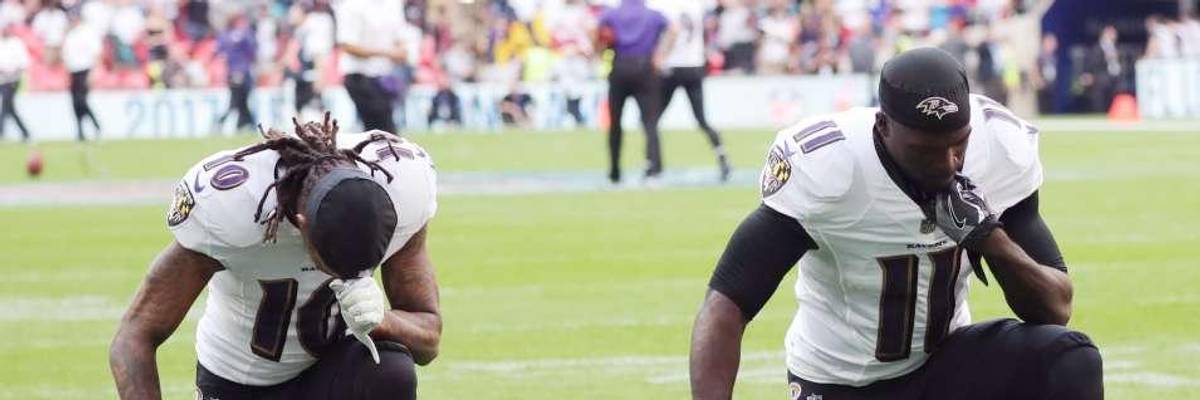
So on the fateful day Colin Kaepernick decided to sit--and later kneel at the advice of former Green Beret Nate Boyer--during the anthem to protest police brutality, it served as a referendum on the league's "patriotism" and helped divide those united by fandom according to racial, economic, and generational lines.
I knew compartmentalizing protecting the shield and my personal beliefs was going to be challenging. The players were never protesting the military, but rather racial injustice--police brutality, mass incarceration, and systemic racism. I've heard this from them directly. They were pointed and thoughtful about their motives.
One player who demonstrated had friends and family who served in the military. He had honest discussions with them about using his platform to bring attention to issues bigger than the game and had nothing but respect for the troops. Another player did not protest, but he expressed solidarity with players who did because he knew racism was real, and he supported making people think about it, not avoid it. The league knew as much. But they had a bottom line to deal with.
I listened to our military nonprofit partners' concerns about the message the protests send to service members with care. Brave men and women fight and die to protect the ideals of this country. I also listened to the players, who are indefatigably ready to help each "Community Tuesday," their in-season off-day dedicated to community service. They run foundations. They fund literacy programs. They do what they can to help this country live up to its ideals.
I watched as fans, owners, and Twitter-users misidentified the purpose of the protests, and even worse, vacillated on the merits of such protests against racial injustice. These dog-whistles, selective patriotism, and tired tropes of the ungrateful Black man are just another reminder of what happens when Black men step out of line.
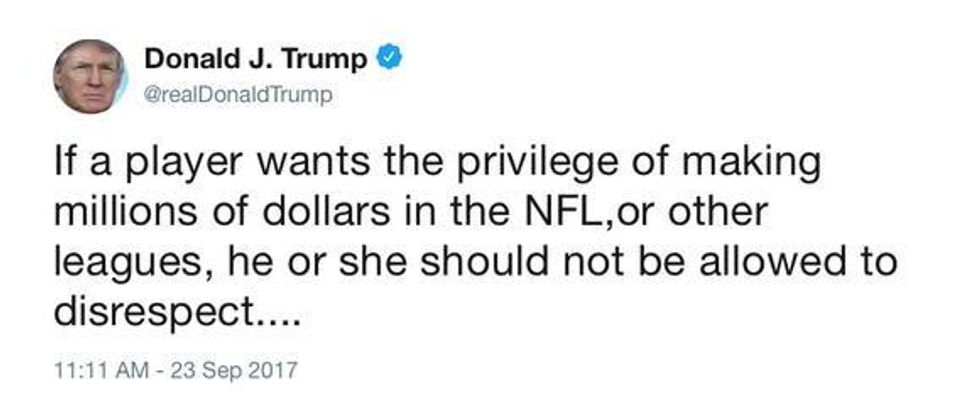
The president has called on NFL incomes as an explanation for players' misplaced concerns regarding systemic racism. But a Black player who signs an NFL contract isn't suddenly not Black.
Black people, as we've witnessed in horrific detail this year, are reported to the police for barbequing, swimming, napping, and moving into an apartment. Black students are suspended and expelled from school three times more often than white students are. Nearly 1,000 people were shot and killed by police in 2017, a disproportionate amount of whom were Black.
The list goes on.
My time at the NFL was marked by a stark reminder that many Americans refuse to confront the history and ubiquity of racism in this country. Yet despite all the dog whistles and outright racism, particularly from the White House, the players carry on. They know they're protesting for justice and have the platform to get the message out.
They don't deserve condemnation. They deserve praise.
I started my professional career in the communications department of the National Football League. It was a dream job right out of college. I grew up a passionate New York Giants fan, but more importantly, I recognized the invaluable experience I'd gain working for an organization that managed to draw more than 100 million viewers to the Super Bowl each year.
The players were never protesting the military, but rather racial injustice--police brutality, mass incarceration, and systemic racism.
This is not a novel observation, but the NFL is more than a sports organization. Football is--sorry baseball--America's pastime, and the league's steps and missteps on player discipline, health and safety, and executive compensation have become part of the national conversation. Knowing this, leadership has clear instructions: Focus on the game; deflect from a scandal; protect the shield.
At the end of the day, it's a business. Pontificate all you want about the selective outrage of the fanbase--denounce signing a domestic violence abuser unless he boosts that defensive line--but that fanbase buys tickets, merchandise, and expensive cable packages to justify multi-year broadcast deals.
Long ago, the NFL made a decision to capitalize on its ostensible patriotism. It helped solidify the association between pregame pageantry--and in turn the national anthem--and military appreciation. It partners with military nonprofit organizations that honorably support active-duty service members, veterans, and their families.
So on the fateful day Colin Kaepernick decided to sit--and later kneel at the advice of former Green Beret Nate Boyer--during the anthem to protest police brutality, it served as a referendum on the league's "patriotism" and helped divide those united by fandom according to racial, economic, and generational lines.
I knew compartmentalizing protecting the shield and my personal beliefs was going to be challenging. The players were never protesting the military, but rather racial injustice--police brutality, mass incarceration, and systemic racism. I've heard this from them directly. They were pointed and thoughtful about their motives.
One player who demonstrated had friends and family who served in the military. He had honest discussions with them about using his platform to bring attention to issues bigger than the game and had nothing but respect for the troops. Another player did not protest, but he expressed solidarity with players who did because he knew racism was real, and he supported making people think about it, not avoid it. The league knew as much. But they had a bottom line to deal with.
I listened to our military nonprofit partners' concerns about the message the protests send to service members with care. Brave men and women fight and die to protect the ideals of this country. I also listened to the players, who are indefatigably ready to help each "Community Tuesday," their in-season off-day dedicated to community service. They run foundations. They fund literacy programs. They do what they can to help this country live up to its ideals.
I watched as fans, owners, and Twitter-users misidentified the purpose of the protests, and even worse, vacillated on the merits of such protests against racial injustice. These dog-whistles, selective patriotism, and tired tropes of the ungrateful Black man are just another reminder of what happens when Black men step out of line.
The president has called on NFL incomes as an explanation for players' misplaced concerns regarding systemic racism. But a Black player who signs an NFL contract isn't suddenly not Black.
Black people, as we've witnessed in horrific detail this year, are reported to the police for barbequing, swimming, napping, and moving into an apartment. Black students are suspended and expelled from school three times more often than white students are. Nearly 1,000 people were shot and killed by police in 2017, a disproportionate amount of whom were Black.
The list goes on.
My time at the NFL was marked by a stark reminder that many Americans refuse to confront the history and ubiquity of racism in this country. Yet despite all the dog whistles and outright racism, particularly from the White House, the players carry on. They know they're protesting for justice and have the platform to get the message out.
They don't deserve condemnation. They deserve praise.