
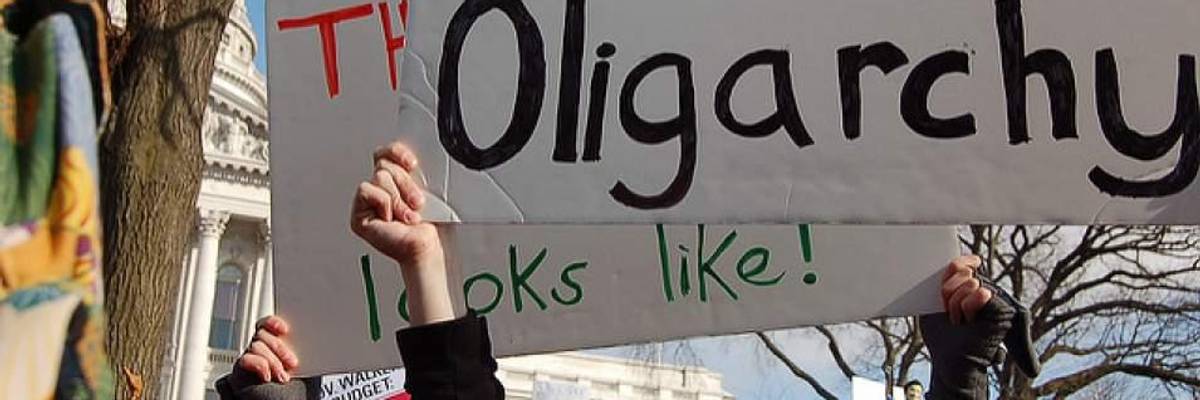
"This is because minority interests in civil society are able to manipulate the political process in their favor - mostly via the unequal distribution of money and power." (Photo: Peoples World/flickr/cc)
On the Ambiguity of "Democracy" in America
What's in a (political) name?
In American public discourse - articulated by public officials, media outlets, and ordinary citizens of virtually all political stripes - the United States is called a democracy. However, this attribution is false and has been so since the foundation of the republic. Many know this, but many don't. And the misuse of the term has become unusually, politically consequential since November, 2016.
Both James Madison and Alexander Hamilton argued clearly and directly in their briefs in 1787-1788 for making the Constitution the new framework for the American political order against "democracy," by which they meant the relatively direct exercise of power by adult white men in the thirteen states. They wanted a government led by a small number of representatives, like themselves, to be responsible for lawmaking. They feared that if the demos was able to exercise political kratos, it would threaten property rights and act according to passion, not reason. They believed that majorities in a democracy could control "minority factions" but not "majority factions."
Notably but not surprisingly, and especially since the Civil War, the dangers to the well-being of the nation have not sprung from "majority factions" but "minority factions" able to capture the reins of American political power.
The Founders, therefore, hobbled "democracy" in ways that had as much to do anxiety that democracy would challenge established interests as with the difference in population and size between modern societies and ancient Athens, the first democracy. To wit: the apportionment of power in the Senate by states rather than population; the Electoral College; the pivotal role of the unelected Supreme Court; the exclusion of women and the tolerance of slavery and second-class citizenship for African Americans until the mid-1960s (although there are democratic merits to a quasi-independent judiciary). And then there are the shenanigans of gerrymandering at the state level, all of which have distorted democracy. (The majority of the popular vote has gone to Democrats in the House, but Republicans remain in control.)
Political language is often opaque and misleading, as with the differentiation of Left and Right, and one might just say that "democracy" is an approximation of the extant political order and emotively richer than "republic." But that's part of the problem I am identifying, for the emotional appeal of "democracy" also misleads. And even if we pay homage to territory and population size and admit the need for "representative" vs. "direct" democracy, the "representative" function in the United States is not a filter for democracy in large-scale societies but more often than not an obstacle to it. This is because minority interests in civil society are able to manipulate the political process in their favor - mostly via the unequal distribution of money and power. Notably but not surprisingly, and especially since the Civil War, the dangers to the well-being of the nation have not sprung from "majority factions" but "minority factions" able to capture the reins of American political power.
In any democracy worthy of its name, even in a Parliamentary system, the man would have been booted out.
The consequences of the misuse of "democracy" as a label for the American political order have become pressing of late. One man, along with a minority faction in the public at large and "representative" majorities in the House and Senate, have been able to take-over the institutions of American government and wield them in ways that most thoughtful Americans find appalling. But there is little to be done about it, even after the November elections, given the shamelessness and overwhelming self-regard of the current American president (trumping Nixon). In any democracy worthy of its name, even in a Parliamentary system, the man would have been booted out. But there is no assurance that he will leave office before 2020, and one wonders about the security of American elections.
It surely is true that the United States in many ways is a democracy, in terms of many of its social and cultural habits and the belief of many of its citizens in the value of political participation. But this kind of democratic temperament is under siege and on the ropes. For the American political system is tipped against it. Yes, America has democratic elements. But the way these form "American democracy" is oppositional, not institutional, and the activity of democracy has to fight an uphill battle every single day to become realized. It's a hard and important task, undertaken through political campaigns for public office. Now, democratic activity more than ever has become a political activity needed to save the American republic.
An Urgent Message From Our Co-Founder
Dear Common Dreams reader, It’s been nearly 30 years since I co-founded Common Dreams with my late wife, Lina Newhouser. We had the radical notion that journalism should serve the public good, not corporate profits. It was clear to us from the outset what it would take to build such a project. No paid advertisements. No corporate sponsors. No millionaire publisher telling us what to think or do. Many people said we wouldn't last a year, but we proved those doubters wrong. Together with a tremendous team of journalists and dedicated staff, we built an independent media outlet free from the constraints of profits and corporate control. Our mission has always been simple: To inform. To inspire. To ignite change for the common good. Building Common Dreams was not easy. Our survival was never guaranteed. When you take on the most powerful forces—Wall Street greed, fossil fuel industry destruction, Big Tech lobbyists, and uber-rich oligarchs who have spent billions upon billions rigging the economy and democracy in their favor—the only bulwark you have is supporters who believe in your work. But here’s the urgent message from me today. It's never been this bad out there. And it's never been this hard to keep us going. At the very moment Common Dreams is most needed, the threats we face are intensifying. We need your support now more than ever. We don't accept corporate advertising and never will. We don't have a paywall because we don't think people should be blocked from critical news based on their ability to pay. Everything we do is funded by the donations of readers like you. When everyone does the little they can afford, we are strong. But if that support retreats or dries up, so do we. Will you donate now to make sure Common Dreams not only survives but thrives? —Craig Brown, Co-founder |
In American public discourse - articulated by public officials, media outlets, and ordinary citizens of virtually all political stripes - the United States is called a democracy. However, this attribution is false and has been so since the foundation of the republic. Many know this, but many don't. And the misuse of the term has become unusually, politically consequential since November, 2016.
Both James Madison and Alexander Hamilton argued clearly and directly in their briefs in 1787-1788 for making the Constitution the new framework for the American political order against "democracy," by which they meant the relatively direct exercise of power by adult white men in the thirteen states. They wanted a government led by a small number of representatives, like themselves, to be responsible for lawmaking. They feared that if the demos was able to exercise political kratos, it would threaten property rights and act according to passion, not reason. They believed that majorities in a democracy could control "minority factions" but not "majority factions."
Notably but not surprisingly, and especially since the Civil War, the dangers to the well-being of the nation have not sprung from "majority factions" but "minority factions" able to capture the reins of American political power.
The Founders, therefore, hobbled "democracy" in ways that had as much to do anxiety that democracy would challenge established interests as with the difference in population and size between modern societies and ancient Athens, the first democracy. To wit: the apportionment of power in the Senate by states rather than population; the Electoral College; the pivotal role of the unelected Supreme Court; the exclusion of women and the tolerance of slavery and second-class citizenship for African Americans until the mid-1960s (although there are democratic merits to a quasi-independent judiciary). And then there are the shenanigans of gerrymandering at the state level, all of which have distorted democracy. (The majority of the popular vote has gone to Democrats in the House, but Republicans remain in control.)
Political language is often opaque and misleading, as with the differentiation of Left and Right, and one might just say that "democracy" is an approximation of the extant political order and emotively richer than "republic." But that's part of the problem I am identifying, for the emotional appeal of "democracy" also misleads. And even if we pay homage to territory and population size and admit the need for "representative" vs. "direct" democracy, the "representative" function in the United States is not a filter for democracy in large-scale societies but more often than not an obstacle to it. This is because minority interests in civil society are able to manipulate the political process in their favor - mostly via the unequal distribution of money and power. Notably but not surprisingly, and especially since the Civil War, the dangers to the well-being of the nation have not sprung from "majority factions" but "minority factions" able to capture the reins of American political power.
In any democracy worthy of its name, even in a Parliamentary system, the man would have been booted out.
The consequences of the misuse of "democracy" as a label for the American political order have become pressing of late. One man, along with a minority faction in the public at large and "representative" majorities in the House and Senate, have been able to take-over the institutions of American government and wield them in ways that most thoughtful Americans find appalling. But there is little to be done about it, even after the November elections, given the shamelessness and overwhelming self-regard of the current American president (trumping Nixon). In any democracy worthy of its name, even in a Parliamentary system, the man would have been booted out. But there is no assurance that he will leave office before 2020, and one wonders about the security of American elections.
It surely is true that the United States in many ways is a democracy, in terms of many of its social and cultural habits and the belief of many of its citizens in the value of political participation. But this kind of democratic temperament is under siege and on the ropes. For the American political system is tipped against it. Yes, America has democratic elements. But the way these form "American democracy" is oppositional, not institutional, and the activity of democracy has to fight an uphill battle every single day to become realized. It's a hard and important task, undertaken through political campaigns for public office. Now, democratic activity more than ever has become a political activity needed to save the American republic.
In American public discourse - articulated by public officials, media outlets, and ordinary citizens of virtually all political stripes - the United States is called a democracy. However, this attribution is false and has been so since the foundation of the republic. Many know this, but many don't. And the misuse of the term has become unusually, politically consequential since November, 2016.
Both James Madison and Alexander Hamilton argued clearly and directly in their briefs in 1787-1788 for making the Constitution the new framework for the American political order against "democracy," by which they meant the relatively direct exercise of power by adult white men in the thirteen states. They wanted a government led by a small number of representatives, like themselves, to be responsible for lawmaking. They feared that if the demos was able to exercise political kratos, it would threaten property rights and act according to passion, not reason. They believed that majorities in a democracy could control "minority factions" but not "majority factions."
Notably but not surprisingly, and especially since the Civil War, the dangers to the well-being of the nation have not sprung from "majority factions" but "minority factions" able to capture the reins of American political power.
The Founders, therefore, hobbled "democracy" in ways that had as much to do anxiety that democracy would challenge established interests as with the difference in population and size between modern societies and ancient Athens, the first democracy. To wit: the apportionment of power in the Senate by states rather than population; the Electoral College; the pivotal role of the unelected Supreme Court; the exclusion of women and the tolerance of slavery and second-class citizenship for African Americans until the mid-1960s (although there are democratic merits to a quasi-independent judiciary). And then there are the shenanigans of gerrymandering at the state level, all of which have distorted democracy. (The majority of the popular vote has gone to Democrats in the House, but Republicans remain in control.)
Political language is often opaque and misleading, as with the differentiation of Left and Right, and one might just say that "democracy" is an approximation of the extant political order and emotively richer than "republic." But that's part of the problem I am identifying, for the emotional appeal of "democracy" also misleads. And even if we pay homage to territory and population size and admit the need for "representative" vs. "direct" democracy, the "representative" function in the United States is not a filter for democracy in large-scale societies but more often than not an obstacle to it. This is because minority interests in civil society are able to manipulate the political process in their favor - mostly via the unequal distribution of money and power. Notably but not surprisingly, and especially since the Civil War, the dangers to the well-being of the nation have not sprung from "majority factions" but "minority factions" able to capture the reins of American political power.
In any democracy worthy of its name, even in a Parliamentary system, the man would have been booted out.
The consequences of the misuse of "democracy" as a label for the American political order have become pressing of late. One man, along with a minority faction in the public at large and "representative" majorities in the House and Senate, have been able to take-over the institutions of American government and wield them in ways that most thoughtful Americans find appalling. But there is little to be done about it, even after the November elections, given the shamelessness and overwhelming self-regard of the current American president (trumping Nixon). In any democracy worthy of its name, even in a Parliamentary system, the man would have been booted out. But there is no assurance that he will leave office before 2020, and one wonders about the security of American elections.
It surely is true that the United States in many ways is a democracy, in terms of many of its social and cultural habits and the belief of many of its citizens in the value of political participation. But this kind of democratic temperament is under siege and on the ropes. For the American political system is tipped against it. Yes, America has democratic elements. But the way these form "American democracy" is oppositional, not institutional, and the activity of democracy has to fight an uphill battle every single day to become realized. It's a hard and important task, undertaken through political campaigns for public office. Now, democratic activity more than ever has become a political activity needed to save the American republic.