SUBSCRIBE TO OUR FREE NEWSLETTER
Daily news & progressive opinion—funded by the people, not the corporations—delivered straight to your inbox.
5
#000000
#FFFFFF
To donate by check, phone, or other method, see our More Ways to Give page.


Daily news & progressive opinion—funded by the people, not the corporations—delivered straight to your inbox.

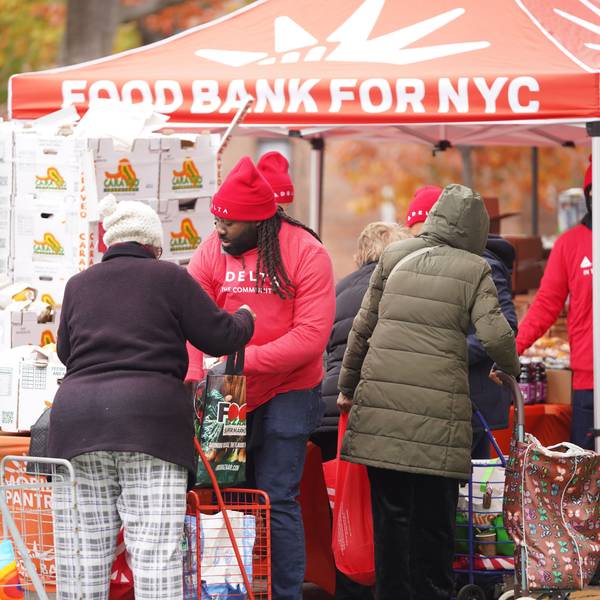
"If we want to do better, we should aim to remove barriers to access, not punish struggling Americans by taking food assistance away from those who can't find work." (Photo: Getty Images)
Growing up in Boonville, California in the 1990s, a friend of mine would sometimes jokingly use the phrase "the beatings will continue until morale improves." If people are feeling bad, what better incentive to change their mood than getting repeatedly whacked with a stick?
Some of the most common barriers to employment are insufficient education or skills, mental health issues, hiring biases and a lack of job opportunities. Fear of not having enough to eat does nothing to overcome those obstacles.
The recent proposal by Congress to add work requirements to the Supplemental Nutrition Assistance Program (SNAP, formerly known as food stamps) reminded me of that phrase. In the 2018 Farm Bill currently under consideration in the House, Republicans have proposed new conditions for SNAP that would block many people from receiving food assistance if they are unemployed. While at first glance this may appear like a policy to encourage greater employment, it would actually make it harder for people to find a job, while taking away crucial support from more than one million hungry Americans.
While setting more unemployed Americans on a path to employment and economic self-sufficiency is a positive goal, the threat of withholding food is a highly ineffective way to encourage workforce participation. Some of the most common barriers to employment are insufficient education or skills, mental health issues, hiring biases and a lack of job opportunities. Fear of not having enough to eat does nothing to overcome those obstacles.
When people are hungry, they're frequently unable to focus, which makes it harder for them to get a job, not easier. Instead of boosting employment, this proposal would act as a barrier rather than an incentive.
The actual impact of this policy change would be to punish hungry Americans. In many regions of the country, people are struggling to find full-time work, but can't. While the overall unemployment rate sits at a low 3.8 percent, the rate of involuntary underemployment is more than twice that, and exceeds 10 percent in many states and counties. This proposal would leave those who are unable to find a job with neither income nor food assistance.
Instead of adding poorly-designed restrictions to SNAP, we should be pursuing evidence-based policy changes to increase the effectiveness of our social programs. As someone who works on universal basic income policy, I've spent years studying the effects of unconditional benefits, i.e. what happens when you offer people support without any requirements on their behavior. Every analysis has arrived at the same conclusion: When you give people benefits without strings attached, they use them for productive purposes. The vast majority of people want to do well in life, and they'll make the most of any support they receive.
When we layer on restrictions and bureaucratic hoops that recipients must jump through, not only does this not improve people's behavior, it actually blocks many people from receiving much-needed support. Even without the new work requirements, SNAP already has many barriers to access that make it difficult to enroll. In California, the latest estimates finds that only 70 percent of eligible residents receive SNAP benefits--due in large part to the challenging enrollment process.
SNAP has a profound positive impact on hungry families. Beyond just providing food security, recent research has found the program reduces healthcare costs and increases economic self-sufficiency for women who received benefits as children. We should be striving to boost participation by removing onerous participation requirements, with the goal of ensuring that every hungry American has access to the program.
Our social safety net is far from perfect--there are many needed changes that can help lift more people out of poverty and set them on a path for long-term success. But if we want to do better, we should aim to remove barriers to access, not punish struggling Americans by taking food assistance away from those who can't find work.

Dear Common Dreams reader, It’s been nearly 30 years since I co-founded Common Dreams with my late wife, Lina Newhouser. We had the radical notion that journalism should serve the public good, not corporate profits. It was clear to us from the outset what it would take to build such a project. No paid advertisements. No corporate sponsors. No millionaire publisher telling us what to think or do. Many people said we wouldn't last a year, but we proved those doubters wrong. Together with a tremendous team of journalists and dedicated staff, we built an independent media outlet free from the constraints of profits and corporate control. Our mission has always been simple: To inform. To inspire. To ignite change for the common good. Building Common Dreams was not easy. Our survival was never guaranteed. When you take on the most powerful forces—Wall Street greed, fossil fuel industry destruction, Big Tech lobbyists, and uber-rich oligarchs who have spent billions upon billions rigging the economy and democracy in their favor—the only bulwark you have is supporters who believe in your work. But here’s the urgent message from me today. It's never been this bad out there. And it's never been this hard to keep us going. At the very moment Common Dreams is most needed, the threats we face are intensifying. We need your support now more than ever. We don't accept corporate advertising and never will. We don't have a paywall because we don't think people should be blocked from critical news based on their ability to pay. Everything we do is funded by the donations of readers like you. When everyone does the little they can afford, we are strong. But if that support retreats or dries up, so do we. Will you donate now to make sure Common Dreams not only survives but thrives? —Craig Brown, Co-founder |
Growing up in Boonville, California in the 1990s, a friend of mine would sometimes jokingly use the phrase "the beatings will continue until morale improves." If people are feeling bad, what better incentive to change their mood than getting repeatedly whacked with a stick?
Some of the most common barriers to employment are insufficient education or skills, mental health issues, hiring biases and a lack of job opportunities. Fear of not having enough to eat does nothing to overcome those obstacles.
The recent proposal by Congress to add work requirements to the Supplemental Nutrition Assistance Program (SNAP, formerly known as food stamps) reminded me of that phrase. In the 2018 Farm Bill currently under consideration in the House, Republicans have proposed new conditions for SNAP that would block many people from receiving food assistance if they are unemployed. While at first glance this may appear like a policy to encourage greater employment, it would actually make it harder for people to find a job, while taking away crucial support from more than one million hungry Americans.
While setting more unemployed Americans on a path to employment and economic self-sufficiency is a positive goal, the threat of withholding food is a highly ineffective way to encourage workforce participation. Some of the most common barriers to employment are insufficient education or skills, mental health issues, hiring biases and a lack of job opportunities. Fear of not having enough to eat does nothing to overcome those obstacles.
When people are hungry, they're frequently unable to focus, which makes it harder for them to get a job, not easier. Instead of boosting employment, this proposal would act as a barrier rather than an incentive.
The actual impact of this policy change would be to punish hungry Americans. In many regions of the country, people are struggling to find full-time work, but can't. While the overall unemployment rate sits at a low 3.8 percent, the rate of involuntary underemployment is more than twice that, and exceeds 10 percent in many states and counties. This proposal would leave those who are unable to find a job with neither income nor food assistance.
Instead of adding poorly-designed restrictions to SNAP, we should be pursuing evidence-based policy changes to increase the effectiveness of our social programs. As someone who works on universal basic income policy, I've spent years studying the effects of unconditional benefits, i.e. what happens when you offer people support without any requirements on their behavior. Every analysis has arrived at the same conclusion: When you give people benefits without strings attached, they use them for productive purposes. The vast majority of people want to do well in life, and they'll make the most of any support they receive.
When we layer on restrictions and bureaucratic hoops that recipients must jump through, not only does this not improve people's behavior, it actually blocks many people from receiving much-needed support. Even without the new work requirements, SNAP already has many barriers to access that make it difficult to enroll. In California, the latest estimates finds that only 70 percent of eligible residents receive SNAP benefits--due in large part to the challenging enrollment process.
SNAP has a profound positive impact on hungry families. Beyond just providing food security, recent research has found the program reduces healthcare costs and increases economic self-sufficiency for women who received benefits as children. We should be striving to boost participation by removing onerous participation requirements, with the goal of ensuring that every hungry American has access to the program.
Our social safety net is far from perfect--there are many needed changes that can help lift more people out of poverty and set them on a path for long-term success. But if we want to do better, we should aim to remove barriers to access, not punish struggling Americans by taking food assistance away from those who can't find work.
Growing up in Boonville, California in the 1990s, a friend of mine would sometimes jokingly use the phrase "the beatings will continue until morale improves." If people are feeling bad, what better incentive to change their mood than getting repeatedly whacked with a stick?
Some of the most common barriers to employment are insufficient education or skills, mental health issues, hiring biases and a lack of job opportunities. Fear of not having enough to eat does nothing to overcome those obstacles.
The recent proposal by Congress to add work requirements to the Supplemental Nutrition Assistance Program (SNAP, formerly known as food stamps) reminded me of that phrase. In the 2018 Farm Bill currently under consideration in the House, Republicans have proposed new conditions for SNAP that would block many people from receiving food assistance if they are unemployed. While at first glance this may appear like a policy to encourage greater employment, it would actually make it harder for people to find a job, while taking away crucial support from more than one million hungry Americans.
While setting more unemployed Americans on a path to employment and economic self-sufficiency is a positive goal, the threat of withholding food is a highly ineffective way to encourage workforce participation. Some of the most common barriers to employment are insufficient education or skills, mental health issues, hiring biases and a lack of job opportunities. Fear of not having enough to eat does nothing to overcome those obstacles.
When people are hungry, they're frequently unable to focus, which makes it harder for them to get a job, not easier. Instead of boosting employment, this proposal would act as a barrier rather than an incentive.
The actual impact of this policy change would be to punish hungry Americans. In many regions of the country, people are struggling to find full-time work, but can't. While the overall unemployment rate sits at a low 3.8 percent, the rate of involuntary underemployment is more than twice that, and exceeds 10 percent in many states and counties. This proposal would leave those who are unable to find a job with neither income nor food assistance.
Instead of adding poorly-designed restrictions to SNAP, we should be pursuing evidence-based policy changes to increase the effectiveness of our social programs. As someone who works on universal basic income policy, I've spent years studying the effects of unconditional benefits, i.e. what happens when you offer people support without any requirements on their behavior. Every analysis has arrived at the same conclusion: When you give people benefits without strings attached, they use them for productive purposes. The vast majority of people want to do well in life, and they'll make the most of any support they receive.
When we layer on restrictions and bureaucratic hoops that recipients must jump through, not only does this not improve people's behavior, it actually blocks many people from receiving much-needed support. Even without the new work requirements, SNAP already has many barriers to access that make it difficult to enroll. In California, the latest estimates finds that only 70 percent of eligible residents receive SNAP benefits--due in large part to the challenging enrollment process.
SNAP has a profound positive impact on hungry families. Beyond just providing food security, recent research has found the program reduces healthcare costs and increases economic self-sufficiency for women who received benefits as children. We should be striving to boost participation by removing onerous participation requirements, with the goal of ensuring that every hungry American has access to the program.
Our social safety net is far from perfect--there are many needed changes that can help lift more people out of poverty and set them on a path for long-term success. But if we want to do better, we should aim to remove barriers to access, not punish struggling Americans by taking food assistance away from those who can't find work.