SUBSCRIBE TO OUR FREE NEWSLETTER
Daily news & progressive opinion—funded by the people, not the corporations—delivered straight to your inbox.
5
#000000
#FFFFFF
To donate by check, phone, or other method, see our More Ways to Give page.
Daily news & progressive opinion—funded by the people, not the corporations—delivered straight to your inbox.
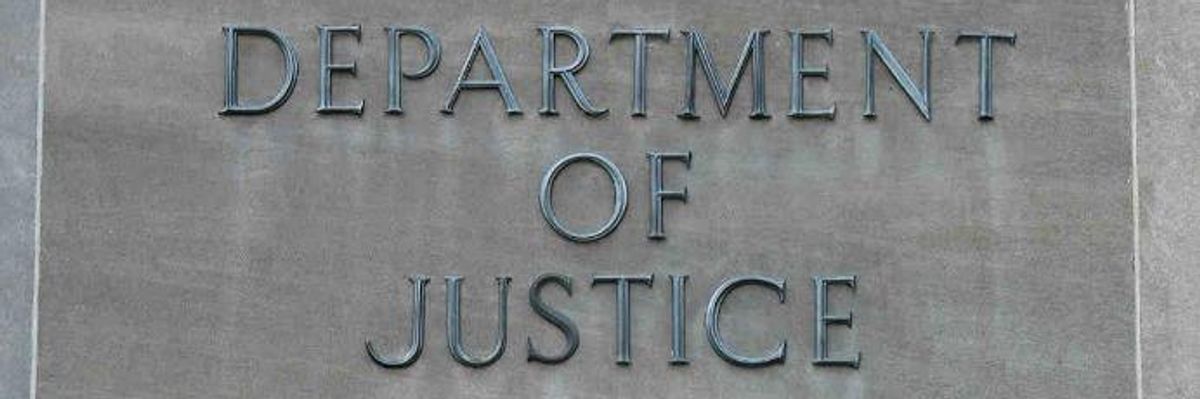
"When the government goes too far in seizing information that it does not need and is not entitled to search, there is a risk of unconstitutional privacy invasions," Bell writes. (Photo: Peter Eimon/Flickr/cc)
It emerged late Thursday that the Justice Department had secretly seized years of email and phone records of a New York Times reporter in connection with a leak investigation. This marks a clear escalation of the Trump administration's attempts to intimidate journalists and their sources. In doing so, it seems that the Justice Department may have violated its own policies for obtaining reporters' communications -- strict standards that are in place because of the importance the Constitution places on freedom of the press.
News of the invasive search came with the indictment of James Wolfe, who recently retired from his long tenure as a nonpartisan employee of the Senate Intelligence Committee. Wolfe is accused of lying to federal investigators about his contacts with three reporters. One of them is Ali Watkins, who has worked for The New York Times since December covering national security.
The First Amendment's protection of a free press is central to the public's ability to hold government officials accountable for their actions. The Obama administration didn't do journalists any favors by pursuing them in leak investigations more than any administration before it. But the Trump administration is accelerating this kind of attack on the public's right to know, with Attorney General Jeff Sessions saying that he had tripled the Department of Justice's leak investigations -- one of them apparently ensnaring Watkins in the process.
In February, the FBI informed her that it had obtained account records from Google and Verizon for her personal phone and email accounts during the time of her previous work as a reporter for Buzzfeed and Politico. While the government says that it did not get the content of her communications, the records investigators did access show who she was in touch with. That is incredibly sensitive information for a reporter who needs to be in contact with government sources in order to properly do her job.
Justice Department guidelines adopted in 2013 dictate that the government should only go after journalists' email and phone records as a last resort. The policy also says that -- except under certain extraordinary circumstances -- the government must give notice to news organizations before trying to obtain these communications. The purpose of this is to give the media a chance to negotiate with the government before any sensitive information is handed over.
Notice, according to the guidelines, can only be delayed if the attorney general determines that it "would pose a clear and substantial threat to the integrity of the investigation, risk grave harm to national security, or present an imminent risk of death or serious bodily harm."
There was no advance notice here -- but it's unclear whether that was because the DOJ felt that this case fell under one of those exceptions or because the Trump administration has decided to effectively disregard the guidelines in its drive to hammer journalists.
Another troubling factor is the sheer breadth of Watkins' records that the government acquired -- reportedly years' worth, including those associated with her undergraduate email address.
When the government goes too far in seizing information that it does not need and is not entitled to search, there is a risk of unconstitutional privacy invasions.
Investigators sifting through digital files may stumble onto sensitive information they were never looking for. That is of particular concern when the digital files being rummaged through are a reporter's. This is why the government's demands for information relating to First Amendment-protected activities should always be narrowly tailored to its legitimate needs alone.
The Trump administration's actions in this case increase the danger of a real chilling effect on both reporters doing their jobs and sources who will be less likely to talk if they fear that their information will end up in the hands of government agents. That, in turn, will subvert our democracy. It needs to stop.
Dear Common Dreams reader, It’s been nearly 30 years since I co-founded Common Dreams with my late wife, Lina Newhouser. We had the radical notion that journalism should serve the public good, not corporate profits. It was clear to us from the outset what it would take to build such a project. No paid advertisements. No corporate sponsors. No millionaire publisher telling us what to think or do. Many people said we wouldn't last a year, but we proved those doubters wrong. Together with a tremendous team of journalists and dedicated staff, we built an independent media outlet free from the constraints of profits and corporate control. Our mission has always been simple: To inform. To inspire. To ignite change for the common good. Building Common Dreams was not easy. Our survival was never guaranteed. When you take on the most powerful forces—Wall Street greed, fossil fuel industry destruction, Big Tech lobbyists, and uber-rich oligarchs who have spent billions upon billions rigging the economy and democracy in their favor—the only bulwark you have is supporters who believe in your work. But here’s the urgent message from me today. It's never been this bad out there. And it's never been this hard to keep us going. At the very moment Common Dreams is most needed, the threats we face are intensifying. We need your support now more than ever. We don't accept corporate advertising and never will. We don't have a paywall because we don't think people should be blocked from critical news based on their ability to pay. Everything we do is funded by the donations of readers like you. When everyone does the little they can afford, we are strong. But if that support retreats or dries up, so do we. Will you donate now to make sure Common Dreams not only survives but thrives? —Craig Brown, Co-founder |
It emerged late Thursday that the Justice Department had secretly seized years of email and phone records of a New York Times reporter in connection with a leak investigation. This marks a clear escalation of the Trump administration's attempts to intimidate journalists and their sources. In doing so, it seems that the Justice Department may have violated its own policies for obtaining reporters' communications -- strict standards that are in place because of the importance the Constitution places on freedom of the press.
News of the invasive search came with the indictment of James Wolfe, who recently retired from his long tenure as a nonpartisan employee of the Senate Intelligence Committee. Wolfe is accused of lying to federal investigators about his contacts with three reporters. One of them is Ali Watkins, who has worked for The New York Times since December covering national security.
The First Amendment's protection of a free press is central to the public's ability to hold government officials accountable for their actions. The Obama administration didn't do journalists any favors by pursuing them in leak investigations more than any administration before it. But the Trump administration is accelerating this kind of attack on the public's right to know, with Attorney General Jeff Sessions saying that he had tripled the Department of Justice's leak investigations -- one of them apparently ensnaring Watkins in the process.
In February, the FBI informed her that it had obtained account records from Google and Verizon for her personal phone and email accounts during the time of her previous work as a reporter for Buzzfeed and Politico. While the government says that it did not get the content of her communications, the records investigators did access show who she was in touch with. That is incredibly sensitive information for a reporter who needs to be in contact with government sources in order to properly do her job.
Justice Department guidelines adopted in 2013 dictate that the government should only go after journalists' email and phone records as a last resort. The policy also says that -- except under certain extraordinary circumstances -- the government must give notice to news organizations before trying to obtain these communications. The purpose of this is to give the media a chance to negotiate with the government before any sensitive information is handed over.
Notice, according to the guidelines, can only be delayed if the attorney general determines that it "would pose a clear and substantial threat to the integrity of the investigation, risk grave harm to national security, or present an imminent risk of death or serious bodily harm."
There was no advance notice here -- but it's unclear whether that was because the DOJ felt that this case fell under one of those exceptions or because the Trump administration has decided to effectively disregard the guidelines in its drive to hammer journalists.
Another troubling factor is the sheer breadth of Watkins' records that the government acquired -- reportedly years' worth, including those associated with her undergraduate email address.
When the government goes too far in seizing information that it does not need and is not entitled to search, there is a risk of unconstitutional privacy invasions.
Investigators sifting through digital files may stumble onto sensitive information they were never looking for. That is of particular concern when the digital files being rummaged through are a reporter's. This is why the government's demands for information relating to First Amendment-protected activities should always be narrowly tailored to its legitimate needs alone.
The Trump administration's actions in this case increase the danger of a real chilling effect on both reporters doing their jobs and sources who will be less likely to talk if they fear that their information will end up in the hands of government agents. That, in turn, will subvert our democracy. It needs to stop.
It emerged late Thursday that the Justice Department had secretly seized years of email and phone records of a New York Times reporter in connection with a leak investigation. This marks a clear escalation of the Trump administration's attempts to intimidate journalists and their sources. In doing so, it seems that the Justice Department may have violated its own policies for obtaining reporters' communications -- strict standards that are in place because of the importance the Constitution places on freedom of the press.
News of the invasive search came with the indictment of James Wolfe, who recently retired from his long tenure as a nonpartisan employee of the Senate Intelligence Committee. Wolfe is accused of lying to federal investigators about his contacts with three reporters. One of them is Ali Watkins, who has worked for The New York Times since December covering national security.
The First Amendment's protection of a free press is central to the public's ability to hold government officials accountable for their actions. The Obama administration didn't do journalists any favors by pursuing them in leak investigations more than any administration before it. But the Trump administration is accelerating this kind of attack on the public's right to know, with Attorney General Jeff Sessions saying that he had tripled the Department of Justice's leak investigations -- one of them apparently ensnaring Watkins in the process.
In February, the FBI informed her that it had obtained account records from Google and Verizon for her personal phone and email accounts during the time of her previous work as a reporter for Buzzfeed and Politico. While the government says that it did not get the content of her communications, the records investigators did access show who she was in touch with. That is incredibly sensitive information for a reporter who needs to be in contact with government sources in order to properly do her job.
Justice Department guidelines adopted in 2013 dictate that the government should only go after journalists' email and phone records as a last resort. The policy also says that -- except under certain extraordinary circumstances -- the government must give notice to news organizations before trying to obtain these communications. The purpose of this is to give the media a chance to negotiate with the government before any sensitive information is handed over.
Notice, according to the guidelines, can only be delayed if the attorney general determines that it "would pose a clear and substantial threat to the integrity of the investigation, risk grave harm to national security, or present an imminent risk of death or serious bodily harm."
There was no advance notice here -- but it's unclear whether that was because the DOJ felt that this case fell under one of those exceptions or because the Trump administration has decided to effectively disregard the guidelines in its drive to hammer journalists.
Another troubling factor is the sheer breadth of Watkins' records that the government acquired -- reportedly years' worth, including those associated with her undergraduate email address.
When the government goes too far in seizing information that it does not need and is not entitled to search, there is a risk of unconstitutional privacy invasions.
Investigators sifting through digital files may stumble onto sensitive information they were never looking for. That is of particular concern when the digital files being rummaged through are a reporter's. This is why the government's demands for information relating to First Amendment-protected activities should always be narrowly tailored to its legitimate needs alone.
The Trump administration's actions in this case increase the danger of a real chilling effect on both reporters doing their jobs and sources who will be less likely to talk if they fear that their information will end up in the hands of government agents. That, in turn, will subvert our democracy. It needs to stop.