SUBSCRIBE TO OUR FREE NEWSLETTER
Daily news & progressive opinion—funded by the people, not the corporations—delivered straight to your inbox.
5
#000000
#FFFFFF
To donate by check, phone, or other method, see our More Ways to Give page.
Daily news & progressive opinion—funded by the people, not the corporations—delivered straight to your inbox.
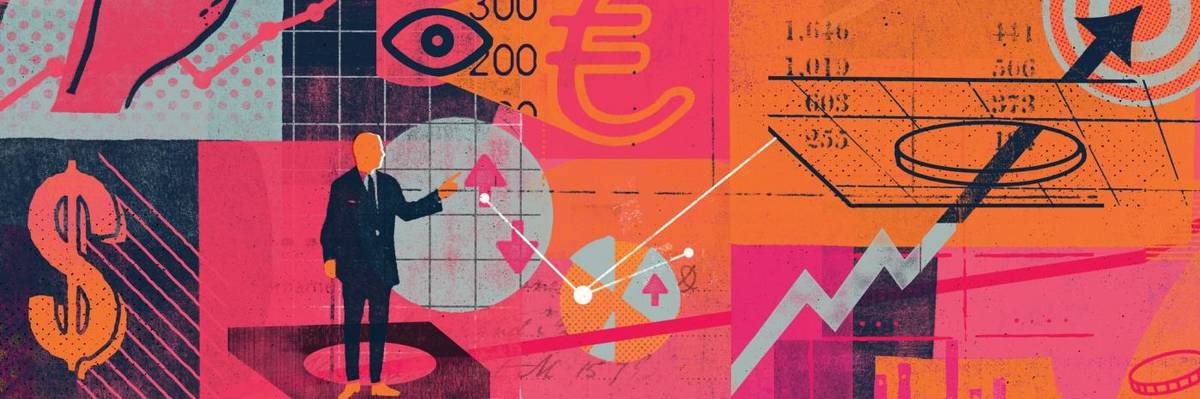
"We have thoroughly tested the neoliberal theory that whatever profits a global corporation serves the common good. The result is that it doesn't." (Photo: Illustration by Stuart Kinlough/Getty Images)
Those who pay attention to trade and economics saw President Trump's imposition of new tariffs--25 percent on steel and 10 percent on aluminum--as just one more bad policy decision by an administration in disarray. Trump may, however, have done us all the favor of reopening a discussion of tariffs, trade, and the competing interests of communities and corporations.
Contrary to the position of most media pundits, tariffs on imports are not necessarily bad. In fact, they may be just what we need as part of a larger set of policy measures to turn from a global economy that maximizes corporate profits to one that maximizes the well-being of people and nature.
Trump is right that free trade agreements are bad for American workers. The corporate lobbyists who supervise their crafting aren't paid to benefit workers. They are paid to serve the bottom lines of the corporations that hire them--in part by minimizing labor costs.
Consequently, existing agreements are mostly bad for workers everywhere. Yet Trump's critics are also right that the precipitous imposition of a tariff on steel and aluminum is a bad idea. We need a dialogue in search of a better framework.
Now is the time to examine how best to rewrite international trade and investment agreements so that they truly serve humanity and sustain a living Earth.
Corporations seek international agreements and domestic laws that secure their self-proclaimed right to move jobs to wherever labor is cheapest, regulations are weakest, and taxes are lowest. In the name of market freedom, they fight restrictions on contributing to political campaigns, concentrating monopoly power, deceiving consumers, extracting resources from public lands, and contaminating Earth's air, water, and land. These actions increase corporate profits and leave impacted communities struggling to deal with the consequences.
The "free" in free trade and investment mostly refers to corporate freedom to dump the consequences of their decisions onto communities stripped of their right to protect themselves. That "freedom" violates the fundamental principle of market theory (not to be confused with free market ideology), that markets allocate efficiently only when decision makers bear the full cost of their decisions. The question is not whether protectionism is good or bad, but rather of who is protected.
Although the corporate PR machine floods the media with claims that the global economy is ending poverty and bringing unprecedented prosperity to everyone, the daily experience for most people is an increasingly desperate struggle to make ends meet. This is an inevitable consequence of a global economy that is:
These are indicators of terminal economic failure.
We have thoroughly tested the neoliberal theory that whatever profits a global corporation serves the common good. The result is that it doesn't.
We now face a defining choice. We can continue to protect the freedom of global corporations to maximize returns to their managers and shareholders. Or we can reorganize to maximize the ability of communities to make their living in a balanced relationship with one another and nature. These are mutually exclusive choices and call for very different global rules.
An organizing framework for the community option was succinctly outlined in 1933 by economist John Maynard Keynes: "I sympathize, therefore, with those who would minimize, rather than with those who would maximize, economic entanglement among nations. Ideas, knowledge, science, hospitality, travel--these are the things which should of their nature be international. But let goods be homespun whenever it is reasonably and conveniently possible, and, above all, let finance be primarily national."
In line with these foundational principles, future international trade and investment agreements should support national communities in meeting self-defined needs in ways that support full domestic employment and the continuous recycling and regeneration of domestic resources. In such agreements, tariffs can and should be applied judiciously, to prioritize domestic ownership and banking. These agreements also need to prohibit financial speculation, penalize monopolistic concentrations of corporate power, and reward local cooperative ownership.
A universal tariff on cross-border exchange, of 10 percent, for example, would provide a modest initial advantage for domestic sourcing of raw materials and consumer goods. Compensatory tariffs might be added to products from countries that do not maintain international standards of environmental protection, wages, health and safety standards, and social safety nets, thus encouraging higher standards for all people everywhere.
Allowing corporations to write the rules of global commerce to favor their purely private interests was a grave error. Now is the time to examine how best to rewrite international trade and investment agreements so that they truly serve humanity and sustain a living Earth. The consequences of inaction are simply unacceptable.
Dear Common Dreams reader, It’s been nearly 30 years since I co-founded Common Dreams with my late wife, Lina Newhouser. We had the radical notion that journalism should serve the public good, not corporate profits. It was clear to us from the outset what it would take to build such a project. No paid advertisements. No corporate sponsors. No millionaire publisher telling us what to think or do. Many people said we wouldn't last a year, but we proved those doubters wrong. Together with a tremendous team of journalists and dedicated staff, we built an independent media outlet free from the constraints of profits and corporate control. Our mission has always been simple: To inform. To inspire. To ignite change for the common good. Building Common Dreams was not easy. Our survival was never guaranteed. When you take on the most powerful forces—Wall Street greed, fossil fuel industry destruction, Big Tech lobbyists, and uber-rich oligarchs who have spent billions upon billions rigging the economy and democracy in their favor—the only bulwark you have is supporters who believe in your work. But here’s the urgent message from me today. It's never been this bad out there. And it's never been this hard to keep us going. At the very moment Common Dreams is most needed, the threats we face are intensifying. We need your support now more than ever. We don't accept corporate advertising and never will. We don't have a paywall because we don't think people should be blocked from critical news based on their ability to pay. Everything we do is funded by the donations of readers like you. When everyone does the little they can afford, we are strong. But if that support retreats or dries up, so do we. Will you donate now to make sure Common Dreams not only survives but thrives? —Craig Brown, Co-founder |
Those who pay attention to trade and economics saw President Trump's imposition of new tariffs--25 percent on steel and 10 percent on aluminum--as just one more bad policy decision by an administration in disarray. Trump may, however, have done us all the favor of reopening a discussion of tariffs, trade, and the competing interests of communities and corporations.
Contrary to the position of most media pundits, tariffs on imports are not necessarily bad. In fact, they may be just what we need as part of a larger set of policy measures to turn from a global economy that maximizes corporate profits to one that maximizes the well-being of people and nature.
Trump is right that free trade agreements are bad for American workers. The corporate lobbyists who supervise their crafting aren't paid to benefit workers. They are paid to serve the bottom lines of the corporations that hire them--in part by minimizing labor costs.
Consequently, existing agreements are mostly bad for workers everywhere. Yet Trump's critics are also right that the precipitous imposition of a tariff on steel and aluminum is a bad idea. We need a dialogue in search of a better framework.
Now is the time to examine how best to rewrite international trade and investment agreements so that they truly serve humanity and sustain a living Earth.
Corporations seek international agreements and domestic laws that secure their self-proclaimed right to move jobs to wherever labor is cheapest, regulations are weakest, and taxes are lowest. In the name of market freedom, they fight restrictions on contributing to political campaigns, concentrating monopoly power, deceiving consumers, extracting resources from public lands, and contaminating Earth's air, water, and land. These actions increase corporate profits and leave impacted communities struggling to deal with the consequences.
The "free" in free trade and investment mostly refers to corporate freedom to dump the consequences of their decisions onto communities stripped of their right to protect themselves. That "freedom" violates the fundamental principle of market theory (not to be confused with free market ideology), that markets allocate efficiently only when decision makers bear the full cost of their decisions. The question is not whether protectionism is good or bad, but rather of who is protected.
Although the corporate PR machine floods the media with claims that the global economy is ending poverty and bringing unprecedented prosperity to everyone, the daily experience for most people is an increasingly desperate struggle to make ends meet. This is an inevitable consequence of a global economy that is:
These are indicators of terminal economic failure.
We have thoroughly tested the neoliberal theory that whatever profits a global corporation serves the common good. The result is that it doesn't.
We now face a defining choice. We can continue to protect the freedom of global corporations to maximize returns to their managers and shareholders. Or we can reorganize to maximize the ability of communities to make their living in a balanced relationship with one another and nature. These are mutually exclusive choices and call for very different global rules.
An organizing framework for the community option was succinctly outlined in 1933 by economist John Maynard Keynes: "I sympathize, therefore, with those who would minimize, rather than with those who would maximize, economic entanglement among nations. Ideas, knowledge, science, hospitality, travel--these are the things which should of their nature be international. But let goods be homespun whenever it is reasonably and conveniently possible, and, above all, let finance be primarily national."
In line with these foundational principles, future international trade and investment agreements should support national communities in meeting self-defined needs in ways that support full domestic employment and the continuous recycling and regeneration of domestic resources. In such agreements, tariffs can and should be applied judiciously, to prioritize domestic ownership and banking. These agreements also need to prohibit financial speculation, penalize monopolistic concentrations of corporate power, and reward local cooperative ownership.
A universal tariff on cross-border exchange, of 10 percent, for example, would provide a modest initial advantage for domestic sourcing of raw materials and consumer goods. Compensatory tariffs might be added to products from countries that do not maintain international standards of environmental protection, wages, health and safety standards, and social safety nets, thus encouraging higher standards for all people everywhere.
Allowing corporations to write the rules of global commerce to favor their purely private interests was a grave error. Now is the time to examine how best to rewrite international trade and investment agreements so that they truly serve humanity and sustain a living Earth. The consequences of inaction are simply unacceptable.
Those who pay attention to trade and economics saw President Trump's imposition of new tariffs--25 percent on steel and 10 percent on aluminum--as just one more bad policy decision by an administration in disarray. Trump may, however, have done us all the favor of reopening a discussion of tariffs, trade, and the competing interests of communities and corporations.
Contrary to the position of most media pundits, tariffs on imports are not necessarily bad. In fact, they may be just what we need as part of a larger set of policy measures to turn from a global economy that maximizes corporate profits to one that maximizes the well-being of people and nature.
Trump is right that free trade agreements are bad for American workers. The corporate lobbyists who supervise their crafting aren't paid to benefit workers. They are paid to serve the bottom lines of the corporations that hire them--in part by minimizing labor costs.
Consequently, existing agreements are mostly bad for workers everywhere. Yet Trump's critics are also right that the precipitous imposition of a tariff on steel and aluminum is a bad idea. We need a dialogue in search of a better framework.
Now is the time to examine how best to rewrite international trade and investment agreements so that they truly serve humanity and sustain a living Earth.
Corporations seek international agreements and domestic laws that secure their self-proclaimed right to move jobs to wherever labor is cheapest, regulations are weakest, and taxes are lowest. In the name of market freedom, they fight restrictions on contributing to political campaigns, concentrating monopoly power, deceiving consumers, extracting resources from public lands, and contaminating Earth's air, water, and land. These actions increase corporate profits and leave impacted communities struggling to deal with the consequences.
The "free" in free trade and investment mostly refers to corporate freedom to dump the consequences of their decisions onto communities stripped of their right to protect themselves. That "freedom" violates the fundamental principle of market theory (not to be confused with free market ideology), that markets allocate efficiently only when decision makers bear the full cost of their decisions. The question is not whether protectionism is good or bad, but rather of who is protected.
Although the corporate PR machine floods the media with claims that the global economy is ending poverty and bringing unprecedented prosperity to everyone, the daily experience for most people is an increasingly desperate struggle to make ends meet. This is an inevitable consequence of a global economy that is:
These are indicators of terminal economic failure.
We have thoroughly tested the neoliberal theory that whatever profits a global corporation serves the common good. The result is that it doesn't.
We now face a defining choice. We can continue to protect the freedom of global corporations to maximize returns to their managers and shareholders. Or we can reorganize to maximize the ability of communities to make their living in a balanced relationship with one another and nature. These are mutually exclusive choices and call for very different global rules.
An organizing framework for the community option was succinctly outlined in 1933 by economist John Maynard Keynes: "I sympathize, therefore, with those who would minimize, rather than with those who would maximize, economic entanglement among nations. Ideas, knowledge, science, hospitality, travel--these are the things which should of their nature be international. But let goods be homespun whenever it is reasonably and conveniently possible, and, above all, let finance be primarily national."
In line with these foundational principles, future international trade and investment agreements should support national communities in meeting self-defined needs in ways that support full domestic employment and the continuous recycling and regeneration of domestic resources. In such agreements, tariffs can and should be applied judiciously, to prioritize domestic ownership and banking. These agreements also need to prohibit financial speculation, penalize monopolistic concentrations of corporate power, and reward local cooperative ownership.
A universal tariff on cross-border exchange, of 10 percent, for example, would provide a modest initial advantage for domestic sourcing of raw materials and consumer goods. Compensatory tariffs might be added to products from countries that do not maintain international standards of environmental protection, wages, health and safety standards, and social safety nets, thus encouraging higher standards for all people everywhere.
Allowing corporations to write the rules of global commerce to favor their purely private interests was a grave error. Now is the time to examine how best to rewrite international trade and investment agreements so that they truly serve humanity and sustain a living Earth. The consequences of inaction are simply unacceptable.