SUBSCRIBE TO OUR FREE NEWSLETTER
Daily news & progressive opinion—funded by the people, not the corporations—delivered straight to your inbox.
5
#000000
#FFFFFF
To donate by check, phone, or other method, see our More Ways to Give page.


Daily news & progressive opinion—funded by the people, not the corporations—delivered straight to your inbox.

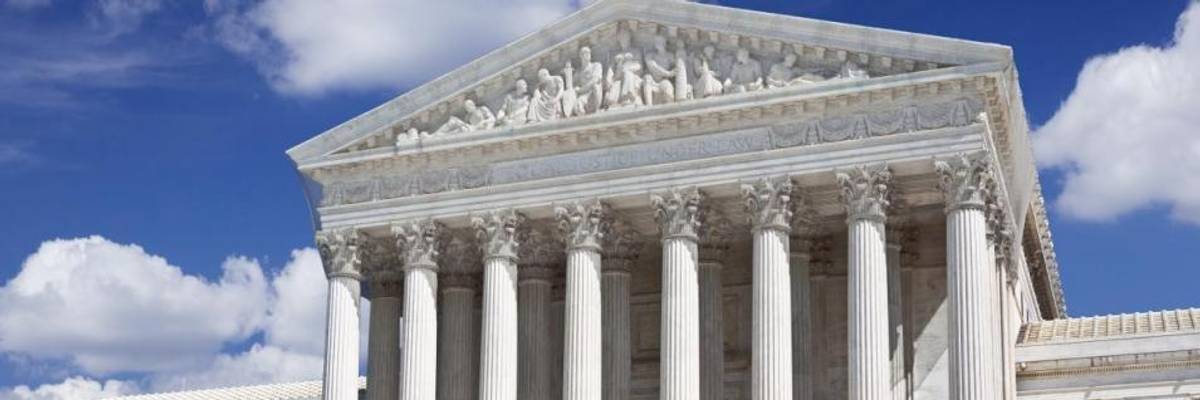
"If the Justices side with Trump and big corporations, women across America will be forced to go it alone when they are victimized and harassed." (Photo: Getty)
Just last week, a poll conducted by NBC News and the Wall Street Journal found that 48 percent of currently employed women in this country say that they have personally experienced an unwelcome sexual advance or verbal or physical harassment at work. And, while many corporations have announced zero-tolerance policies for harassment, employers are increasingly preventing workers who experience sexual harassment to join together to seek justice
Today, 24.7 million American workers have been forced to sign contracts that, as a condition of employment, require them to waive their rights to joining a class action lawsuit to address sexual harassment and other workplace disputes--instead these workers must act alone to resolve what is often systemic violations of employment protections. The National Labor Relations Board has determined that these arbitration agreements violate workers' right under the National Labor Relations Act to join together for "mutual aid and protection." Business interests--and the Trump administration--disagree. In Murphy Oil, the Supreme Court will decide whether workers have the right to come together to protect themselves from workplace issues like sexual harassment. The case could not be more relevant, or present the Justices with two more starkly divergent options.
If the Justices side with Trump and big corporations, women across America will be forced to go it alone when they are victimized and harassed. This means that a woman whose boss just threatened to fire her if she refuses to perform sexual favors (1) has to find a lawyer on her own, (2) is prevented from bolstering her credibility by involving coworkers who have endured the same treatment, and (3) has to subject herself to sole scrutiny of the action. As recent revelations demonstrate, in many workplaces this is not a one-off experience, but is instead a systemic problem. Prohibiting women and men from collectively addressing harassment and forcing them to go it alone creates an obstacle to pushing for systemic change, which means that the problem is likely to continue.
If the Justices side with the NLRB and the working people they represent, that woman can seek the support of her coworkers, making it easier to find a lawyer to take the case and present the pattern that gives an accurate picture of the workplace. From Rosa Parks to Lily Ledbetter to the brave women in the #metoo campaign, women have recognized the power of community to effect real change. The argument in Murphy Oil could not present a more stark choice for the Justices--a choice between a future where corporations can run roughshod over the rights of workers or where women and men can effectively seek justice.

Dear Common Dreams reader, It’s been nearly 30 years since I co-founded Common Dreams with my late wife, Lina Newhouser. We had the radical notion that journalism should serve the public good, not corporate profits. It was clear to us from the outset what it would take to build such a project. No paid advertisements. No corporate sponsors. No millionaire publisher telling us what to think or do. Many people said we wouldn't last a year, but we proved those doubters wrong. Together with a tremendous team of journalists and dedicated staff, we built an independent media outlet free from the constraints of profits and corporate control. Our mission has always been simple: To inform. To inspire. To ignite change for the common good. Building Common Dreams was not easy. Our survival was never guaranteed. When you take on the most powerful forces—Wall Street greed, fossil fuel industry destruction, Big Tech lobbyists, and uber-rich oligarchs who have spent billions upon billions rigging the economy and democracy in their favor—the only bulwark you have is supporters who believe in your work. But here’s the urgent message from me today. It's never been this bad out there. And it's never been this hard to keep us going. At the very moment Common Dreams is most needed, the threats we face are intensifying. We need your support now more than ever. We don't accept corporate advertising and never will. We don't have a paywall because we don't think people should be blocked from critical news based on their ability to pay. Everything we do is funded by the donations of readers like you. When everyone does the little they can afford, we are strong. But if that support retreats or dries up, so do we. Will you donate now to make sure Common Dreams not only survives but thrives? —Craig Brown, Co-founder |
Just last week, a poll conducted by NBC News and the Wall Street Journal found that 48 percent of currently employed women in this country say that they have personally experienced an unwelcome sexual advance or verbal or physical harassment at work. And, while many corporations have announced zero-tolerance policies for harassment, employers are increasingly preventing workers who experience sexual harassment to join together to seek justice
Today, 24.7 million American workers have been forced to sign contracts that, as a condition of employment, require them to waive their rights to joining a class action lawsuit to address sexual harassment and other workplace disputes--instead these workers must act alone to resolve what is often systemic violations of employment protections. The National Labor Relations Board has determined that these arbitration agreements violate workers' right under the National Labor Relations Act to join together for "mutual aid and protection." Business interests--and the Trump administration--disagree. In Murphy Oil, the Supreme Court will decide whether workers have the right to come together to protect themselves from workplace issues like sexual harassment. The case could not be more relevant, or present the Justices with two more starkly divergent options.
If the Justices side with Trump and big corporations, women across America will be forced to go it alone when they are victimized and harassed. This means that a woman whose boss just threatened to fire her if she refuses to perform sexual favors (1) has to find a lawyer on her own, (2) is prevented from bolstering her credibility by involving coworkers who have endured the same treatment, and (3) has to subject herself to sole scrutiny of the action. As recent revelations demonstrate, in many workplaces this is not a one-off experience, but is instead a systemic problem. Prohibiting women and men from collectively addressing harassment and forcing them to go it alone creates an obstacle to pushing for systemic change, which means that the problem is likely to continue.
If the Justices side with the NLRB and the working people they represent, that woman can seek the support of her coworkers, making it easier to find a lawyer to take the case and present the pattern that gives an accurate picture of the workplace. From Rosa Parks to Lily Ledbetter to the brave women in the #metoo campaign, women have recognized the power of community to effect real change. The argument in Murphy Oil could not present a more stark choice for the Justices--a choice between a future where corporations can run roughshod over the rights of workers or where women and men can effectively seek justice.

Just last week, a poll conducted by NBC News and the Wall Street Journal found that 48 percent of currently employed women in this country say that they have personally experienced an unwelcome sexual advance or verbal or physical harassment at work. And, while many corporations have announced zero-tolerance policies for harassment, employers are increasingly preventing workers who experience sexual harassment to join together to seek justice
Today, 24.7 million American workers have been forced to sign contracts that, as a condition of employment, require them to waive their rights to joining a class action lawsuit to address sexual harassment and other workplace disputes--instead these workers must act alone to resolve what is often systemic violations of employment protections. The National Labor Relations Board has determined that these arbitration agreements violate workers' right under the National Labor Relations Act to join together for "mutual aid and protection." Business interests--and the Trump administration--disagree. In Murphy Oil, the Supreme Court will decide whether workers have the right to come together to protect themselves from workplace issues like sexual harassment. The case could not be more relevant, or present the Justices with two more starkly divergent options.
If the Justices side with Trump and big corporations, women across America will be forced to go it alone when they are victimized and harassed. This means that a woman whose boss just threatened to fire her if she refuses to perform sexual favors (1) has to find a lawyer on her own, (2) is prevented from bolstering her credibility by involving coworkers who have endured the same treatment, and (3) has to subject herself to sole scrutiny of the action. As recent revelations demonstrate, in many workplaces this is not a one-off experience, but is instead a systemic problem. Prohibiting women and men from collectively addressing harassment and forcing them to go it alone creates an obstacle to pushing for systemic change, which means that the problem is likely to continue.
If the Justices side with the NLRB and the working people they represent, that woman can seek the support of her coworkers, making it easier to find a lawyer to take the case and present the pattern that gives an accurate picture of the workplace. From Rosa Parks to Lily Ledbetter to the brave women in the #metoo campaign, women have recognized the power of community to effect real change. The argument in Murphy Oil could not present a more stark choice for the Justices--a choice between a future where corporations can run roughshod over the rights of workers or where women and men can effectively seek justice.